What Is the Difference Between an Elliptical and a Rowing Machine
So, you're wondering, what's the real difference between an elliptical and a rowing machine? That's a smart question because both machines can give you a fantastic workout, but they do it in very different ways. Our research shows that understanding these distinctions is key to choosing the equipment that best fits your fitness goals and physical needs.
As of 2026, the fitness industry continues to favour these versatile machines for home and gym use.
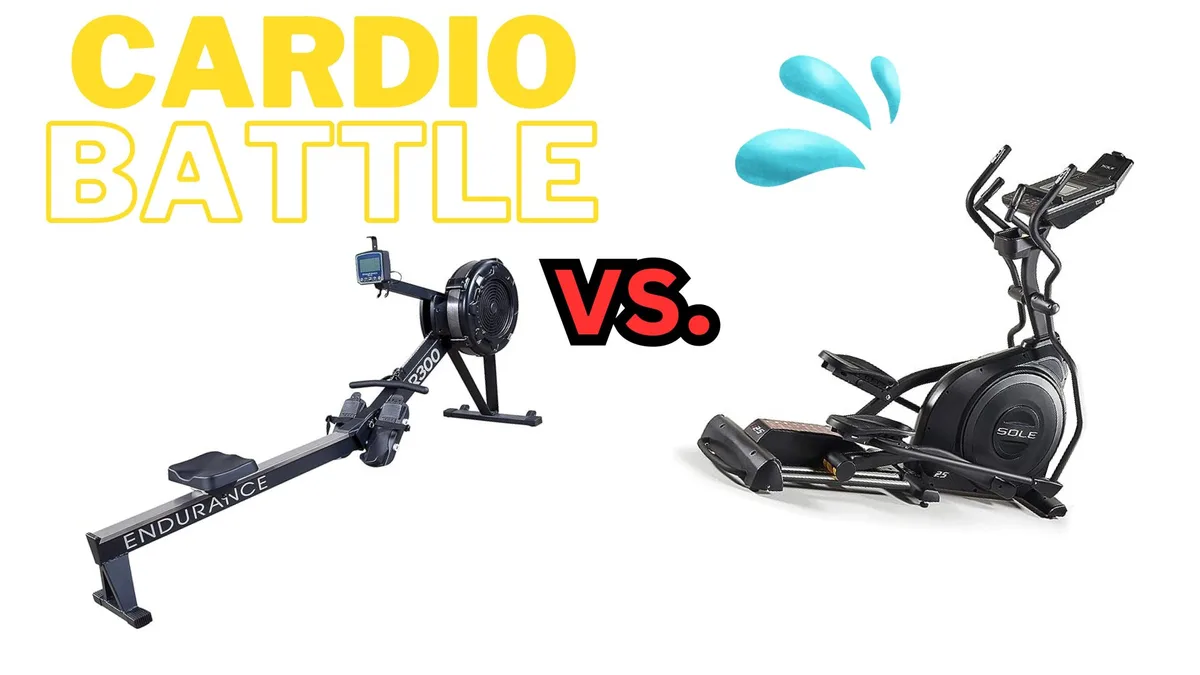
Image source: Bing (Web (fair-use with source credit))
Quick Answer
The main difference is how they work your body: ellipticals offer low-impact cardio with a gliding motion, primarily working legs and arms. Rowing machines provide a high-intensity, full-body workout using a powerful push-pull action engaging about 85% of muscles. Ellipticals are ideal for joint comfort, while rowers excel at building comprehensive strength and endurance.
Elliptical Machine: The Smooth Operator
What It Is & How It Works
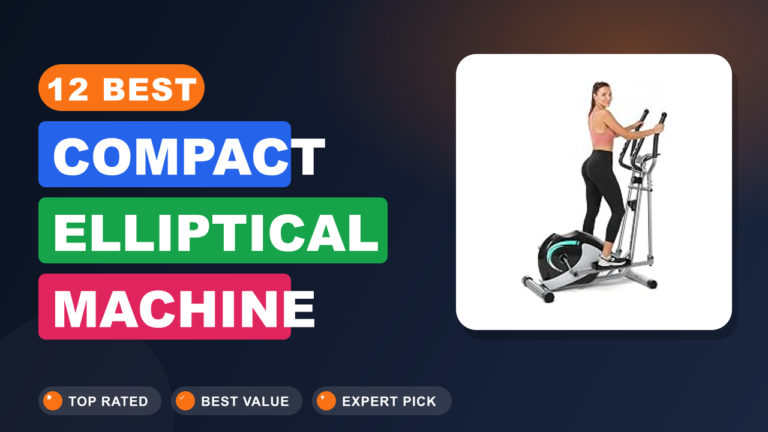
An elliptical machine, often called a cross-trainer, is designed to mimic activities like walking, running, and stair climbing without the jarring impact. You stand on foot pedals that move in an elongated oval or elliptical path, hence the name. Simultaneously, you grip moving handlebars that allow your arms to work in sync with your legs.
This coordinated movement means you're engaging both your upper and lower body in a single, fluid motion.
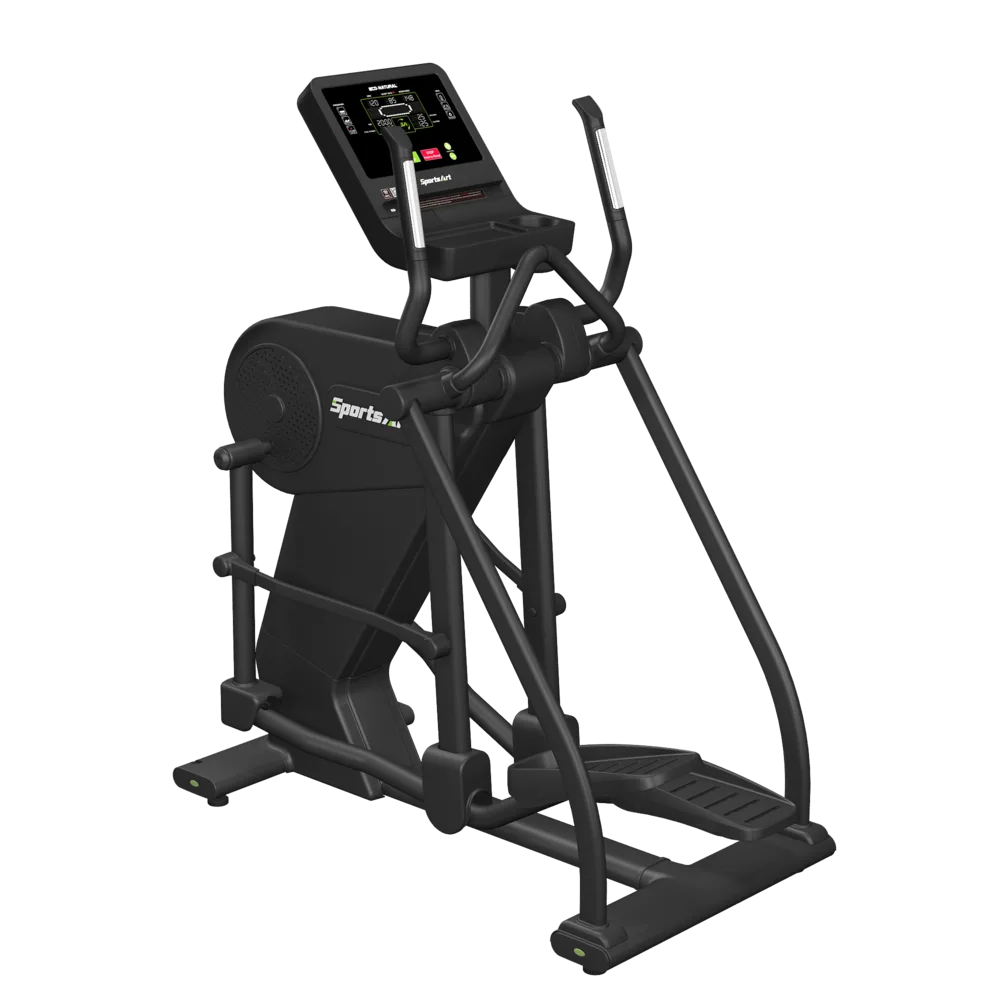
Image source: Bing (Web (fair-use with source credit))
Manufacturer specifications often highlight adjustable resistance and incline levels, allowing users to control the workout's intensity. For example, many models offer 10 to 20 resistance settings, enabling a gradual increase in challenge. The core mechanism typically involves a weighted flywheel and a resistance system, commonly magnetic or electro-magnetic, which provides smooth, consistent tension as you pedal.
For users prioritizing joint health, the lack of foot lifting off the pedals is a critical design element, reducing stress on knees, hips, and ankles compared to activities like running. This machine is a great option if you're looking for a more gentle cardio experience, similar to how some find an exercise bike suitable for lower-impact training.
Key Features & Benefits
The primary benefit of an elliptical is its low-impact nature. Your feet remain on the pedals throughout the exercise, eliminating the shock that can aggravate joints. This makes it a popular choice for individuals with knee, hip, or ankle issues, or those recovering from injuries.
It’s also excellent for general cardiovascular conditioning, helping to improve heart health and increase stamina.
The dual-action capability, where moving handlebars work your arms, shoulders, chest, and back along with your legs and glutes, provides a more comprehensive workout than a stationary bike might. This integrated upper and lower body engagement can lead to a higher calorie burn in a given time frame, supporting weight loss goals. Additionally, ellipticals are generally intuitive to use; most people can hop on and begin a workout with minimal instruction, making it an accessible option for beginners.
The variety of resistance and incline settings allows for progressive training, ensuring you can continue to challenge yourself as your fitness improves.
Potential Drawbacks & Who It Might Not Be For
While ellipticals are lauded for their low impact, they may not provide the same level of muscle activation as a rowing machine. The motion, though fluid, can be less intense for certain muscle groups, particularly the hamstrings and glutes, unless incline features are heavily utilized. Some users find the movement repetitive or less engaging over time compared to more dynamic exercises.
Furthermore, ellipticals can occupy a significant amount of floor space, which might be a consideration for those with limited room at home; you can explore how much space an exercise bike needs to get a sense of typical footprints. For individuals seeking significant strength gains, especially in the posterior chain (glutes, hamstrings, back), an elliptical alone might not be sufficient. It’s also worth noting that the controlled motion, while beneficial for joints, doesn't engage stabilizing muscles as intensely as activities that require more balance.
Users looking for a workout that closely mimics natural running or jumping movements may find an elliptical doesn't quite replicate that specific feel.
Rowing Machine: The Full-Body Powerhouse
What It Is & How It Works
A rowing machine, often called an ergometer or "ergo," is designed to simulate the motion of rowing a boat. The user sits on a sliding seat, places their feet in straps, and pulls a handle attached to a resistance mechanism. The exercise involves a distinct sequence: a leg press (the "catch"), a lean back (the "drive"), and a pull of the handle towards the upper chest (the "finish").
As you extend your arms and lean back, the seat slides forward for the next stroke.
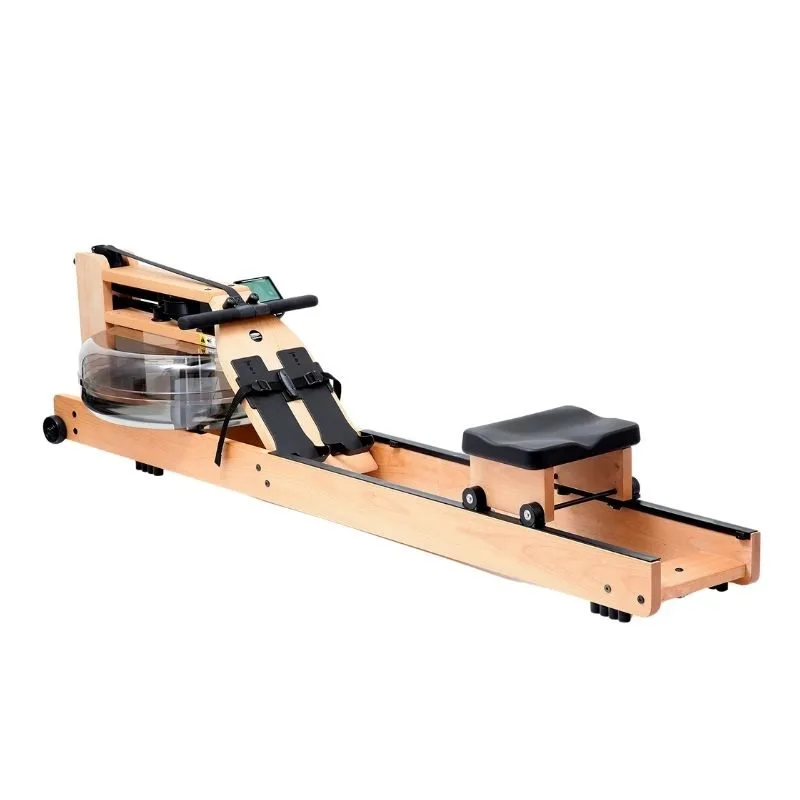
Image source: Bing (Web (fair-use with source credit))
These machines typically use one of three primary resistance types: air, water, or magnetic. Air resistance rowers, like those from Concept2, provide a smooth, consistent feel that scales with your effort, the harder you pull, the more resistance you generate. Water rowers use a tank of water to create a dynamic, fluid resistance that mimics the feel of rowing on water.
Magnetic rowers use magnets to create resistance, often offering a quieter operation and more precise control over tension levels, similar to how magnetic resistance works on many exercise bikes. According to industry standards, proper form is crucial to maximize effectiveness and prevent injury, focusing on a strong leg drive and controlled upper body movement.
Key Features & Benefits
The rowing machine's most significant advantage is its ability to deliver a comprehensive, full-body workout. Aggregate user reviews and exercise physiology studies consistently report that rowing engages approximately 85% of the body's muscles. This includes a powerful drive from the legs (quadriceps, hamstrings, glutes), a strong core stabilization (abdominals, obliques, lower back), and significant engagement of the back muscles (lats, rhomboids, traps), along with the shoulders and arms.
This extensive muscle activation translates into a highly efficient calorie burn, often exceeding that of ellipticals for users of similar effort levels.
Beyond calorie expenditure, rowers are exceptional for building both cardiovascular endurance and muscular strength simultaneously. The rhythmic, powerful motion elevates the heart rate effectively for aerobic conditioning, while the resistance challenges muscles, promoting strength and toning. For those seeking to improve their overall physical conditioning or prepare for demanding activities, the rowing machine offers a unique combination of benefits.
It also places low impact on the joints, provided correct form is maintained, making it a viable option for many individuals. The ability to adjust resistance allows for varied workouts, from steady-state cardio to high-intensity interval training.
Potential Drawbacks & Who It Might Not Be For
While rowers are fantastic for a full-body workout, they do present a steeper learning curve for proper form compared to an elliptical. Incorrect technique, particularly in the lower back or shoulder movements, can lead to strain or injury. It's vital for new users to focus on mastering the sequence of leg drive, torso lean, and arm pull to maximize benefits and minimize risk.
For context on proper setup for other fitness equipment, understanding how to set up an exercise bike can highlight the importance of initial configuration.
The physical demands of a rowing machine can also be intense. While it's low impact, the sheer number of muscles worked means it can be more physically taxing than an elliptical, especially for beginners or those with certain pre-existing conditions. Users with significant lower back sensitivity might find that even with correct form, the continuous flexing and extending can be uncomfortable.
Another common issue is the potential for repetitive strain if the machine isn't properly maintained, much like why is my exercise bike making noise. It’s also important to ensure you have adequate space, as rowers can be quite long, though some models fold for storage.
Who is Each Machine Best For?
Ideal Elliptical User Scenarios
The elliptical machine shines for individuals prioritizing joint health or those returning to exercise after injury. If you've ever experienced knee pain from running or found gym floors tough on your ankles, the smooth, gliding motion of an elliptical is likely a good fit. It’s also excellent for users who want a solid cardiovascular workout without the high impact.
Many find that as a low-impact alternative to treadmills, it offers a comparable calorie burn while being far gentler on the body.
For beginners, the intuitive design means you can jump on and start working out almost immediately, focusing on your cardio rather than complex movements. It's also ideal if you enjoy a workout that engages both your upper and lower body simultaneously, providing a balanced session. Those aiming for consistent, moderate-intensity cardio without pushing their joints to the limit will find the elliptical a reliable choice for their home gym or fitness routine.
You might also find it appealing if you've previously explored what muscles an exercise bike works and are looking for something that adds more upper body engagement.
Ideal Rowing Machine User Scenarios
Rowing machines are fantastic for those seeking a truly comprehensive, full-body workout. If your goal is to maximize calorie burn and engage nearly every major muscle group in a single session, an ergometer is hard to beat. It's particularly well-suited for individuals who want to build both cardiovascular endurance and muscular strength efficiently.
Users looking to improve posture or build a stronger back will find the rowing motion highly beneficial, provided they focus on correct technique.
This machine is also a great option for athletes in training who need a conditioning tool that builds power and stamina across the entire body. For example, cross-training athletes often incorporate rowing to enhance their overall athletic performance. While it requires more focus on form than an elliptical, the payoff in terms of full-body conditioning and high-intensity potential is substantial.
If you're intrigued by the idea of a demanding workout that strengthens your posterior chain and improves your cardiovascular system all at once, a rower could be your ideal equipment.
Ideal User Scenarios for Both
Sometimes, the best solution isn't picking one over the other, but understanding how they can complement each other. For instance, an athlete might use the elliptical for active recovery days, allowing their joints to rest while still getting a cardio session. On other days, they might opt for the rowing machine for intense strength and cardio conditioning.
Individuals with specific fitness goals might use one machine for its unique benefits. Someone training for a long-distance event might use the elliptical for steady-state cardio to build endurance without undue stress, while someone focusing on functional strength and power might favour the rowing machine. Alternating between the two can also prevent workout boredom and challenge the body in different ways, contributing to more well-rounded fitness.
This approach acknowledges that different tools serve different purposes in a holistic fitness plan.
Common Mistakes to Avoid on Each Machine
Elliptical User Errors
A common mistake on the elliptical is focusing too much on passive arm movement. While the handlebars move, they should be actively pushed and pulled to engage the upper body. Simply resting your hands or letting your arms passively follow the motion negates a significant benefit.
Another error is letting your back round or slouching, which reduces core engagement and can lead to discomfort.
Some users neglect to adjust the incline and resistance, sticking to the same easy setting workout after workout. This limits the potential for progression and calorie burn. Manufacturer specifications often indicate a wide range of resistance and incline options designed to challenge users at various fitness levels, so experimenting with these settings is key to an effective workout.
It’s also important to maintain a balanced stance, avoiding leaning too heavily on the handlebars, which can put undue pressure on your wrists and shoulders. If you find yourself experiencing discomfort, much like why is my exercise bike pedal making noise, it often points to a technique or setup issue.
Rowing Form Fumbles
The most critical mistake on a rowing machine is improper form, which can lead to lower back strain. This often happens when users initiate the pull with their back instead of their legs. The primary power should come from the legs pushing against the footrests, followed by a lean back and then the arm pull.
Reversing this sequence or arching the lower back excessively during the drive are common errors.
Another frequent misstep is rushing the stroke, leading to a choppy rhythm and reduced effectiveness. A proper rowing stroke is deliberate and controlled, with a distinct sequence of movements. Beginners might also pull the handle too high, causing shoulder strain, or not fully extend their legs at the end of the drive.
Mastering the catch, drive, release, and recovery phases is essential for both safety and performance, and many find that instructional videos or even a session with a trainer can clarify these nuances. Similar to how how to set up a spin bike requires attention to detail, rowing form demands precision.
Making Your Choice: Expert Tips for Decision Making
Key Questions to Ask Yourself
When deciding between an elliptical and a rowing machine, start by honestly assessing your primary fitness goals. Are you focused on low-impact cardio and joint protection, or do you prioritize a full-body strength and endurance challenge? Consider your current physical condition; if you have existing joint pain or back issues, an elliptical might be the safer starting point, while a rower demands more attention to proper execution.
Think about your personality and workout style. Do you prefer a straightforward, intuitive machine where you can easily zone out, or are you motivated by learning a more complex technique that offers a deeper physical engagement? Also, consider the space you have available at home, as ellipticals tend to have a larger footprint, though some rowing machines offer folding capabilities.
Finally, reflect on what kind of workout experience you find more enjoyable and sustainable long-term. Your enjoyment is key to sticking with any fitness routine.
Frequently Asked Questions About Ellipticals and Rowers
How much space does each machine typically need?
Ellipticals generally have a larger footprint, often measuring around 6-7 feet in length and 2-3 feet in width. Rowing machines can also be long, typically 7-9 feet when in use, but many modern designs offer folding capabilities, significantly reducing their storage footprint.
Can I build significant muscle mass on either machine?
You can build muscle endurance and tone on both. However, for significant muscle hypertrophy (growth), a rowing machine offers better potential due to its full-body strength engagement. For dedicated muscle building, adding weight training is usually recommended alongside any cardio machine.
Which machine is better for burning calories?
Both can burn a significant number of calories. Generally, a rowing machine can lead to a higher calorie burn in the same amount of time due to its extensive muscle engagement, assuming proper intensity and form. However, consistent effort on an elliptical also yields excellent calorie expenditure.
Is one machine quieter than the other?
Magnetic resistance ellipticals and rowers tend to be quieter than air or water resistance rowers. Air resistance rowers produce a noticeable "whoosh" sound with each stroke. Water rowers have the added sound of the water moving in the tank.
What maintenance is typically required for these machines?
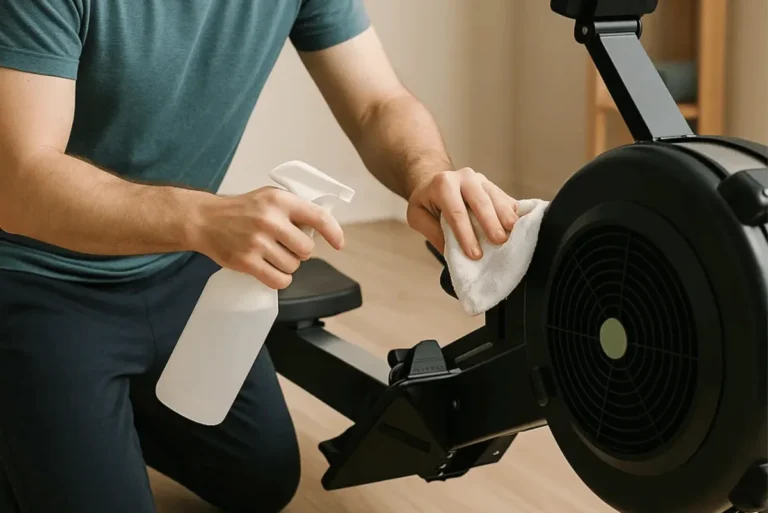
Basic maintenance includes regular cleaning with a damp cloth. For rowers, checking and potentially cleaning the air or water tank (if applicable) and lubricating the seat rail is important. For ellipticals, ensuring the resistance mechanism is functioning smoothly and occasionally checking for loose parts is advisable.
Following manufacturer guidelines, such as those found in how to maintain an exercise bike, will prolong the life of your equipment.

14 Comments