What Treadmill Motor Size Do I Need
If you're wondering what treadmill motor size do I need, you've probably noticed that most machines advertise horsepower front and center. That number drives the price, the weight, and the performance. But here's the catch: the number on the box often isn't the number that matters.
Let's clear this up right now. Most consumer treadmills between $500 and $3,000 list their "peak horsepower" in big marketing type. The real spec is something called continuous horsepower (CHP), which measures what the motor can sustain during a full workout.
UL 1647, the safety standard for exercise machinery in the US, helps define how that rating gets tested. Once you understand the difference between the two numbers, you'll never overpay for a treadmill again.
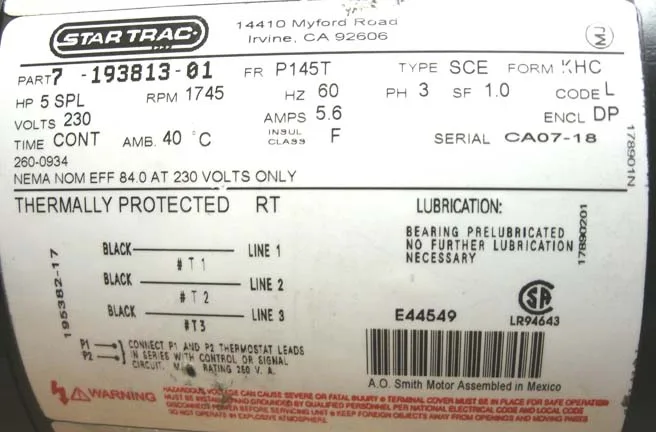
Image source: Bing (Web (fair-use with source credit))
Quick Answer
Walkers under 200 lbs need only 1.5 to 2.0 CHP. Joggers should aim for 2.5 CHP. Runners weighing 200 to 250 lbs need 3.0 CHP.
Heavier users or incline trainers should choose 3.5 CHP or more. Always read the continuous horsepower rating, not peak HP.
Why "Horsepower" on Treadmills Is So Misleading
Treadmill manufacturers love advertising peak horsepower because it's the most impressive number they can legally print. A motor that peaks at 3.0 HP might only sustain 1.5 CHP during continuous use. That's a massive gap, and it's exactly where buyers get burned.
Peak horsepower is what the motor delivers in a brief burst, like when you first step on the belt. Continuous horsepower is what it maintains minute after minute during a 40-minute run. A motor rated 3.0 peak but only 1.5 CHP will struggle with daily jogging.
It'll run hot, slow down under your weight, and wear out within a couple of years.
The Peak HP Marketing Trap
Every major brand does this. They slap "3.0 HP" on the box because it sells. The fine print on the spec sheet reveals the actual continuous rating.
Some budget brands are worse, stretching the difference to nearly 3x.
Here's what we found in our research: a treadmill labeled "3.0 HP" often contains a 1.75 CHP motor. That's fine for light walking but dangerously underpowered for running. Aggregate reviews confirm the problem.
The most common complaints about "weak motors" trace back to shoppers trusting the peak number.
What Happens When You Buy on the Wrong Number
Underpowered motors create three predictable problems. The belt stalls when you plant your foot, the motor heats up and shuts off mid-workout, and the whole unit vibrates annoyingly. None of those are quality-control issues.
They're engineering limits being exceeded.
An undersized motor also draws more current as it strains. That's why many budget treadmills trip household breakers. The motor isn't faulty.
It's just working harder than it was designed to handle.
CHP vs Peak HP: The Number That Actually Tells the Truth
Continuous horsepower, or CHP, measures sustained output. It's the spec serious buyers should check first. Peak HP measures a quick burst.
Think of it like a car's redline versus its comfortable cruising speed. You can hit redline briefly, but you can't safely live there.
The gap between the two numbers matters most at low speeds. This is where torque comes into play. Torque is rotational force, and treadmills need plenty of it when you're walking at 2.5 mph on a 12% incline.
The belt speed barely changes, but the motor is under heavy load. A motor with good CHP torque keeps the belt moving smoothly. A peak-rated motor bucks and slows.
What Continuous Horsepower Means
CHP represents the motor's steady-state output under load. Manufacturers test it by running the motor continuously at a set resistance until temperatures stabilize. That's the number that predicts real-world lifespan.
Most reputable brands print the CHP rating in the spec sheet, even if it isn't on the box.
A 2.5 CHP motor handles most home runners comfortably. It offers enough headroom for incline training and interval sprints. Stepping up to 3.0 CHP adds durability for heavier users and those logging 30+ miles per week.
Why Torque at Low Speed Beats Top Speed
The speed rating on a treadmill, usually 10 or 12 mph, matters far less than torque. Reaching 10 mph with no load is trivial for even a 1.5 CHP motor. Maintaining a steady 6 mph pace with intermittent heavy foot strikes is the real test.
That's where torque saves you. The flywheel and motor work together to smooth out every stride. A heavy flywheel compensates for a slightly smaller motor, but it can't fix a severely underpowered one.
The Treadmill Motor Size Decision Tree (Follow These Steps)
This is the exact process we use to match anyone with the right motor size. Grab your weight and honest workout summary, then run through these steps.
Image source: Bing (Web (fair-use with source credit))
Step 1: Weigh In, Literally
Your body weight is the single biggest factor. Every treadmill's max user weight rating is set by the motor, frame, and belt system. Exceeding that rating wears out the motor first.
Weigh yourself honestly. If you're between thresholds, round up, not down.
Step 2: Classify Your Workout Style
Be honest about what you'll actually do. Walking at 3 mph uses far less motor than jogging at 5 mph. Running with a 30-minute stride requires continuous power.
If you plan to lose weight, factor in a future healthier target weight. The motor doesn't care what you weigh on day one. It cares about your heaviest day.
Step 3: Factor Incline and Weekly Frequency
Incline training dramatically increases motor load. A 10% incline at 3 mph demands more torque than a flat-out 6 mph jog. Your weekly frequency matters too.
A motor used 3 days per week lasts far longer than one running daily. If you train more than 4 days weekly, step up one tier from the baseline recommendation.
Step 4: Verify the CHP on the Spec Label, Not the Box
If the spec sheet lists both numbers, trust the CHP figure. If it only lists peak HP, divide by 1.5 to 2 to estimate the continuous rating. A "3.0 HP" motor with no CHP listed is likely 1.5 to 2.0 CHP.
That's enough for walking only.
Real-Life Scenarios: Who Needs 1.5, 2.5, or 3.5 CHP
Real numbers make this concrete. Here are three typical buyers, their needs, and the motor that actually serves them.
The 140-lb Casual Walker
Sarah weighs 140 lbs and plans to walk 20 minutes daily while watching TV. She never runs, rarely hikes the incline above 3%, and averages 8 miles per week. A 1.5 CHP motor is plenty.
Her light frame and low speed demand almost nothing from the drive system. The money she saves goes toward better cushioning, which serves her comfort more than extra horsepower.
The 220-lb Daily Jogger
Mike carries 220 lbs and jogs 5 miles every morning. He keeps a steady 5.5 mph pace with occasional incline bursts. His baseline need is 2.5 CHP.
Since he runs daily, we'd recommend 3.0 CHP for longevity. The extra headroom keeps the motor cool and quiet across years of use. If he were considering a lower-impact alternative, many users find that switching between cardio platforms helps joint recovery, and the elliptical vs. rowing machine debate is worth exploring.
The 250-lb Incline Runner
Priya weighs 250 lbs and trains for 5K races with a 10% incline setting. She logs 25 miles weekly with sprint intervals. We'd put her on a 3.5 to 4.0 CHP motor.
Her high body mass plus incline plus speed equals maximum torque demand. Anything under 3.0 CHP will overheat and slow. She also needs a heavy flywheel and a solid 20-amp circuit.
These choices feel expensive upfront but save her from a dead motor in year two.
Common Motor-Size Mistakes That Shorten a Treadmill's Life
A treadmill motor usually dies from overload, heat, or electrical stress. These failure patterns appear repeatedly in national consumer safety databases. A little planning prevents all three.
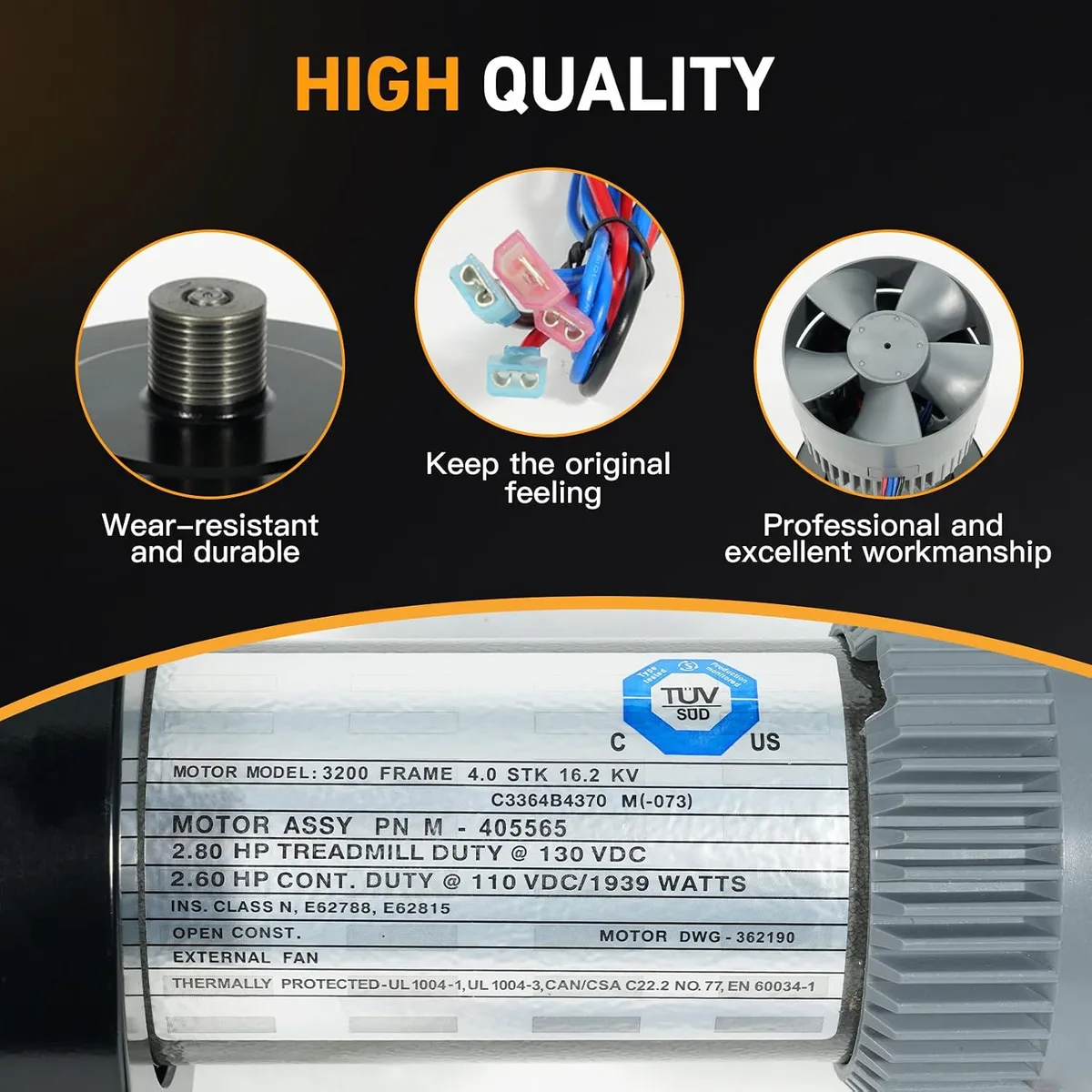
Image source: Bing (Web (fair-use with source credit))
Ignoring the Max User Weight Rating
The user weight limit isn't arbitrary. It's tied directly to motor torque and belt strength. Exceeding it stalls the belt and overheats the drive system.
If you weigh 240 and the limit is 250, you're fine. If it's 220, keep looking.
This mistake also shortens the motor's duty cycle. The motor runs hotter than its design allows. Thermal overload protection kicks in and shuts the treadmill down mid-stride.
That shutdown is the motor begging for mercy.
Tripping the Breaker from Over-Drawing Amps
Motors above 3.0 CHP can pull more than 15 amps under load at low speeds. That's why they trip standard household breakers. Give larger treadmills a dedicated 20-amp circuit.
The owner's manual lists the exact amp draw.
A dedicated circuit isn't special wiring. It just means nothing else shares that outlet. A fridge, a TV, or a space heater on the same circuit pushes the total current over the limit.
The breaker trips, and the treadmill loses power mid-run.
Skimping on the Flywheel
The flywheel isn't the motor, but it protects it. A heavier flywheel stores momentum between strides. That smooths the load and cuts motor strain.
Runners should insist on at least 2.5 pounds. Four is even better.
Aggregate reviews show that flywheel weight is the most ignored spec on spec sheets. Buyers obsess over horsepower while a light flywheel quietly forces the motor to work harder every single step. It also explains why two treadmills with identical CHP ratings feel completely different underfoot.
Motor care doesn't stop at purchase. The same routine maintenance habits apply to treadmills, ellipticals, and exercise bikes. Dust on the motor, a loose belt, or a dry deck all add strain to the drive system.
Treadmill Motor Size FAQs
Is 2.5 CHP Enough for Running?
Yes, for most runners under 200 lbs. It holds a 6 to 7 mph pace with authority. Add heavy incline training or 30+ weekly miles, and 3.0 CHP gives safer headroom.
What's the Real Difference Between 2.5 and 3.0 CHP?
About 20 percent more continuous torque. It also runs cooler under the same workload and handles heavier users more gracefully. That temperature margin directly extends the motor's lifespan.
Do I Need a Dedicated 20-Amp Circuit?
Only for motors above 3.0 CHP. Check the spec sheet for amp draw before deciding. Most home treadmills draw under 15 amps and work fine on a standard circuit.
A dedicated circuit prevents nuisance breaker trips in a busy home gym.
Can a 2.5 CHP Motor Handle a 12% Incline?
At walking speed, yes. At a running pace, no. Incline multiplies torque demand faster than speed does.
A 12% grade at 6 mph needs closer to 3.5 CHP for sustained effort.
How Long Should a Treadmill Motor Last?
Expect 10 to 15 years for walkers, 5 to 8 years for daily runners. Regular belt lubrication and deck leveling extend either number. As of 2026, most home warranties cover the motor for 3 to 5 years.
Final Verdict: Choose Your Motor Size in One Minute
Here's the whole process boiled down. Match your motor to your heaviest body weight and your most intense workout. When torn between two sizes, round up.
| User Profile | Weight | Recommended CHP |
|---|---|---|
| Walker | Under 200 lbs | 1.5–2.0 CHP |
| Jogger | Under 200 lbs | 2.0–2.5 CHP |
| Runner | 200–250 lbs | 2.5–3.0 CHP |
| Incline trainer or heavier user | Over 250 lbs | 3.0–4.0 CHP |
Never trust peak HP alone. Find the continuous duty rating on the spec label. If the brand omits it, that omission is your answer.
The treadmill down the aisle with the honest spec sheet deserves your money.
You'll also want to think about how a treadmill fits your full routine. If you alternate cardio sessions, the same logic applies elsewhere. Ask yourself whether an elliptical is worth it or how an upright bike compares when joint impact is a concern.
And if you're adding strength work, choosing the correct dumbbell weight matters just as much as any motor spec.
Buy the most torque your budget allows. Your knees, your belt, and your breaker box will thank you later.