How to Train for a 5K on a Treadmill
If you've ever stared at a treadmill screen and wondered how to train for a 5K on a treadmill, you're in the right place. The machine can feel like a punishment, but it's actually one of the most precise training tools you'll ever use. No stoplights, no weather excuses, no uneven pavement.
Just you, the belt, and a plan that actually works.
Here's the thing about treadmill 5K training: it's not just "running on a hamster wheel" until the distance is done. It's about using the console's speed and incline features to build real race fitness. The equipment itself is a controlled environment, which makes pacing simple.
As of 2026, most home treadmills still lack a true auto-adjust feature for outdoor simulation, so you'll need to set a 1% incline to mimic road running. Let's break down exactly how to do it.

Image source: Web (Bing) / thatparkplace.com (Web image (fair-use with source credit))
Quick Answer
Training for a 5K on a treadmill takes 6 to 12 weeks. Run three times per week. Use a 1% incline to mimic outdoor effort.
Mix easy runs, intervals, and tempo runs. Build mileage gradually to avoid injury.
First, Where Are You Starting From?
Before you touch a single button, you need to be honest about your current fitness. The right plan for you depends entirely on what you can do right now. This isn't a one-size-fits-all situation.
If You've Never Run a 5K Before
If you can't run for 10 minutes straight without walking, treat this as a run/walk program. Your goal isn't speed, it's building the habit of moving for 30 to 40 minutes total. A good starting ratio is 1 minute of running followed by 2 minutes of brisk walking.
You'll repeat that cycle for 20 to 30 minutes. Future weeks will slowly flip the ratio.
Your first week on the treadmill should feel almost too easy. Set a walking speed around 3.0 to 3.5 mph and a running speed between 4.5 and 5.0 mph. If you're gasping for air, slow down.
A conversational pace is the goal. Most beginners train for a 5K in 8 to 12 weeks, so don't rush the process.
If You're Coming Back After a Break
Maybe you used to run 5Ks regularly, but life happened. An injury, a new job, or a long winter threw you off. You can still run comfortably for 10 to 15 minutes, but you're nowhere near race pace.
Jumping back to your old speed is a mistake. Your connective tissue needs time to re-adapt.
Start with 2 to 3 weeks of easy base running. Run at a conversational effort three times per week. Don't touch intervals or speed work yet.
On a treadmill, that means staying between 5.0 and 5.5 mph. Your goal is consistency, not intensity. Once you can run 20 minutes without stopping, you can move to the structured workouts below.
If You Can Already Run 3 Miles
If running 3 miles at a comfortable pace is already normal for you, your training switches from "can I finish" to "how fast can I go." This changes your workouts entirely. You're not training to survive, you're training to improve your pace. That means intervals, tempo runs, and a real weekly plan.
Your easy runs should stay at your comfortable pace, roughly 60 to 70% of your max effort. The hard workouts are where the magic happens. You'll do short speed repeats at a pace that leaves you breathless.
And you'll need one tempo run per week to build your lactate threshold. We'll cover these in detail shortly.
Set Up the Treadmill So It Doesn't Lie to You
A treadmill gives you perfect pace feedback, but it also flatters you. Outdoor running involves wind resistance, slight terrain changes, and no belt pulling your feet backward. If you train flat at zero incline, your first outdoor 5K will feel brutally harder than your treadmill sessions.
Here's how to fix that.
The 1% Incline Rule
The most widely accepted guideline is to set your treadmill to 1% incline to mimic outdoor running. This compensates for the lack of wind resistance and the moving belt. Research has shown that this small grade increases your effort to a level comparable to running outside on flat ground.
So unless you're doing specific hill training, run your base miles at 1%.
Read Your Pace in MPH, Not "Feel"
Treadmill consoles display speed in miles per hour, and that's your objective truth. A 10:00 minute mile equals 6.0 mph. A 9:00 mile equals 6.7 mph.
Most beginners target a pace between 5.5 and 6.2 mph. If you're doing intervals, you'll need quick speed changes, so memorize your target mph before you start. It's much easier than doing mental math while running.
Don't Hold the Handrails
Holding the handrails takes up to 20% of your body weight off your legs. It also changes your posture and shortens your stride. You're training your body for something that won't happen on race day.
Keep your hands free, pump your arms naturally, and let your legs do the work. If you're clinging to the console, your speed is too fast.
Safety Clip and Emergency Stop Basics
Every treadmill has a safety clip, usually a red magnetic key attached to a cord. Clip it to your shirt before you start. If you stumble or fall, the key pulls out and the belt stops immediately.
This isn't optional. Aggregate reviews and manufacturer safety manuals consistently list falls as the top treadmill-related injury. Also check the emergency stop button location before your first run, so you know exactly where it is if you need it.
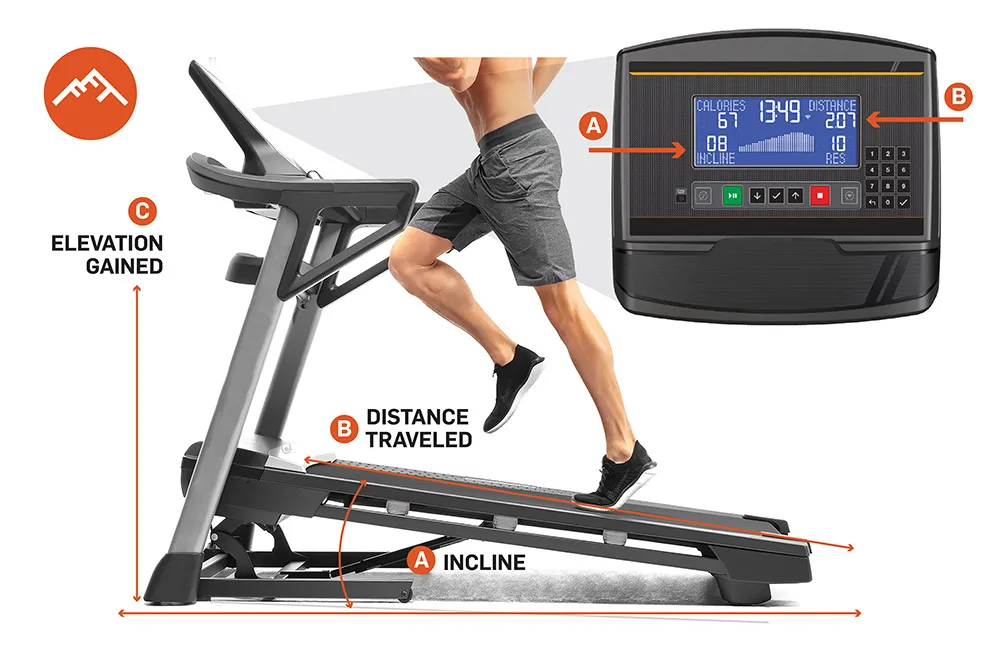
Image source: Bing (Web (fair-use with source credit))
The Three Workouts That Actually Build Your 5K
You don't need seven different training methods. You need three core workouts, done right, on the right days. These three session types build your aerobic base, your speed, and your race-day confidence.
Most amateur runners overcomplicate this, and it hurts their performance.
Easy Runs
These are your foundation. Easy runs build your aerobic engine, improve blood flow to your muscles, and help you recover from harder sessions. The pace should feel almost frustratingly slow.
You should be able to hold a conversation without gasping. On a treadmill, that's usually 5.0 to 5.5 mph for beginners. These runs last anywhere from 20 to 40 minutes.
Intervals and Speed Repeats
This is where you get faster. You run at a hard, controlled effort for a short period, then recover by walking or jogging slowly. The ratio depends on your fitness.
A beginner might start with 2 minutes of running at 6.0 mph, followed by 2 minutes of walking. An advanced runner might do 5 repetitions of 800 meters at a pace that's roughly 30 seconds faster than their goal 5K pace.
Tempo Runs
A tempo run sits at your "comfortably hard" effort, about 80 to 90% of your max heart rate. This is pace training, not sprinting. The goal is to sustain a challenging speed for 10 to 20 minutes total.
On a treadmill, set the speed at your 5K goal pace plus a small buffer, and hold it for a continuous block. These sessions build your lactate threshold, which is the point where your body stops clearing acid as fast as it builds up.

Image source: Bing (Web (fair-use with source credit))
Your Week-by-Week Treadmill 5K Training Plan
Here's a practical six-week progression that works for a beginner or someone returning from a break. It assumes you can already run for a few minutes at a time. If you truly can't run for 2 minutes, spend two weeks on the run/walk ratio adjustments first.
| Week | Workout 1 (Easy) | Workout 2 (Intervals) | Workout 3 (Tempo) |
|---|---|---|---|
| 1 | 20 min easy run | 6 x 1 min hard, 2 min walk | 10 min easy + 10 min tempo |
| 2 | 25 min easy run | 6 x 2 min hard, 2 min walk | 10 min easy + 12 min tempo |
| 3 | 30 min easy run | 5 x 3 min hard, 2 min walk | 10 min easy + 15 min tempo |
| 4 | 30 min easy run | 4 x 4 min hard, 2 min walk | 10 min easy + 18 min tempo |
| 5 | 35 min easy run | 3 x 5 min hard, 2 min walk | 10 min easy + 20 min tempo |
| 6 | 20 min easy run | 2 x 6 min hard, 2 min walk | Race rehearsal: 10 min easy + 3K at goal pace |
When to Take a Rest Day
Do not run two hard days back to back. Your body repairs itself during recovery, not during the workout itself. At minimum, take one full rest day per week.
You can also add a cross-training session, like an elliptical session to give your joints a break, which you can read about in our guide to cardio machine differences. This reduces injury risk and builds aerobic fitness without the impact of running.
The key is progression. Notice how the interval workouts get longer but fewer as the weeks pass. That maintains the intensity while pushing your endurance.
Take rest days seriously. Your legs will feel heavy if you skip them and then attempt a hard tempo run.
Common Treadmill 5K Mistakes to Avoid
You can follow a training plan perfectly and still mess up your results. These are the five most common treadmill-specific errors I see in aggregate user reviews and training logs. Avoid these, and you'll finish your 5K stronger than you started.
Training Flat All the Time
Running at zero incline leaves you unprepared for outdoor races. It also under-develops your glutes and hamstrings. Always set at least a 1% incline for standard runs.
Use higher inclines of 3 to 6% for hill simulation when you want extra strength work. This also helps with different cardio equipment goals, since incline work mimics the variable resistance of other machines.
Running Too Fast Too Soon
A common pattern is starting your "easy" run too fast because it feels fine for the first five minutes. Then you fade dramatically by minute 15. The solution is to set your speed, then reduce it by 0.3 to 0.5 mph for your easy days.
Easy days are for recovery and base building. Save speed for interval and tempo days. Established physical activity guidelines from the CDC recommend gradual progression for a reason.
Treating Treadmill Pace Like Outdoor Pace
As mentioned, the 1% incline rule fixes most of this gap. But there's another factor: pacing error. On a treadmill, you can see your exact speed.
Outside, runners naturally surge and slow. If you train at a consistent mph on the treadmill, you'll be consistent outside too. Just remember to add the incline.
Also, don't rely on the treadmill's distance calculation as perfect. Calibration varies across models, and manufacturer specs confirm that belt speed accuracy can drift over time.
Letting Boredom Sabotage Your Effort
Monotony kills more treadmill workouts than fatigue ever will. Staring at a wall for 30 minutes makes you want to quit early. The fix is active distraction.
Put a towel over the console readout and run by feel for easy days. Build a playlist with songs that match your cadence. Or alternate the incline every five minutes, simulating rolling hills.
Anything that gives your brain a different input.
The biggest mistake, though, is skipping your warm-up. A cold body on a fast treadmill belt is a recipe for a pulled hamstring. Start with a 5 minute brisk walk at 3.0 mph, then a gentle jog at 4.0 mph for 2 minutes.
Your muscles need that blood flow before you ask for speed. If your treadmill starts acting up, the upkeep basics are similar to other cardio equipment.
Race Week and Race-Day Tips
You've built the engine. Now it's time to execute the race plan without throwing away six weeks of hard work. Race week is about confidence, not last-minute heroics.
Trust the training you've already done.
Tapering Your Mileage
Cut your volume by 50% in the final week. A common mistake is trying to squeeze in one more hard workout. That just leaves you tired on race day.
Do one short, easy run of 20 minutes two days before the race. Keep your legs moving, but don't test your limits. Rest and sleep matter more than any last interval.
Should You Run the 5K Outdoors or on the Treadmill?
It depends on your goal. If your race is outdoors, do at least one outdoor run during the final week so your body remembers the feel of real ground. If you're racing on the treadmill itself, keep your workouts on the same machine.
Familiarity matters. For a virtual 5K or an indoor challenge, set the 1% incline aside and run at 0% on race day, since there's no wind resistance to compensate for.
How to Hit Your Goal Pace on Race Day
Pick your target mph early and stick to it for the first mile. Most runners start too fast and pay for it in mile three. Break the race into three chunks: settle in, hold pace, then push.
The treadmill makes this easy. Just program your speeds and let the belt keep you honest. Don't forget to warm up for 10 minutes before the clock starts.
If you want extra aerobic work without added leg fatigue, a short elliptical cross-training session works well.
Frequently Asked Questions
How Long Does It Take to Train for a 5K on a Treadmill?
Most beginners need 8 to 12 weeks. If you can already run 10 minutes continuously, a 6-week plan works well. The timeline depends on your current fitness and consistency.
Running three times per week is the minimum for meaningful progress.
What Speed Should I Set for a Beginner 5K?
Start at 4.5 to 5.0 mph for running intervals. That translates to roughly a 12:00 to 13:24 minute mile. If you can't hold a conversation at that pace, drop it by 0.3 mph.
Speed will come with time.
Should I Run a 5K on the Treadmill at 0% or 1% Incline?
Use 1% for all training runs to simulate outdoor effort. On race day, use 0% if you're racing on the treadmill itself. The 1% rule compensates for wind resistance that doesn't exist indoors.
Can I Train for a 5K on a Treadmill and Run the Race Outside?
Yes, and it works well. Just include outdoor runs once per week so your legs adapt to uneven surfaces and real turns. Also, practice pacing without a screen showing your exact speed.
That skill takes time to develop. If you're looking for a low-impact alternative to give your joints a break, many runners add an elliptical session on rest days.