What Muscles Does an Elliptical Machine Work
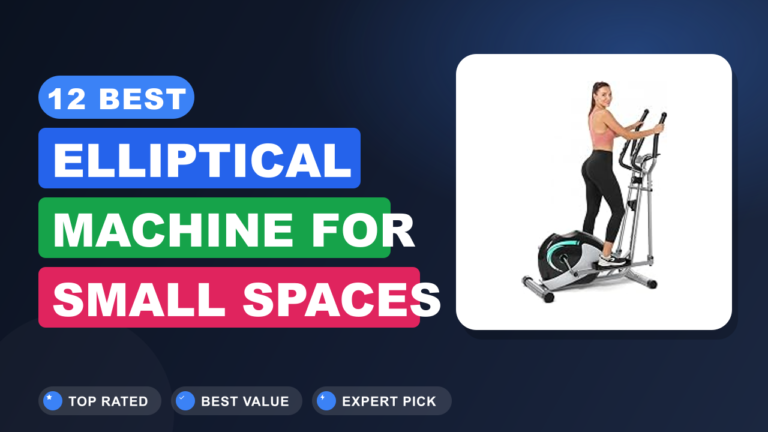
If you've ever wondered exactly what you're getting into when you step onto an elliptical machine, you're not alone. Many people assume it's a simple leg workout, but the reality is much more comprehensive, engaging a variety of muscle groups to provide a full-body conditioning experience. Understanding these muscles can help you maximize your workout and get the most out of this popular piece of fitness equipment.
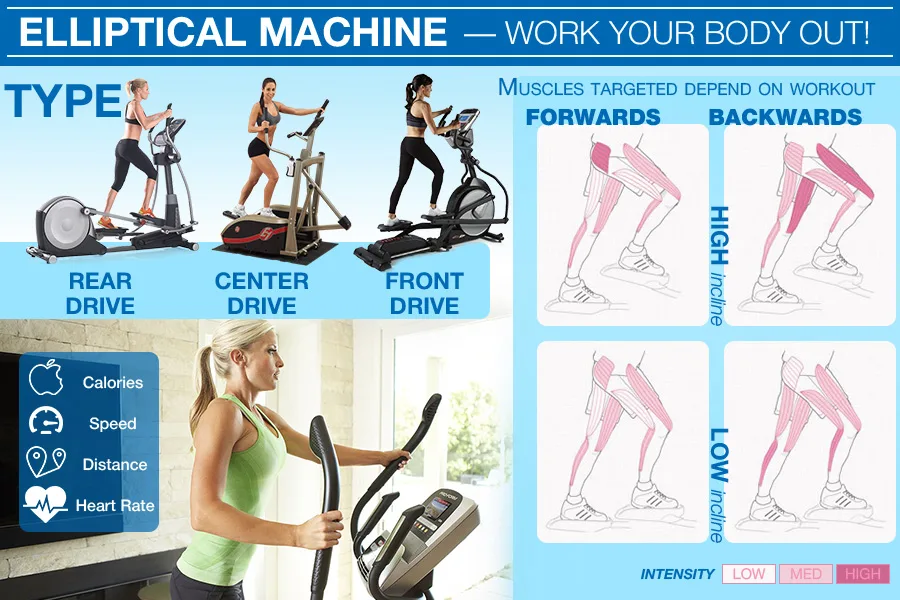
Image source: Bing (Web (fair-use with source credit))
The movement mimics walking, running, or climbing stairs, but with significantly less impact on your joints, making it a great option for a wide range of fitness levels. Manufacturer specifications for many ellipticals indicate a broad range of resistance settings, allowing for varied intensity to target different muscle fibers and cardiovascular benefits.
Quick Answer
An elliptical machine primarily works your leg muscles and core. You'll engage your quadriceps, hamstrings, glutes, and calves. Your abdominal muscles and lower back also act as stabilizers.
Using the moving handlebars can further activate your biceps, triceps, shoulders, chest, and back muscles, offering a more complete workout.
Why Elliptical Muscle Focus Needs Visuals
To really grasp what muscles an elliptical machine works, it helps to visualize the movement. Imagine your body's mechanics as you push and pull the pedals and handlebars; different muscle groups fire up to create that smooth, gliding motion. While we can describe the actions, seeing diagrams that highlight muscle engagement during pedaling and handle movement makes the process much clearer.
For example, a diagram would instantly show how your quadriceps are the primary movers when you push down, and how your glutes activate more forcefully with a greater range of motion. Understanding these visual cues is key to intentional training.
The Engine Room: Your Lower Body Muscles on an Elliptical
Your legs are the primary engine of any elliptical workout. They're responsible for the core motion of pushing and pulling the pedals, providing the power for your workout. Engaging these large muscle groups also burns a significant amount of calories and builds lower body strength.
The Quads: Pushing Power
The quadriceps, located at the front of your thighs, are heavily involved in the downward push of the pedal. Every time your leg straightens out from a bent position to push the pedal away from you, your quads are contracting to perform that action. This is a key movement for generating forward momentum on the machine.
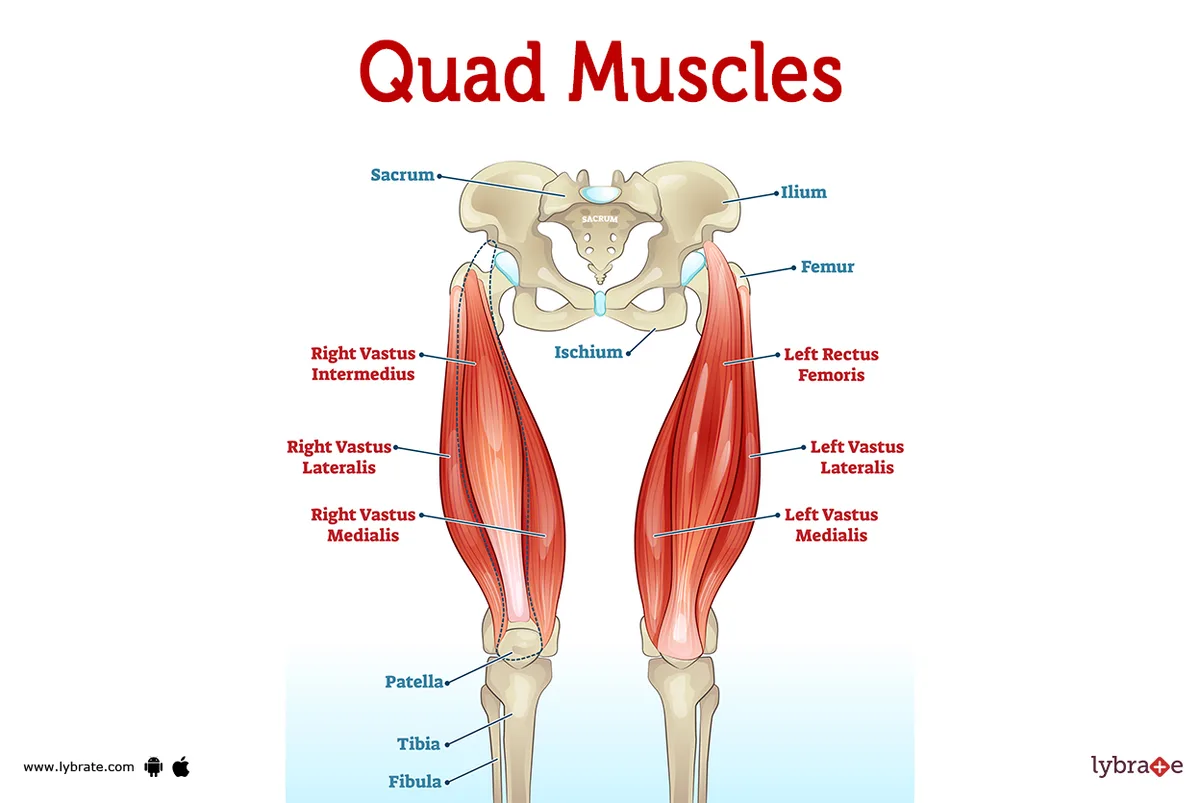
Image source: Bing (Web (fair-use with source credit))
The Hamstrings: Pulling Rhythm
Working in opposition to your quads, your hamstrings are the muscles at the back of your thighs. They come into play as you pull the pedal back towards your body. This pulling motion helps create the continuous, circular movement characteristic of an elliptical, ensuring a fluid and balanced workout.
The Glutes: Driving Force
Your gluteal muscles, or glutes, are crucial for driving your legs forward and backward. To really engage them, focus on pushing through your heels and consciously squeezing your glutes as you complete each pedal stroke, especially during the push phase. Maximizing your range of motion can help target these muscles more effectively.
The Calves: Ankle Support
While not the main drivers, your calf muscles (gastrocnemius and soleus) provide essential stabilization for your ankles. They assist in the final push and pull of the pedal stroke, ensuring your feet remain stable and your ankles are supported throughout the entire movement.
Your Core: The Stability and Power Center
Don't underestimate the work your core is doing on an elliptical. These muscles act as the central support system, keeping you stable and upright. A strong core not only improves your workout efficiency but also helps prevent lower back strain.
Abdominals: The Torso Stabilizers
Your abdominal muscles, including your rectus abdominis (the "six-pack" muscles) and obliques (side abs), work constantly to keep your torso stable. They prevent you from rocking side-to-side and maintain an upright posture. If you use the moving handlebars, your obliques will be further engaged through the twisting motion.
Lower Back: Posture and Support
The muscles in your lower back are equally important for maintaining good posture and balance. They work in conjunction with your abdominal muscles to create a strong, stable core. Keeping your back straight and engaged throughout the workout is key to both effective muscle activation and injury prevention.
Upper Body Engagement: It Depends on the Handles
The degree to which your upper body is worked on an elliptical largely depends on whether you're using the stationary or moving handlebars. This feature allows you to tailor the workout to focus more on the lower body or to incorporate an upper body challenge.
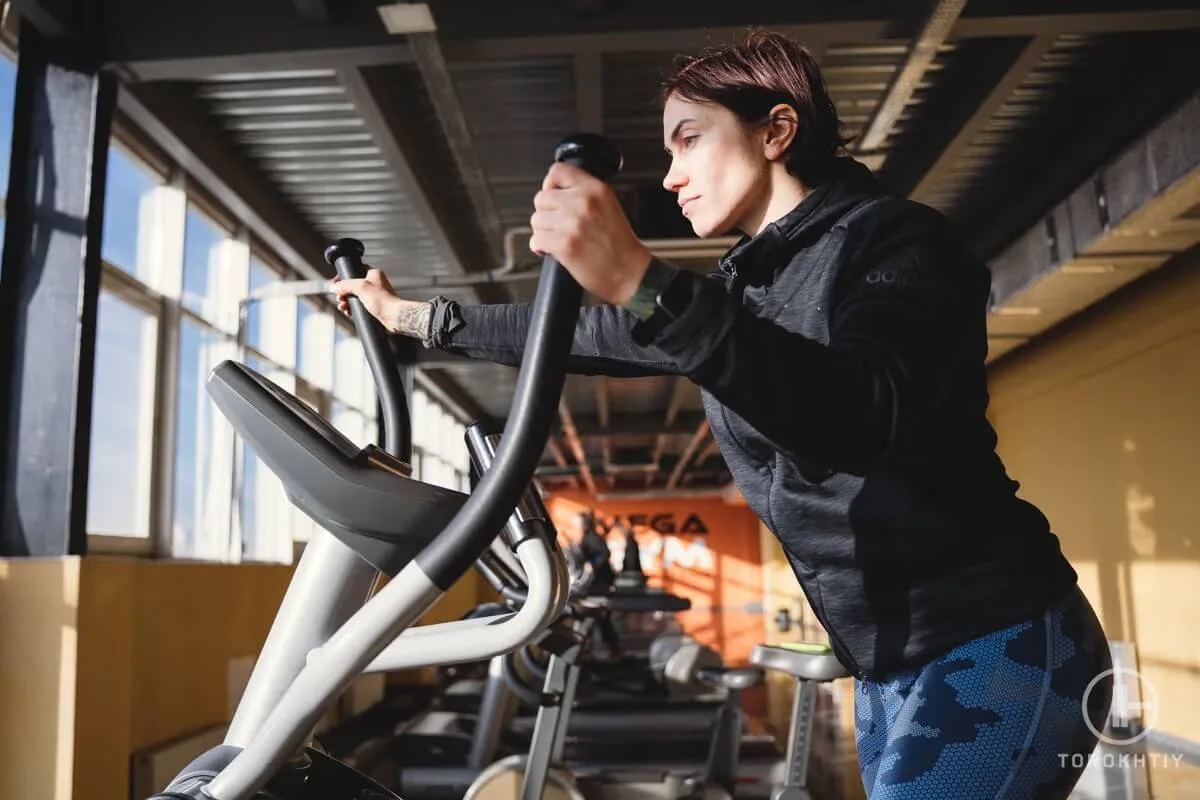
Image source: Bing (Web (fair-use with source credit))
Working Out with Moving Handles
When you actively push and pull the moving handlebars in sync with your leg movements, you're engaging a significant portion of your upper body. Your biceps and triceps will work as you pull and push respectively, while your shoulders (deltoids) and chest muscles (pectorals) contribute to the pushing motion. Your back muscles, particularly the latissimus dorsi (lats), will engage during the pulling action.
This coordinated movement turns the elliptical into a more comprehensive, full-body exercise.
Resting with Stationary Handles
If you opt to hold onto the stationary handlebars, you're providing yourself with a stable point of contact for balance. This configuration significantly reduces upper body engagement, allowing you to focus more intensely on your legs and core. These handles are excellent for beginners or when you want to concentrate on building lower body strength and cardiovascular endurance without the added upper body demand.
Smart Elliptical Use: Getting the Best Muscle Engagement
To truly maximize the muscle activation an elliptical provides, deliberate technique is essential. Simply pedaling without intention can lead to a less effective workout. Our research indicates that focusing on specific form cues can significantly enhance the engagement of your target muscle groups and improve overall results.
Standing Tall: The Foundation of Good Form
Maintaining an upright posture is crucial. Resist the urge to slouch or lean heavily on the handlebars, especially stationary ones. Keep your chest lifted, shoulders relaxed but back, and your core engaged.
This alignment ensures that your core muscles are actively stabilizing your torso, rather than your spine or shoulders taking the load. Imagine a string gently pulling you up from the crown of your head. This focus helps distribute the work correctly across your body.
Resistance and Incline: Targeting Intensity
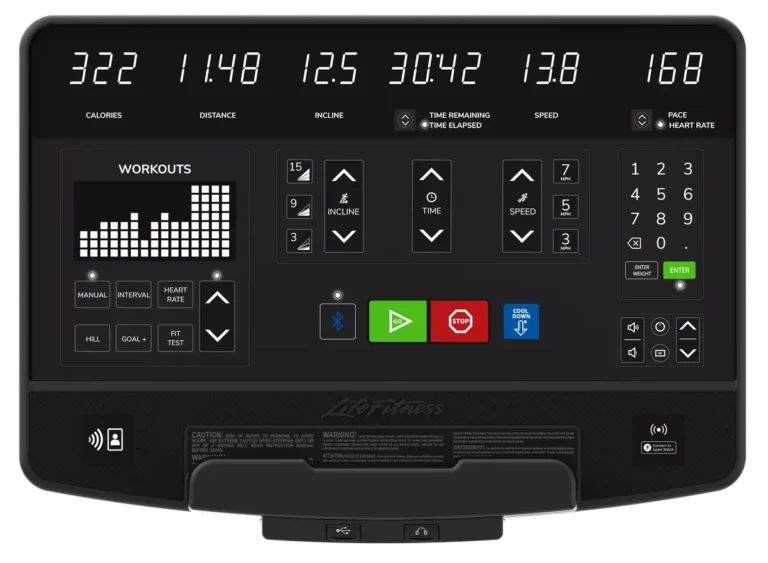
The resistance and incline settings on an elliptical are your primary tools for manipulating muscle activation and workout intensity. Increasing resistance requires your leg muscles, particularly your quads and glutes, to work harder to push and pull the pedals. Similarly, adjusting the incline (if your machine offers it) can alter the range of motion and emphasize different parts of your leg muscles.
For instance, a steeper incline might feel more like climbing stairs, placing more emphasis on your glutes and hamstrings.
Full Range of Motion: Maximizing Muscle Stretch and Contraction
Utilizing the full range of motion available on the elliptical is key for comprehensive muscle development. This means allowing your legs to fully extend and bend with each pedal stroke, and for your arms to move through their complete arc if you're using the moving handlebars. A limited range of motion means only a portion of the muscle is being worked, reducing the overall benefit.
For example, not fully extending your leg at the bottom of the pedal stroke limits the engagement of your quadriceps.
Common Elliptical Workout Mistakes to Avoid
Even with its low-impact nature, incorrect form on an elliptical can lead to less effective workouts or potential discomfort. Being aware of common errors can help you stay on track and get the most out of your time on the machine. Many users, especially those new to this equipment, make similar missteps that reduce their gains.
- Slouching: Leaning forward and rounding your shoulders is a frequent mistake. This takes engagement away from your core and upper back and can strain your neck and shoulders.
- Relying too much on stationary handles: Gripping stationary handles too tightly for too long means you miss out on upper body work and can develop imbalances.
- Pedaling too fast without control: Simply spinning your legs quickly often leads to loss of form and reduces muscle engagement effectiveness. Focus on controlled, smooth movements instead.
- Ignoring resistance: Using the lowest resistance setting for your entire workout limits strength-building and cardiovascular challenge. You should feel a burn in your muscles, especially as you increase duration.
Frequently Asked Questions About Elliptical Muscle Work
Does an elliptical work your glutes?
Yes, an elliptical can work your glutes, particularly if you focus on engaging them intentionally. Pushing through your heels and consciously squeezing your glutes during the pedal stroke will increase activation. Adjusting the incline and resistance can also help target these muscles more effectively.
Can an elliptical build muscle?
An elliptical is primarily a cardiovascular exercise machine, meaning its main benefit is improving heart health and endurance. While it engages and tones muscles, especially when using moving handlebars and higher resistance, it's not designed for significant muscle hypertrophy (building large muscle mass) like weightlifting. For substantial muscle growth, incorporating strength training is essential.
Is an elliptical better than a treadmill for muscle toning?
The "better" machine depends on your goals. An elliptical offers a more comprehensive workout by engaging upper body muscles if you use the moving handlebars and provides a smoother, lower-impact experience. Treadmills tend to engage leg muscles, particularly hamstrings and glutes, more intensely due to the natural running motion.
For general toning and low-impact cardio, the elliptical is often favored; for focused lower-body strength and running simulation, a treadmill might be preferred. Consider what is the difference between an exercise bike and a treadmill if you're weighing options.
How can I target my hamstrings more on an elliptical?
To emphasize your hamstrings, focus on the pulling motion of the pedal stroke. Try to initiate the movement by actively pulling the pedal back towards you rather than just letting it come around. Experimenting with different resistance levels and maintaining a slightly deeper bend in your knee at the bottom of the pedal stroke can also help increase hamstring engagement.
Is an elliptical good for core strength?
Absolutely. Your core muscles are constantly engaged on an elliptical to maintain balance and an upright posture, regardless of whether you use the moving handlebars. This stabilization action is crucial for a good workout and contributes to overall core strength over time.
If you’re looking for equipment that offers a blend of cardio and core work, it’s a solid choice.