What Treadmill Should I Buy
If you're asking what treadmill should I buy, you've probably already discovered there's no universal answer. The right machine depends on how fast you'll move, how much room you have, and what your joints can handle. A budget treadmill can work fine for walking, but it'll struggle if you're training for a race.
In our research, one specification matters more than any other: continuous duty horsepower. That's the motor power a treadmill can sustain over a long workout, not just a short burst. Many budget models advertise peak horsepower instead, which makes them sound stronger than they really are.
Let's sort through the confusion step by step.
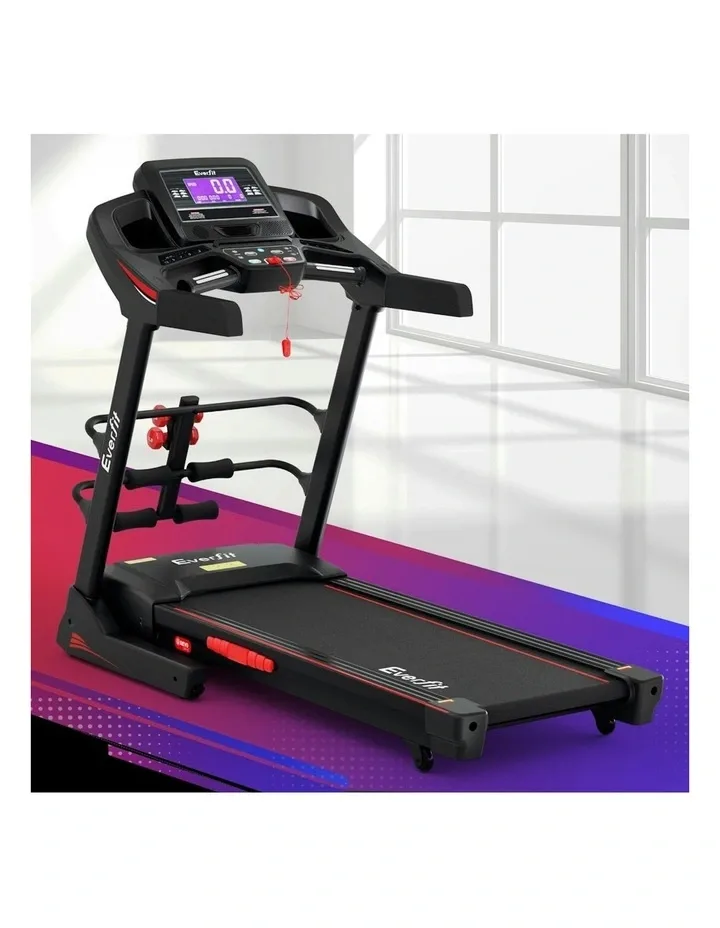
Image source: Bing (Web (fair-use with source credit))
Quick Answer
Buy a treadmill with at least 2.0 CHP if you plan to run. Look for a deck 55 inches long or more. Check the weight capacity against the heaviest user in your home.
A folding frame helps only if space is tight. Choose the most stable machine your budget and room allow.
Why “What Treadmill Should I Buy?” Is Harder to Answer Than It Seems
Part of the problem is marketing. Treadmill brands love to emphasize touchscreens, app subscriptions, and incline ranges. But those extras don't matter if the frame wobbles at a jogging pace or the belt stalls under your weight.
Aggregate reviews and editor research suggest three factors cause most buying mistakes: motor strength, deck size, and physical footprint. If you're a walker, a lighter motor can get the job done. If you're a runner, you need at least 2.0 continuous horsepower and a deck near 55 inches long.
There's also the weight question. Every treadmill has a maximum user capacity, usually between 275 and 400 pounds. That number isn't just a warranty detail.
Exceeding it strains the motor, the belt, and the frame over time.
That's why our first piece of advice is simple: define your workout before you look at brands. The best treadmill for you is the one that matches your speed, your body, and your room. And when you compare specs, look for machines that meet published standards from organizations like ASTM International.
Their performance testing separates real engineering from flashy marketing.
Treadmill Styles: Matching the Machine to Your Space and Routine
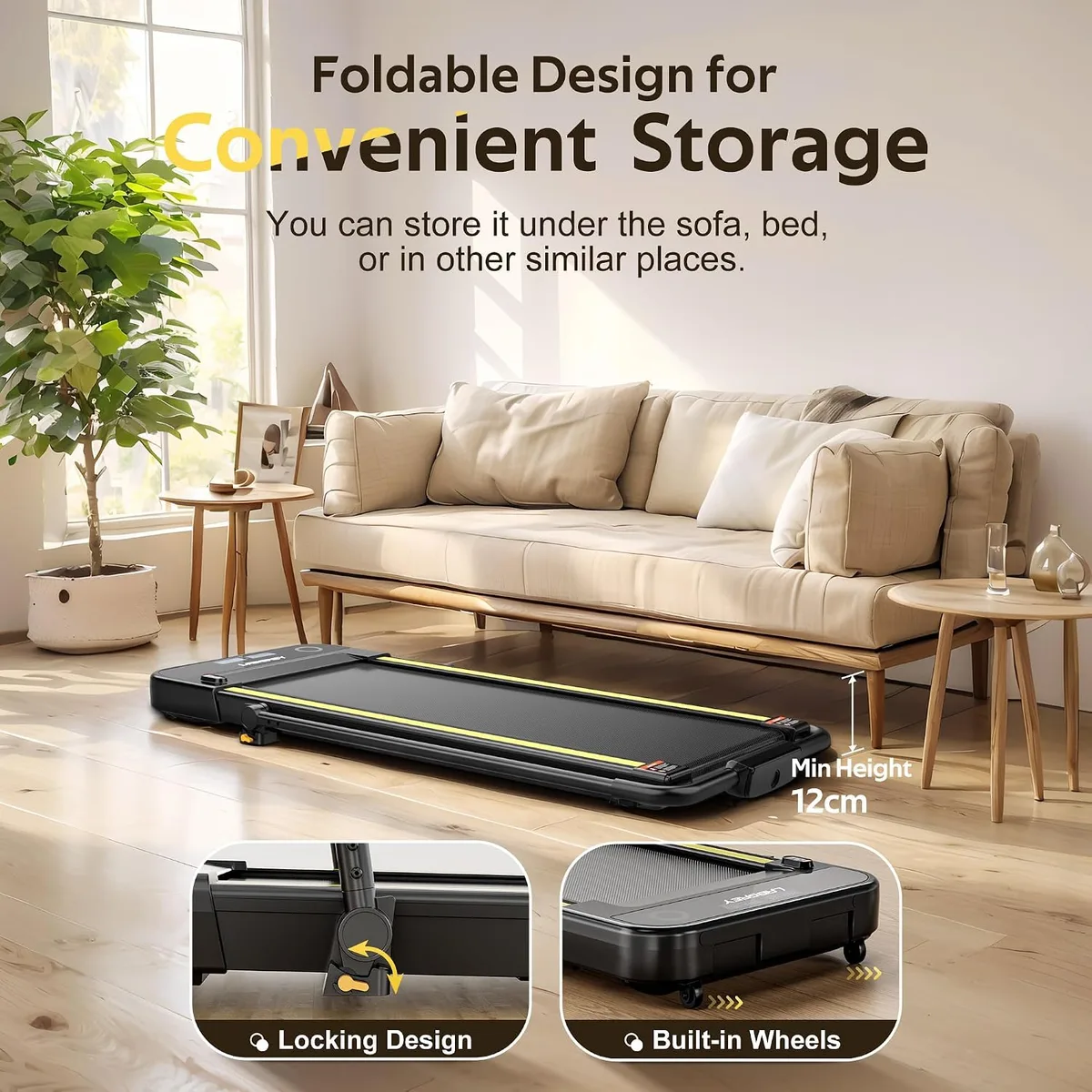
Image source: Bing (Web (fair-use with source credit))
Folding vs. Non-Folding Treadmills
Folding treadmills are popular for small apartments. They usually have a hydraulic lift that lets you tilt the deck upright when you're done. The trade-off is stability.
Many folding models flex more during running, especially if they're lightweight.
Non-folding treadmills stay on the floor. They tend to be heavier, sturdier, and better at absorbing impact. If you have a dedicated home gym, this is usually the better investment.
If space is tight, look for a folding model with a steel frame and at least a 300-pound weight capacity.
Manual vs. Motorized vs. Curved Treadmills
Manual treadmills are powered by your own stride. They're cheaper and smaller, but they feel harder on your joints. Motorized treadmills do the work for you and keep the belt speed consistent.
Curved treadmills are common in commercial gyms. They feel more natural for sprints but cost thousands of dollars.
For most home buyers, a motorized treadmill is the right call. Manual machines are best for gentle walking or physical therapy. Curved treadmills only make sense if you're a serious athlete with a large budget.
Treadmill Desks and Hybrid Machines
Treadmill desks let you walk while you work. Most have a top speed between 2 and 4 mph, so they're not built for running. Hybrid machines add stepper or elliptical motions, but they rarely feel as smooth as a dedicated treadmill.
Before you commit to any of these, it's worth comparing them to other home cardio machines. Rowers and ellipticals give you a different muscle stimulus, and that may change your purchase entirely.
The Machinery Inside: Motor, Deck, Cushioning, and Safety
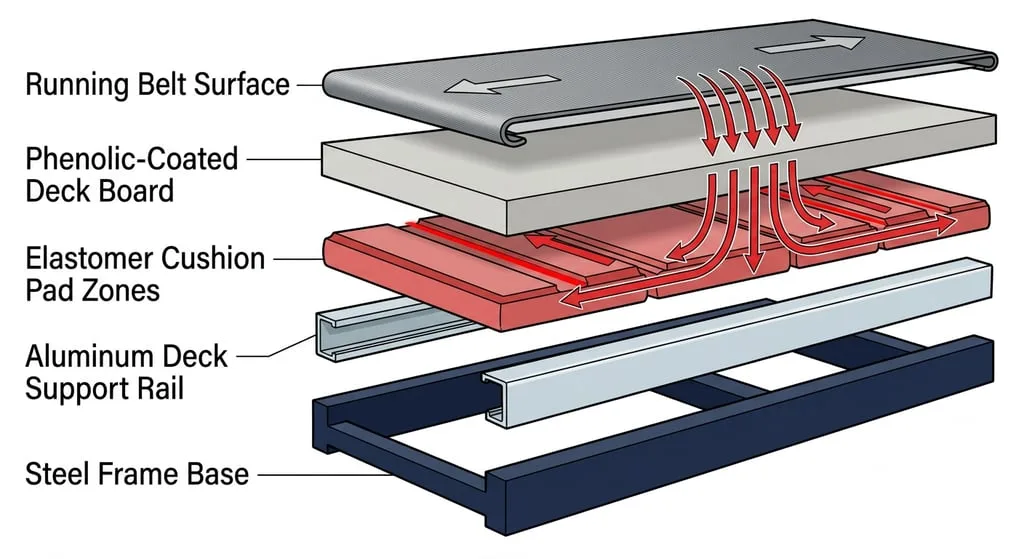
Image source: Bing (Web (fair-use with source credit))
Continuous Horsepower vs. Peak Horsepower
Continuous duty horsepower, or CHP, is the real measure of a treadmill motor. It tells you how much power the motor can sustain over a 30-minute workout. Peak horsepower is the marketing number.
It measures a burst of output that doesn't reflect daily use.
For walking, 1.5 CHP is enough. For jogging or running, look for 2.0 CHP or higher. Heavy users should aim for 3.0 CHP or more.
Manufacturer specifications usually list both numbers, but the CHP rating is the one that matters.
Deck Length, Width, and Belt Quality
Deck size is a major comfort factor. A 20 by 55 inch deck works for most people under six feet tall. Taller runners should aim for 60 inches to avoid overstriding.
Wider decks add stability but take up more floor space.
The belt itself should move smoothly. It should not stick or stutter at lower speeds. A good belt has a textured surface that gives you traction without feeling rough on your socks or shoes.
Cushioning Systems and Running Feel
Every treadmill absorbs impact differently. Some use rubber bushings, others use air springs or foam layering. Softer cushioning is gentler on your joints but can feel sluggish.
Firmer cushioning feels closer to outdoor running but can be harsh over time.
Try to test the cushioning in person. If you're buying online, read verified owner reviews about how the deck feels during long runs. Owner feedback is the best way to spot the gap between marketing claims and real comfort.
Weight Capacity, Safety Keys, and Emergency Stops
Check the maximum user weight, not just for the frame but also for the motor warranty. A treadmill rated for 400 pounds will last longer under a 250-pound user. A unit rated for exactly 275 pounds may wear out quickly under heavy daily use.
The safety key is a small clip that kills the motor if you trip. Always attach it to your clothing. It's the one safety feature you should refuse to skip.
You can also check the CPSC recall database before buying a used treadmill to see if a model has been flagged for safety issues.
Side-by-Side Comparison: What Each Price Range Actually Gets You
Here's what manufacturer specs and aggregate buyer reviews suggest you can expect at each price point.
| Price Range | Typical Motor | Deck Size | Best For |
|---|---|---|---|
| Under $800 | 1.0 to 1.75 CHP | 45 to 50 inches | Walkers and light jogging |
| $800 to $1,500 | 2.0 to 3.0 CHP | 55 to 60 inches | Regular runners under 250 lbs |
| $1,500 to $2,500 | 3.0 to 4.0 CHP | 60 inches or more | Heavier runners and taller users |
| $2,500 and up | 3.5 to 4.5 CHP | 60+ inches, wider belts | Serious training and long-term durability |
A treadmill in the budget tier is fine for walking two or three miles a day. Pushing it beyond that will shorten its life. Mid-range machines give you the best balance of price and performance for most households.
Premium treadmills are built for daily running and heavy users.
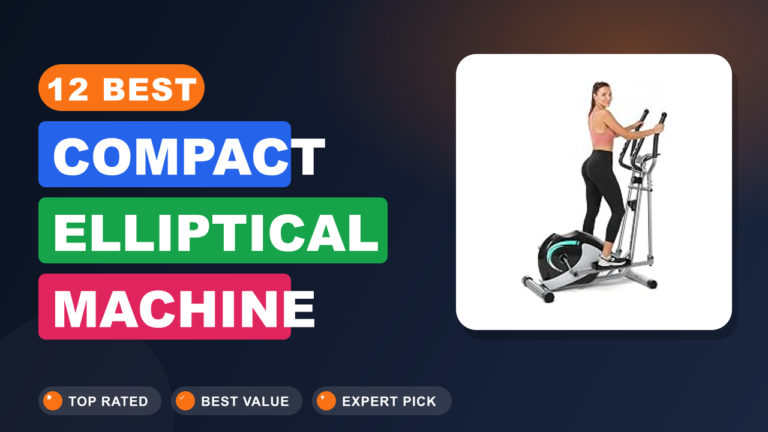
If your budget is the biggest constraint, an elliptical may be a better value. It uses a different motion, and the lack of impact can be easier on your knees and hips.
Best Treadmill for Your Situation: Walkers, Runners, Small Spaces, and Heavy Users
Ask yourself one question first: what's the fastest pace you'll realistically hit? Your answer determines nearly every spec you need.
If you're a walker, a basic motorized treadmill with a 1.5 to 2.0 CHP motor and a 50-inch deck will work. You don't need a giant console or a high top speed. Spend your money on cushioning and a quieter motor instead.
If you're a runner, prioritize a 2.5 CHP motor or higher, a 60-inch deck, and a heavier frame. Runners also benefit from incline range. A 12 percent incline is more useful than a fancy screen with subscription workouts.
If you live in a small apartment, look for a folding treadmill with transport wheels. Check the folded footprint, not just the unfolded one. Measure your doorways and ceiling height, especially if the treadmill has an incline feature that raises the deck.
If you weigh more than 250 pounds, choose a treadmill with a weight capacity of at least 350 pounds. Also check the motor warranty length. A longer motor warranty usually means the manufacturer trusts its components.
And if you have joint pain, take a close look at how a treadmill compares to a low-impact alternative. Sometimes the best cardio machine isn't a treadmill at all.
Once you've narrowed it down, remember that the machine is only half the equation. A consistent routine matters more than an expensive console. Pair your treadmill work with basic strength training, and you'll build a more balanced fitness base.
That's where adding dumbbell work can really help.
Treadmill Mistakes That Cost You Money and Frustration
There are five common treadmill mistakes that show up again and again in buyer reviews. Avoid them, and you'll save hundreds of dollars and a lot of headaches.
- Trusting peak horsepower. Peak HP is a marketing number. A 3.0 HP peak rating can drop to 1.5 CHP under load. Use continuous duty horsepower when comparing machines.
- Buying a deck too short. If you stride past the front or rear edge, you'll feel it in your knees. Runners need at least 55 inches, ideally 60.
- Skipping the hallway measurements. A treadmill that fits your room may not fit through your front door. Measure doorways, stair landings, and ceiling height before you order.
- Overlooking the weight limit. The max user weight isn't just a number. Regularly exceeding it voids your warranty and wears out the motor fast.
- Ignoring the warranty. A cheap part can cost more than the whole machine. Look for at least a 10-year frame warranty and 2 years on parts.
Skipping maintenance is another costly mistake. A dry belt and loose hardware shorten a treadmill's life. A simple service routine applies here too, just like on other cardio equipment.
Frequently Asked Questions
These are the treadmill questions buyers ask most often.
How much should I spend on a treadmill?
Plan on spending $800 to $1,500 for a treadmill that handles regular running. Budget models under $800 suit walkers. If you expect daily use from a heavy user, budget closer to $2,000.
Is a folding treadmill as good as a non-folding one?
A folding treadmill can be just as good if it has a solid steel frame and a strong folding latch. The compromise is usually stability, not speed. Test the deck feel before you buy.
Can I run on a treadmill with a 1.5 CHP motor?
You can, but not for long. A 1.5 CHP motor handles walking and light jogging. Sustained running needs 2.0 CHP or more, otherwise the motor overheats and slows.
How important is a warranty when buying a treadmill?
Very important. Look for a lifetime frame warranty, at least 10 years on the motor, and 2 years on parts and labor. A short warranty often signals low-quality components.
Final Verdict: How to Narrow Down the Right Treadmill and Buy Confidently
Here's how to bring everything together. Count your space first, then set your speed and weight requirements. Use the table below to match your profile.
| If you are a | Get |
|---|---|
| Walker under 250 lbs | 1.5 to 2.0 CHP, 50-inch deck |
| Runner under 250 lbs | 2.5 CHP or higher, 60-inch deck |
| Heavy user or tall runner | 3.0 CHP or higher, 60-inch deck, strong frame |
| Small apartment | Folding model, check folded footprint |
The right treadmill is the one that fits your body, your room, and the speed you'll actually use. Measure twice, buy once, and don't let a touchscreen talk you into a machine that can't take the miles. As of 2026, the best value sits in the $1,000 to $1,500 range for most households.