How to Walk on a Treadmill Properly
If your treadmill sessions leave you with achy knees or a tight lower back, the problem often isn't the machine. Learning how to walk on a treadmill properly starts with one basic idea: you're walking on a moving surface, not a solid sidewalk. Most people never adjust for that difference, so their body fights the belt the whole time.
In our research, we found that most treadmill users lose proper posture within the first five minutes of a workout. That breakdown adds up fast, especially if you're walking several times a week. Let's fix the small details that protect your joints and make every session feel smoother.
Quick Answer
Stand tall with your head facing forward. Keep your shoulders relaxed and your core tight. Land heel-to-toe with a natural stride.
Let your arms swing with a slight bend. Start slow, then build your speed gradually.
Why Treadmill Walking Form Matters (And What's at Stake)
Walking on a treadmill seems foolproof. Step on, hit start, and go. But the moving belt changes everything.
If your form falls apart, you're not just wasting effort. You're signing up for pain.
The most common problems we see in our research:
- Overstriding, which jams your knee joints.
- Leaning forward, which strains your lower back.
- A lazy foot strike, which can trigger plantar fasciitis or shin splints.
The stakes are higher than most people realize. Many treadmill injuries happen during walking, not running. They trace back to poor posture, distractions, or leaning on the rails.
Good form changes the math. When you stand tall and walk naturally, you engage your glutes, hamstrings, and core. When you don't, your joints absorb the punishment.
If you're exploring low-impact cardio, elliptical machines are a popular alternative, but they demand the same respect for alignment.
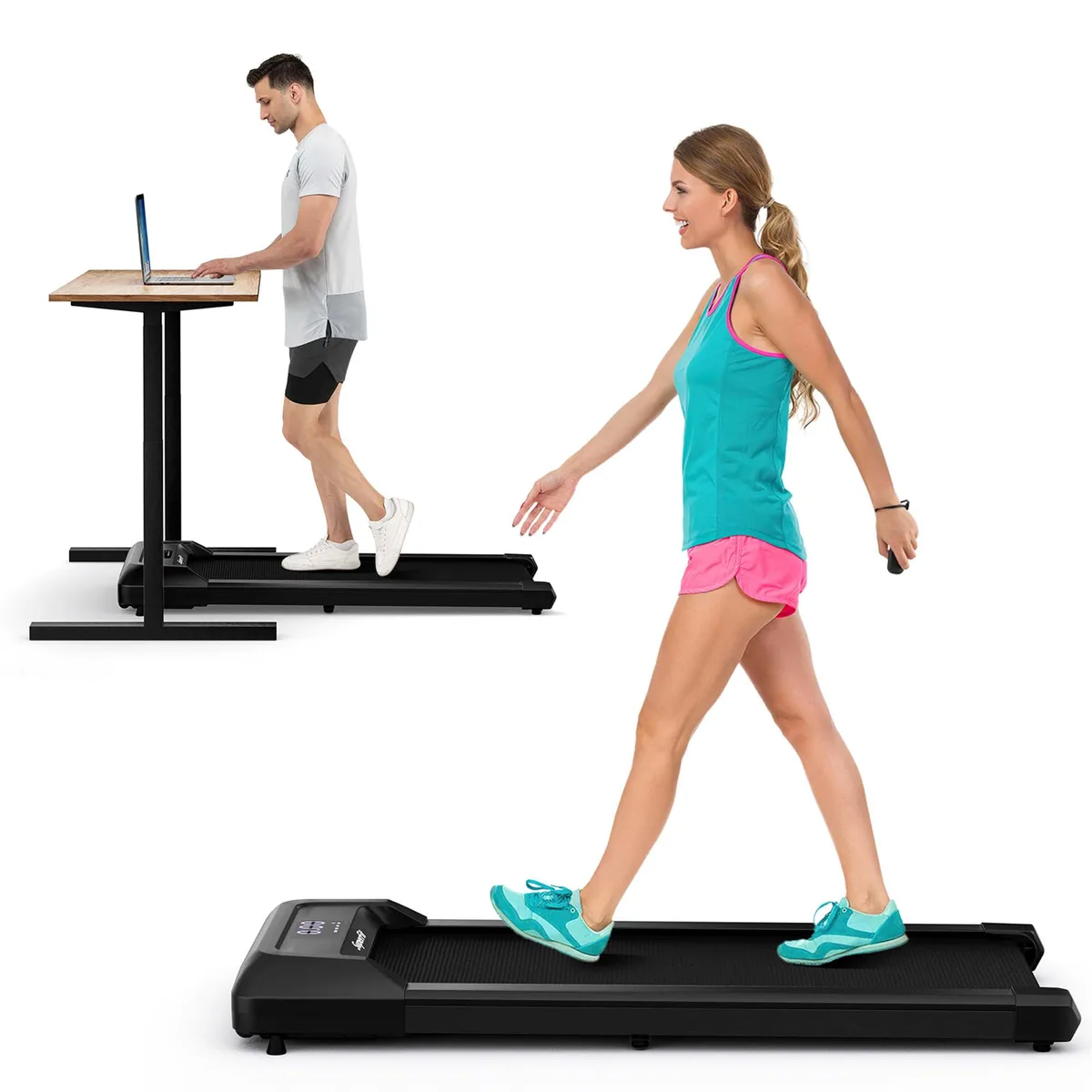
Image source: Bing (Web (fair-use with source credit))
Core Facts: What Good Treadmill Walking Actually Looks Like
Good treadmill walking is your natural outdoor gait with one small tweak. The belt pulls your feet backward slightly. That means your stride should be a touch shorter than usual.
Here's the posture checklist:
- Head up, eyes focused straight ahead.
- Shoulders relaxed, not rolled forward.
- Core engaged, with your belly button pulled gently toward your spine.
- Arms bent close to 90 degrees, swinging opposite to your legs.
- Foot strike that starts at the heel, rolls through the midfoot, and pushes off from the toe.
Think of it as a smooth rollout. Heel, midfoot, push-off. No slapping the belt flat-footed.
No bouncing or bobbing.
Per the Physical Activity Guidelines for Americans, walking counts as moderate aerobic activity. Adults should aim for at least 150 minutes per week. Understanding which muscles each movement targets helps you build a balanced routine across all your cardio sessions.
Step-by-Step Guide: How to Walk on a Treadmill Properly
Here's the exact order that works. Follow it every session until it becomes second nature.
- Clip the safety key to your shirt. This is non-negotiable.
- Straddle the belt with both feet on the side rails.
- Start the treadmill at a slow 1.5 to 2 mph.
- Step onto the belt one foot at a time.
- Let your stride settle for 30 seconds before touching any buttons.
- Adjust your speed based on your breathing, not your ego.
- Add incline only after you feel stable.
- Finish with a two-minute cooldown at 2 mph.
Pace matters more than people think. Here's a quick reference:
| Effort Level | Speed (mph) | Typical Use | | Beginner | 2.0 – 2.5 | Warm-up, recovery | | Moderate | 3.0 – 3.5 | Brisk cardio | | Advanced | 4.0+ | Speed intervals |
The biggest mistake is jumping straight to a high speed. Your body needs time to calibrate the moving belt. Give it a full minute before you adjust anything.
The same logic applies to keeping home cardio equipment in good shape, where small upkeep prevents bigger problems later.
Common Mistakes to Avoid (Even Seasoned Walkers Mess These Up)
We've analyzed endless form breakdowns. These are the repeat offenders, plus the easy fix for each.
- Hanging onto the rails. This shifts your weight backward and shortens your stride. Fix: keep your hands loose at your sides.
- Overstriding. Reaching too far forward jams your knees. Fix: land with your foot directly underneath your body.
- Looking down. This rounds your shoulders and strains your neck. Fix: pick a point at eye level on the wall ahead.
- Starting too fast. A sudden belt speed throws off your rhythm. Fix: begin at 2 mph and work up.
- Leaning forward. It dumps pressure into your lower back. Fix: keep your ears, shoulders, and hips in one vertical line.
A quick way to check yourself mid-walk is to let go of the rails and glance at a mirror. Your posture should hold that line without effort. It's the same principle as choosing between different bike setups, where proper positioning makes or breaks the workout.
Walking Without Rails: Why It's Non-Negotiable for Good Form
Holding the rails while walking is like using training wheels on a bike. It feels safer, but it teaches your body the wrong pattern. When you grip the rails, you can't swing your arms.
That kills the natural counter-rotation of your torso. It also shortens your stride and takes the load off your glutes.
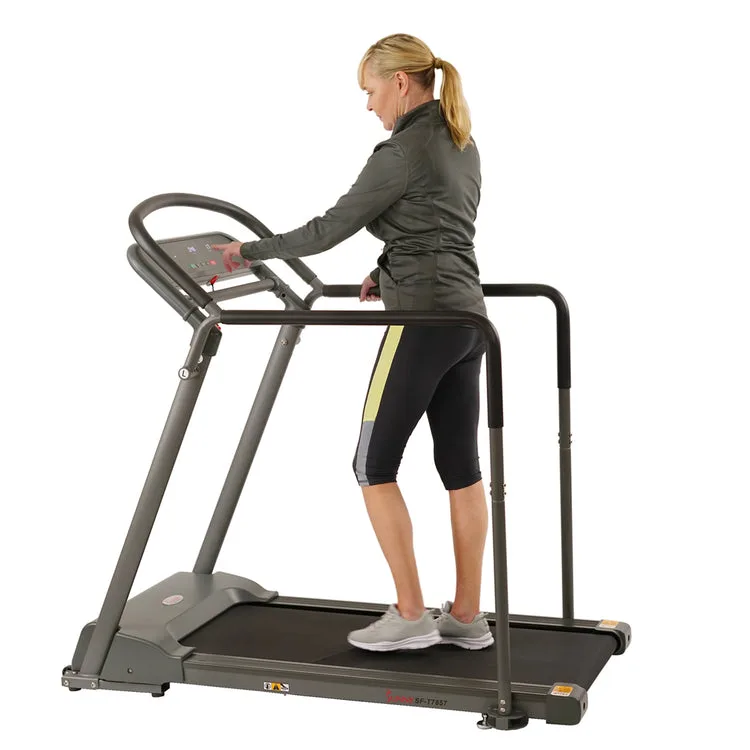
Image source: Bing (Web (fair-use with source credit))
Your body learns to lean on external support that won't be there when you step onto solid ground. That's a recipe for a fall, not a workout.
Here's how to break the habit:
- Start with one minute rail-free.
- Then try five minutes.
- Build up to a full session without touching them.
- Keep your hands loose, let your arms swing naturally.
- Slow the belt down if you feel unbalanced. Don't grab.
The rails are an emergency feature, not a permanent crutch. Clip the safety key, step off the belt to stretch, or grab them if you stumble. Beyond that, let go.
Adding a little dumbbell strength work to your weekly routine helps your body stay upright and stable on the belt, too.
Treadmill Walking vs. Outdoor Walking: What's Different and Why It Matters
The treadmill changes your walk in subtle but important ways. The belt pulls your feet backward, so your hamstrings work less on propulsion. There's no wind resistance, no uneven pavement, and no natural incline unless you set it yourself.
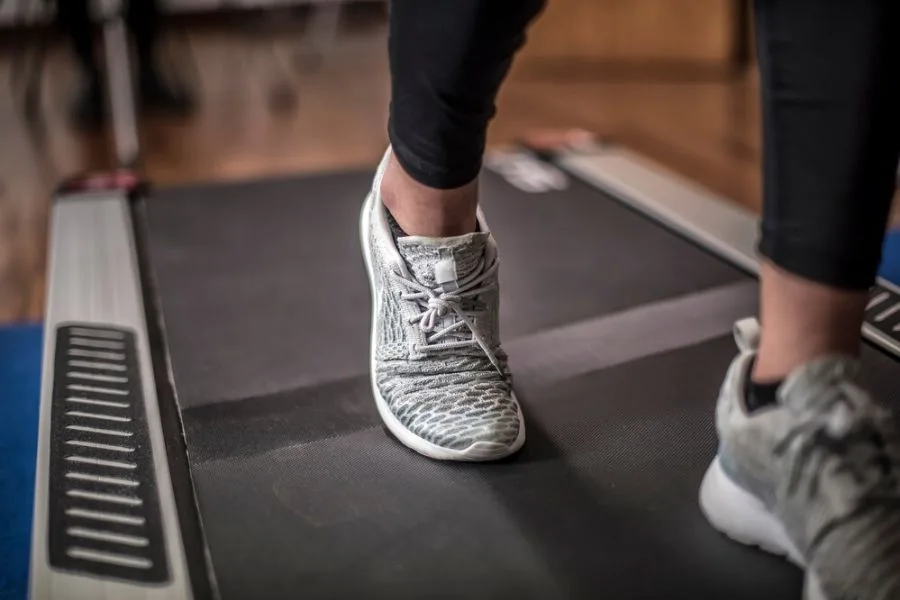
Image source: Bing (Web (fair-use with source credit))
| Factor | Treadmill | Outdoor |
|---|---|---|
| Surface | Flat, cushioned | Varied, uneven |
| Wind resistance | None | Present, slowing you down |
| Propulsion | Belt assists | You push off completely |
| Incline | Set manually | Natural hills and curbs |
The big fix is adjusting your stride. Most people overstride on a treadmill because they reach forward to "catch" the belt. Instead, shorten your stride and let your foot land directly beneath your body.
That promotes a proper heel-to-toe foot strike.
If you're used to walking outside, start at a 1% incline. Multiple manufacturers recommend this to mimic the effort of walking outdoors. You can bump it higher once you're comfortable.
It's the same logic as choosing between different cardio machines: each option changes the load pattern, so you have to adapt your movement to the equipment.
Quick-Reference Treadmill Walking Chart (Pace, Incline, Cadence)
These numbers come straight from our research and manufacturer specs. Use them as a starting point, then adjust based on how you feel.
| Goal | Speed (mph) | Incline (%) | Cadence (steps/min) |
|---|---|---|---|
| Warm-up / Recovery | 2.0 – 2.5 | 0 – 1 | 100 – 115 |
| Fat Burn / Weight Loss | 3.0 – 3.5 | 5 – 8 | 120 – 130 |
| Cardiovascular Fitness | 3.5 – 4.0 | 1 – 2 | 130+ |
| Hill Endurance | 3.0 – 3.5 | 10 – 12 | 115 – 125 |
For a moderate walking pace, aim for a heart rate at 50% to 70% of your max. Max heart rate is roughly 220 minus your age. As of 2026, most home treadmills display cadence.
If yours doesn't, count your steps for 15 seconds and multiply by four.
If you alternate between machines, budgeting your cardio frequency across different types prevents overuse. Treadmill walking every single day is fine, but mixing in variety keeps your body guessing.
Frequently Asked Questions
Should you hold onto the treadmill handrails while walking?
No. Only use the rails for balance when stepping on or off the belt. Gripping them shortens your stride and reduces calorie burn.
It also trains your body to lean forward, which carries over to bad posture outdoors. Keep your hands free and your arms swinging naturally.
Is walking on a treadmill good for weight loss?
Yes. Brisk walking at 3.5 mph burns roughly 300 calories per hour for a 160-pound person. Add a 5% incline and you'll burn more without going faster.
Consistency matters more than intensity here. Three to four sessions per week produces visible results.
How fast should you walk on a treadmill for a good workout?
Aim for 3.0 to 4.0 mph if you're in decent shape. That pace counts as moderate aerobic activity per the CDC's Physical Activity Guidelines. You should be breathing noticeably but still able to hold a conversation.
If you can't, slow down.
Why do my shins hurt when I walk on a treadmill?
Shin pain usually comes from overstriding or a slow, bouncing cadence. Shorten your step and speed up your foot turnover. Avoid cranking the incline too high too soon.
Worn-out shoes with flat soles also contribute. Replace them before they break down.
Should you use an incline when walking on a treadmill?
Yes, but build up gradually. A 1% to 3% incline mimics outdoor terrain. Higher inclines strengthen your glutes and hamstrings but demand a slower speed.
Start with 0% for the first minute, then add incline only after your stride feels stable.
Final Take: Your First Proper Treadmill Walk
Here's your mental checklist before you hit start:
- Clip the safety key to your shirt.
- Start at 2 mph with both feet on the belt.
- Let go of the rails immediately.
- Stand tall with your eyes focused forward.
- Land heel to toe with each step.
- Keep your stride short and your cadence quick.
- After two minutes, add a small incline.
- Cool down for two minutes at 2 mph.
Your body adapts fast. Within a few sessions, this sequence will feel completely normal. Focus on consistency, not speed.
Each walk strengthens the movement pattern in your brain and your muscles.
If you have an old treadmill at home that needs attention, a little routine maintenance goes a long way. A smooth belt makes proper form far easier to hold.