How Much Space Does an Exercise Bike Need
Have you ever been so close to buying an exercise bike, only to stop because the spare room feels impossibly small? Wondering "how much space does an exercise bike need" is the exact question that prevents a very expensive mistake. The truth is, the bike's physical footprint is only half the story.
You also have to plan for your body, your door frames, and even your ceiling height.
In our research, a standard upright bike measures roughly 40 to 48 inches long and 18 to 22 inches wide. Add the manufacturer recommended clearance zones, and you're usually looking at a minimum of 18 to 30 square feet of usable floor space. Get this right upfront, and your workout area will feel practical instead of claustrophobic.
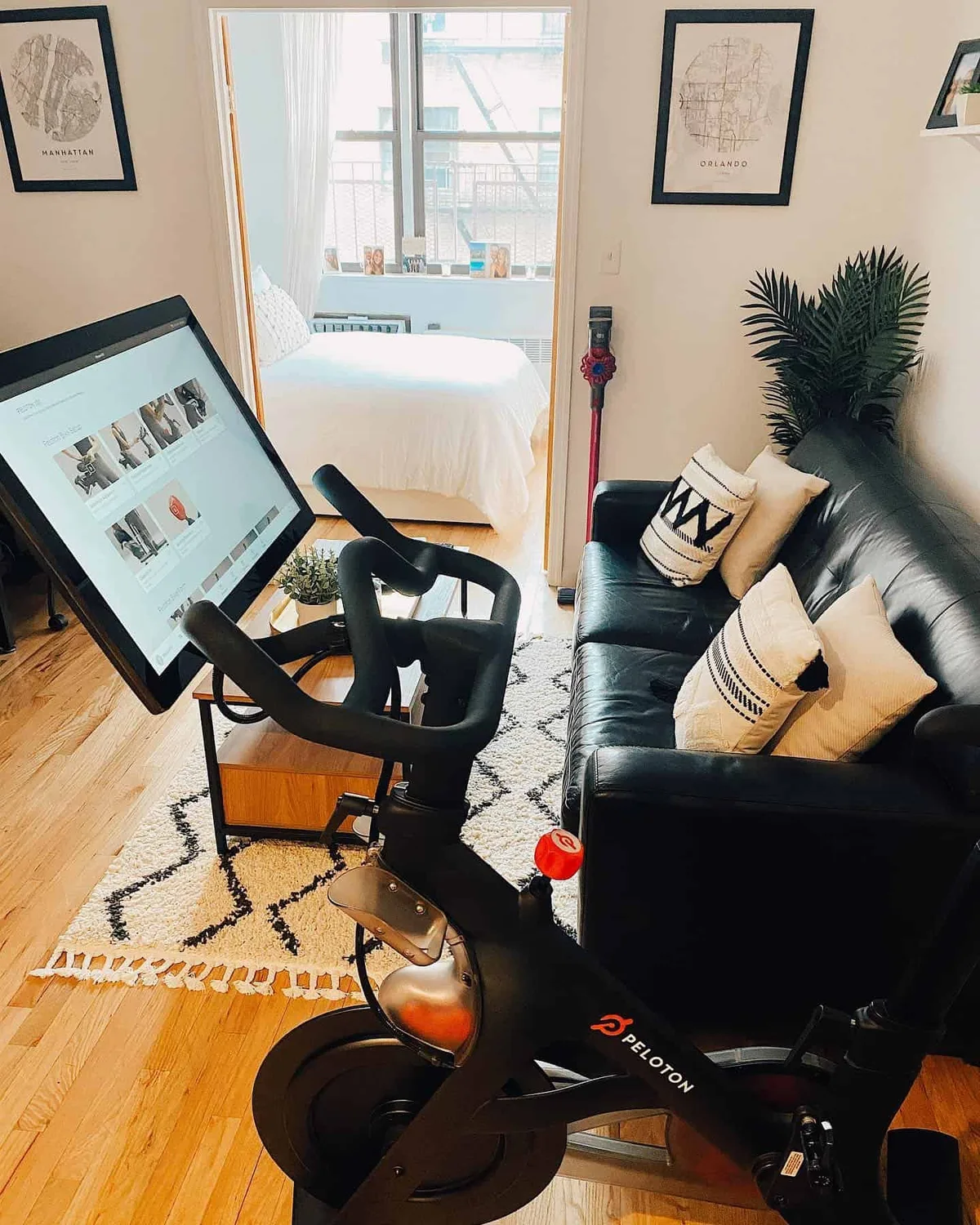
Image source: Bing (Web (fair-use with source credit))
Quick Answer: The Minimum Floor Space an Exercise Bike Really Needs
An exercise bike needs roughly 18 to 30 square feet of clear floor space. This accounts for the bike itself plus rider clearance. The bike's base alone rarely exceeds 50 by 26 inches.
You should plan for at least 24 inches of clearance behind the bike. Also, keep 12 inches of open space on each side.
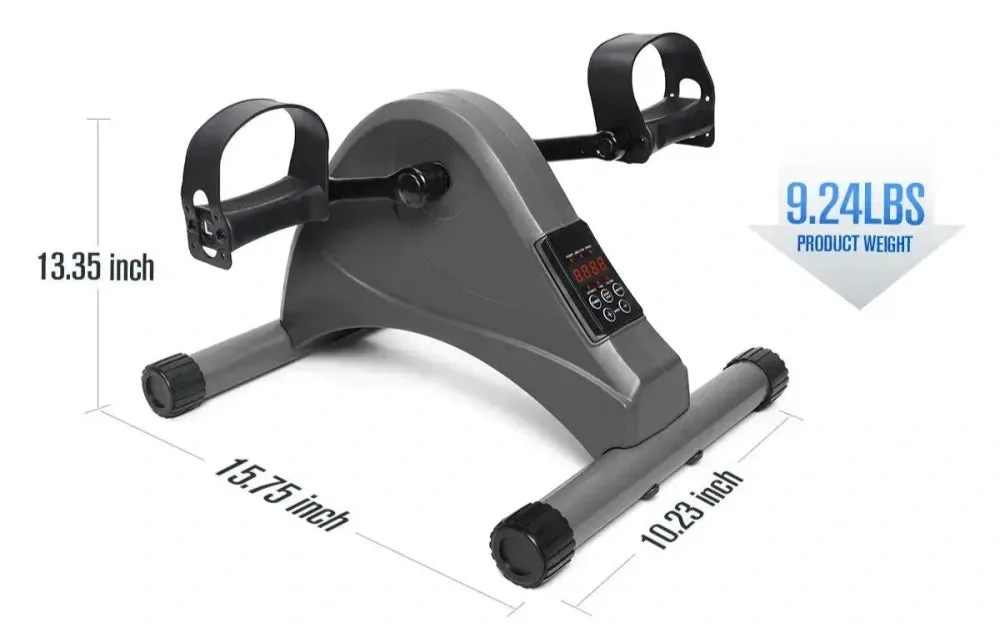
Image source: Bing (Web (fair-use with source credit))
Here's the breakdown by bike type:
| Bike Type | Footprint (L x W) | Minimum Clearance Needed | Ideal Room Size |
|---|---|---|---|
| Upright | 40-48" x 18-22" | ~24" rear, ~12" sides | 6' x 6' |
| Recumbent | 50-60" x 22-26" | ~36" rear for seat slide | 7' x 6' |
| Spin / Cycling | 40-50" x 18-22" | ~12" each side for knees | 6' x 5.5' |
| Folding | 30-40" x 18-20" | Requires closet storage | 6' x 5' |
As of 2026, most connected bikes like Peloton list a base footprint of about 4 by 2 feet. However, you don't ride the base. You ride with your knees out, your back leaning, and your hands on the bars.
Don't forget to include space for your body.
Clearance Is the Real Space Requirement: Mounting, Elbows, and Seat Adjustments
Why does a bike look perfect in the corner but feel impossible to use? The answer is clearance. We don't just bolt a bike to the floor.
We swing a leg over it, lean forward, and slide the seat back and forth.
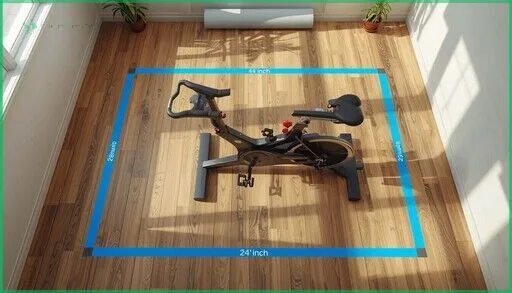
Image source: Bing (Web (fair-use with source credit))
There are four clearance zones you need to account for:
- Rear Clearance (24-36 inches): This is the most critical zone. It handles your mounting and dismounting. For recumbent bikes, the seat slides backward, so you need extra space here.
- Side Clearance (12-24 inches): Your elbows flare out when you ride. Your knees also travel upward and outward. Without side clearance, you'll scrape the wall with every pedal stroke.
- Front Clearance (18-24 inches): You don't want the handlebars jammed against a wall. This zone gives you room to place a water bottle or a tablet.
- Top Clearance: A tall rider on an upright bike raises the seat to 35-40 inches. In a basement with a 7-foot ceiling, you'll be fine. In a room with a sloping roof, check the height at the bike's exact location.
The four zones above line up with how safety standards like ASTM F2116 approach stationary bike design. The standard focuses on stability and safe mounting, which is exactly why clearance matters.
The ceiling height is a classic overlooked variable. So are door swings. A bike placed near a door that opens inward will block the door.
Remember the power cable too. Connected bikes need to reach an outlet. Measure the distance from the bottom of the bike frame to the outlet, not from the top of the screen.
Bike Type vs Room Size vs Rider Height: The Key Decision Variables
The best bike for you depends on the room you have. Different bikes have totally different spatial constraints. There is no universal answer.
Here is how they compare.
Upright bikes are the easiest to fit in a small area. They have a narrow footprint and a vertical frame. They rely heavily on your body's height, though.
If you are over 6 feet tall, you'll raise the seat significantly. That makes the bike taller, but it doesn't widen the footprint much.
Recumbent bikes are the opposite. They are longer and lower. They shine in basements with sloped ceilings.
Because you recline, the seat slides forward and backward on a rail. That sliding rail is exactly where people forget to add space. You need 30 to 36 inches behind the seat rail.
Spin bikes are built for intensity. They have a heavy flywheel and a rigid frame. They are compact, but they require lateral space for your knees.
You will need that 12-24 inches of side clearance to avoid scratching your paint.
Folding bikes solve storage problems. They fold down to a compact rectangle you can tuck in a closet. Be honest with yourself.
In our research, many users leave them unfolded in the corner because folding and unfolding gets tedious. They also have smaller frames, which can be a tight fit for tall riders.
- Upright: Best for narrow rooms, tall riders, and easy step-through.
- Recumbent: Best for low ceilings, long rooms, and senior users.
- Spin: Best for serious training, but requires solid knee room.
- Folding: Best for tiny apartments and intermittent use.
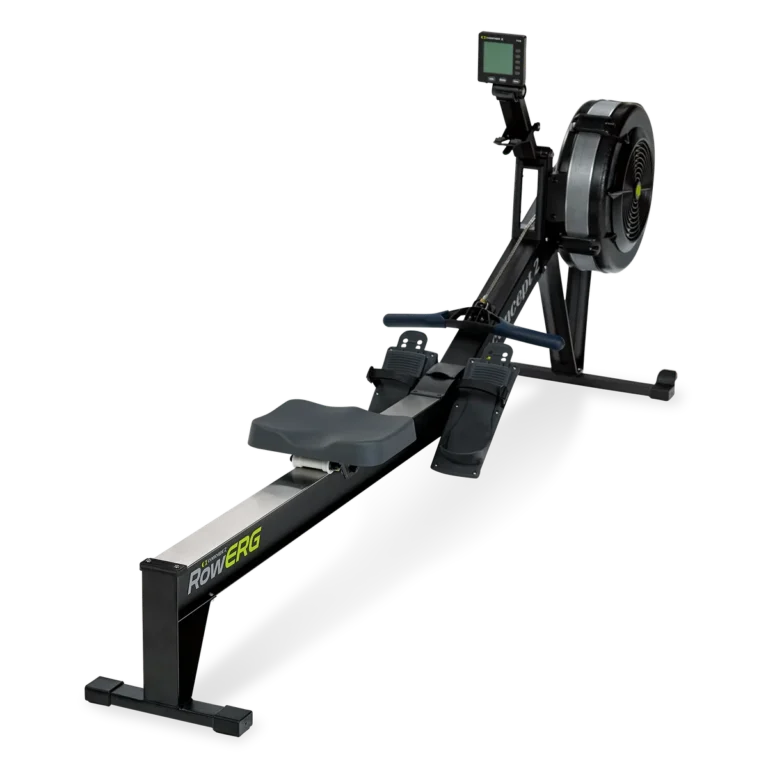
When you compare machines, an exercise bike is usually more compact than a treadmill but similar to a rower. If you are weighing your options, a rowing machine's floor plan is a great point of reference before you commit to one type of cardio equipment.
How to Measure Your Space and Pick the Right Spot (Step-by-Step)
Ready to get specific? Grab a measuring tape and some painter's tape. You'll use the tape to mark out the exact dimensions on your floor.
This turns an abstract idea into a visual test.
Step 1: Measure the bike's assembled footprint.
Look up the manufacturer's spec sheet. Write down the length and width. Add 2 inches on all sides for wobble and cables.
Step 2: Add the clearance zones.
Mark the bike's base on the floor with tape. Then, measure out 24 to 36 inches behind the seat post. Mark that line.
Next, add 12 to 24 inches on each side. You now have the true footprint of your workout space.
Step 3: Check the ceiling height with the seat fully raised.
Measure from the floor to your ceiling. Subtract the height of the bike with its seat raised. If you have less than 12 inches of headroom above the seat, consider a recumbent or a lower spin bike.
Step 4: Test door swings, closets, and hallway paths.
Open every door that is near your marked area. Close the closet. Pull out the drawer.
If your marked zone touches any of these, you'll be fighting with the furniture every day.
Step 5: Position the bike near power and a screen.
Decide where you want to watch TV or use a tablet. Connected bikes have a cord, so place the outlet nearest to the handlebars.
Step 6: Protect floors and check for wobble.
Lay down an exercise mat. It protects your floor and prevents the bike from moving. Place the bike on the mat, sit on it, and feel for stability.
This method takes less than 15 minutes. It will save you from spending a weekend moving a 100-pound machine around your house.
Common Space Mistakes That Make an Exercise Bike Inconvenient
Even with the right measurements, people make mistakes. We've studied countless user reviews and forum threads about poor bike placement. Here are the most common spatial frustrations we see.
The recumbent bike that blocks the closet.
Recumbents are long. The sliding seat rail extends backward. Once you adjust the seat for a tall person, it slides right into the closet door's path.
Always measure the room's active traffic zones, not just the empty wall space.
The spin bike that hits the light fixture.
Spin bikes are compact in length, but they're tall. Some have handlebars that lean forward. If you place one under a ceiling fan or a pendant light, you'll hit your head when you mount it.
Keep the bike at least 6 to 12 inches away from overhead fixtures.
The "folding" bike that lives in a corner, unfolded.
Folding bikes are great in theory. In practice, they lose their appeal if you have to fold them up after every sweaty ride. The fold feature only works if you have the storage space.
If you don't have a closet, you're better off with a sleek upright bike that looks good as a permanent fixture. It's the same logic as a compact small-space elliptical. If it doesn't fit seamlessly, you won't use it.
Ignoring how each rider adjusts the seat differently.
Your partner may need the seat 6 inches lower than you do. The bike's rear clearance needs to accommodate the tallest user, not just you. Otherwise, changing settings becomes a wrestling match with the wall.
These mistakes are avoidable with a quick walk-through. Think about your daily routine. Are you moving laundry through this room?
Do you have kids running around?
If the bike gets in the way of your life, you'll stop using it. The best workout equipment is the one that lives happily in the space it occupies.
Your Decision Guide: Matching the Bike to the Space You Have
Now that you know the measurements, the real question is simple: which bike fits your room? The answer depends on your walls, your ceiling, and how often you'll actually ride. If your space is under 8 feet wide, an upright bike is your best bet.
If you have a basement with a low ceiling, go recumbent.
| Your Space | Best Bike Type | Why |
|---|---|---|
| Small bedroom (8' x 10') | Folding or upright | Narrow footprint, easy storage |
| Shared living room | Upright or spin | Looks sleek, fits against a wall |
| Basement with low ceiling | Recumbent | Low profile, generous seat rail |
| Garage / workshop corner | Spin bike | Sturdy, won't tip on uneven floors |
| Hallway or closet nook | Under-desk pedal exerciser | Micro footprint, can slide away |
If you're working with a standard 6 by 6 foot corner. An upright or spin bike will fit comfortably. Keep the rear clearance at 24 inches minimum. You'll have just enough room to mount and dismount without hitting the wall.
If you're dealing with a narrow, awkward hallway. Skip the full-size bike. A folding model or an under-desk pedal exerciser is the practical choice.
A folding bike still needs a closet for storage, though. Make sure the folded dimensions fit your storage spot before you order.
If you have a long, narrow room. A recumbent bike shines. Its length is the main requirement, so a 7 by 5 foot space works well. The low profile also means you can place it under a window without blocking the light.
If you're choosing between a bike and other cardio equipment. Compare the footprints first. An exercise bike takes up far less floor space than a treadmill, but a rowing machine's measurements might surprise you.
Rowers are longer, while bikes are taller. Match the machine to your ceiling and wall length, not just the floor square footage.
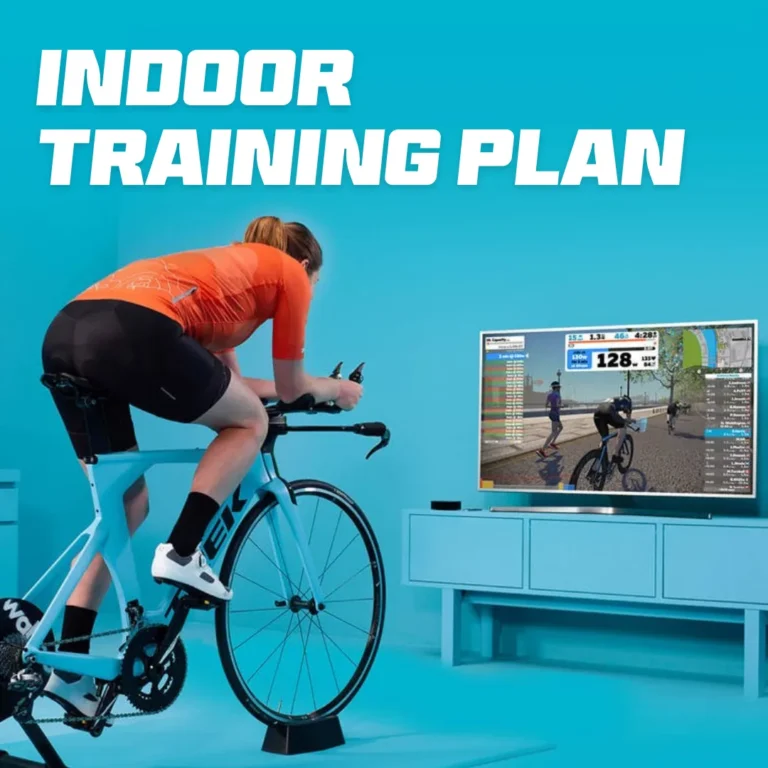
When should you skip the bike entirely? If you can't clear at least 18 square feet of floor space, a full-size bike won't work. Consider an indoor bike trainer instead.
It turns your road bike into a stationary bike. You just bolt your rear wheel onto the trainer, and the whole setup folds down when you're done.
Frequently Asked Questions About Exercise Bike Space
Is a 2-foot clearance around the bike enough?
A 2-foot clearance behind the bike is generally enough, but it depends on the bike type. Upright and spin bikes need about 24 inches of rear clearance. Recumbent bikes need more, since the seat slides back further.
Always measure with the seat in its highest or most extended position.
Can I put an exercise bike on carpet?
Yes, but use a mat under it. Thick carpet can make the bike wobble and trap sweat. A rigid exercise mat will stabilize the base and make cleaning easier.
If your carpet is plush, consider a plywood board under the mat for extra stability.
How much space does a Peloton bike need?
The Peloton Bike footprint is roughly 4 feet long by 2 feet wide. Peloton officially recommends at least 24 inches of clearance on all sides. That puts the total space needed at about 8 by 6 feet.
The bike's height also matters, so measure from your floor to the ceiling before you commit.
Do folding bikes need less room when in use?
No, a folding bike needs the same clearance as a regular bike when you're riding it. The main difference is storage. When folded, they shrink to around 3 feet by 1.5 feet.
The trade-off is convenience. If you have to fold and unfold it daily, you might just leave it out.
How do I get an assembled bike through a narrow doorway?
Check the bike's folded or boxed dimensions before assembly. Most bikes come in a box that fits through a standard 30-inch doorway. If the box doesn't fit, assemble it in the room where it will live.
Carrying a fully assembled bike up stairs is risky and can bend the frame or crack the flywheel casing. The same weight and maneuverability concerns apply to other heavy home gym equipment, so measure before you buy.
Do I need a mat under my exercise bike?
Yes, always use a mat. It protects your floor from sweat and scratches. It also reduces noise and stops the bike from sliding.
Look for a mat that's slightly larger than the bike's footprint. A 4 by 6 foot mat gives you a little extra margin for your mounting zone.





One Comment