How to Do HIIT on a Treadmill
You don't need a gym full of equipment or a 90-minute window to get a serious cardio workout. Learning how to do HIIT on a treadmill comes down to three things: a proper warm-up, a work-to-rest ratio you can actually hold, and the discipline to stop before your form falls apart. Get those right and 20 minutes can rival a much longer steady run.
HIIT stands for high-intensity interval training, which means alternating short bursts of hard effort with easier recovery periods. The American College of Sports Medicine lists interval training as a proven way to build cardiorespiratory fitness, and treadmill makers build quick-select speed and incline keys specifically for it. As of 2026, most home treadmills top out between 10 and 12 mph, which is more than enough for the work intervals we're about to cover.

Image source: Bing (Web (fair-use with source credit))
What Treadmill HIIT Actually Is: The Quick Answer
To do HIIT on a treadmill, alternate short bursts of hard effort with slower recovery periods. Warm up for five minutes first. Then run or power-walk hard for 20 to 40 seconds.
Recover for 60 to 90 seconds at an easy pace. Repeat for 6 to 12 rounds, then cool down.
Why it’s different from just “running fast”
A steady run keeps your heart rate in a moderate zone the whole time. HIIT pushes you to near-maximal effort, then gives you a window to recover before doing it again. That pattern forces your heart and muscles to work differently.
It builds speed, power, and aerobic capacity at the same time.
The intervals need to be genuinely hard. If you can hold a conversation during a work interval, you're not doing HIIT. You're just doing tempo running with extra steps.
The common HIIT formats that work (1:1, 1:2, Tabata)
Work-to-rest ratio means how long you push versus how long you recover. A 1:2 ratio means your recovery is twice as long as your work. That's the smart starting point for most people.
Tabata uses a strict 20-second hard effort, 10-second recovery format. On a treadmill, 10 seconds of recovery goes by fast and the short work bursts make it a tough but doable format for intermediate and advanced users.
Beginners should stick with 1:2 or even 1:3 ratios. You need the extra breathing room to keep your form clean.
Why Treadmill HIIT Works: The Real Benefits and Who Should Do It
The metabolic and cardiovascular payoff
Short, hard intervals push your heart rate into the 80 to 95 percent range of your estimated maximum. That's where your body makes its biggest cardiorespiratory gains. Vigorous work delivers these benefits in less total time than moderate exercise.
You also earn a post-workout afterburn. Studies on high-intensity interval training show a small but real bump in calorie burn after the session ends. It's not a magic fat-loss bullet, but it stacks up over time.
The people it’s perfect for — and the people who should skip it
Busy people are the biggest winners here. Twenty minutes of intervals fits neatly inside a lunch break. Runners who hate the treadmill also benefit, because intervals make the time pass faster.
Beginners can start with inclined walking intervals instead of sprinting. Lifters can use HIIT as 15 minutes of conditioning at the end of a session. Need a cardio option that's gentler on the joints?
An elliptical trainer does the job well.
If you have a heart condition, joint problems, or months of inactivity behind you, check with a doctor before starting. Pregnant women should modify intensity and avoid exhausting effort. Listen to your body when it tells you to pull back.
The Safety Rules That Matter More Than Speed
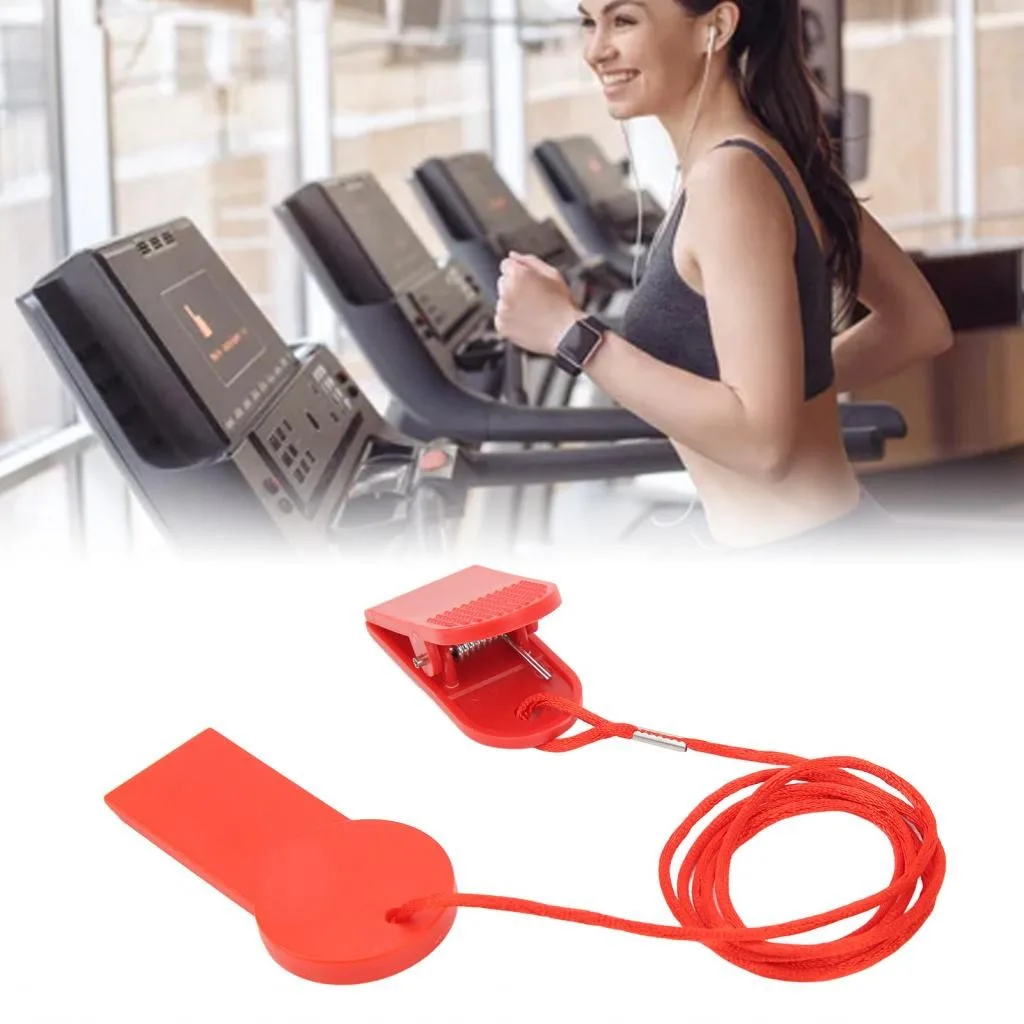
Image source: Bing (Web (fair-use with source credit))
Emergency clips, handrails, and the “jumping off” rule
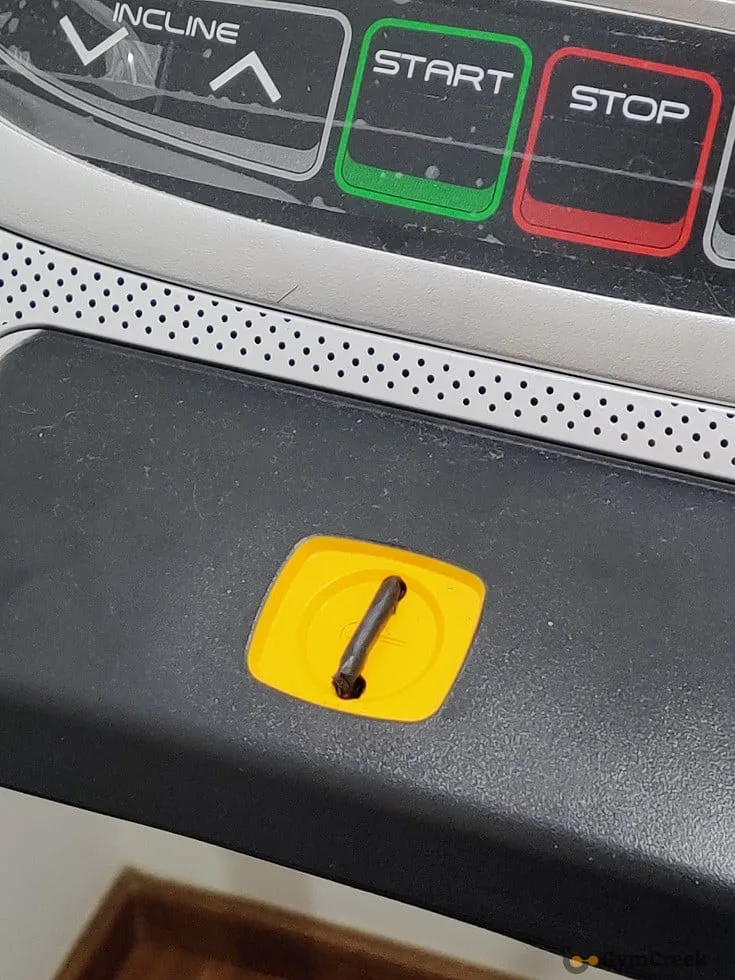
The emergency stop clip is non-negotiable. Attach it to your waistband before you press start. If you slip, the cord pulls and the belt stops instantly.
Two more rules to take seriously:
- Never step onto a moving belt
- Always wait for a full stop before stepping off
Most treadmill falls happen from jumping off while the belt is still moving. Give yourself an extra two seconds.
Why incline is often safer than speed for beginners
Speed puts stress on joints fast. Incline sends your heart rate up without the shin-pounding impact. Set a 6 to 10 percent incline and walk at a brisk 3.5 to 4 mph.
That's plenty for a new person.
Progressing by incline keeps you safer than progressing by speed. Your knees and ankles will thank you.
Stop immediately if any of these happen
- Dizziness or lightheadedness
- Chest pain or pressure
- Nausea that doesn't pass quickly
- Blurred vision
- Sharp or specific joint pain
Push through muscle fatigue, never through those five.
Your Step-by-Step Treadmill HIIT Template
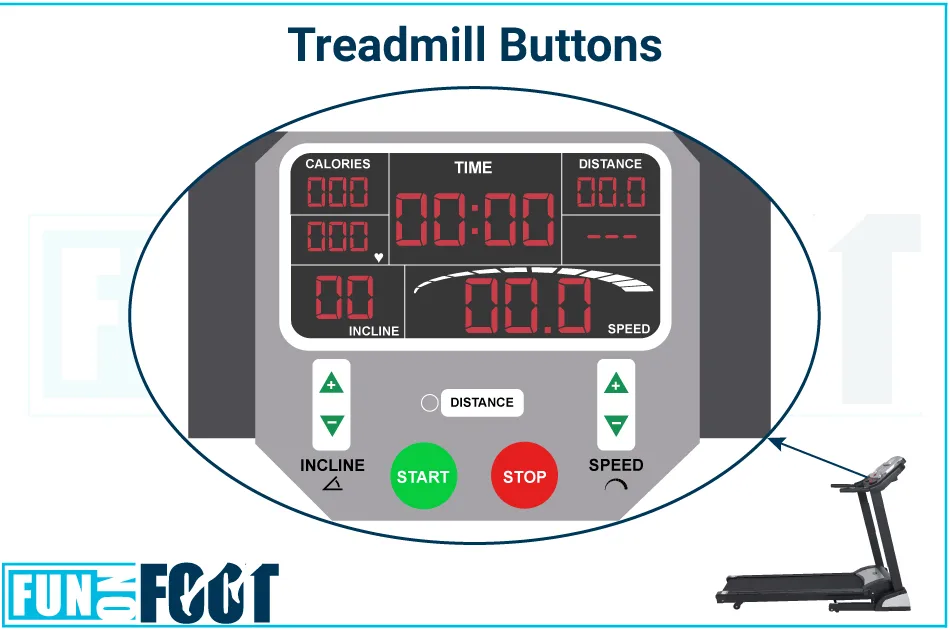
Image source: Bing (Web (fair-use with source credit))
How to warm up properly (skip this and you’ll regret it)
Walk briskly for three minutes, then ease into a light jog for two. Your legs need to feel loose before the first hard interval. Cold hamstrings and sudden speed changes are how tweaks happen.
Exact work-to-rest ratios for your first sessions
Start with a 1:2 ratio and adjust from there. Use this table as a guide.
| Level | Work | Recovery | Rounds |
|---|---|---|---|
| Beginner | 20 sec | 90 sec | 6 to 8 |
| Intermediate | 30 sec | 60 sec | 8 to 10 |
| Advanced | 40 sec | 40 sec | 10 to 12 |
The set-by-set protocol (speeds, inclines, and times)
Set your work speed first. For jogging, that's usually 5 to 7 mph. For walking intervals, use 3.5 to 4.5 mph with an 8 to 10 percent incline.
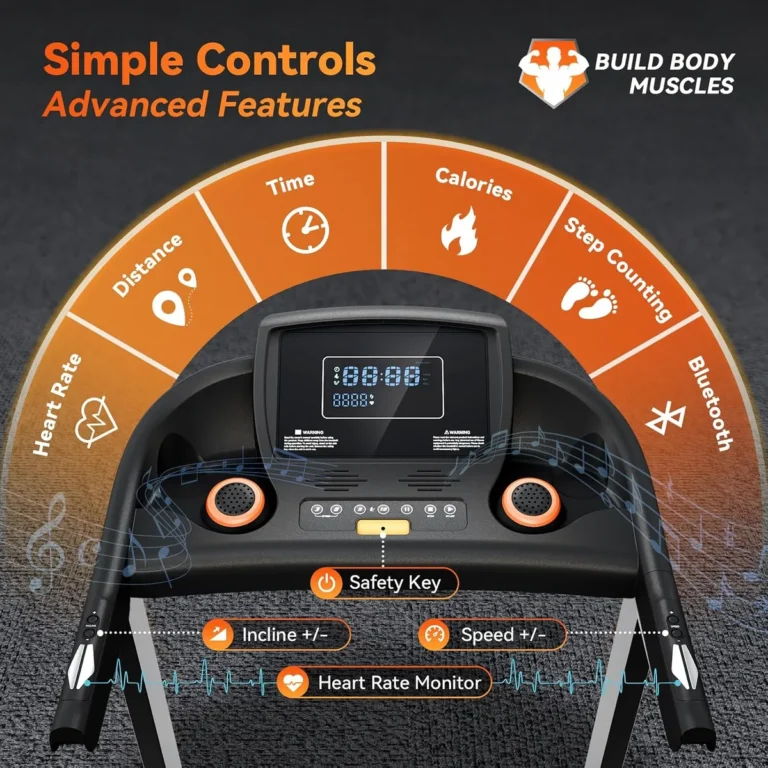
Hit the quick-select button to your work pace at the start of each interval. Drop to 2 to 3 mph at the end. Hold your pace steady for the full work period, then let the recovery walk bring your breathing down.
How to cool down without hitting a wall
Slow walk for three to five minutes so your heart rate settles gradually. Then stretch your calves, quads, and hamstrings. Skipping the cool-down leaves you stiff and can cause blood pooling in the legs.
Common Treadmill HIIT Mistakes That Wreck Your Workout
Holding the handrails during work intervals
Let go. Gripping the rails shifts your weight off the belt and quietly cuts your workload. It also ruins your running posture.
If you need the rails to stay upright, your effort is too fast.
Picking intervals you can’t sustain with good form
Form breaks down at the end of a long work interval. If your hips sag or your hands reach for the rails at second 25 of 30, shorten the interval. Drop to 20 seconds and finish strong instead of 30 seconds of sloppy running.
Training too frequently and never taking a rest day
HIIT taxes your nervous system as much as your muscles. Your body needs a day to recover between hard sessions. Take 48 hours off after a tough workout.
Even fit runners do better with two or three interval days per week.
How to Measure Effort, Progress, and Know When to Stop
Using RPE and the talk test instead of obsessing over heart rate
Rate of Perceived Exertion runs from 1 to 10. Work intervals should sit around an 8 or 9. Recovery intervals should drop to a 3 or 4.
Heart rate monitors lag behind how you feel, so RPE is the more practical dial.
The talk test works just as well. One word at a time during effort means you're in the right zone. Full sentences while recovering is a good sign.
If you can't say "yes" without gasping, your work interval is too hot.
The simple way to progress each week (incline, not just speed)
Change one variable at a time. Add a half-percent incline before raising speed. Add one round to your total.
Steal five seconds from your recovery. Doing all three at once makes it impossible to know what worked.
The progression should feel gradual. If your last round is drastically slower than your first, back off the intensity next time.
Red flags — dizziness, chest pain, and when to call it quits
Dizziness and chest pain are not normal. Stop the machine, sit down, and hydrate. The National Strength and Conditioning Association reminds us that adequate recovery is part of the training plan, not a bonus feature.
Be careful with max-effort intervals if you're coming off an illness.
FAQs: Your Treadmill HIIT Questions Answered
How long should my treadmill HIIT session last?
Between 20 and 30 minutes total, including warm-up and cool-down. The working part, the interval rounds, should last 10 to 15 minutes. Anything longer usually means your effort isn't intense enough.
Is walking incline HIIT actually effective?
Yes. It's the smartest way for beginners to start. Use an 8 to 10 percent incline and a brisk walking pace for your work intervals.
It gets your heart rate up with minimal impact on your knees and shins. Walking incline intervals often feel harder than a flat jog.
Can I do HIIT on a treadmill every day?
No. Two to three sessions per week is the sweet spot. Your muscles, connective tissue, and nervous system need rest days between hard efforts.
Daily sessions lead to joint strain, poor sleep, and a plateau in performance.
What speed should a beginner start at?
Start work intervals at 5 to 6 mph if you're jogging, or 3.5 to 4 mph for incline walking. You should feel challenged but not desperate by the end of the interval. Drop the speed if you can't finish the last two rounds.
The Bottom Line: Should You Do HIIT on the Treadmill?
Who gets the most value from this workout
Anyone who wants real cardio gains in under 30 minutes. Busy parents, shift workers, and travelers benefit most. Treadmill HIIT also helps runners who want to improve speed without pounding the pavement all week.
If you can't handle high impact, stick to inclined walking intervals. You'll still get the benefits with far less joint stress.
The final word on making it a safe, sustainable habit
Start with the beginner ratio and warm up every single session. Use incline before speed, attach the emergency clip, and keep a rest day between workouts. HIIT is a powerful tool that works best when used sparingly and consistently.
If you're choosing between machines to support this habit, read up on how a treadmill compares to a stationary bike before buying.