Can Dumbbells Build Muscle

Image source: Web (Bing) / pngall.com (Web image (fair-use with source credit))
Thinking about building muscle and wondering if those dumbbells sitting in the corner can actually get the job done? You're not alone. Many people wonder if they need fancy machines or a gym membership to see results.
The truth is, dumbbells are incredibly effective tools for muscle growth, provided you use them correctly and consistently.
Our research shows that the fundamental principles of muscle building, challenging your muscles and allowing them to adapt, can be met effectively with dumbbells. As of 2026, their accessibility and versatility make them a go-to for many fitness goals, from gaining strength to increasing muscle mass. Let's explore how.
How Dumbbells Drive Muscle Growth: The Science Explained
Building muscle, medically known as hypertrophy, is your body's response to stress. When you lift weights, you create microscopic tears in your muscle fibers. Your body then repairs these tears, making the fibers thicker and stronger to better handle that stress in the future.
Dumbbells are fantastic for this because they allow for a natural movement pattern and can be easily adjusted to increase the challenge over time.
Progressive Overload with Dumbbells
This is the absolute cornerstone of muscle building. If you don't progressively challenge your muscles, they have no reason to grow. Progressive overload means gradually increasing the demand placed on your muscles over time.
With dumbbells, you can achieve this in several ways:
- Increase the Weight: This is the most straightforward method. When you can comfortably complete a target number of repetitions for an exercise, it's time to increase the dumbbell weight.
- Increase Repetitions: If you can't jump up in weight yet, try to do one or two more repetitions than your previous workout with the same weight. For example, if you hit 10 reps last time, aim for 11 or 12.
- Increase Sets: Performing an extra set of an exercise adds more total volume and work for your muscles.
- Improve Form and Range of Motion: Sometimes, simply performing an exercise with better control, slower negatives (the lowering phase), or a fuller range of motion can be a form of progressive overload.
Our research indicates that consistently applying at least one of these methods is crucial for continued muscle growth. For instance, if you're consistently lifting 20lb dumbbells for 3 sets of 10 reps on dumbbell bench presses, you'd look to increase the weight to 25lbs, or aim for 3 sets of 12 reps, once that 10-rep mark feels easy.
Image source: Web (Bing) / walmart.com (Web image (fair-use with source credit))
Stabilizer Muscles and Balance
One of the unique advantages of dumbbells over barbells or many machines is that they require your body to work harder to stabilize the weight. When you hold a dumbbell in each hand, especially for movements like overhead presses or rows, your smaller, stabilizing muscles (like those in your shoulders, upper back, and core) have to engage significantly to keep the weight steady and your body balanced. This leads to more well-rounded, functional strength development.
This independent limb training is also key to correcting muscular imbalances. If one side of your body is naturally stronger than the other, using dumbbells for exercises like dumbbell curls or dumbbell presses forces each limb to work independently. This prevents the stronger side from compensating for the weaker side, which often happens with bilateral (two-limb) exercises like barbell squats or bench presses.
Over time, this can lead to more symmetrical muscle development across your entire body.
Quick Answer
Yes, dumbbells can absolutely build muscle. Through consistent strength training with dumbbells, you can effectively challenge your muscles to stimulate hypertrophy, or muscle growth. This requires applying progressive overload, ensuring adequate protein intake, and allowing for proper recovery.
How Dumbbells Drive Muscle Growth: The Science Explained
Building muscle, medically known as hypertrophy, is your body's response to stress. When you lift weights, you create microscopic tears in your muscle fibers. Your body then repairs these tears, making the fibers thicker and stronger to better handle that stress in the future.
Dumbbells are fantastic for this because they allow for a natural movement pattern and can be easily adjusted to increase the challenge over time.
Progressive Overload with Dumbbells
This is the absolute cornerstone of muscle building. If you don't progressively challenge your muscles, they have no reason to grow. Progressive overload means gradually increasing the demand placed on your muscles over time.
With dumbbells, you can achieve this in several ways:
- Increase the Weight: This is the most straightforward method. When you can comfortably complete a target number of repetitions for an exercise, it's time to increase the dumbbell weight.
- Increase Repetitions: If you can't jump up in weight yet, try to do one or two more repetitions than your previous workout with the same weight. For example, if you hit 10 reps last time, aim for 11 or 12.
- Increase Sets: Performing an extra set of an exercise adds more total volume and work for your muscles.
- Improve Form and Range of Motion: Sometimes, simply performing an exercise with better control, slower negatives (the lowering phase), or a fuller range of motion can be a form of progressive overload.
Our research indicates that consistently applying at least one of these methods is crucial for continued muscle growth. For instance, if you're consistently lifting 20lb dumbbells for 3 sets of 10 reps on dumbbell bench presses, you'd look to increase the weight to 25lbs, or aim for 3 sets of 12 reps, once that 10-rep mark feels easy.
Image source: Web (Bing) / walmart.com (Web image (fair-use with source credit))
Stabilizer Muscles and Balance
One of the unique advantages of dumbbells over barbells or many machines is that they require your body to work harder to stabilize the weight. When you hold a dumbbell in each hand, especially for movements like overhead presses or rows, your smaller, stabilizing muscles (like those in your shoulders, upper back, and core) have to engage significantly to keep the weight steady and your body balanced. This leads to more well-rounded, functional strength development.
This independent limb training is also key to correcting muscular imbalances. If one side of your body is naturally stronger than the other, using dumbbells for exercises like dumbbell curls or dumbbell presses forces each limb to work independently. This prevents the stronger side from compensating for the weaker side, which often happens with bilateral (two-limb) exercises like barbell squats or bench presses.
Over time, this can lead to more symmetrical muscle development across your entire body.
Real-World Dumbbell Muscle Building: What It Looks Like
Seeing is believing, and many people have transformed their physiques using nothing more than a pair of dumbbells. It’s not about having the most advanced equipment; it’s about a smart, consistent approach. Think of it as a marathon, not a sprint, where each workout builds upon the last.
Your Dumbbell Muscle Growth Journey: A Timeline
Progress isn't always linear, but with dumbbells, you can realistically expect to see and feel changes within weeks if you're consistent.
- Weeks 1-4: Neuromuscular Adaptation: In the first month, you're primarily teaching your muscles and brain to work together more efficiently. You'll notice exercises feel a little easier, and you might start to feel a better mind-muscle connection. Some slight strength gains are common, and you might notice a bit more muscle definition as you learn to engage the correct muscles.
- Months 1-3: Initial Hypertrophy: This is where visible muscle growth starts to become more apparent. If you’re consistently applying progressive overload and eating enough protein, you'll likely see an increase in muscle size and strength. Your workouts will feel more challenging, and you might need to increase dumbbell weights or reps regularly.
- Months 3-6+: Sustained Growth: Continued consistency and progression will lead to more significant muscle gains. You'll likely need to invest in heavier dumbbells or adopt more challenging exercise variations to keep progressing. At this stage, managing fatigue and optimizing recovery becomes even more critical for continuous development.
This timeline is a general guide. Factors like genetics, diet, sleep quality, and training intensity will influence your personal results.
Key Dumbbell Exercises for Muscle Gain
While you can perform hundreds of exercises with dumbbells, focusing on compound movements that work multiple muscle groups simultaneously is the most efficient way to build overall muscle mass.
- Lower Body:
- Goblet Squats: Great for quads, glutes, and core. Holding one dumbbell at chest level.
- Dumbbell Lunges: Excellent for quads, glutes, and hamstrings, also improving balance.
- Romanian Deadlifts (RDLs): Targets hamstrings and glutes effectively. Keeping a slight bend in the knees and hinging at the hips.
- Upper Body Push:
- Dumbbell Bench Press: Works chest, shoulders, and triceps. Can be done on a flat, incline, or decline bench.
- Dumbbell Overhead Press: Primarily targets shoulders and triceps. This is a key exercise for building upper body pressing strength.
- Dumbbell Push-ups: Placing hands on dumbbells allows for a deeper range of motion and reduces wrist strain.
- Upper Body Pull:
- Dumbbell Rows: Targets the back muscles (lats, rhomboids) and biceps. Can be done with one arm or both.
- Dumbbell Pullovers: Works the chest, lats, and triceps. A good exercise for broadening the upper body.
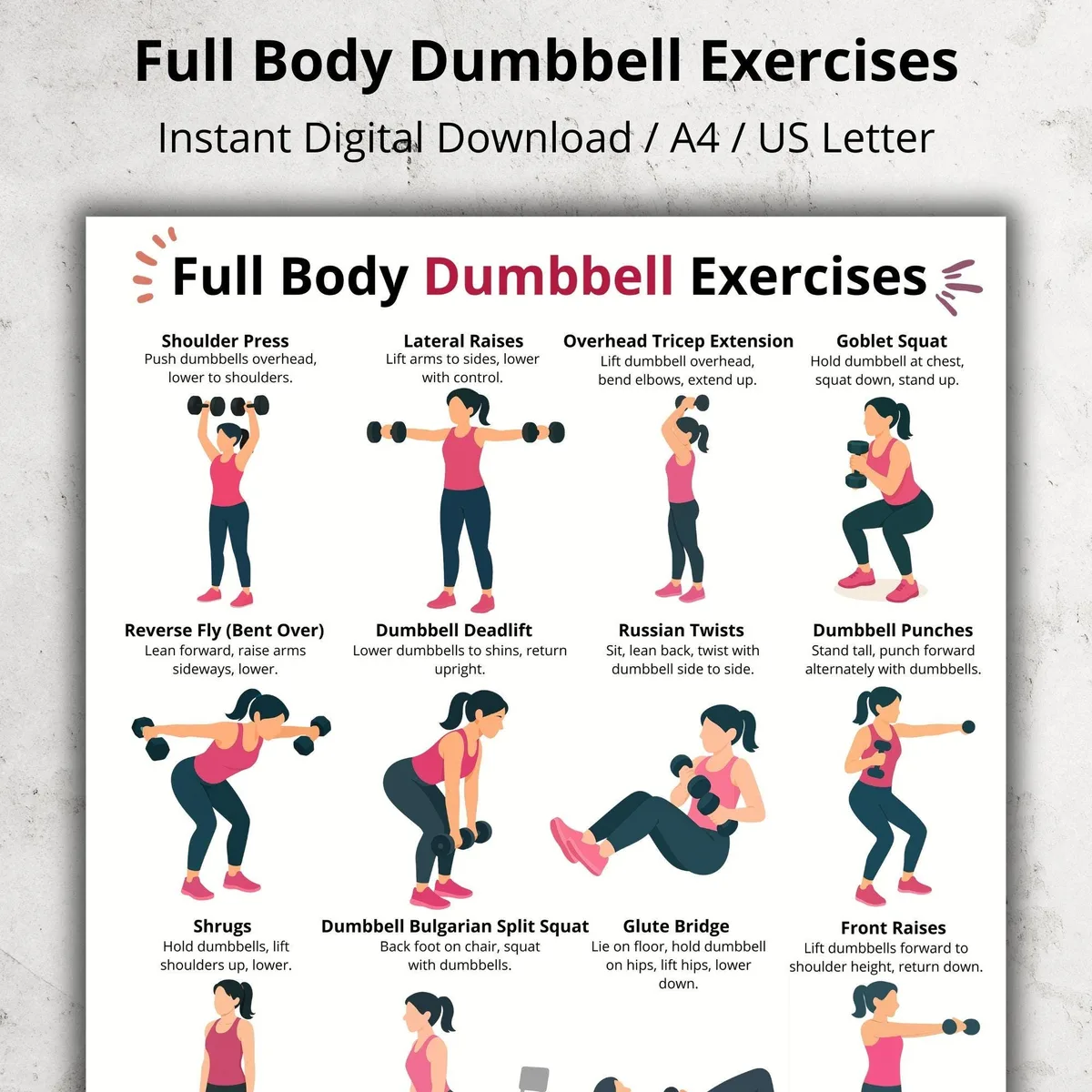
Image source: Bing (Web (fair-use with source credit))
Incorporating a balanced selection of these exercises into your routine will ensure you hit all major muscle groups for comprehensive development.
Maximizing Your Dumbbell Workouts: Mistakes to Avoid
Even with the best intentions and a good set of dumbbells, it's easy to make mistakes that hinder progress. Recognizing these common pitfalls is key to ensuring your efforts translate into muscle growth. A little knowledge here can save you a lot of wasted time and frustration.
Common Dumbbell Training Pitfalls
- Inconsistent Training: Skipping workouts or not training regularly is the biggest killer of progress. Muscles need consistent stimulation to grow. Aim for 2-4 strength training sessions per week, allowing at least one rest day between working the same muscle groups.
- Neglecting Progressive Overload: As mentioned, if you do the same weight, reps, and sets week after week, your muscles will adapt and stop growing. You must continually challenge them. Not increasing the weight or reps when you're capable is a common mistake.
- Poor Form: Lifting too heavy with bad form not only increases the risk of injury but also takes the tension off the target muscles. For example, swinging dumbbells during a bicep curl means your momentum is doing the work, not your biceps. Focus on controlled movements.
- Ignoring Nutrition and Recovery: Muscle growth happens outside the gym. If you're not consuming enough protein (essential for muscle repair and synthesis) or not getting enough sleep, your muscles won't recover and grow effectively, no matter how hard you train. Research suggests protein intake around 1.6, 2.2 grams per kilogram of body weight is optimal for muscle gain.
A common error is focusing solely on lifting heavy without considering the full picture of recovery and nutrition.
Nutrition and Recovery for Dumbbell Muscle Building
Your diet is as crucial as your training. To build muscle, you need a calorie surplus, meaning you consume slightly more calories than your body burns. This provides the energy needed for muscle repair and growth.
- Protein: This is the building block of muscle. Ensure you're getting adequate protein from sources like lean meats, fish, eggs, dairy, legumes, and protein supplements if needed.
- Carbohydrates: These provide the energy for your workouts and help replenish glycogen stores post-exercise. Whole grains, fruits, and vegetables are excellent sources.
- Healthy Fats: Important for hormone production, including those that aid muscle growth. Avocados, nuts, seeds, and olive oil are good choices.
Recovery is when the magic happens. Sleep is paramount; aim for 7-9 hours per night. During sleep, your body releases growth hormone and performs essential repair processes.
Active recovery, like light walking or stretching on rest days, can also aid blood flow and reduce soreness.
Dumbbells vs. Other Tools: Making the Right Choice
While dumbbells are fantastic, it's helpful to understand where they fit in the broader landscape of strength training equipment. Sometimes, other tools might be more efficient for specific goals or offer different benefits.
When Barbells or Machines Might Be Better
- Barbells: For sheer maximal strength and power development, barbells are often preferred. They allow for extremely heavy loads that are sometimes impractical or impossible to achieve with dumbbells for exercises like squats, deadlifts, and bench presses. Loading a barbell with 300lbs is generally easier and safer than handling that much weight in dumbbell form.
- Weight Machines: Machines can be great for beginners or for isolating specific muscles with less risk of form breakdown. They often provide a fixed path of motion, which can be beneficial when learning a new movement or when dealing with injuries. For example, a leg press machine isolates the quads and glutes without requiring as much balance as dumbbell squats.
However, many studies and practical applications show that for muscle hypertrophy, dumbbells can be just as effective as barbells when programmed correctly. The greater range of motion and increased stabilizer activation with dumbbells can often lead to superior muscle stimulation for certain movements.
Dumbbells as Your Primary Muscle-Building Tool
For many, especially those training at home or with limited equipment, dumbbells are the perfect primary tool.
- Versatility: A single pair of dumbbells, or even a few pairs of varying weights, allows for a full-body workout. You can target every major muscle group with numerous exercises.
- Accessibility: Dumbbells are widely available and come in various forms, from fixed-weight dumbbells to adjustable ones that save space.
- Natural Movement: They promote a more natural, biomechanically sound movement pattern compared to many machines, which can translate to better functional strength.
The decision often comes down to your specific goals, available space, and budget. But don't underestimate the power of dumbbells; they are a complete muscle-building solution in themselves. If you're considering different fitness equipment, understanding how they compare is useful.
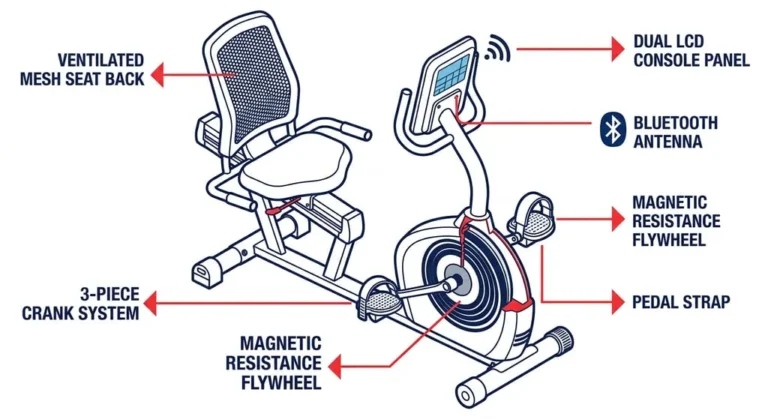
For instance, knowing how much space an exercise bike needs can help if you're designing a home gym alongside your dumbbell setup.
Expert Tips for Dumbbell Muscle Maximization
To truly unlock your muscle-building potential with dumbbells, go beyond the basics. Applying these expert-level insights can significantly boost your results and refine your training.
- Master the Mind-Muscle Connection: Don't just lift the weight; feel the muscle working. Focus intently on the targeted muscle group throughout the entire range of motion for each rep. For example, when doing dumbbell curls, actively squeeze your biceps at the top of the movement and control the descent, feeling the stretch. This connection enhances muscle activation and can lead to better hypertrophy.
- Embrace the Full Range of Motion (ROM): Whenever possible and safe, move the dumbbells through their complete range of motion. For dumbbell bench presses, allow your elbows to go slightly past your body at the bottom to get a full stretch in your chest. For dumbbell rows, extend your arm fully at the bottom to get a good stretch in your back muscles. This full ROM typically leads to greater muscle fiber recruitment.
- Control the Eccentric (Lowering) Phase: Many people rush the lowering portion of an exercise. Slowing down the eccentric phase, the part where you’re lowering the weight, can create more muscle damage and stimulate more growth. Aim for a 2-3 second lowering time for most dumbbell exercises. This controlled movement also improves stability and reduces the risk of injury.
- Incorporate Variety Strategically: While consistency is king, introducing variety can prevent plateaus. This doesn't mean changing your workout every week. Instead, consider switching up your rep ranges (e.g., 6-10 for strength and hypertrophy, 10-15 for more endurance-focused hypertrophy), using different grips (e.g., hammer curls vs. supinated curls), or altering exercise tempo. For instance, try pausing briefly at the bottom or top of a dumbbell movement.
- Listen to Your Body and Prioritize Recovery: Overtraining is a real threat. If you're constantly sore, fatigued, or experiencing persistent joint pain, you might be pushing too hard without adequate rest and recovery. Ensure you're getting 7-9 hours of quality sleep per night, stay hydrated, and fuel your body with sufficient protein and calories. Active recovery, like light cardio or stretching, can also be beneficial on rest days.
These tips, rooted in exercise science and practical application, help you move from simply lifting dumbbells to intelligently training for maximum muscle gain.
Frequently Asked Questions About Dumbbells and Muscle
Can I build muscle with just one dumbbell?
Yes, you can build muscle with a single dumbbell, though your options for exercises will be more limited. You can perform many unilateral (one-sided) exercises like single-arm rows, single-arm presses, and lunges. However, bilateral exercises that require equal weight in both hands, like standard dumbbell bench presses or overhead presses, won't be possible.
Using one dumbbell is better than nothing for muscle stimulation.
How much weight should I use with dumbbells?
The ideal weight for dumbbells depends on your strength level and the specific exercise. You should choose a weight that allows you to perform your target number of repetitions (e.g., 8-12) with good form, reaching near muscular failure on the last few reps. If you can easily do more than 15 reps, the weight is likely too light for hypertrophy.
If you can't complete 8 reps with good form, it's too heavy.
How often should I train with dumbbells to build muscle?
For building muscle, training each major muscle group 2-3 times per week is generally recommended. This could mean a full-body workout 3 times a week, or an upper/lower body split training each part twice a week. Ensure you have at least one rest day between sessions that work the same muscle groups to allow for recovery and growth.
Do I need to go to failure on every set with dumbbells?
Going to muscular failure on every single set isn't strictly necessary for muscle growth, and it can sometimes lead to overtraining. However, pushing your working sets close to failure (leaving 1-2 reps in the tank) is important for stimulating hypertrophy. Some variation in intensity, including occasional sets taken to absolute failure, can be beneficial but should be managed carefully.
Final Verdict: Dumbbells Are a Powerful Muscle Builder
Dumbbells are an exceptionally versatile and effective tool for anyone looking to build muscle. They enable natural movement patterns, challenge stabilizing muscles, and can be used to implement progressive overload crucial for hypertrophy. Whether you're a beginner or an experienced lifter, incorporating dumbbells into your training routine can lead to significant strength and muscle gains.
By focusing on consistent training, proper form, progressive overload, adequate nutrition, and sufficient recovery, you can achieve impressive results with just a pair of dumbbells. Their accessibility and adaptability make them a cornerstone of effective strength training for individuals of all fitness levels aiming to enhance their physique and overall strength.

One Comment