How to Use Treadmill Emergency Stop
Every year, thousands of treadmill users end up in emergency rooms after losing their footing on a moving belt. Knowing how to use treadmill emergency stop systems is one of the simplest things you can do to stay safe, yet most people skip the pre-workout test every single time. That little magnetic key hanging off your shirt isn't decorative.
It's the only thing between you and a nasty fall.
Per ASTM F2116, motorized treadmills must include a safety-interlock system that cuts motor power within seconds of the key being pulled. Here's why that matters and how to make sure yours actually works when you need it most.
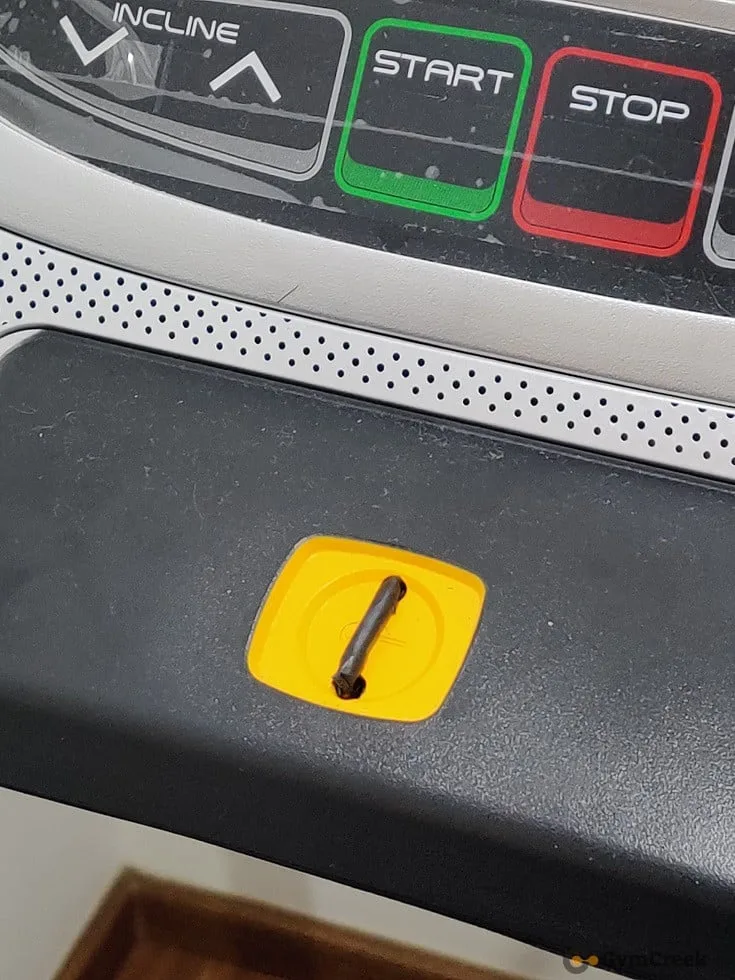
Image source: Bing (Web (fair-use with source credit))
Quick Answer
Use a treadmill emergency stop by clipping the magnetic key to your shirt. Pull the key to cut power instantly if you stumble. Test the stop at low speed before every workout.
After any stop, reattach the key to the console dock and restart.
Why the Emergency Stop Is Non-Negotiable
The Real Risk Behind "I'll Be Fine"
Most treadmill injuries don't happen to beginners. They happen to confident runners who've talked themselves out of using the safety key. The Consumer Product Safety Commission (CPSC) has documented thousands of treadmill-related emergency room visits annually in the United States.
Falls, entanglement under the belt, and collisions with furniture are the leading causes.
The pattern is almost always the same. The user feels steady, so they skip the clip. Then something changes: a stumble, a cramp, a child or pet entering the room.
Without the magnetic interlock engaged, the belt keeps running at full speed. The result is a friction burn at best and a spinal injury at worst.
How the Emergency Stop Actually Saves You
Think of the magnetic safety key as a dead-man's switch. The moment it detaches from the console, the motor controller receives an immediate kill signal. The belt doesn't coast to a gentle stop on its own.
Per UL 1647 testing standards for motor-operated exercise equipment, the system is designed to halt belt motion as rapidly as the mechanical brake allows, typically within two to three seconds.
That two to three second window is the difference between a controlled deceleration and being thrown backward off the rear roller. On a treadmill running at eight miles per hour, even a half-second delay means the belt travels nearly six feet while you're already falling. The stop system doesn't give you superhuman reflexes.
It buys you time and friction.
Who Needs This Most
If you fall into any of these categories, the emergency stop isn't optional. It's mandatory equipment, just like the belt itself.
- Older adults using treadmills for balance and cardiovascular rehab
- Cardiac rehabilitation patients under medical supervision
- Parents who exercise at home with children or pets nearby
- HIIT and sprint interval runners pushing speeds above eight mph
- First-time treadmill users still building coordination
- Physical therapy clinic patients working with limited mobility
Even if you've never tripped before, the stop system exists for the one time you will. Building the habit of clipping in every time is far easier than recovering from a preventable fall. The same logic applies to other cardio machines.
Understanding how different equipment works helps you pick the safest option for your home. Comparing those machine types is worth a look before you commit to a workout setup.
How the Magnetic Safety Key and Stop System Actually Work
The Core Components
Every modern treadmill with a safety interlock has three parts working together:
| Component | What It Does |
|---|---|
| Magnetic safety key | Sits on the console dock and completes the electrical circuit that powers the motor |
| Tether cord | Connects the key to the clip you wear, usually 12 to 24 inches long |
| Safety clip | Attaches to your clothing, typically the front hem of your shirt |
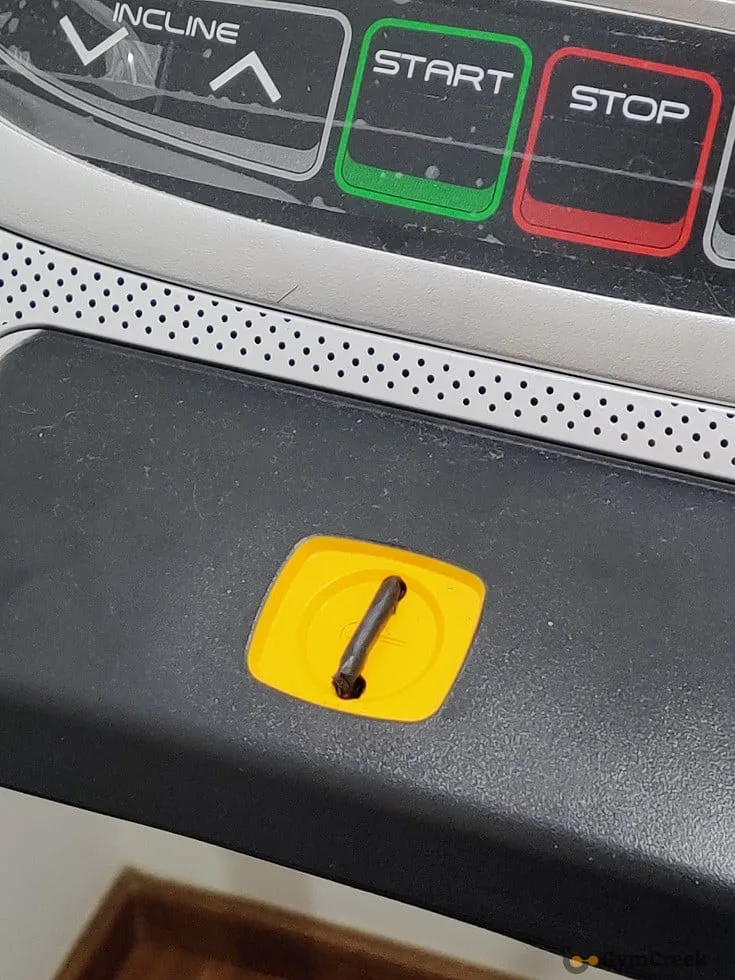
The magnet sits on a contact plate built into the console. When it's seated, the circuit is closed and the treadmill operates normally. The moment the magnet lifts away, the circuit opens and the motor controller initiates an immediate shutdown.
This interlock design is governed by the ASTM F2116 standard, with performance requirements published by ASTM International.
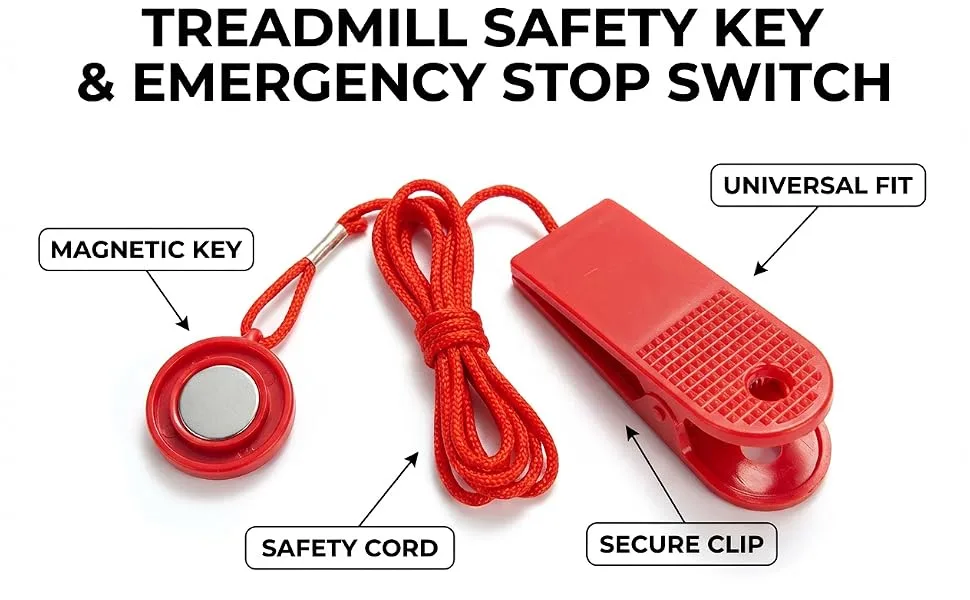
Image source: Bing (Web (fair-use with source credit))
Why Magnets, Not Buttons
A magnetic key works as a fail-safe because it requires a deliberate, physical action to engage. You can't accidentally start the treadmill without placing the key on the dock. More importantly, the clip-to-shirt connection means the system responds to your body's movement.
If you stumble backward or fall off the side, your body pulls the tether, the magnet detaches, and the belt dies.
Some commercial gym treadmills add a secondary contact bar or knee-strike switch as a backup. These work differently. Instead of relying on a tether, they require physical contact with a metal strip at the front of the machine.
The magnetic key is still the primary system on the vast majority of home and commercial models as of 2026.
What Happens Inside the Motor Controller
When the key pulls away, the console sends a signal to the motor controller to cut power. On belt-driven models, an electromagnetic brake may engage to accelerate the deceleration. On direct-drive models, the controller simply removes voltage and allows the motor's internal resistance to slow the belt.
The difference matters for stop time. Belt-drive treadmills tend to stop faster because the brake actively opposes the belt's motion.
Manufacturer specifications confirm that belt stop time varies with speed. A belt running at twelve mph takes longer to halt than one at four mph. That's why the emergency stop isn't just a convenience.
It's a system you should understand before you need it at high speed.
Step-by-Step: How to Use the Treadmill Emergency Stop Safely Every Time
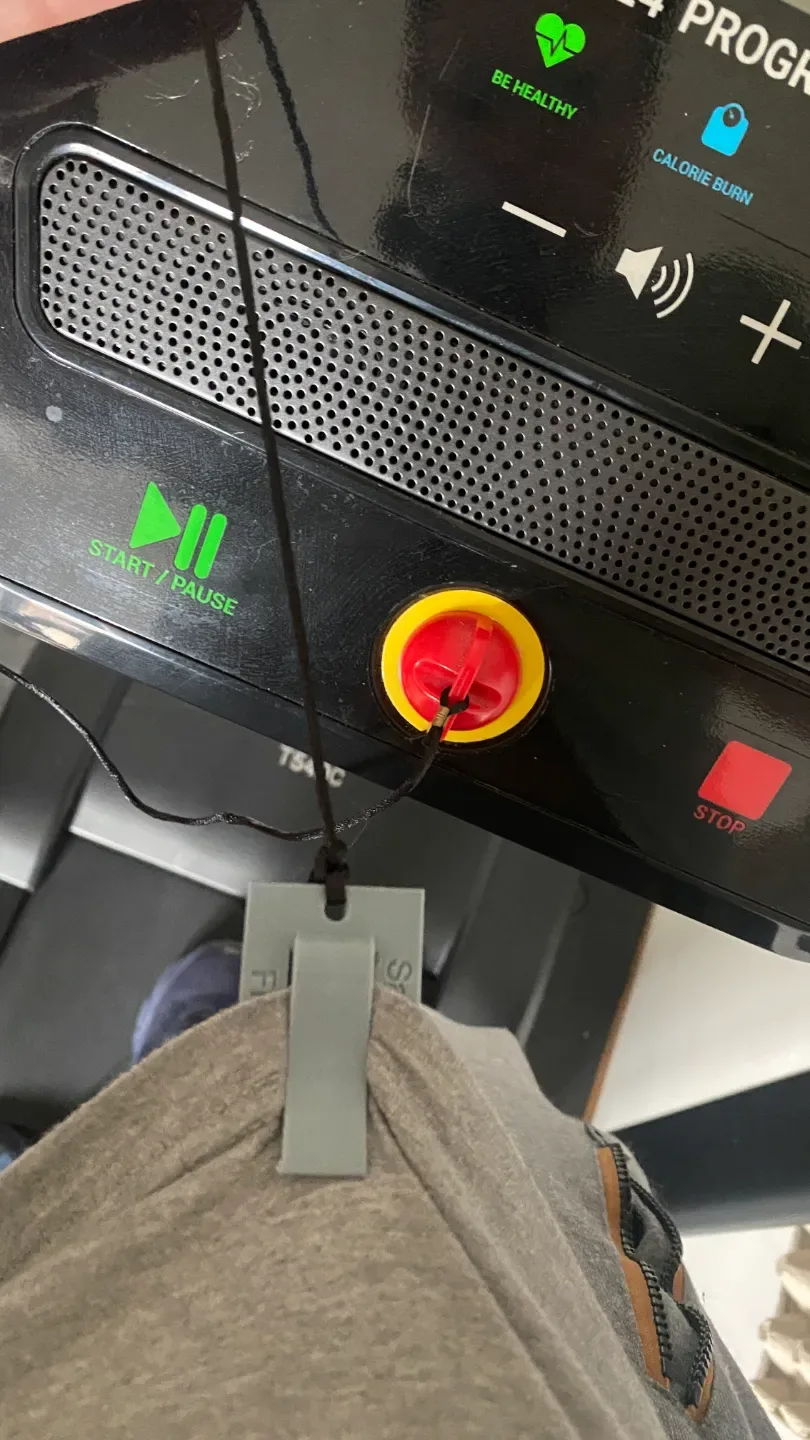
Image source: Bing (Web (fair-use with source credit))
Before You Start: The Pre-Workout Safety Check
This takes ten seconds and it should happen every single time, no exceptions.
- Pick up the magnetic safety key from the console dock.
- Inspect the tether cord for fraying, cracks, or weak spots.
- Clip the safety key to the front hem of your shirt, near your belly button.
- Tug the tether gently to confirm the clip holds securely.
- Lower the treadmill speed to its minimum setting.
- Step on the belt and let it start moving at walking pace.
- Pull the key away from the console while walking slowly.
- Confirm the belt stops within two to three seconds.
- Reattach the key to the console dock and wait for the console to reset.
- You're now cleared to begin your workout.
That's the complete test. Do it every time, even if you tested it yesterday. Cords wear.
Magnets lose strength. Clips loosen. A ten-second check costs you nothing.
A skipped check could cost you everything.
During Your Workout: Keeping the System Active
Once the key is clipped and the belt is running, there's really nothing else to do. The system works passively. Your job is to keep the clip attached and positioned where a fall or stumble will naturally pull the tether.
Placement matters. Clipping to a loose jacket or a baggy sweatshirt defeats the purpose. If the fabric bunches or shifts, the clip might detach before your body does. The front hem of a fitted shirt is the best anchor point.
It sits close to your center of gravity and responds directly to backward or sideways movement.
What if you need to grab a water bottle or adjust the incline? Lean slightly, keep your footing, and keep the clip where it is. Don't unclip it for convenience. That's exactly the moment most falls happen.
You're distracted, you shift your weight, and the clip is sitting on the floor instead of your shirt.
When the Stop Triggers: What Happens Next
If the key pulls free, the belt will decelerate rapidly. Stay calm. Plant your feet on the side rails if you can, or let the belt slow to a stop under you.
Don't try to jump off a moving belt. That's how ankle sprains and wrist fractures happen.
Once the belt is fully stopped, here's the reset sequence:
- Reattach the magnetic key to the console dock.
- Wait for the console display to light up and show the default screen.
- If the console doesn't reset, unplug the treadmill for thirty seconds, then plug it back in.
- Restart the treadmill at a low speed and confirm normal operation.
- Resume your workout or end the session if you need to recover.
Reset procedures vary slightly between brands. NordicTrack, ProForm, and Precor models typically reset with a simple key reattachment. Some Life Fitness commercial models require you to press a "start" button after reseating the key.
Your owner's manual will cover model-specific behavior. It's worth a five-minute read even if you've owned the machine for years. The same applies to any home cardio equipment, since adjusting equipment properly reduces strain on both you and the machine.
5 Common Safety Key Mistakes That Can Get You Hurt
Mistake 1: Skipping the Pre-Workout Test
This is by far the most common error. Aggregate user reviews and CPSC incident reports consistently show that most treadmill falls involve a safety system that was available but unused. People assume the key works because it worked last week.
A tether cord can develop a micro-fracture from repeated flexing. A magnet can weaken from age or heat exposure. The only way to know it works is to test it.
Mistake 2: Clipping to the Wrong Fabric
Baggy clothing, loose tank tops, and jackets with floppy hems are all terrible anchor points. The clip needs a stable, snug surface. If the fabric pulls away from your body before the tether engages, the key won't detach when it matters.
Wear a fitted shirt when treadmill running. It's a small adjustment with a significant safety payoff.
Mistake 3: Positioning the Clip Too Far from Your Center
Clipping the tether to a back pocket, a waistband, or a sleeve means the cord has to travel a long way before it pulls the key free. During a backward fall, the tether needs a direct line of pull from your body to the console. Front-center placement eliminates slack and ensures the fastest possible response.
Mistake 4: Ignoring the Emergency Stop Button
Many treadmills have both a magnetic key and a large red panic button on the console. The magnetic key is your primary system, but the button is your backup. If the tether jams, the clip fails, or you're not wearing the key, that button can still kill the motor.
Know where it is before you start running. Glance at the console. Find it with your hand at least once per session.
Mistake 5: Letting Kids Play with the Safety Key
This one seems obvious, but it happens more than you'd think. Children see the bright red magnet as a toy. If a kid removes the key while you're running at high speed, the sudden stop can throw you off the machine.
Keep spare keys out of reach and teach young children that the treadmill key is not a toy.
Routine upkeep of your entire workout setup helps prevent these kinds of surprises. You might also consider keeping your cardio machines in top shape as part of a regular home gym maintenance habit.
What to Do If the Stop System Fails or Feels Weak
Signs Your Safety Key Needs Attention
A safety key that slides off the console too easily, a tether that shows visible wear, or a clip that doesn't grip your shirt firmly are all warning signs. So is a belt that doesn't fully stop when you pull the key during a test. These aren't things to ignore until your next scheduled maintenance.
Here are the specific symptoms that warrant immediate action:
| Symptom | What It Might Mean |
|---|---|
| Key slides off without tug | Magnet is weakened or contact plate is worn |
| Belt takes over four seconds to stop | Brake or controller issue, needs service |
| Tether shows fraying or discoloration | Cord is degrading, replacement needed |
| Clip spring feels loose | Clip won't hold during a fall |
| Console doesn't reset after key reattachment | Wiring fault or controller glitch |
Replacing a Lost or Worn Safety Key
Most manufacturers sell replacement keys directly, typically between $10 and $30. You'll need your treadmill's model number, which is usually on a sticker on the frame under the belt or on the back of the console. Third-party universal keys exist, but compatibility varies.
A key that doesn't seat properly on the magnetic dock is worse than no key at all because it gives you a false sense of security.
If you can't find an exact replacement, contact the manufacturer's parts department. NordicTrack, ProForm, Life Fitness, and Precor all maintain parts catalogs for current and older models. Per the CPSC, you should never operate a treadmill without a functioning safety key.
If you're waiting for a replacement, treat the treadmill as off-limits.
When the Stop System Needs Professional Service
If the belt doesn't stop when the key pulls free, or if the motor continues running after the console resets, stop using the machine immediately. This is a motor controller or wiring fault that requires a qualified technician. The CPSC has issued recalls on specific treadmill models where the stop mechanism failed under load.
Check your model against the CPSC recall database at cpsc.gov before attempting any DIY repair on the electrical system.
Unusual noises from the drive motor are another red flag, similar to tracking down a squeaking elliptical before a small issue turns into a big one. For general machine longevity, our guide on machine servicing best practices covers maintenance principles that apply across cardio equipment.
Frequently Asked Questions
Can you run without the safety key?
No. Running without the magnetic safety key defeats the interlock system that halts the belt during a fall. Even experienced runners stumble.
The clip costs you zero effort and adds a genuine layer of protection against a serious injury.
What if the safety key pulls out mid-run?
Let the belt stop completely before you step off. Don't jump from a moving surface. Check why the tether detached, reattach the clip to a snug spot on your shirt, reseat the key on the console dock, and restart slowly.
How often should you test the emergency stop system?
Test it before every single workout. A tether can fray overnight. A magnet can weaken without warning.
Ten seconds of testing is cheap insurance compared to a full-speed fall that ends your running routine for months.
How much does a replacement safety key cost?
Most brand-name replacement keys cost between $10 and $30. Third-party universal keys are cheaper, but they don't always seat properly. Always confirm compatibility with your exact treadmill model before ordering.
Do all treadmills have an emergency stop button?
Most modern home treadmills have a magnetic safety key. Many commercial models also include a panic button or a contact bar. Check your owner's manual to confirm which systems your machine has and test each one regularly.
The Bottom Line
Turn the safety key into a non-negotiable habit. Clip it on before you press start. Test it at walking speed.
Keep spare keys away from children. This is the cheapest insurance you'll ever buy for your treadmill workouts.
One last reminder: if the stop system ever feels weak, don't push through. A replacement key costs $10 to $30. A torn ACL or a shoulder fracture costs far more.
Check your model against the CPSC recall database, read your owner's manual once, and treat the safety key like the life-saving device it actually is.