Why Does My Treadmill Vibrate
You've heard that rattle at the console, felt the floor shake, and wondered if your treadmill is about to give out. It's one of the most common complaints from home users, and the fix is often simpler than you expect. The vibration can come from the floor, the belt, the rollers, or the motor mounts.
Finding the real cause is a process of elimination, not luck.
In our research, motor mounts, belt friction, and uneven floors account for most documented vibration cases. ISO 20957-6 sets safety and durability standards for treadmills, and even a small imbalance shows up clearly above 6 mph. So before you call a technician, walk through the steps below.
We'll help you find the source, decide if it's safe, and fix most issues yourself.
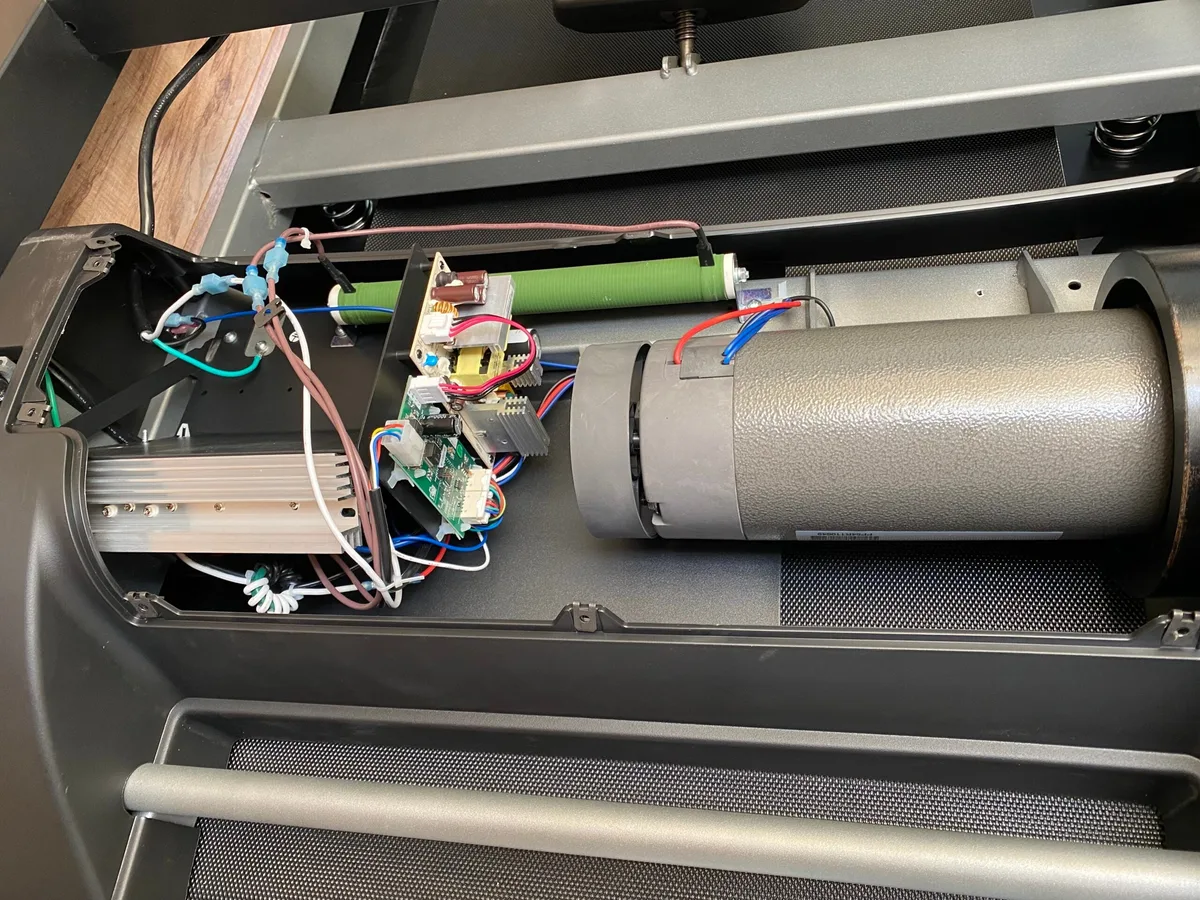
Image source: Bing (Web (fair-use with source credit))
Quick Answer
Why does a treadmill vibrate? Usually, something is loose, worn, imbalanced, or on a bad surface.
Check the floor first.
Then test the belt, deck, rollers, and motor mounts.
Common fixes are tightening bolts, repositioning the mat, and lubricating the deck.
How to Read Your Treadmill's Vibration Pattern

Image source: Web (Bing) / hindustantimes.com (Web image (fair-use with source credit))
Before you touch anything, watch when and where the shaking happens. The pattern is a fingerprint. It tells you which part is failing.
When It Vibrates: Empty vs. Under Load
If the machine shakes with nobody on it, the fault is inside the rotating parts. That means rollers, flywheel, drive belt, or motor. If it only vibrates under your weight, the issue is the floor, deck cushioning, or loose deck bolts.
The empty-machine test splits your diagnosis in half.
Where It Vibrates: Front, Rear, Deck, or Console
Vibration at the front usually points to the motor, drive belt, or flywheel. At the rear, suspect the rollers or rear bearings. A shaking deck means worn cushioning or loose deck bolts.
A wobbling console mast often means a loose frame connection or resonance traveling up the neck.
How It Vibrates: Speed-Linked vs. Constant
If vibration peaks at one speed and disappears at others, you're dealing with resonance or a flat spot on a roller. If it shakes at every speed, the cause is probably bearing wear, a bent shaft, or motor mount fatigue. This distinction narrows the list quickly.
The Diagnostic Workflow: Isolating the Source Step by Step
Grab a spirit level, a torque wrench, and a clean cloth. These five steps will isolate the cause in under an hour. Always unplug the treadmill before you touch moving parts.
Step 1: Rule Out the Floor and Setup
Place a spirit level on the deck lengthwise and side to side. Adjust the leveling feet until the bubble sits centered. If the mat is buckling or the floor flexes, move the machine to solid ground.
Carpet over concrete works fine. Suspended floors in apartments can make vibration worse, no matter how new the machine is. It's the same setup logic you'd use when adjusting a home cross-trainer: level first, then tighten.
Step 2: Test Without Load at Three Speeds
Run the belt empty at 1 mph, 3 mph, then 6 mph. Note the speed where shaking appears. Empty-machine vibration almost always points to rollers, flywheel, belt, or motor.
Record what you feel in the frame and the console. One clear observation beats a hundred guesses.
Step 3: Check the Belt, Deck, and Rollers
Stop the machine and inspect the belt. Look for worn edges, fraying, glazing, or cracks. Check tracking: the belt should sit centered with no side contact.
Spin each roller by hand; they should turn freely. If the deck feels dry or sticky, apply the manufacturer-approved silicone lubricant. As of 2026, most residential decks still use silicone-based lube.
That's the same kind of moving-part care you'd give a home cardio machine.
Step 4: Inspect the Drive Belt, Motor Mounts, and Flywheel
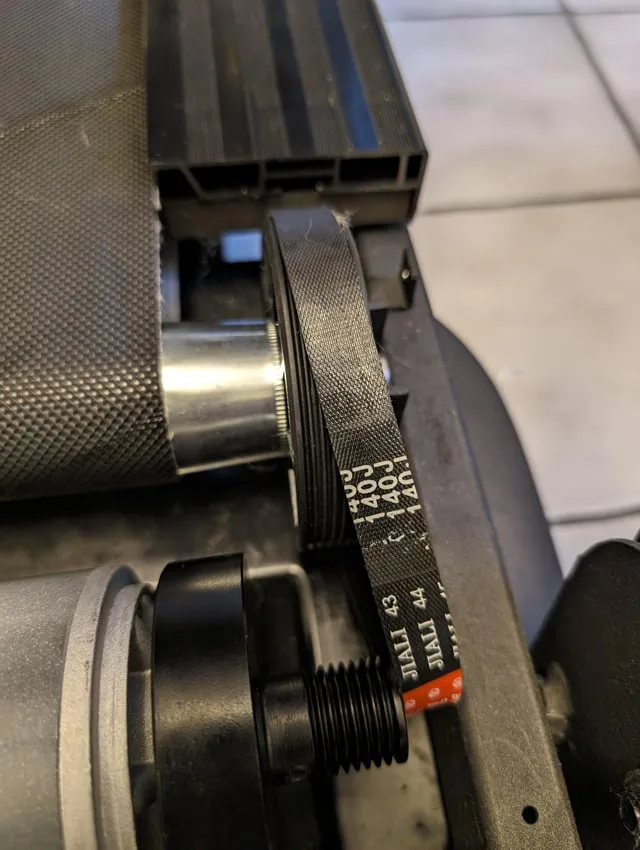
Image source: Bing (Web (fair-use with source credit))
Remove the motor cover. Inspect the drive belt for cracks, glazing, or slack. The motor mounts are black rubber blocks, and any crack or sag means replacement.
Spin the flywheel by hand to check runout; a wobble points to imbalance. If you see scorching or burn marks, stop and call a technician.
Step 5: Isolate Resonance and Consumable Wear
Run the belt at different speeds again. If shaking only happens at one speed, it's resonance, not a worn part. Move the treadmill a few feet and test again.
Some vibration at high speed is normal on budget machines, even when everything is within spec. Knowing the difference saves you from replacing good parts.
What Each Vibration Pattern Usually Means
Once you've isolated the pattern, compare it to this table. It reflects what service technicians report most often.
| Vibration Pattern | Likely Cause | First Fix |
|---|---|---|
| Shakes only under load | Loose deck bolts or worn cushioning | Tighten bolts to torque spec |
| Vibrates at one specific speed | Resonance or flat-spotted roller | Reposition machine or replace roller |
| Constant hum and shake | Motor bearing or drive belt wear | Replace bearings or drive belt |
| Wobbles in the console | Loose frame bolts or cracked base | Inspect and tighten all fasteners |
| Belt slips and shakes | Overtightened belt or dry deck | Re-tension belt and lubricate deck |
When the pattern matches a specific component, you can order the exact part instead of guessing. That's the whole point of methodical diagnosis.
Mistakes That Make Treadmill Vibration Worse
A few common errors turn a small problem into an expensive repair. Avoid these entirely.
- Over-tightening the belt until it strains the front roller bearings.
- Applying too much lubricant, which causes belt slip and surging.
- Using a thick rubber mat that creates bounce instead of damping.
- Tightening bolts without a torque wrench and stripping the threads.
- Ignoring the leveling feet after moving the machine to a new spot.
- Skipping the empty-load test and replacing the wrong part first.
The same DIY discipline that fixes a squeaky elliptical applies here, but methodical steps beat brute force. Also, check current safety bulletins from the Consumer Product Safety Commission if you own a newer machine. Recalls happen, and warranty coverage beats a self-repair bill.
Repair vs. Technician: When to Stop and Call Someone
If you don't feel confident with mechanical repairs, stop early. Certain jobs need specialist tools, torque specs, and experience. Motor bearing presses, belt splice repairs, and controller replacements are best left to a certified technician.
Signs you should call a pro right away:
- Grinding or scraping sounds that follow the motor rotation
- Burning rubber or electrical smell
- Belt won't track no matter how you adjust it
- Motor housing hot to the touch after 10 minutes
- Vibration continues after you finish the full diagnostic workflow
Warranty math matters here. DIY repair on a treadmill that's still under warranty usually voids coverage. Leveling, lubrication, and tightening visible bolts are safe.
Anything that requires removing the motor cover or pulleys deserves a check with the manufacturer first.
If the machine is older, run the replacement cost calculation. A $200 motor repair on a $2,300 treadmill is worth it. The same fix on a $400 budget treadmill means it's time to shop.
It's the same cost payoff you'd weigh when deciding whether an elliptical justifies its price. And if you're thinking about switching to a lower-impact machine, factor in the repair cost against resale value.
Aggregate service reports put typical repair costs at $150 to $350 for bearing work, $90 to $180 for a drive belt swap, and $250 or more for roller replacement. If parts plus labor push past half the machine's resale value, replacement wins.
Safety, Warranty, and Long-Term Vibration Prevention
Unplug the treadmill before you touch the belt, rollers, or motor. Lock the safety key as well. A machine that starts while your hand is near the drive belt can cause serious injury.
Keep the manual's torque specs nearby. Over-tightening bolts cracks the frame or strips threads. Under-tightening lets vibration loosen everything else over time.
Prevention checklist:
- Level the machine after every move
- Lubricate per the manual, not per internet advice
- Wipe the belt and deck rails monthly
- Inspect motor mounts twice a year
- Use a treadmill mat that's 1/4-inch or thinner
- Keep kids and pets away while the treadmill runs
Warranty protection comes down to paper trails. Take photos before any repair, keep receipts for parts, and get written approval from the manufacturer before invasive work. The same routine care that keeps a home cross-trainer running smoothly applies here.
Check for treadmill recalls through the Consumer Product Safety Commission. They update fitness equipment alerts regularly. As of 2026, more than a few vibration-related defects have turned into recall notices.
A quick search beats an expensive repair.
FAQs About Treadmill Vibration
How do I know if my treadmill vibration is serious?
If you hear grinding, smell burning rubber, or see the belt wobble, stop using the machine. Those are signs of worn bearings or a failing motor. A vibration that only happens under load is usually a floor or leveling issue.
Why does my treadmill vibrate only when I run?
That pattern points to floor flex or worn deck cushioning. Check the leveling feet first. Then inspect the rubber cushioning pads under the deck for cracking or compression.
If the machine sits on a suspended floor, the bounce may be structural.
Can a treadmill mat cause vibration?
Yes. A thick mat softens the floor too much and lets the machine rock side to side. Stick with a mat that's 1/4-inch or thinner.
The right mat absorbs noise without creating resonance.
How often should I lubricate the treadmill deck?
Most residential manufacturers recommend a silicone-based lubricant every 3 to 6 months, depending on usage. Check your manual for the exact interval. Over-lubricating actually causes belt slip and surging, which makes vibration worse.
Is it safe to use my treadmill while it vibrates?
It's safe only if the vibration comes from the floor or a loose bolt. Worn motor bearings or roller damage can get worse with continued use. Fix the cause before your next workout.