How Often Should You Lubricate a Treadmill
How often should you lubricate a treadmill? Most manufacturers recommend lubricating the deck every three months or after every 40 hours of use, whichever comes first. Getting this wrong is one of the fastest ways to destroy a treadmill belt and deck.
But that simple rule doesn't tell the whole story. Your treadmill's design and your workout habits completely change the answer. We'll walk you through exactly how to figure out the right schedule for your machine.
Image source: Bing (Web (fair-use with source credit))
Quick Answer: The Bottom Line First
How often should you lubricate a treadmill? For most home treadmills, lubricate the deck every three months or after every 40 hours of use, whichever comes first. Light walkers can stretch it to six months.
Heavy runners may need it monthly.
Check your owner's manual first. Some newer models have self-lubricating decks and don't need any manual lubrication. You'll know you need lube if the belt feels sluggish or you hear squeaking.
Always use 100% silicone lubricant.
What Actually Determines Lubrication Frequency
Forget generic schedules. The real answer depends on three things: how much you use the treadmill, what kind of deck it has, and how the belt feels.
Image source: Bing (Web (fair-use with source credit))
Usage Hours vs. Calendar Time
The "every three months" guideline is a baseline for light use. If you're a serious runner logging 10 hours a week, you'll need lubricant much more often, likely every month or two. The "40 hours of use" rule is more precise.
Track your workouts in a simple log or use the treadmill's built-in hour meter if it has one. You're already tracking your workout time on other machines, so it's an easy habit to extend.
Deck Type: Manual vs. Self-Lubricating
This is the biggest variable. Self-lubricating decks have a treated surface that reduces friction without added silicone. For these models, you typically never lubricate the deck yourself.
If your treadmill has a standard, untreated deck, you are responsible for all lubrication. Manufacturer specifications indicate this is the most common type for home machines.
Belt Condition, Tension, and How You Run
A belt that's too tight or too loose creates excess friction. Running is harder on a treadmill than walking. Heavier users put more pressure on the deck, increasing wear.
If you notice the belt hesitating when you step on it or a burning smell, it's past time for lubricant.
Here's how your usage changes the schedule:
| Usage Level | Hours Per Week | Suggested Lubrication Interval |
|---|---|---|
| Light (walking) | 1-3 hours | Every 6 months or 40 hours |
| Moderate (jogging) | 4-6 hours | Every 3-4 months or 40 hours |
| Heavy (running) | 7+ hours | Every 1-2 months or 40 hours |
The Treadmill Lubrication Decision Tree
Use this flow to find your exact schedule. Start with your deck type.
Branch 1: You Have a Self-Lubricating Deck
If your manual says the deck is "pre-lubricated" or "maintenance-free," follow this path. Do not add extra lubricant. Doing so can gum up the system and cause belt slippage.
Your only job is to keep the belt and deck clean. Wipe debris off the underside of the belt periodically.
Branch 2: Manual Deck + 3 or Fewer Hours Per Week
If you use your treadmill for casual walks or light workouts a few times a week, the standard schedule applies. Lubricate after 40 hours of use, which often works out to roughly every three months.
Before applying, do the paper test. Slide a folded piece of paper under the belt. If it glides easily, there's enough lube.
If it drags or comes out dusty, it's time.
Branch 3: Manual Deck + More Than 3 Hours Per Week
For regular joggers, runners, or households where multiple people use the machine, you need a proactive schedule. Don't wait for the belt to feel dry.
Lubricate after 40 hours of use. This might mean every month if you run 10 hours weekly. Also, lubricate any time you hear squeaking, notice increased motor noise, or feel the belt dragging.
Aggregate owner feedback shows that runners and heavy users save money on belt replacements by sticking to this shorter cycle.
Step-by-Step: Lubricate It Right, Even If You've Never Done It
The process is straightforward. The key is using the right material and applying it correctly.
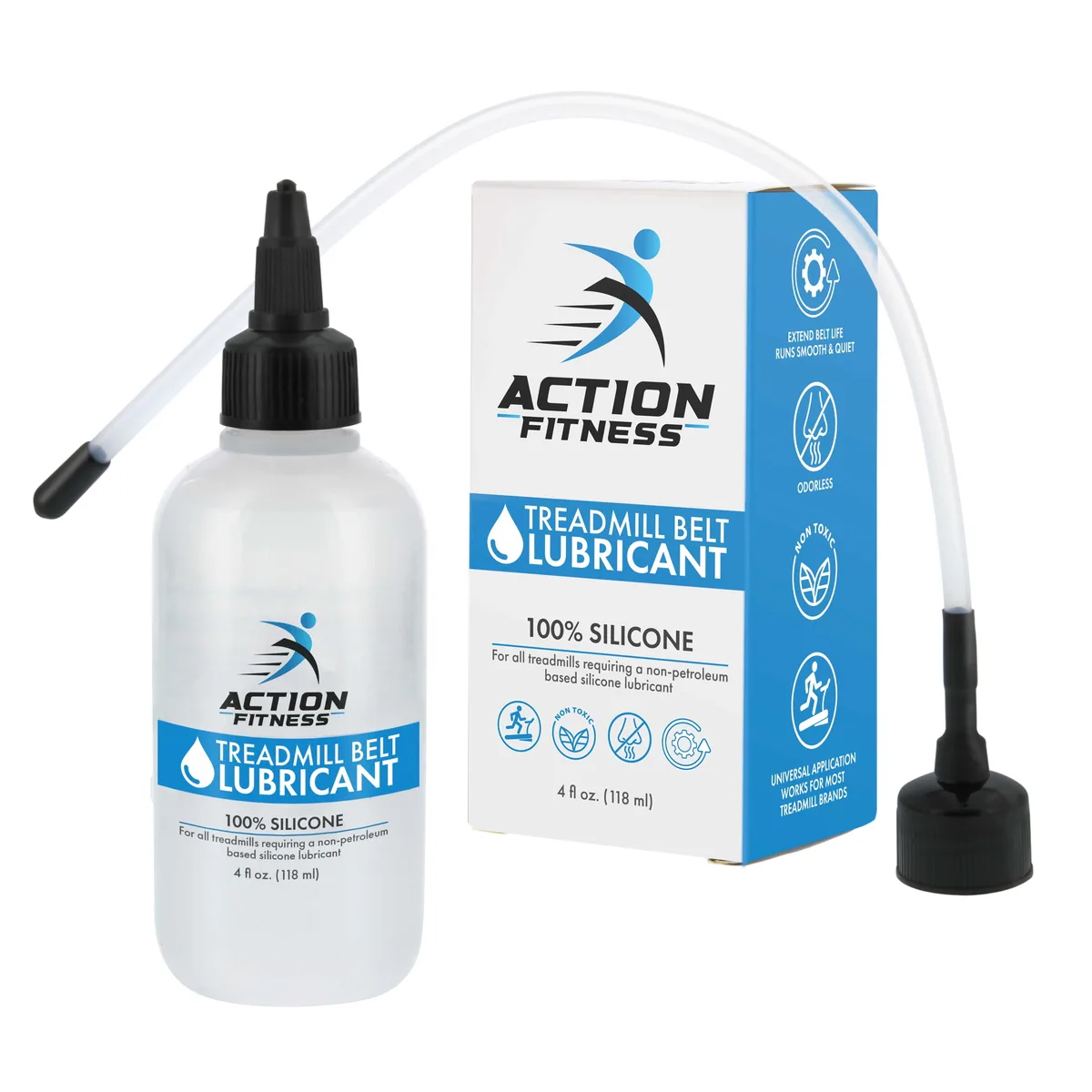
Image source: Bing (Web (fair-use with source credit))
Choosing the Right Silicone Lubricant
Use only 100% silicone lubricant made for treadmills. Do not use WD-40, vegetable oil, or anything with petroleum distillates. These can degrade the belt material and void your warranty.
Silicone spray works well and is easy to apply evenly under the belt. Liquid squeeze bottles are just as effective but take a bit more care.
The Two-Minute Application Process
- Power Off and Unplug: Safety first. Turn off and unplug the treadmill.
- Loosen the Belt: You need access to the deck surface. Loosen the rear roller bolts slightly with an Allen wrench (usually included with the treadmill) to create slack. You should be able to lift the belt easily.
- Clean the Deck: Wipe any dust or debris from the deck surface and the underside of the belt with a dry cloth. Debris mixed with lube creates a gritty paste. This is the same principle as keeping your gear dust-free on other machines.
- Apply Lubricant: Run a thin bead of liquid silicone or spray a light, even coat along the center of the deck where your feet land. A thin line down the middle is enough. Avoid the edges.
- Distribute the Lube: Plug in the treadmill, power it on, and run it at a slow speed (3-5 mph) for 30-60 seconds. This spreads the lubricant evenly across the deck.
- Re-Tension and Test: Turn off the machine and tighten the rear rollers back to their original tension. The belt should have about 1/4 to 1/2 inch of play when pressed with moderate force. Plug it in and run it again to check for smooth operation.
Over-Lubrication and Other Mistakes That Kill Treadmill Decks
More lube isn't better. Over-lubrication is a common and destructive mistake.
The Major Pitfalls to Avoid
- Too Much Silicone: A belt that's over-lubricated will slip. You'll feel it hesitate or lurch under your feet. This is a safety hazard and strains the motor. Excess lube also attracts dust, which grinds into the deck. The U.S. Consumer Product Safety Commission publishes treadmill safety and recall information if you want to dig deeper.
- Skipping the Cleaning Step: Applying new lubricant over a dirty deck is pointless. The grit will work against you, just like when you skip the cleaning routine on other equipment. Always clean first.
- Using the Wrong Lubricant: Petroleum-based products will ruin your belt. They cause it to swell, soften, and break down prematurely. Stick with silicone only.
- Ignoring the Tension: A loose belt after lubrication can track off to one side. An overly tight belt creates unnecessary drag on the motor. Get the tension back to factory spec.
Regular lubrication is part of equipment maintenance that keeps all your cardio machines running longer.
Signs Your Lubrication Schedule Is on Track (and When to Adjust)
A well-lubricated treadmill deck feels smooth and quiet. You shouldn't notice any dragging, squeaking, or burning smells during your workout. If you've hit your 40-hour mark and applied fresh silicone, these signs tell you everything is working.
But sometimes the schedule needs tweaking. If you still hear noise after lubricating, the belt might be misaligned or too tight. Check the tracking and re-tension the rear rollers.
If the squeak persists, the problem could be the motor bearings, not the deck. If you're dealing with the same kind of squeak on a different machine, here's how to pinpoint where it's coming from.
The paper test is a quick check between scheduled intervals. Fold a piece of printer paper in half and slide it under the belt. If it slides through easily, the deck still has enough lubricant.
If it drags or comes out coated in dust, your belt is running dry.
Pay attention to how the belt feels when you start walking. A dry belt causes a slight hesitation or sticky feel on your first few steps. A properly lubricated belt responds instantly.
Aggregate reviews and owner feedback show that most lubrication problems come from ignoring the first signs of wear. A squeaky belt almost always means dry spots, not a faulty machine. Jump on it early and you'll extend the life of both the belt and deck significantly.
If you're a heavy runner, expect to adjust the schedule more often. If you're a casual walker, don't just stick to the calendar. Let your specific usage hours and the physical feel of the belt be your guide.
The same logic applies to adjusting moving parts on any home gym equipment you own.
Treadmill Lubrication FAQs
Can I use WD-40 to lubricate my treadmill?
No. Never use WD-40 or any petroleum-based product on a treadmill deck. These lubricants degrade the belt material, causing it to weaken or swell.
They also attract dust, creating a gritty paste that scratches the deck. Use only 100% silicone lubricant.
How do I know if my treadmill needs lubrication?
Signs include a squeaky or squealing belt, a hesitation when you step on it, and a burning rubber smell. Dust or debris under the belt is another indicator. If you're unsure, use the paper test.
A paper that drags or comes out dusty under the belt means the deck is dry.
Should I lubricate my treadmill if it says "self-lubricating"?
No. Self-lubricating decks have a sealed or treated surface that doesn't need added silicone. Applying lubricant to these models can cause the belt to slip and void the warranty.
Check your owner's manual. If it says "maintenance-free," follow that guidance.
Does treadmill lubricant expire?
Yes, silicone lubricant has a shelf life. Check the bottle for an expiration date. Old lubricant can thicken or separate, making it less effective.
Most manufacturers recommend using a fresh bottle within one to two years of purchase to ensure optimal performance.
Can I use too much treadmill lubricant?
Absolutely. Over-lubrication is as bad as no lubrication. Excess silicone causes the belt to slip, which stresses the motor and creates a safety hazard.
It also attracts dust and debris. Apply a thin, even line down the center of the deck and wipe away any excess after distribution.