Can I Put a Treadmill on Carpet
You're staring at a treadmill box in your living room, and the only open floor space is carpeted. The question running through your head is simple: can I put a treadmill on carpet? The honest answer is yes, but it depends on a few things you probably haven't considered yet.
In our research, most home treadmills weigh between 200 and 350 pounds, and that weight sits on just four small contact points. Carpet and its padding underneath act like a sponge, so without the right setup, you're asking for wobble, overheating, and permanent floor damage. As of 2026, manufacturer specifications still point to one clear rule: you need to understand your carpet's pile, your treadmill's ventilation, and your warranty's fine print before you bolt anything together.
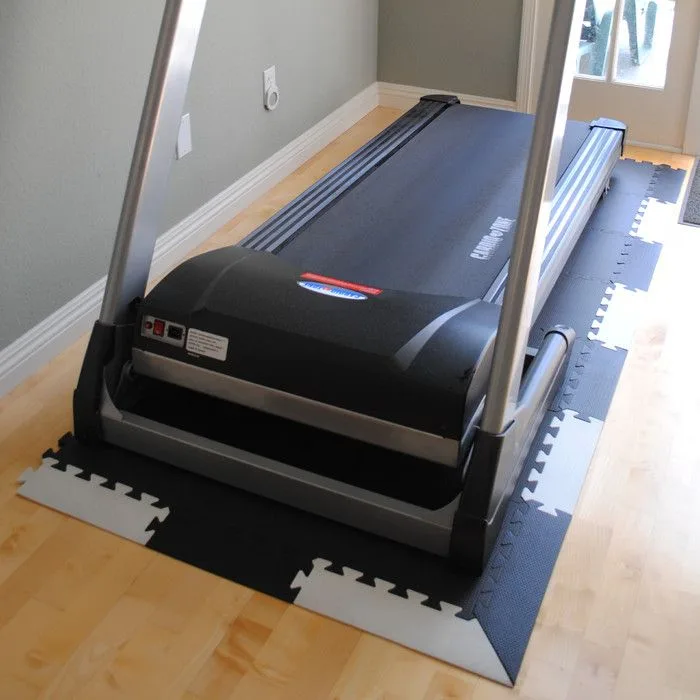
Image source: Bing (Web (fair-use with source credit))
Quick Answer: Yes, But It Depends
Yes, you can put a treadmill on carpet. Low-pile or commercial carpet with a dense rubber mat underneath is generally fine for most home machines. High-pile or plush carpet needs extra support, usually a plywood platform beneath the mat.
Your treadmill's motor needs breathing room, so never block the vents with thick padding.
Always check your owner's manual first. Many warranties explicitly require a hard, level surface. If the manual says "hard floor only," carpet voids the warranty.
When in doubt, a 3/4-inch plywood base under a rubber mat solves most stability and heat problems.
What Actually Happens When You Put a Treadmill on Carpet
Carpet feels nice underfoot, but it's structurally the worst enemy of a heavy machine. Here's what goes wrong when you skip the prep work.
The wobble problem. Carpet padding compresses unevenly under a treadmill's weight. Your feet may not sit level, so the frame rocks slightly with every stride. That rocking stresses the welds, misaligns the belt, and makes your run feel unstable.
A machine that moves under you is a machine that eventually breaks.
The heat problem. Most treadmills pull air in through vents on the motor housing, often near the bottom. Plush carpet or a thick mat can block those vents completely. Motors overheat, electronics fry, and the treadmill shuts down mid-workout.
This is the most common cause of premature treadmill failure on carpet.
The carpet problem. A 300-pound machine pressing down through four small feet crushes carpet fibers permanently. You'll see visible indentations within weeks. The padding underneath loses its bounce, and the carpet never recovers.
Ever moved a heavy sofa? Same idea, but worse.
The noise problem. Carpet muffles footfalls, which sounds good. But a treadmill that isn't level against a soft floor creates a low-frequency thumping that travels through the floor joists. Your downstairs neighbors will hear it, even if you can't.
The same physics apply to other home cardio machines that sit on soft surfaces.
The Decision Tree: Is Your Carpet Setup Safe?
Work through this in order. Each branch gives you a clear answer.
Branch 1: Low-pile carpet + proper mat. Low-pile carpet means tight, short fibers like berber or commercial-grade carpets. If your carpet has less than 1/4 inch of pile height and thin padding underneath, you're in the safest zone. A dense rubber treadmill mat at least 3 to 4 millimeters thick is usually enough.
Follow the setup steps in the next section and you're good to go.
Branch 2: Plush, thick, or high-pile carpet. If your carpet is soft, fluffy, or has thick padding, you need more than a mat. The mat alone won't stop the wobble because the padding underneath still compresses. Add a 3/4-inch plywood platform beneath the mat to distribute the treadmill's weight across a wider area.
This combo turns your soft carpet into a stable base.
Branch 3: Upstairs carpeted room. Upstairs carpet sits on floor joists, which flex more than a concrete slab. The plywood plus mat setup isn't just recommended here, it's essential. The platform spreads the load across multiple joists and reduces noise transfer to the room below.
If you're on the second floor, don't skip the plywood.
Branch 4: Your warranty says "hard floor only." Some manufacturers, especially budget brands and walking pads, explicitly void the warranty on carpet. If your manual says this, you have two options. Either return the treadmill and get a model that allows carpet use, or place it on a solid platform that mimics a hard floor.
That means 3/4-inch plywood cut to match the treadmill's footprint, with no gaps underneath.
Step-by-Step: How to Set Up a Treadmill on Carpet the Right Way
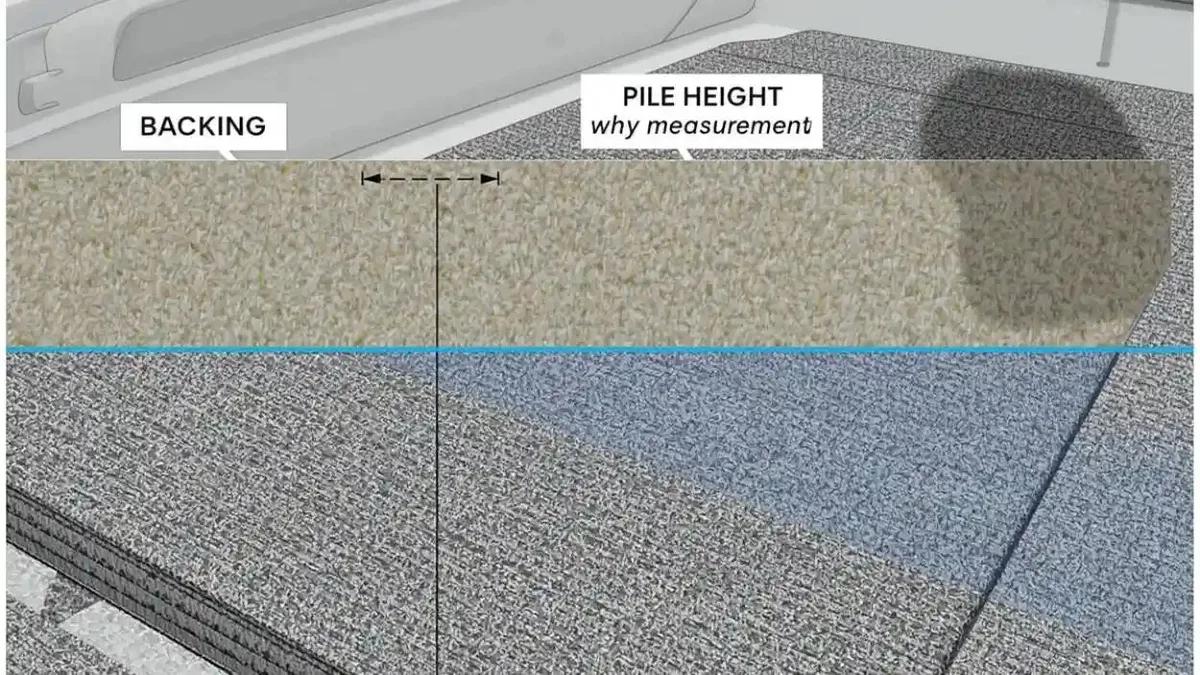
Image source: Bing (Web (fair-use with source credit))
Get the setup right the first time so you don't have to wrestle a heavy machine again. Here's the process our research recommends.
Step 1: Measure your carpet and pad. Push a ruler straight down into the carpet next to a wall. Pile height is the distance from the backing to the fiber tips. Include the padding if you can see it at a door threshold.
Anything above 1/4 inch total is plush territory, meaning you'll need plywood.
Step 2: Choose your mat size. Your mat must be larger than the treadmill's footprint. Add at least 2 inches on every side, so the machine never tips off the edge. Measure the distance between the front and rear feet, not the full frame length.
A mat that's too short leaves the front feet hanging off.
Step 3: Lay the plywood base if needed. Cut 3/4-inch plywood slightly larger than your mat. You want the platform to cover the same area as the mat, not the whole room. Place it directly on the carpet, then put the rubber mat on top.
This sandwich spreads weight evenly and protects both the carpet and the machine.
Step 4: Assemble or place the treadmill on the mat. Position the treadmill on the mat before you fully assemble or move it into place. Dragging an assembled treadmill across the carpet can shift the mat and bunch it up. Once it's in position, check that the mat lies flat with no wrinkles under any foot.
Step 5: Level the treadmill feet. Most treadmills have adjustable feet you can twist to raise or lower each corner. Use a carpenter's level on the deck, front to back and side to side. On plush carpet, you may need to extend the front feet a half-inch or more to compensate for the compression.
Step 6: Test at walking speed first. Before you do a full run, walk on the treadmill for a few minutes. Watch for rocking, sliding, or mat bunched up in front of the belt. Run your hand under the motor housing to confirm the vents aren't blocked.
Then gradually work up to your normal pace.
Step 7: Re-check after the first week. The carpet will compress further once the treadmill has been weighted for a few days. Re-level the feet and flatten the mat if it has shifted. This quick check prevents long-term wobble and keeps the machine quiet.
It's part of the regular maintenance that every piece of home cardio equipment needs.
Image source: Bing (Web (fair-use with source credit))
Treadmill Mats, Plywood, and Other Floor Protectors: What Actually Works
Not all mats are equal. Our research shows three distinct options, each with its own job.
Thin PVC mats (1.5 to 3 mm). These are cheap, lightweight, and fine for protecting a hard floor from scratches. On carpet, they're nearly useless. They lay flat but don't absorb the treadmill's vibration or stop the rocking.
You'll also find they creep and bunch up under the front feet quickly.
Dense rubber mats (4 to 8 mm). This is the sweet spot for carpet. Rubber grips the carpet fibers and stays in place without adhesive. It absorbs a good amount of impact and keeps the machine from walking across the room.
Look for 100 percent rubber, not recycled foam or PVC, because those compress too much under heavy loads. But a mat alone works only on low-pile carpet with firm padding.
Plywood platform + rubber mat. This is the gold standard for plush carpet and upstairs rooms. The plywood does the heavy lifting, spreading the treadmill's weight over a broad area. The rubber mat on top grips the treadmill and adds vibration damping.
Cut the plywood so it sits flat with no gaps underneath. Sand the edges to avoid splinters.
What not to use. Avoid yoga mats, exercise puzzle mats, and anti-fatigue kitchen mats. They're too soft, too thin, or both. You'll also want to skip carpet protectors designed for office chairs.
Those are rigid and crack under a treadmill's weight.
When you can skip all of this. If your treadmill is a lightweight walking pad under 100 pounds, and the carpet is low-pile with firm padding, the machine's own rubber feet may be enough. Even then, a thin rubber mat is cheap insurance against permanent carpet dents.
Mistakes That Ruin Treadmills and Carpets
You've got the right mat and the setup looks solid. But there are a few common traps that still wreck machines and floors.
Skipping the mat because it's a lightweight walking pad. Even a 100-pound machine crushes carpet over time. The fibers mat down, and the padding loses its bounce. A thin rubber mat is cheaper than a carpet repair, so don't skip it.
Using a mat that's too thick under the motor vents. Thicker rubber isn't always better. Some mats push right up against the motor housing and block airflow. You want a mat that fits under the feet but leaves clearance around the vents.
Run your hand underneath the machine after setup to confirm there's breathing room.
Letting the mat bunch up near the front feet. The treadmill's belt motion slowly creeps the mat forward. A folded mat creates an uneven surface and a rocking frame. Flatten it out every few workouts.
Ignoring a wobble until something snaps. A little shake at walking speed turns into a violent shimmy at 6 mph. That movement stresses the frame welds and misaligns the belt. If you feel wobble, stop and re-level.
The same advice applies to other home cardio gear, since a frame that loses alignment often starts making odd noises during use.
Forgetting to re-check after the first week. New carpet compresses dramatically once a heavy machine sits on it. The leveling feet that were perfect on day one are loose by day seven. Re-tighten and re-level after the initial break-in period.
Using an office chair carpet protector. Those hard plastic mats crack under concentrated weight. They're designed for rolling chairs, not static loads. Stick with rubber and plywood.
FAQs About Treadmills on Carpeted Floors
Does carpet void my treadmill warranty?
It can. Many manufacturers explicitly require a hard, level surface in their warranty terms. If the manual says "hard floor only," using carpet without a plywood platform is grounds for denial.
Read the warranty section before you set up. Some brands allow carpet, but only with a mat and only on low-pile surfaces.
What's the best plywood type for a treadmill base?
Use 3/4-inch sanded plywood, preferably AC grade or better. Avoid particle board, which crumbles under weight and absorbs moisture. Cut the platform slightly larger than the treadmill's footprint, then paint or seal it to protect against sweat.
You don't need hardwood plywood, just a solid structural sheet that doesn't flex. For reference, the Consumer Product Safety Commission recommends inspecting exercise equipment regularly for signs of wear and loose connections.
How much noise will a treadmill make for downstairs neighbors?
Quite a bit, if the carpet has thick padding. The padding acts like a spring, transferring impact energy through the floor joists. A plywood platform helps a lot by spreading the load across more joists.
A dense rubber mat on top kills the high-frequency slap. Still, expect some low-frequency thumping on the floor below.
Can I put a treadmill mat directly on plush carpet?
You can, but it won't solve the stability problem. The mat grips the fibers, yet the padding underneath still compresses unevenly. You'll get a wobble that no mat can fix.
Plush carpet needs the plywood platform beneath the mat to distribute the machine's weight properly.
Do I need to worry about static electricity?
Yes, especially in dry climates. Carpet generates static, and the treadmill belt adds more friction. You might feel small zaps when you touch the handrails.
A rubber mat doesn't eliminate static, but it does insulate the machine from the carpet. Plug the treadmill into a grounded outlet, and don't use a cheater plug.
Final Verdict: What to Do in Your Situation
You now have a clear decision path. Let's simplify it even further.
If you have low-pile carpet with firm padding: buy a dense rubber mat at least 4 millimeters thick, level the treadmill, and you're done. This setup works for most home machines.
If you have plush, high-pile, or thickly padded carpet: add a 3/4-inch plywood platform under that rubber mat. This is non-negotiable for stability and heat clearance. It also protects the carpet from permanent crush marks.
If you're setting up on an upstairs carpeted room: always use plywood and a mat. The platform spreads the load across joists and cuts noise transfer. Skip it, and you'll hear every footfall from the floor below.
If your warranty requires a hard floor: build the plywood platform so it creates a solid, unbroken surface. Cover it with the mat. That combination mimics a hard floor closely enough for most manufacturers to accept it.
This same logic applies when you're weighing a treadmill against other cardio options, so ask yourself whether a different machine fits your space better before you commit.
If you're renting: protect the carpet like your deposit depends on it. Use both plywood and a rubber mat. Take photos of the setup when you move in and when you move out.
Bottom line? A treadmill on carpet works fine when you respect the three risks. Manage the weight distribution, keep the motor vents clear, and protect the fibers.
Do that, and your machine will run quietly and safely on even the fluffiest floor. Just re-check the leveling after a week, and you'll be set for years of runs.