Is an Exercise Bike Good for Beginners
You want to get fit without wrecking your knees or wasting money on something you'll abandon by April. Is an exercise bike good for beginners? Usually, yes, but only when you pick the right style and set it up properly.
The seat, the resistance, and your starting plan make all the difference.
Per the American Heart Association, adults need about 150 minutes of moderate aerobic activity weekly. A stationary bike is one of the simplest ways to get there indoors. It's low impact, forgiving, and doesn't require much coordination.
But the phrase "exercise bike" covers several very different machines, so let's work out which one actually fits you.
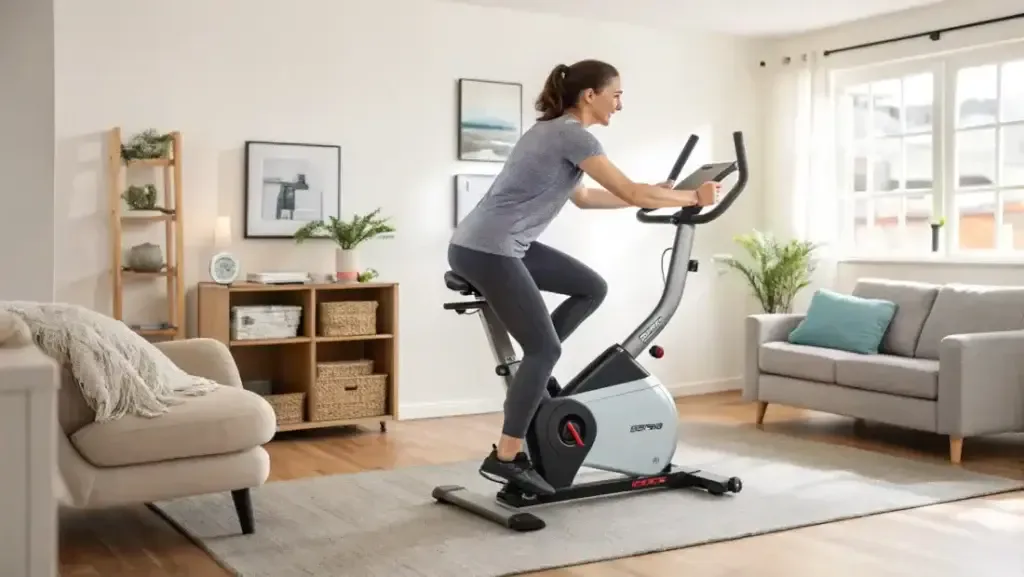
Image source: Bing (Web (fair-use with source credit))
Quick Answer
Yes, an exercise bike is good for beginners. It offers low-impact cardio with a small learning curve. You can control the intensity from near-zero resistance.
That makes it safer than running or jumping rope. It's a solid first piece of home fitness gear.
Is an Exercise Bike Actually Good for Beginners? A 3-Step Reality Check
Short answer: yes, but "good for beginners" depends on three conditions. Work through them before you buy anything.
Step 1: Get a medical green light. If you're over 40, sedentary, or managing high blood pressure, talk to a doctor first. The CDC's physical activity guidelines support this precaution.
Step 2: Check your knees and hips. A stationary bike is low impact, but an upright bike holds your knees in a fixed arc. If your hips feel stiff or your lower back complains, a recumbent bike spares both.
Step 3: Name your goal. Want to build cardio and establish a routine? A bike is perfect. Looking for huge calorie burn with zero extra effort?
No machine does that on its own.
If all three check out, an exercise bike is a smart first machine. If not, you might be better served by a rower since it uses more of your body.
Upright vs. Recumbent vs. Spin: Which Beginner Bike Matches Your Body and Goals?
Exercise bikes fall into three camps. Your body and goals decide which one belongs in your living room.
Upright bike looks like a regular bicycle bolted to the floor. You sit almost directly over the pedals and lean forward slightly. It's the most common type and the best value for basic cardio.
Recumbent bike uses a wide chair-like seat with pedals out in front. Your back stays supported, which makes it easier on your lower back, hips, and wrists. It's the safest pick for seniors and anyone with mobility concerns.
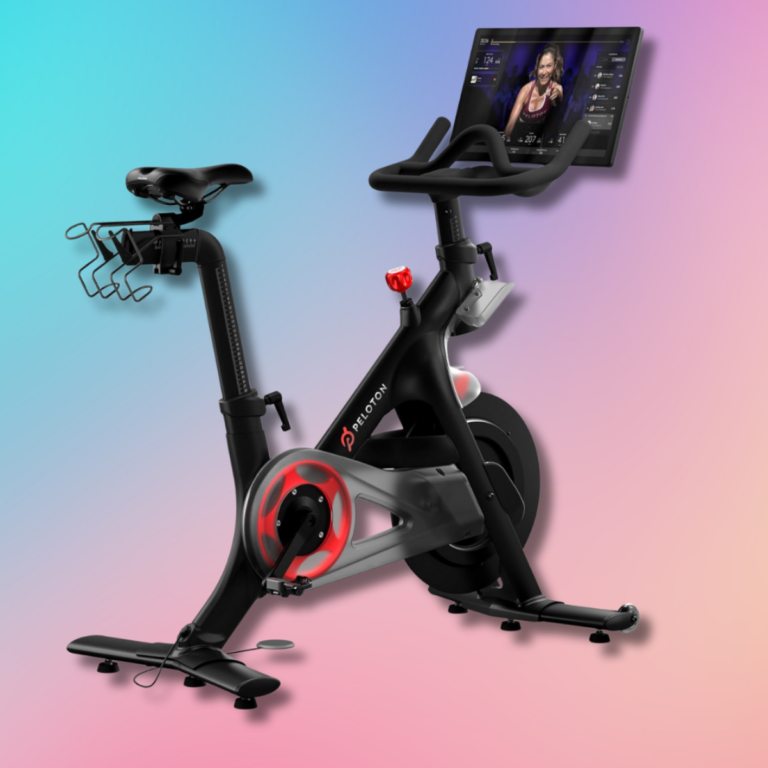
Spin bike mimics a road bike, but with a heavier flywheel. It's ideal if you want intense, class-style workouts later. Beginners often choose it for the look, then struggle with the firm saddle.
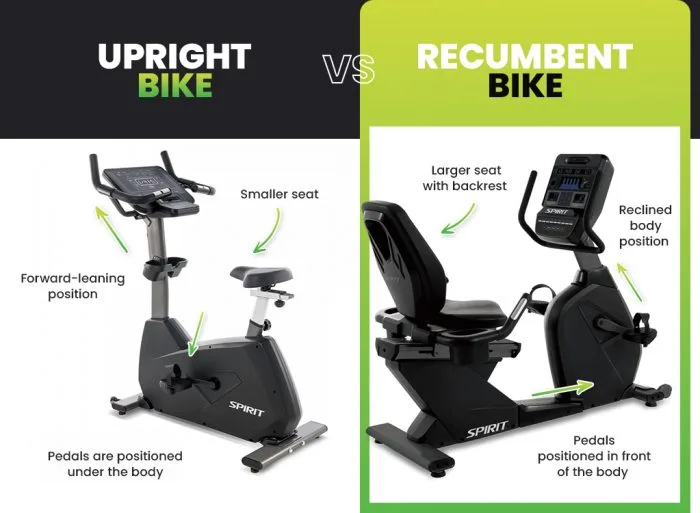
Image source: Bing (Web (fair-use with source credit))
| Bike type | Best for | Watch out for |
|---|---|---|
| Upright | Budget-friendly cardio | Stiff hips and wrists |
| Recumbent | Back pain, older riders | Less intense; bulkier |
| Spin | Future intensity goals | Firm saddle, higher price |
In our research, recumbent bikes cause the least beginner discomfort. Upright bikes feel the most natural. Spin bikes reward you later but punish you first.
Start with the bike that fits your body today, not the one that matches your six-month fantasy.
If your joints still complain, easy-to-start ellipticals offer another low-impact route.
Your First 10-Minute Ride: A Step-by-Step Beginner Session
Your first ride should feel almost boring. That's a good sign. Keep the resistance light and your pace steady.
Step 1: Set the seat height. Sit on the saddle and place your heel on a pedal at its lowest point. Your leg should be fully straight. Switch to the ball of your foot.
Your knee should now have a slight bend. This one adjustment prevents most knee pain.
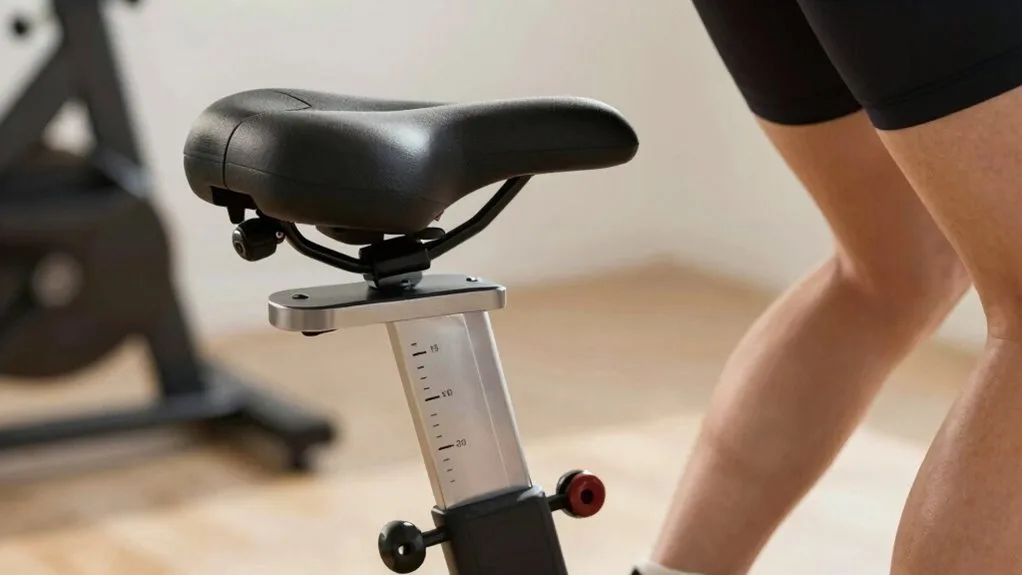
Image source: Bing (Web (fair-use with source credit))
Step 2: Warm up for 3 minutes. Pedal slowly with almost no resistance. Aim for about 60 RPM, which is one full pedal turn per second.
Step 3: Find your riding pace. Increase resistance until you feel a slight push, not a struggle. Spin at 70 to 80 RPM for 5 minutes. You should be able to speak in short sentences.
Step 4: Cool down for 2 minutes. Drop the resistance and pedal easily. Stretch your calves and thighs afterward.
That's ten minutes total. Repeat this session three times per week, then add two minutes each week. If you move to a rower later, seat adjustability matters just as much there.
Beginner Bike Specs to Care About (and What to Ignore)
Some specs matter. Others exist only to look good in a product photo. Here's the list worth your attention.
- Resistance type: Magnetic resistance is smooth and quiet. Felt-pad resistance gets draggy and noisy over time. Choose magnetic if you can.
- Flywheel weight: For beginners, 15-25 pounds is plenty. Heavier flywheels feel smoother but cost more.
- Adjustable seat: Look for height and fore-and-aft (front-back) adjustment. Without both, you can't match the bike to your leg length.
- User weight capacity: Always check this number. If it's below 250 pounds, the frame may feel wobbly.
- Display: A basic time, speed, and distance readout is all you need. Heart-rate grip sensors are nice, not required.
As of 2026, basic magnetic-resistance bikes start around $150 and do the job well. Skip the built-in workout programs, Bluetooth speakers, and tablet holders. They add price, not results.
| Spec | Beginner priority | Why |
|---|---|---|
| Magnetic resistance | High | Smooth and quiet |
| Flywheel 15-25 lb | Medium | Feels stable |
| Seat adjustability | High | Prevents knee pain |
| Weight capacity | High | Safety |
| Fancy display | Low | Rarely used |
The same priority list helps when comparing indoor ellipticals.
7 Mistakes That Make Exercise Bikes Feel Uncomfortable or Useless
Most beginners don't quit because biking is hard. They quit because these seven errors make it miserable.
- Seat too low. This is the #1 cause of knee pain. Set your seat so your knee barely bends at the bottom of the pedal stroke.
- Cranking the resistance. High resistance burns you out in four minutes and teaches your body to dread the machine. Keep it light.
- Ignoring saddle soreness. Your backside will hurt for the first two weeks. That's normal. If it lingers, buy a wider gel-padded saddle.
- Skipping the warm-up. Cold muscles feel awful. Pedal easily for 3 minutes before pushing any effort.
- Buying the cheapest bike. Very cheap bikes often use felt resistance that drags and brakes that wear out. At least get a basic magnetic model.
- Not scheduling rides. A bike you don't schedule is a bike you skip. Set a recurring reminder for three mornings per week.
- Expecting instant weight loss. A bike helps, but not in a week. Pair it with better eating, and you'll notice changes in about a month.
If you ever switch to a rower, the maintenance habits you build on a bike carry over well.
Alternatives If an Exercise Bike Still Isn't Clicking: Walking, Elliptical, and More
Maybe you've tried a bike and the saddle is a dealbreaker. Or your hips just don't agree with that fixed motion. Good news: you still have solid beginner-friendly options.
Walking is the most forgiving. It costs nothing, needs no equipment, and works anywhere. For total beginners with joint pain, it's often the smartest start.
Elliptical trainer gives you upper body involvement without impact. It feels similar to a bike but keeps your legs in a more natural ellipse. The downside is size and price.
Budget-friendly compact models exist, but you'll spend more for the same quality as a basic bike.
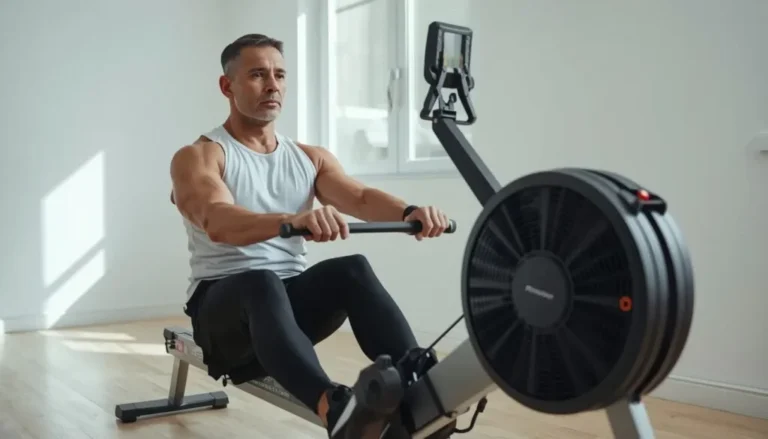
Rowing machine works your legs, core, and arms in one fluid stroke. It's a superb full-body beginner option, but the form takes practice. You'll need more floor space than a bike and a learning curve.
| Alternative | Impact | Skill level | Cost range | Best for |
|---|---|---|---|---|
| Walking | None | Very easy | Free | Absolute beginners |
| Elliptical | None | Easy | $300-$1,000 | Full-body cardio |
| Rowing machine | None | Medium | $200-$900 | Total-body conditioning |
| Exercise bike | None | Very easy | $150-$800 | Lower-body cardio |
The truth is, the best beginner machine is the one you'll actually use. If a bike hurts, don't force it. Try walking for two weeks and reassess.
Frequently Asked Questions
How long should a beginner ride an exercise bike?
Start with 10 to 15 minutes per session, 2 to 3 days per week. Add 2 minutes each week. By week four, you'll comfortably handle 20 minutes.
Keep the resistance light enough that you can talk in full sentences.
Is a recumbent bike better for bad knees?
Yes, usually. Recumbent bikes put you in a reclined position, with your legs extending forward instead of straight down. That reduces compression on the knee joint.
If you have knee pain, choose a recumbent model and keep the resistance low.
How many times per week should I use an exercise bike?
Three times per week is ideal for beginners. It gives your muscles a rest day in between sessions. If you prefer daily movement, alternate biking with walking.
Listen to your knees and hips, they'll tell you when to back off.
Can you lose belly fat with an exercise bike?
Yes, but not on its own. A bike burns calories and builds cardiorespiratory fitness, but spot reduction isn't real. Pair regular riding with a modest calorie deficit and strength training.
You'll see changes in about four to six weeks, not one.