How to Fix a Rice Cooker Not Cooking
Your rice cooker just sat there, clicked to warm, and left you with a pot of crunchy rice. If you've ever wondered how to fix a rice cooker not cooking, the answer starts with the symptom, not the brand. Three common failures cause almost every case, and each one has a distinct fix.
As of 2026, most budget and mid-range rice cookers rely on the same simple mechanical core: a magnetic switch, a thermal fuse, and a heating element. Per UL appliance construction standards, these three parts handle the entire cook cycle. Once you know which one failed, you're about five minutes of testing away from a cooked batch of rice.
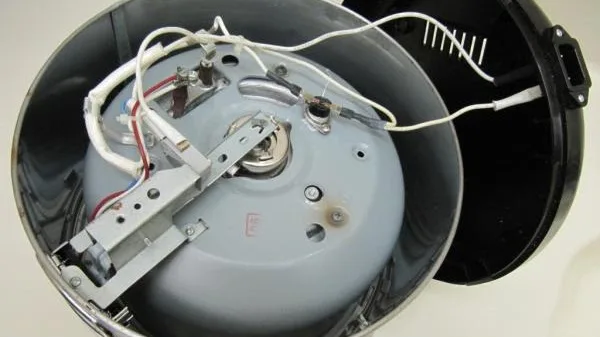
Image source: Bing (Web (fair-use with source credit))
What Kind of "Not Cooking" Problem Do You Have?
Before you unscrew anything, match your cooker to one of three failure patterns. The symptom narrows the repair from twelve possible causes down to one.
- No power at all. The light is dead, the cooker won't switch on, and nothing heats. That points to the power cord, the fuse, or the heating element.
- Turns on but never gets hot. The indicator light glows, but the rice stays raw and the pot stays cold. That usually means the magnetic switch isn't latching properly.
- Clicks to warm too early. The unit switches from cook to warm before the rice is done. You'll see steam, but the cooking stops halfway. This is typically a blown thermal fuse or a magnet that lost its strength.
| Symptom | Likely Cause | Fix |
|---|---|---|
| No power at all | Power cord, fuse, or heating element | Test continuity, replace bad part |
| Light on, no heat | Magnetic switch contacts | Clean or bend switch contacts |
| Clicks to warm early | Thermal fuse or weak magnet | Replace fuse or switch |
Many owners toss a perfectly repairable cooker at this point. Aggregate reviews show most rice cookers fail after two to four years, and the failure is rarely catastrophic. The fix is usually a $10 part and 30 minutes of work.
If you're still not sure which pattern you have, run a water test. Add one cup of water, press cook, and watch what the switch does. The behavior tells you everything.
What's Inside: The Three Components That Decide If Rice Cooks
Every rice cooker, whether it's a $20 Aroma or a $200 Zojirushi, uses the same basic trio under the pot. Understanding these three parts makes the repair obvious.
- Heating element. This is the coil that gets hot when electricity passes through it. It sits under the cooking pot and does the actual cooking.
- Magnetic switch. Also called the Curie point switch, this is the small magnet-and-contacts assembly that holds the cook circuit closed. When the pot gets hot enough, the magnet loses its pull and releases a spring, which drops the cooker into warm mode.
- Thermal fuse. This is a safety device. It's a one-time fuse that blows if the unit overheats or the switch fails. It cuts power to the heating element, which is why many cookers stop producing heat mid-cycle.
There's also a bimetallic thermostat in many digital models, but the mechanical pair is the most common failure point in analog cookers. Parts are still interchangeable across dozens of brands because they all follow the same compact design. Think of the magnetic switch as the brain and the thermal fuse as a guard.
The heating element is the muscle. If one fails, the whole cycle breaks. It's the same logic you'd use when figuring out why a hand mixer suddenly stops working.
The Quick Diagnostic Test: Check Continuity with a Multimeter
Grab a digital multimeter. It's the only tool that can tell you exactly which component is dead. First, unplug the cooker and remove the bottom cover with a Phillips screwdriver.
You'll see the heating element terminals, the fuse, and the switch wires.
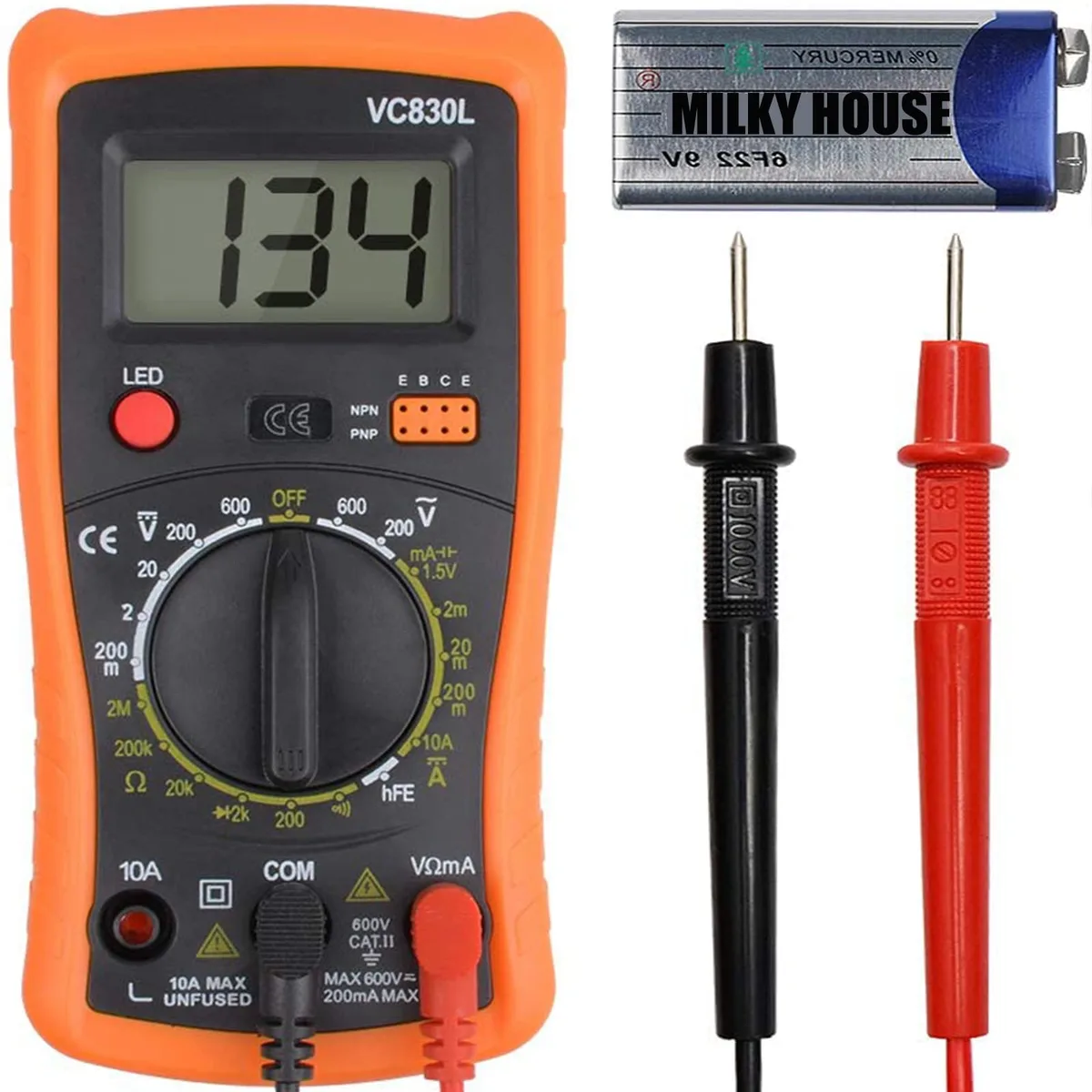
Image source: Web (Bing) / animalia-life.club (Web image (fair-use with source credit))
Set the multimeter to the ohms or continuity setting. Touch one probe to one terminal and the other probe to the other. The display tells you what's intact:
- Thermal fuse: Should read near 0 ohms. Any reading above 1 ohm, or no reading at all, means the fuse is blown.
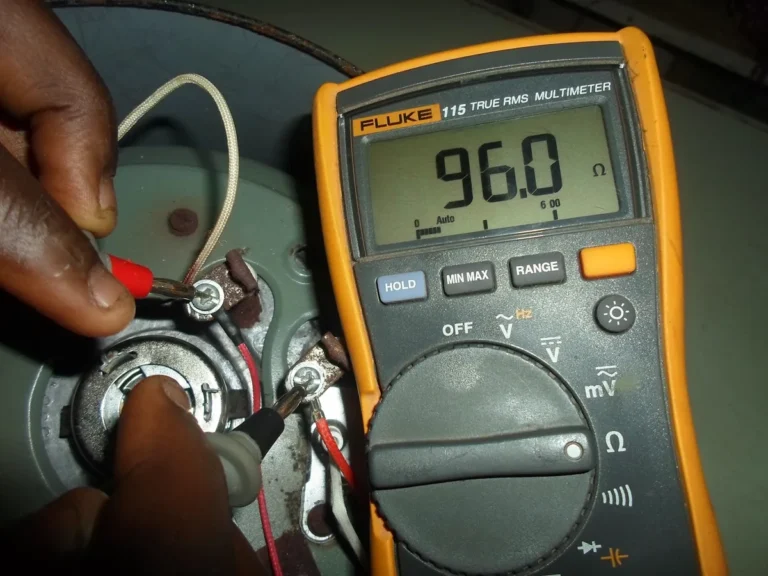
- Heating element: Should read between 100 and 300 ohms for a standard 120V unit. An open circuit or infinite reading means the element is burned out.
- Magnetic switch contacts: When the switch is pressed closed, you should get a near-zero reading. If you get infinite resistance, the contacts aren't making contact.
Manufacturer specifications indicate these ranges hold across most consumer rice cookers sold in the US. If you get a dead reading on the element, stop and test your multimeter leads first by touching them together. A cold connection can fake a blown part.
The same testing habits apply when you're checking electrical parts on other appliances.
If It Turns On but Never Gets Hot: Clean and Bend the Switch Contacts
This is the most common fix and the cheapest one. The cooker turns on, the light works, but the heating element never fires. That's the magnetic switch failing to make contact.
Open the base and locate the switch assembly. It's usually a small plastic block with two metal contacts and a spring arm. Over time, these contacts tarnish, or the spring bends and loses pressure.
Here's the fix:
- Unplug the unit and remove the bottom cover.
- Find the magnetic switch contacts.
- Slide a piece of fine-grit sandpaper between the contacts and rub gently. Pull the paper out.
- Look at the spring arm. If it's sitting lower than it should, bend it upward just a couple of millimeters.
- Reassemble and run a water test.
A slow, careful touch matters. Bend the arm too far and the switch will never release, which can blow the thermal fuse. A tiny bend is usually enough.
If you're not comfortable bending metal, clean the contacts first and test again. Aggregate user reviews report that cleaning alone solves about half of these cases. If the contacts look burned, replace the entire switch assembly instead.
This kind of routine upkeep is the same mindset that keeps kitchen tools running smoothly for years.
If It Clicks to Warm Too Early: Replace the Thermal Fuse
It's clicking to warm before the rice is done. That's the thermal fuse or the magnetic switch failing. Here's the thing: the fuse doesn't usually blow by accident.
A worn-out magnet keeps the switch engaged too long, the pot overheats, and the fuse sacrifices itself.
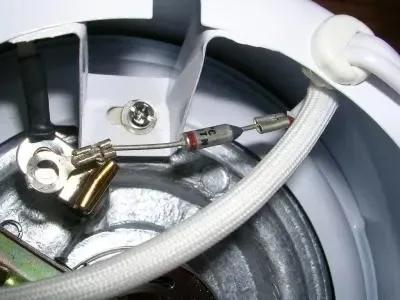
Image source: Bing (Web (fair-use with source credit))
To fix it:
- Unplug and open the base.
- Locate the thermal fuse. It looks like a small white or black ceramic cylinder with two wires.
- Test it with your multimeter in continuity mode. No beep means it's dead.
- Read the printed rating on the fuse casing, usually something like 185°C 10A.
- Order a replacement with the exact same rating. Cost is usually $5 to $15. Never substitute a higher-temperature fuse, since that bypasses the safety protection.
- Cut the old wires, strip the new ones, and connect them using the same connectors you removed.
- Reassemble and run a water test before cooking actual rice.
A burned fuse might also mean the heating element is shorted. Before you replace the fuse, test the element's resistance with your multimeter. If the element reads infinite, replace the element first, or the new fuse will blow on the next cook.
The same repair logic applies to other small appliances, like a noisy hand mixer that needs a fix.
If It's Completely Dead: Test the Power Cord and Heating Element
A dead cooker means the power path is broken somewhere. Start at the wall, then work inward.
Test the power cord first. Unplug it and set your multimeter to continuity. Probe where the prongs meet the internal connector pins.
No beep means the cord is damaged internally. That's a $10 replacement and the easiest fix on this list.
Next, test the heating element. Touch one probe to each terminal beneath the base. You should read between 100 and 300 ohms on a 120V unit.
On a 220-240V European cooker, expect roughly double that. A reading of zero ohms signals a shorted coil. Infinite resistance means the coil is burned out.
If the element is dead, order a direct replacement. Match the wattage and base diameter exactly. Disconnect the old element, secure the new one with the same screws and connectors, then reassemble.
There's one more silent failure path: a loose base-plate connector pin. Those pins carry current from the cord to the element. Corroded pins mimic a dead cooker.
Clean them with fine sandpaper or electrical contact cleaner. Many cookers come back to life at this step.
Digital models add a control board to the mix. A faulty board usually means the unit is not worth repairing. A replacement board can cost more than a budget cooker.
The same approach applies to any kitchen appliance that loses power: test the cord, test the heating part, clean the contacts.
Repair vs. Replace: Mistakes to Avoid and When to Throw in the Towel
Most rice cookers are worth fixing, but not all. Watch for the red flags that say the unit is done.
Replace the cooker if you find a melted base housing, charred wire insulation, or an element that reads zero ohms. Those point to a serious short. Digital control board failures also push the cost past a new unit.
Avoid the classic repair mistakes. Never bypass the thermal fuse. It prevents fires.
Removing it turns a small failure into a kitchen fire risk.
The other mistakes are quieter:
- Replacing a fuse without testing the magnet switch first. The new fuse will blow again.
- Reusing old wire connectors. Crimp fresh ones for a safe connection.
- Ignoring burn marks in the housing. That plastic is fatigued and may fail badly.
Here's the breakdown for an analog cooker:
| Scenario | Likely Fix | Cost |
|---|---|---|
| Switch won't latch | Clean or bend contacts | $0 |
| Fuse blown | Replace fuse | $5 to $15 |
| Element burned out | Replace element | $10 to $20 |
| Housing melted | Replace cooker | $20 to $80 |
A simple fuse or switch repair costs $5 to $15. A new analog cooker runs $20 to $80. If the housing is fine and the element is healthy, repairing makes sense.
If the bowl is warped or the base is melted, replace the whole unit.
Frequently Asked Questions
Why is my rice cooker not cooking but the light is on?
The magnetic switch contacts are likely dirty or misaligned. The heating element never receives power because the switch won't latch. Clean the contacts with fine sandpaper, then retest with a water test.
That resolves most cases. If it still won't latch, the magnet assembly itself may need replacing.
Can I use a rice cooker without a thermal fuse?
No. The thermal fuse is a fire-safety device. A failed switch can overheat the element indefinitely without it.
You risk a melted base or a kitchen fire. Replace the fuse with the same temperature rating printed on the casing. Never substitute a higher rating.
Why does my rice cooker click to warm before the rice is done?
The thermal fuse blows or the magnet weakens. Either issue cuts power early and leaves rice undercooked. Test both with a multimeter and replace the part that fails.
Be sure to test the heating element too, since a shorted element can destroy the new fuse.
How much does it cost to fix a rice cooker?
A thermal fuse costs $5 to $15. A heating element runs $10 to $20. A magnetic switch is around $8 to $12.
The labor is yours. Compare that to $20 to $80 for a new cooker. If the repair price exceeds half the replacement cost, buy new.
Is it safe to repair a rice cooker at home?
Yes, for simple parts. Unplug it first and discharge the control board in digital models. Match replacement parts to the original ratings exactly.
Use a multimeter to verify each part before installation. If you see melted plastic or burned wires, stop and replace the whole unit.