How to Create a Treadmill Workout
If you've ever stood on a treadmill and guessed your way through 20 minutes, you know how quickly that gets boring. The good news is that learning how to create a treadmill workout isn't complicated. You just need a clear plan that matches your current fitness level, goals, and available time.
That's what we're covering here, step by step.
As of 2026, the American College of Sports Medicine (ACSM) recommends at least 150 minutes of moderate-intensity cardio per week for most healthy adults. That breaks down to roughly 30 minutes, five days a week. A treadmill makes hitting that target easy, because you control the speed, incline, and duration.
Let's build a plan that keeps you safe and makes every minute count.
Image source: Bing (Web (fair-use with source credit))
Quick Answer
To create a treadmill workout, start with a 5 minute easy warm-up. Then pick a structure: steady-state, intervals, or incline. Set speed and incline to a moderately hard effort.
Finish with 5 minutes of easy walking. Increase intensity by no more than 10% each week.
Why Accuracy Matters: How the Right Treadmill Workout Keeps You Safe and Gets Real Results
Most treadmill workout advice online is a list of random intervals with no context. That's a problem, because the right routine depends on your body, your goals, and your injury history. A beginner returning from a knee issue needs a different plan than a seasoned runner.
And someone managing high blood pressure needs more caution than a young athlete. A poorly designed workout doesn't just waste time. It can cause joint pain, injury, or even a cardiac event.
That's why this guide treats accuracy as the foundation. We're not going to hand you a single "best" workout. We're going to show you how to create your own treadmill workout based on your current fitness, your schedule, and how your body responds.
We'll also flag the red flags that mean you should slow down or stop.
The science behind this is well established. Per ACSM guidelines, the FITT-VP principle, which stands for frequency, intensity, time, type, volume, and progression, is the standard for building cardio programs. Use it and you're following the same framework exercise physiologists recommend.
Skip it and you're guessing. Guessing leads to plateaus or worse.
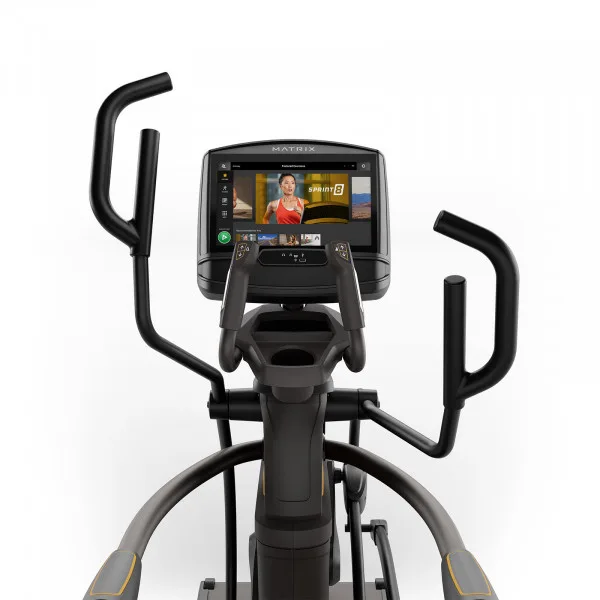
If your joints can't handle impact, you might want to start with a low-impact alternative like an elliptical instead. It gives you similar cardio benefits without the pounding. But if your body is ready for the treadmill, the next section covers the essentials you need before pushing a single button.
The Core Building Blocks of Every Treadmill Session
Before you touch the speed button, understand these five basics. They apply to every workout, whether you're walking or sprinting.
Warm-up and cool-down. Start with 5 minutes of easy walking or jogging. End with 3 to 5 minutes at a slow pace. This raises your heart rate gradually and prevents sudden blood pressure drops.
Heart rate zones. Your max heart rate is roughly 220 minus your age. Moderate effort sits at 50 to 70 percent of that. Vigorous effort is 70 to 85 percent. A simple chest strap or wrist monitor can help you stay in range.
Rate of Perceived Exertion (RPE). On a 1 to 10 scale, 5 means you can talk in full sentences. 8 means you can only push out a few words. Use this when you don't have a heart rate monitor.
Speed vs. incline. Speed raises your leg turnover. Incline adds resistance, increases glute and hamstring work, and raises your heart rate without extra joint impact. That's why incline walking is often easier on knees than fast running.
Safety essentials. Clip the emergency lanyard to your shirt. Know where the stop button is. And always step onto the belt only after it starts moving.
The talk test is the simplest tool you'll ever use. If you can sing, you're going too easy. If you can barely speak, you're going too hard.
Aim for the sweet spot where conversation is possible but not effortless.
You'll notice the same principles apply to other types of cardio equipment, like ellipticals and bikes. But the treadmill adds one unique factor you can't avoid, your body weight. That's why proper structure matters more here than on any seated machine.
How to Build Your Own Treadmill Workout: A Step-by-Step Plan
Use this process every time you design a session. It takes about two minutes and works for any fitness level.
Check with your doctor if you have any chronic condition. If heart disease, high blood pressure, diabetes, or joint issues are in your history, get medical clearance first. This is non-negotiable.
Decide your frequency. Beginners should start with 2 to 3 days per week. More experienced folks can do 4 to 5 days, but not all at high intensity.
Set your starting duration. If you're new, start with 20 minutes total. That includes your warm-up and cool-down. As you adapt, add 5 minutes every couple of weeks.
Choose your structure. Pick one of the three templates in the next section. Steady-state is best for building base endurance. Intervals boost stamina in less time. Incline work strengthens legs and glutes.
Set intensity using the talk test or RPE. For moderate effort, aim for RPE 5 to 6. For intervals, work up to RPE 8 during hard reps.
Progress gradually. Increase your total weekly time by no more than 10 percent per week. That's the rule of thumb in exercise science to avoid injury.
Track your numbers. Distance, pace, average heart rate, and how you felt. Write it down or log it in an app. This helps you adjust next time.

Image source: Web (Bing) / ameblo.jp (Web image (fair-use with source credit))
The console on most treadmills shows speed, incline, distance, time, and calories. Use the quick speed and incline keys to jump values instead of holding the button. And remember, the numbers don't tell the whole story.
How your legs and lungs feel matters just as much, especially early on.
If you're used to setting a sensible session length on other machines, the same logic applies here. Start shorter than you think you can handle. It's easier to add time than to force yourself through an overlong workout.
Three Sample Workouts: Beginner, Fat-Burn, and Endurance
Here are three proven templates. Pick the one that matches your current fitness.
1. Beginner 20-Minute Walking Plan
- 0-5 min: easy walk at 2-3 mph
- 5-7 min: brisk walk at 3.5-4 mph
- 7-8 min: easy walk
- 8-10 min: brisk walk
- 10-12 min: easy walk
- 12-15 min: brisk walk
- 15-20 min: easy cool-down
2. Incline Fat-Burn Plan (30 minutes)
- 0-5 min: walk at 3 mph, 0% incline
- 5-10 min: walk at 3.5 mph, 3% incline
- 10-15 min: walk at 3.5 mph, 5% incline
- 15-20 min: walk at 3.5 mph, 7% incline
- 20-25 min: walk at 3 mph, 4% incline
- 25-30 min: easy walk, 0% incline
3. Interval Endurance Plan (25 minutes)
- 0-5 min: easy jog at 4-5 mph
- 5-7 min: run at 6 mph
- 7-8 min: jog back down
- 8-10 min: run at 6.5 mph
- 10-11 min: jog
- 11-13 min: run at 7 mph
- 13-14 min: jog
- 14-16 min: run at 7 mph
- 16-17 min: jog
- 17-20 min: run at 6 mph
- 20-25 min: easy cool-down
| Workout | Intensity | Duration | Best For |
|---|---|---|---|
| Beginner Walking | Light | 20 min | New exercisers |
| Incline Fat-Burn | Moderate | 30 min | Weight loss |
| Interval Endurance | Vigorous | 25 min | Speed and stamina |
These three templates cover the main training styles. You can rotate them through the week to keep things interesting. If you prefer variety, you can also use cross-training options like an elliptical or rower on off days.
Common Treadmill Mistakes That Slow Your Progress or Cause Injury
We see these five errors again and again. Avoid them and your sessions will feel better and produce faster results.
Holding the handrails for support. Gripping the rails shifts your posture and cuts the workout's effort by up to 20 percent. If you need the rails, your pace or incline is too high. Let go and slow down.
Starting too fast or too steep. Your body needs time to warm up. Jumping to 8 mph or a 10% incline in the first minute strains your calves, heart, and lungs. Build up gradually.
Doing the same session daily. Repetition leads to plateaus and boredom. Your body adapts within a few weeks. Change your intensity, incline, or interval pattern.
Ignoring joint pain or shin splints. Discomfort is a signal, not a challenge to push through. Stop if sharp pain appears, especially in your knee, shin, or hip. Pushing through can turn a small issue into a long layoff.
Skipping the cool-down. Halting suddenly causes blood to pool in your legs, which can make you dizzy. Walk slowly for 3 to 5 minutes at the end.
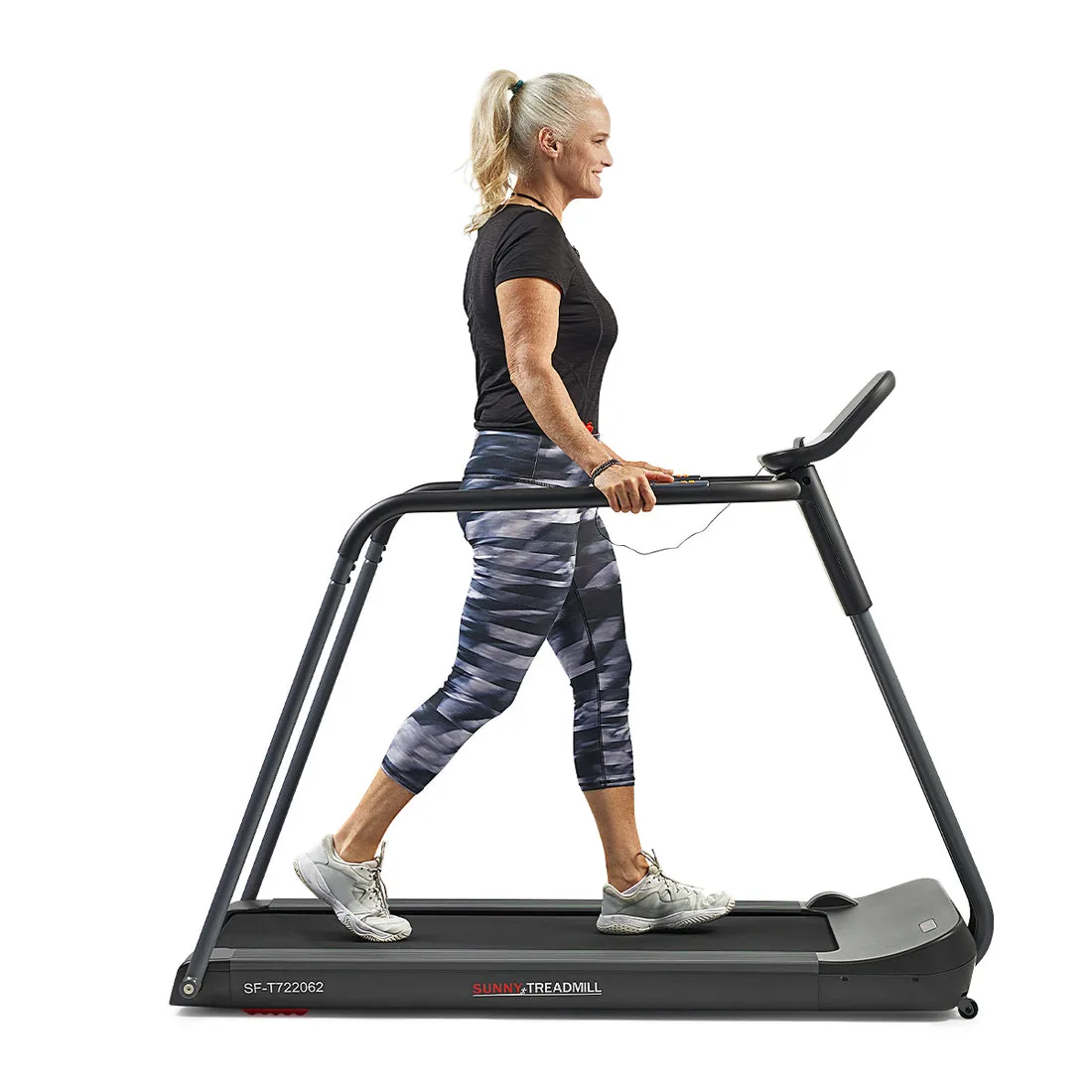
Image source: Bing (Web (fair-use with source credit))
Follow the workout frequency guidelines you'd use on any cardio machine. Rest days aren't lazy. They're when your body repairs and gets stronger.
And if something feels off, it usually is. Listen to that.
When to Slow Down or See a Doctor: Red Flags
Most treadmill sessions should end feeling energized, not wrecked. But some symptoms mean you stop immediately and seek medical advice.
Chest pain, pressure, or tightness. Stop the treadmill and sit down. Call your doctor if the sensation doesn't fade quickly.
Dizziness or lightheadedness. This can signal a drop in blood pressure or an irregular heart rhythm. Never try to "walk it off."
Unusual shortness of breath. Feeling winded beyond your normal effort level deserves attention, especially if it comes with wheezing.
Fainting or near-fainting. If you feel you might pass out, stop and get to a safe seated position immediately.
Joint or muscle pain that worsens. Sharp pain in the knee, shin, hip, or ankle is different from normal muscle fatigue. Push through it and you risk a real injury.
Per the American Heart Association, anyone with a history of heart disease, high blood pressure, or stroke should get medical clearance before starting a treadmill program. The same goes for anyone over 45 who has been inactive for years.
If you have diabetes, monitor your blood sugar before and after sessions. Treadmill workouts can drop glucose levels significantly, especially if you're on insulin.
Repeating joint trouble is a sign to get professional help. A physical therapist or exercise physiologist can analyze your gait and spot the root cause. That's often a flexibility imbalance or muscle weakness, not the treadmill itself.
FAQs: Your Treadmill Workout Questions, Answered
Is the treadmill better or worse for your joints than running outside?
Treadmills are generally easier on joints than pavement. The belt surface has more give than concrete, which reduces impact on the knees and shins. That said, a cushioned treadmill doesn't fix poor running form.
If you land hard with straight legs, the force transfers differently. Start with a 1 to 2 percent incline to mimic outdoor running and reduce heel-strike shock.
How many days a week should I use the treadmill?
Most people do well with 3 to 4 sessions per week. That gives you the cardiovascular benefits of regular exercise while leaving room for rest and recovery. If you're doing high-intensity intervals, cap it at 2 sessions per week and use other days for easy walking or cross-training.
Listen to your body. Soreness is normal. Deep fatigue is not.
What incline should I use to mimic outdoor running?
Set the treadmill to 1 to 2 percent incline. Outdoor running involves slight forward propulsion that treadmills lack. A 1 percent grade closely matches outdoor energy cost, a finding supported by research in the Journal of Sports Sciences.
For walking, keep the incline at 0 to 2 percent.
Can I lose weight just by walking on a treadmill?
Yes, if you create a calorie deficit. A 160-pound person burns roughly 300 calories per hour walking at 3.5 mph on a flat grade. That number climbs with incline.
Walking is also more sustainable than high-intensity running for beginners. Pair consistent sessions with a sensible diet and you'll see results.
How do I make treadmill workouts less boring?
Change one variable every few minutes. Speed, incline, or both. Interval-style workouts break up the monotony and pass time faster.
Music with a steady beat helps your rhythm. So does a fan and good hydration. And if boredom is a real problem, split your session into two 15-minute blocks with a quick water break in between.