What Is the Difference Between a Spin Bike and an Exercise Bike
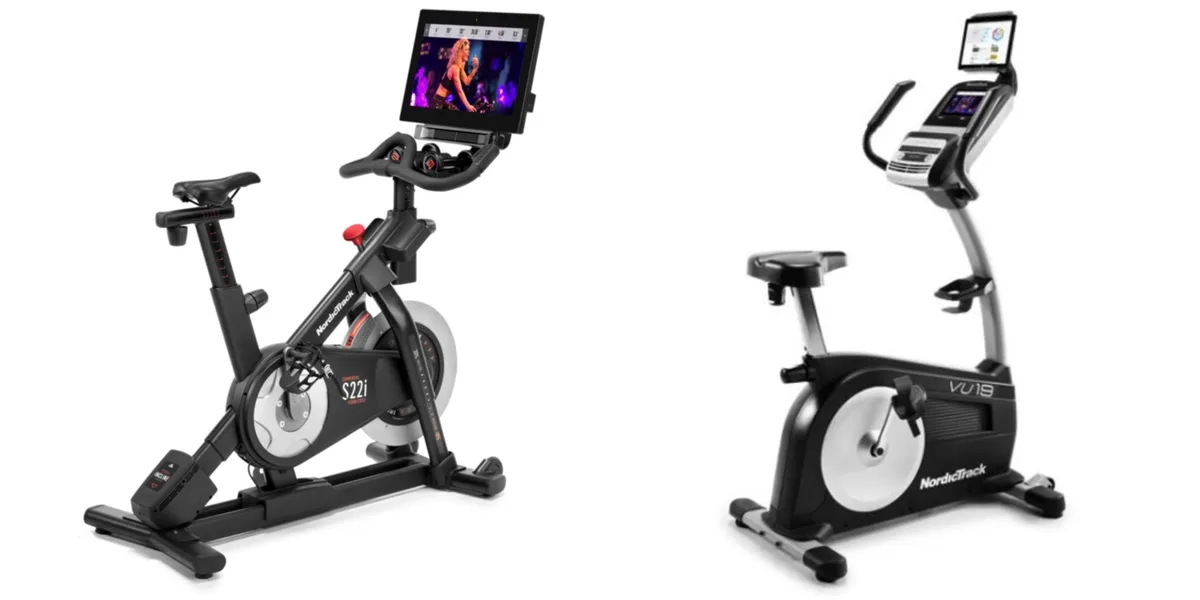
Image source: Bing (Web (fair-use with source credit))
Quick Answer
A spin bike is a stationary bike built to mimic road cycling. It uses a heavy flywheel, a racing-style saddle, and a forward-leaning posture. An exercise bike is a broader category that includes upright bikes and recumbent bikes, designed more for general cardio fitness than for simulating the road.
The main differences come down to flywheel weight, riding position, and intensity. Spin bikes feel heavier and smoother. Exercise bikes feel more upright and casual.
In our research, most riders choose spin bikes for high-intensity workouts and exercise bikes for comfort and gentle movement.
Why the Spin vs. Exercise Bike Question Deserves a Real Answer
The confusion makes sense. "Spinning" is technically a brand name, but it became shorthand for any indoor cycling class. That muddies the water.
When people ask, "What is the difference between a spin bike and an exercise bike," they usually mean: "Which one is built for the way I want to train?"
The real difference is design philosophy. A spin bike replicates the geometry of a road bicycle. You lean forward, you grip drop bars, and you stand up to climb.
The flywheel is heavy, often 18 to 30 pounds on home models and up to 45 pounds on commercial bikes. That mass creates momentum, which makes the ride feel smooth and continuous.
Standard exercise bikes take a different path. They prioritize upright posture and accessibility. You sit more vertically, the pedals sit farther forward, and the flywheel is lighter.
The goal is steady, comfortable cardio rather than intense race simulation.
As of 2026, the market has blurred a little. Many upright bikes now come with heavier flywheels, and some spin bikes offer more relaxed geometry. But the core distinction still holds.
We should talk about what each machine is actually built to do.
What a Spin Bike Really Is: The Ride, the Posture, and the Momentum

Image source: Web (Bing) / pinterest.com (Web image (fair-use with source credit))
A spin bike is the closest you can get to riding a road bike inside your home. That's the entire point. It exists to train cyclists and to deliver a studio-style workout that pushes your cardio and leg strength.
The posture is the first thing you'll notice. The handlebars sit low, and the saddle sits high. Your torso leans forward at roughly a 45-degree angle.
That may feel strange at first, but it's exactly how you ride outside. Our research shows that posture matters more than most buyers realize, because it changes which muscles do the work.
Flywheel weight is the second big deal. Heavier wheels require more force to get spinning, but once they're moving, they keep moving. That momentum lets you coast through the dead spot in each pedal stroke.
Lighter flywheels feel jerky by comparison. Aggregate reviews consistently rate heavier flywheels as the reason spin bikes feel like a real ride.
Spin bikes also allow more aggressive workouts. You can rise out of the saddle and push the pedals hard while your body weight drives the stroke. That movement, called a standing climb, is something you'll never see on a gentle upright exercise bike.
What an Exercise Bike Really Is: Upright and Recumbent Options
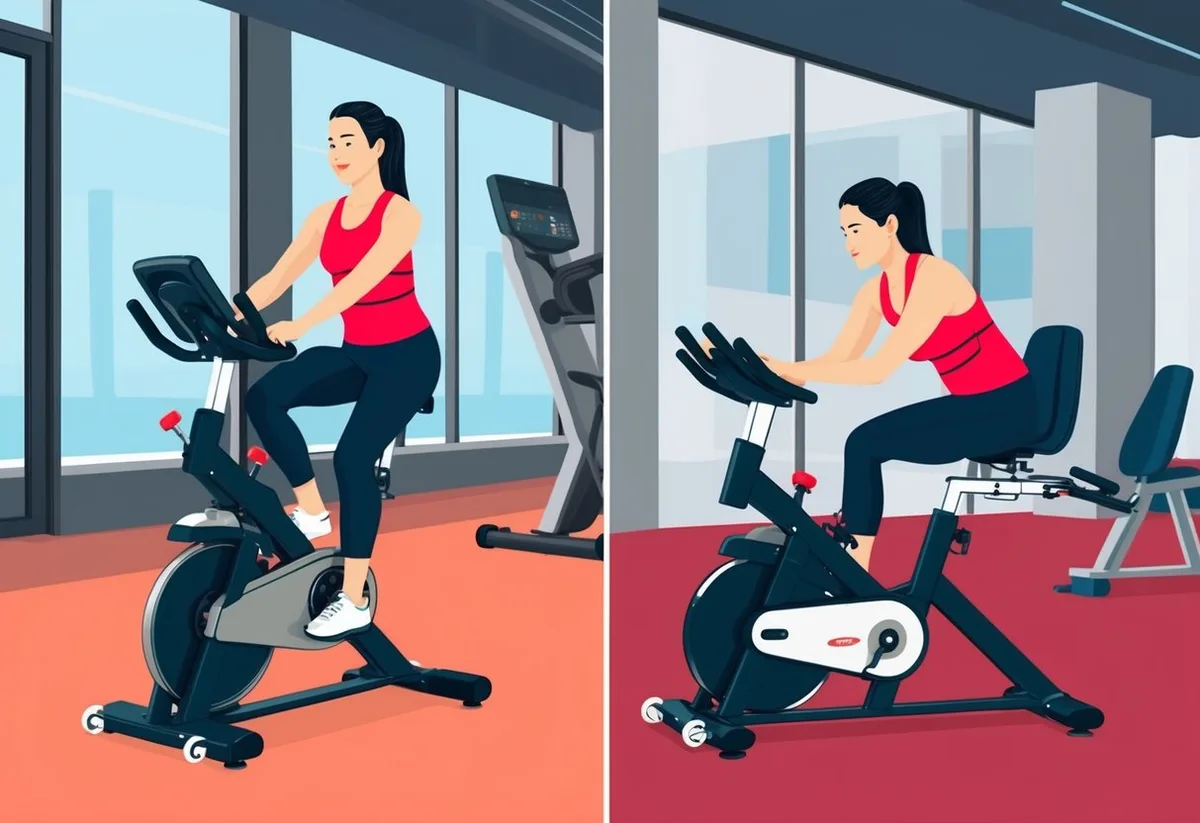
Image source: Bing (Web (fair-use with source credit))
Exercise bikes are the family sedan of cardio machines. They're built for comfort, convenience, and steady movement. Within that umbrella, you get two distinct styles.
Upright Exercise Bikes
Upright bikes look somewhat like regular bicycles, but with a more relaxed geometry than a spin bike. The handlebars sit higher, and the seat is positioned so your spine stays more vertical. You're pedaling in a circle rather than driving down and pulling up like you would on a spin bike.
The resistance typically comes from a magnetic brake rather than a friction pad. That makes upright bikes quieter and essentially maintenance-free. Most upright bikes also include preset workout programs, heart rate handles, and basic LCD consoles.
They're designed for people who want to watch TV and pedal at a comfortable pace.
Recumbent Exercise Bikes
Recumbent bikes take comfort even further. You sit in a bucket seat with your legs extended forward to pedals that sit at the same height as your hips. Your back is fully supported, which eliminates pressure on your wrists and lower back.
These bikes are popular with seniors, people recovering from injury, and anyone who wants the easiest possible joint-friendly cardio. In our research, recumbent bikes also tend to have wider seats and lower step-through frames. That makes them easier for people with limited mobility.
If you're comparing machines for general fitness, keep that in mind.
Head-to-Head: Flywheel Weight, Resistance, Comfort, and Noise
| Feature | Spin Bike | Upright Exercise Bike | Recumbent Exercise Bike |
|---|---|---|---|
| Riding posture | Forward lean, road cycling | Upright, slightly reclined | Fully reclined with back support |
| Flywheel weight | 18–45 lbs | 8–18 lbs | 8–20 lbs |
| Resistance type | Friction pad or magnetic | Magnetic (mostly) | Magnetic (mostly) |
| Typical noise | Moderate to quiet | Very quiet | Very quiet |
| Standing rides | Yes, built for them | No, not recommended | No |
| Best for | Intense cycling workouts | Steady cardio, all levels | Joint-friendly exercise, seniors |
The numbers tell the story. Spin bikes carry much heavier flywheels, which creates that smooth momentum you feel in a studio class. The standing climb feature separates them from every other stationary bike on the market.
Resistance feels different too. Friction systems give you an infinite, stepless range, while magnetic systems use numbered levels.
Comfort is where exercise bikes pull ahead. Upright bikes put less pressure on your hands and wrists. Recumbent bikes eliminate that pressure entirely.
Spin saddles are narrow and firm, designed for performance rather than lounging. You can upgrade the seat on any spin bike, and many riders do.
Noise levels are fairly close when you choose magnetic resistance. Chain-driven spin bikes are louder, but belt-driven models run quiet enough for apartment living. Recumbent and upright bikes rarely make noise at all.
Which Bike Fits Your Goals, Space, and Body?
There isn't a single correct answer. The right choice depends on how you plan to use the bike.
If you want to replicate road cycling during winter, get a spin bike. The geometry carries over. Your muscle recruitment, your hip angle, and your pedaling style all match what you'd feel on a road bike.
The same logic applies if you love high-intensity interval training or studio classes. Spin bikes support that kind of effort.
If you want steady, low-stress cardio while watching TV or reading, an upright exercise bike makes more sense. It's comfortable, quiet, and simple. The lighter flywheel means you can start and stop without wrestling momentum.
Preset programs give you structure without forcing you to think about cadence or power.
If you have back problems, hip stiffness, or balance concerns, choose a recumbent bike. The supported seating position keeps your spine neutral. The forward leg extension reduces knee strain compared to the downward pedaling motion of an upright or spin bike.
Space matters too. Spin bikes are heavier and bulkier, sometimes weighing over 100 pounds. Upright bikes are lighter and easier to move.
If you plan to wheel your machine between rooms or store it vertically, lighter is better. Recumbent bikes take up the most floor space but offer the easiest entry and exit.
Your fitness level also plays a role. Beginners often prefer the forgiving nature of an exercise bike. Experienced riders who crave a challenge usually gravitate toward the heavier flywheel and full-body involvement of a spin bike.
Neither is better, they're just tools for different jobs.
Mistakes That Waste Money and Kill Motivation
Choosing the wrong bike is rarely a disaster. It's a slow drain on your wallet and your motivation. In our research, the biggest mistake is buying a spin bike for gentle cardio.
If you want a relaxed ride while watching TV, you'll hate the leaned-forward posture. That $600 machine becomes a clothes rack within a month.
Another error is ignoring flywheel weight on exercise bikes. A cheap upright bike with a 10-pound flywheel feels jerky. Your cadence fluctuates, and the ride never smooths out.
Heavier flywheels, around 18 pounds, make steady pedaling feel natural. Don't skip the specs just to save money.
Finally, people skip measuring ceiling height. Spin saddles sit high, sometimes 40 inches off the floor. Tall riders will hit their heads during standing climbs.
Recumbent bikes need generous floor clearance too. This is the same planning step you'd take with other bulky home fitness gear. Measure the room before you order.
Saddle soreness is the quiet motivation killer. Spin saddles are narrow and firm. A $30 gel cover or padded shorts changes everything.
That's a tiny fix compared to abandoning your routine. Also, friction-based bikes need periodic part swaps, much like the regular upkeep on other home machines.
Common Questions, Answered
Can you use a spin bike for a gentle workout?
Yes, but it's not ideal. Spin bikes force you into a forward posture that works best for moderate to high effort. You can pedal slowly, but the saddle and handlebar position stay aggressive.
If gentle movement is your goal, an upright or recumbent bike suits you better.
Which burns more calories: spin bike or exercise bike?
Spin bikes usually burn more calories. The heavy flywheel and standing climbs let you generate higher power output. A 150-pound person can burn roughly 500 to 700 calories per hour in a vigorous spin session.
That matches the CDC's physical activity guidelines for vigorous cycling. An upright bike at moderate pace burns closer to 400 per hour.
Is a spin bike good for bad knees?
It can be, with the right setup. The seated position and smooth flywheel reduce impact. But the fixed gear means you can't coast.
If your knees hurt when you stop pedaling suddenly, you may need to ease up before stopping. Correct saddle height is essential to avoid strain, just like setting the foot position correctly.
Do spin bikes work for beginners?
Yes, if you start slow. The movements are simple, and the resistance knob lets you dial down the difficulty. Many beginners do just fine.
The learning curve is mostly about finding a comfortable setup and pacing yourself. The same pacing advice applies to beginner-friendly cardio machines. Don't stand up and sprint on your first ride.
Final Verdict: Spin Bike or Exercise Bike?
Here's the short version. Choose a spin bike if you want intense workouts, road-cycling training, or studio-style sessions. Pick an upright exercise bike for steady, comfortable cardio with minimal setup fuss.
Choose a recumbent bike if you need back support or joint-friendly movement.
Still unsure? Answer two questions. Do you want to stand up while you pedal?
If yes, get a spin bike.
Do you want to read comfortably during your ride? If yes, pick an upright or recumbent bike.
Both machines will improve your fitness. The difference is how harsh the ride feels and how much intensity you can generate. Spin bikes demand more from your body.
They reward you with higher calorie burn.
Exercise bikes are gentler and easier to stick with long term. If you're weighing other cardio options, our take on whether rowers deliver a good return on investment may help with your decision.
Our final advice: match the bike to the workout you'll actually do, not the workout you imagine. A realistic purchase beats a dramatic one. The best bike is the one you'll use three weeks from now.