Is an Exercise Bike Good for Weight Loss
Is an exercise bike good for weight loss? That's one of the most common fitness questions we hear. It's also one of the most misunderstood.
The short answer is yes, an exercise bike can absolutely help you lose weight. But it's not magic, and it won't work on its own.
Our research shows that someone weighing around 185 pounds can burn roughly 400 to 600 calories per hour on a stationary bike at a moderate to vigorous effort. That makes it a solid tool for building the calorie deficit your body needs to shed fat. The real question isn't just "does it work," it's "how do you use it correctly." Let's break that down.
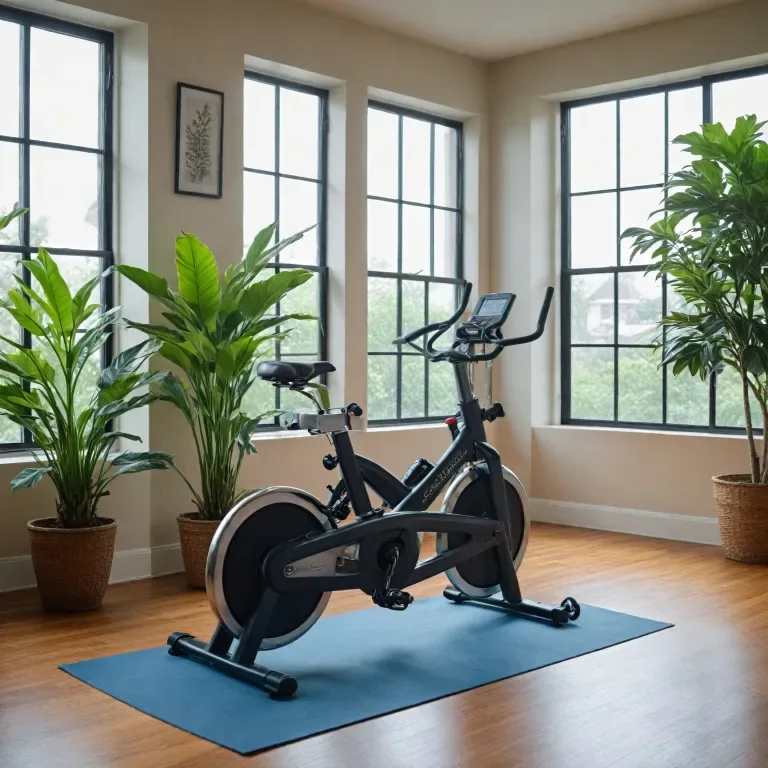
Image source: Bing (Web (fair-use with source credit))
Quick Answer: Does It Actually Work?
Yes, an exercise bike is good for weight loss when used in a calorie deficit. A calorie deficit means burning more calories than you eat.
The bike makes that deficit easier to create. It burns calories, builds cardiovascular fitness, and is gentle on your joints.
But you can't outride a bad diet. Nutrition drives weight loss. The bike just helps you burn more.
As of 2026, health guidelines recommend at least 150 minutes of moderate-intensity cardio weekly for general health. For significant weight loss, the World Health Organization suggests up to 300 minutes per week. The bike is a practical way to hit those numbers indoors.
The Science of Weight Loss: Calories, Cardio, and the Bike's Role
Weight loss comes down to energy balance. If you consume fewer calories than your body burns, you lose weight. It's that simple on paper.
Your body burns calories three ways: resting metabolic rate, the thermic effect of food, and physical activity. Exercise bikes target the third category.
A 160-pound person burns about 300 calories in 30 minutes of vigorous cycling. A 200-pound person burns closer to 400. Over a month, that adds up.
Research published in the Journal of Sports Science & Medicine confirms that regular aerobic exercise, including stationary cycling, contributes meaningfully to fat loss. But it works best alongside a modest calorie reduction.
The bike excels because it lets you control intensity precisely. You can crank up resistance for intervals or pedal easy for a long steady ride. That flexibility makes it easier to stay consistent.
Consistency matters more than intensity for most people. A bike you'll actually ride beats a treadmill you'll avoid.
Steady-State vs. HIIT on an Exercise Bike: Which Burns More?
Two main approaches dominate indoor cycling for weight loss: steady-state cardio and high-intensity interval training. Both work. The difference is how you use them.
Steady-state means maintaining a moderate effort for 30 to 60 minutes. You're breathing hard but can still talk. It's comfortable, sustainable, and burns a solid number of calories during the session.
HIIT means alternating all-out effort with recovery. Think 30 seconds sprinting at high resistance, then 60 seconds easy pedaling. Repeat that cycle for 20 minutes.
HIIT burns more calories per minute and keeps your metabolism elevated afterward. That's called excess post-exercise oxygen consumption, or EPOC. Your body keeps burning extra calories for hours after you finish.
Steady-state is better for beginners and recovery days. It's lower injury risk and easier to sustain mentally.
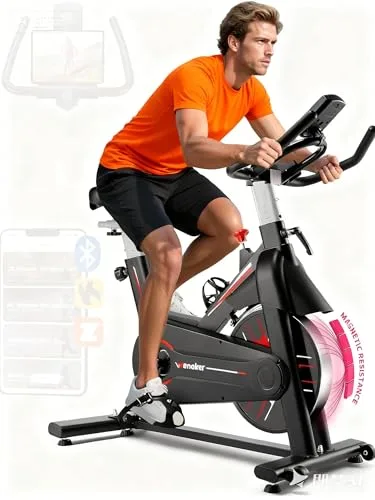
Image source: Bing (Web (fair-use with source credit))
| Steady-State | HIIT | |
|---|---|---|
| Typical duration | 30-60 min | 15-25 min |
| Intensity | Moderate | High / very high |
| Calories per session | Moderate | High |
| EPOC effect | Low | High |
| Best for | Beginners, base fitness | Busy people, fat loss |
Here's the practical rule of thumb. If you can only do three workouts per week, make two of them HIIT. If you can do five, mix in steady-state sessions for volume.
The best approach for weight loss is whichever one you'll repeat consistently. Some people love hammering intervals. Others dread them.
Choose the sustainable path.
How to Use an Exercise Bike for Real Weight Loss: A Step-by-Step Plan
Jumping on and pedaling randomly works for a while, then it stops. You need structure. Here's a simple weekly framework based on what works in practice.
First, set up the bike properly. Seat height matters. Set the saddle so your leg has a slight bend at the bottom of the pedal stroke.
Your knee should never fully lock.
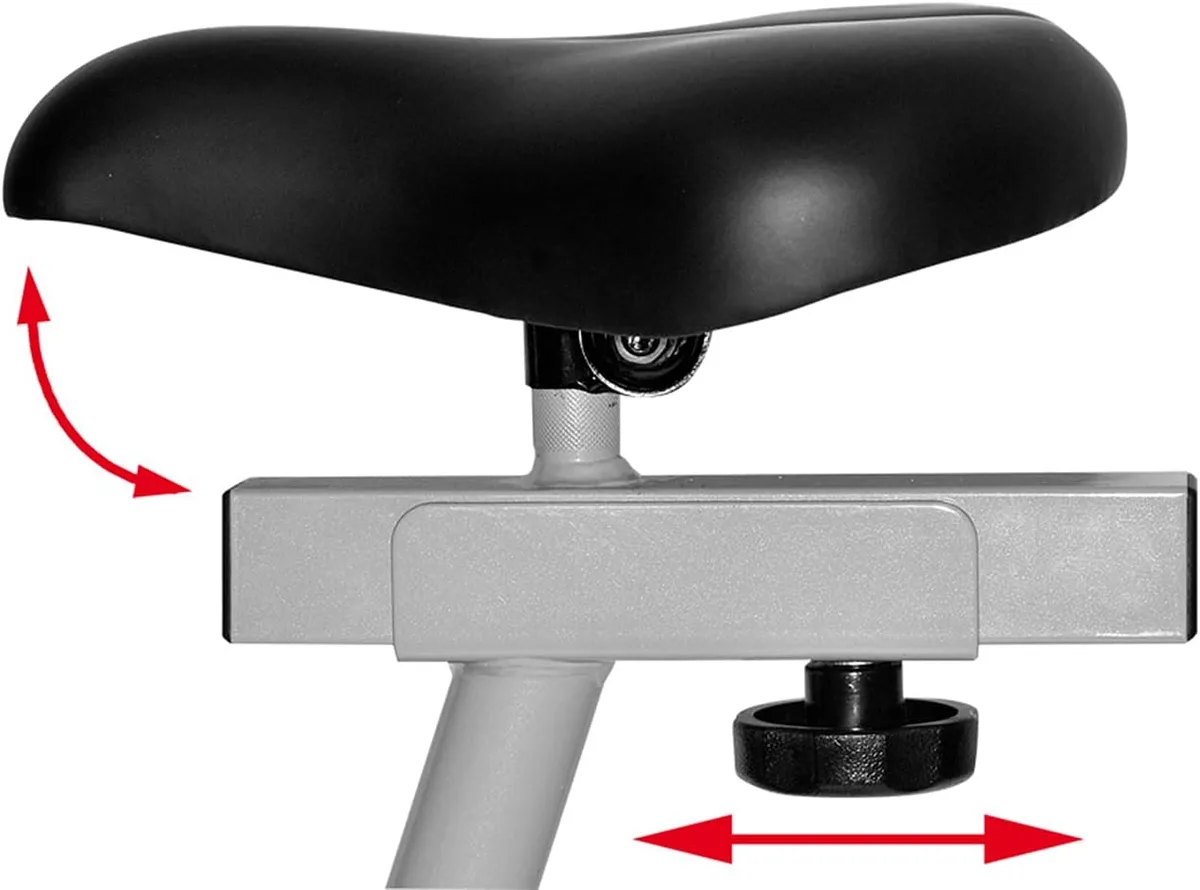
Image source: Bing (Web (fair-use with source credit))
Next, warm up. Pedal at low resistance for 5 minutes before any session. This raises your heart rate gradually and preps your joints.
Then follow a weekly schedule. Here's a sample that balances effort and recovery:
- Monday: 30-minute steady-state ride at moderate effort
- Tuesday: 20-minute HIIT session
- Wednesday: Rest or easy 15-minute recovery ride
- Thursday: 20-minute HIIT session
- Friday: 40-minute steady-state ride
- Saturday: Rest day
- Sunday: 30-minute moderate ride or outdoor activity
Each week, progress the workload. Add 5 minutes to steady-state rides. Increase resistance on intervals.
Or add one extra interval repetition.
Track your effort using rate of perceived exertion, or RPE. On a scale of 0 to 10, steady-state sits around 5 to 6. HIIT work intervals hit 8 to 9.
Recovery intervals sit at 3 to 4.
Finally, pair this with a calorie target. Find your maintenance calories and subtract 300 to 500. Eat enough protein to preserve muscle.
This combination creates predictable weight loss.
Common Mistakes That Keep You Stuck (and How to Fix Them)
Most people don't fail because the bike doesn't work. They fail because of one of these five mistakes.
Pedaling too easy. Low resistance with high speed feels like effort, but it doesn't challenge your cardiovascular system. If you can hold a conversation easily, crank the resistance up. You want the talk test to feel difficult.
Trusting the bike's calorie readout. Most exercise bikes overestimate calories burned by 20 to 40 percent. Manufacturer specifications are notoriously optimistic. Use the number as a rough estimate, not a license to eat back everything.
Ignoring nutrition. This is the biggest one. You can burn 400 calories in a session and undo it with a donut in two minutes. Weight loss requires the calorie deficit, and the bike alone can't guarantee it.
Doing the same workout every time. Your body adapts to repetition. That 30-minute moderate ride burns fewer calories after 6 weeks because your body became efficient at it. Change resistance, duration, or work-to-rest ratios regularly.
Skipping strength training. Cardio improves heart health and burns calories, but it doesn't build muscle. More muscle means a higher resting metabolic rate. Add two resistance sessions per week using dumbbells for strength training or bodyweight exercises.
Exercise Bike vs. Other Cardio Options: Treadmill, Elliptical, Walking
An exercise bike isn't the only cardio machine that burns calories. Treadmills, ellipticals, and plain old walking all get the job done. The best choice depends on your body, your space, and what you'll stick with.
Treadmills burn the most calories per minute, especially if you run. But they're high-impact. If you have knee or back problems, running often makes things worse.
Ellipticals offer a no-impact, whole-body workout. Our research shows they're excellent for seniors and beginners. They cost more, take up more space, and the "floating" motion feels unnatural to some.
Walking is the cheapest and easiest option. It's low-impact and you can do it anywhere. But it takes twice as long to burn the same calories as biking, because the effort is lower.
| Option | Impact | Calories/hour (185 lb person) | Space needed |
|---|---|---|---|
| Exercise bike | Low | 400-600 | Small |
| Treadmill | High | 500-800 | Large |
| Elliptical | Low | 400-650 | Large |
| Walking | Low | 200-300 | None |
The bike wins for joint-friendly intensity in a compact footprint. Rowing machines are worth considering if you also want upper-body muscle engagement. Ellipticals are stronger if you prefer a standing, full-body motion.
If floor space is tight, rowers fold up smaller than you might expect, though they're less forgiving on form.
When an Exercise Bike Isn't Right for You (Safety & Health Risks)
Exercise bikes are safe for most people. They're low-impact and easy on the joints. But they're not for everyone.
If you have unstable heart disease, uncontrolled high blood pressure, or recent chest pain, get medical clearance first. The Physical Activity Readiness Questionnaire (PAR-Q) is a fast, CDC-endorsed screening tool.
Knee pain is a tricky issue. Proper seat height fixes many cases, but some meniscal tears flare up with repeated knee flexion. If cycling hurts, stop.
Numbness in the hands or feet is common with bad bike fit. Saddle pressure can also cause problems. A gel seat cover or proper padded shorts usually solves this.
Don't exercise through sharp chest pain, dizziness, or unusual shortness of breath. Those are red flags. Stop and check with your doctor.
When used correctly, an exercise bike is one of the safest cardio options. Stationary bikes also meet international safety standards like ISO 20957 when assembled correctly.
Frequently Asked Questions
How many minutes should I ride a bike to lose weight?
Aim for 150 to 300 minutes per week. That breaks down to 30 to 60 minutes, five days a week. Split it between steady-state rides and HIIT sessions.
Start with 20-minute workouts if you're new, then add 5 minutes each week.
Is the exercise bike calorie counter accurate?
No, most bike calorie counters overestimate by 20 to 40 percent. They don't account for your age, gender, or muscle mass. Use the number as a rough guide, not an exact measure.
For a more accurate estimate, use a heart-rate monitor or power meter.
Can I lose belly fat with an exercise bike?
Spot reduction is a myth. You can't target belly fat with any exercise. Cycling burns overall body fat, and your belly will shrink over time as a result.
Combine a calorie deficit with strength training for the fastest visible changes.
Is riding a bike better than walking for weight loss?
Yes, generally. Cycling burns more calories per minute than walking for the same person and effort level. It's also easier to add high-intensity intervals on a bike.
Walking is still great for beginners and recovery days.
How long does it take to see weight loss results with an exercise bike?
Most people notice changes in 4 to 8 weeks if they keep a calorie deficit and ride 4 to 5 times per week. Early weight loss is often water weight. Expect 1 to 2 pounds per week of true fat loss after the initial drop.
Final Verdict: The Realistic Truth
Is an exercise bike good for weight loss? Yes, but only as part of a bigger system. The bike burns hundreds of calories per hour, builds cardiovascular fitness, and protects your joints.
That's a solid tool.
But the scale won't move unless you eat slightly fewer calories than you burn. Exercise supports the deficit. Diet creates it.
The real win is consistency. The best workout is the one you'll actually repeat. If a stationary bike fits your home, your body, and your schedule, it can absolutely carry you to your goal.
Pair it with strength training a couple days a week. Watch your portions. Sleep well.
Follow the same principles that make rowing machines effective for fat loss and you'll see results. In our research, people who stuck with a plan for 12 weeks lost an average of 5 to 10 pounds. The bike made it possible.
Your habits make it real.



One Comment