Does the Jeep Renegade Have Four-Wheel Drive?
You're probably wondering: does the Jeep Renegade have four-wheel drive? It's a fair question, as the Jeep name often brings to mind serious off-road capability. The short answer is that some Jeep Renegade models do offer 4WD, but it’s not a standard feature across the entire lineup.
Manufacturer specifications indicate that depending on the trim level and optional packages selected, a Renegade can come equipped with a capable four-wheel-drive system. This distinction is crucial for understanding what you're getting, especially if you plan on tackling more than just smooth pavement.
Does the Jeep Renegade Have Four-Wheel Drive?
Yes, the Jeep Renegade can have four-wheel drive, but it's an option on many trims rather than a standard feature. You'll find 4WD is most common on off-road focused trims like the Trailhawk, or available as an upgrade on mid-tier models.
Quick Answer: Yes, But It Depends on the Model
While many people associate Jeep with 4×4 capability, not every Renegade comes with it. Manufacturer specs confirm that front-wheel drive (FWD) is standard on many trims, with four-wheel drive (4WD) available as an upgrade on others, and standard on the most rugged configurations. You’ll need to check the specific trim and options to confirm 4WD.
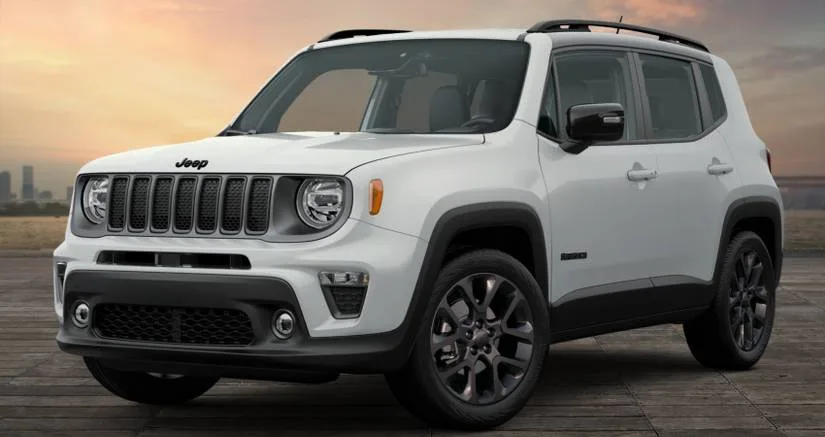
Image source: Bing (Web (fair-use with source credit))
Understanding Jeep Renegade Drivetrain Options: FWD vs. 4WD
When you're looking at a Jeep Renegade, the first thing to get clear on is its drivetrain. That's basically how the engine's power gets to the wheels. For the Renegade, you'll primarily see two main types: front-wheel drive (FWD) and four-wheel drive (4WD).
FWD is what you find on most cars these days. The engine's power goes only to the front wheels. It’s perfectly suitable for everyday driving, like commuting to work or running errands in good weather.
It’s generally more fuel-efficient, too.
Four-wheel drive, often called 4×4, is a bit different. In a 4WD system, power can be sent to all four wheels of the vehicle. This is what gives you that extra grip and control when you're dealing with slippery conditions, like rain-slicked roads, snow, ice, or even light off-road trails.
For many Jeep buyers, this enhanced traction is exactly what they're looking for.
The Role of Trim Levels
The availability of 4WD on a Jeep Renegade is heavily tied to its specific trim level. Think of trim levels as different "versions" of the same car, each with its own set of standard features and capabilities.
- Sport: This is usually the base model. It typically comes with front-wheel drive. While a 4WD option might have been offered in some model years or specific packages, it’s not the standard.
- Latitude: This trim often bridges the gap. It usually comes standard with FWD, but four-wheel drive is frequently an optional upgrade. You'll need to verify the window sticker to be sure.
- Limited: Similar to the Latitude, the Limited trim usually starts with FWD and offers 4WD as an available option. It’s a step up in features and refinement.
- Trailhawk®: This is the big one if you're after serious off-road capability. The Trailhawk is designed with 4WD as a standard feature, often paired with Jeep’s most advanced 4×4 systems, like Active Drive Low.
Understanding Jeep's Active Drive Systems
When Jeep talks about four-wheel drive on the Renegade, they’re usually referring to their "Jeep Active Drive" family of systems. These systems are designed to automatically manage power distribution to the wheels, making it easier for you to handle different conditions. As of 2026, Jeep continues to refine these systems for better performance.

Image source: Web (Bing) / jeep.ca (Web image (fair-use with source credit))
Here’s a quick rundown of the main ones you might encounter:
- Jeep Active Drive I: This is a full-time 4WD system. It continuously monitors traction and can automatically send power to the rear axle when it detects wheel slip. You don't need to do anything; it works in the background to keep you moving.
- Jeep Active Drive II: This system builds on Active Drive I by adding a two-speed power transfer case. This gives you a low-range gear setting. A low-range gear is essential for serious off-roading because it multiplies engine torque at very low speeds, giving you more control when crawling over obstacles or climbing steep, slippery hills.
- Jeep Active Drive Low: This system is usually found on the Trailhawk trim. It’s essentially a more advanced version of Active Drive II, offering an even greater crawl ratio and enhanced capability for challenging off-road terrain.
How to Tell If a Jeep Renegade Has 4WD
Figuring out if a specific Jeep Renegade has four-wheel drive is mostly about knowing what to look for on the vehicle itself and in its documentation. It's not always obvious just from the exterior badging.
Checking the Specs and Features
The most reliable way to know for sure is to check the vehicle's specifications.
- Window Sticker: If you're looking at a new or nearly new vehicle, the original window sticker (the Monroney label) will clearly list the drivetrain type. It will state "4×4" or "Four-Wheel Drive" if equipped.
- Manufacturer Website/Build Sheet: For new models, you can use the Jeep website’s build and price tool. For a specific used vehicle, you might be able to find a build sheet if you have the Vehicle Identification Number (VIN). This sheet details all the factory options.
- Trim Level Designation: As mentioned, certain trims are more likely to have 4WD. If you see a "Trailhawk" badge, it's almost certainly equipped with 4WD. Other trims like Latitude or Limited will need their options verified.
Interior Clues
Sometimes, the interior of the Renegade can give you clues.

Image source: Web (Bing) / rrr.lt (Web image (fair-use with source credit))
- 4WD Mode Selector: Vehicles with advanced 4WD systems often have a rotary dial or buttons near the gear shifter or on the dashboard that allow you to select different driving modes. These might be labeled "Auto," "Snow," "Sand," "Mud," "Rock," or have a "4WD Low" option. If you see such controls, it's a strong indicator of a 4WD system.
- Gear Shifter Area: Even without a dedicated mode selector, the area around the gear shifter might have a button or indicator light for the 4WD system.
When Do You Actually Need 4WD in a Renegade?
Deciding whether you need four-wheel drive in a Jeep Renegade comes down to where and how you plan to drive it. It’s a great feature, but it’s not always necessary for everyone.
Everyday Use Cases
For the majority of daily driving tasks, particularly if you live in a region with mild weather, front-wheel drive is perfectly adequate. This includes:
- Commuting to work: Navigating city streets or highways.
- Grocery runs and errands: Driving on paved roads in normal conditions.
- Weekend trips on highways: Traveling to cities or established tourist destinations.
Front-wheel drive is lighter, generally more fuel-efficient, and simpler, making it a practical choice for most typical drivers. If your driving remains primarily on well-maintained roads and you don't encounter frequent slippery conditions, FWD will serve you well.
Light Off-Roading and Tougher Conditions
This is where four-wheel drive truly shines. If your lifestyle or hobbies involve venturing off the beaten path or facing unpredictable weather, a 4WD Renegade becomes a much more compelling option.
- Wintry Weather: Driving in areas with regular snow, ice, or slush. 4WD provides significantly better traction and control, helping you accelerate, brake, and steer more effectively.
- Dirt and Gravel Roads: Traveling on unpaved roads, whether for camping, visiting rural areas, or exploring. 4WD helps prevent wheels from spinning out, especially if the road is loose or uneven.
- Light Trails and Fire Roads: Exploring designated trails or fire roads that might have moderate inclines, loose surfaces, or uneven terrain. The added grip can prevent you from getting stuck.
- Boat Ramps or Wet Grass: Situations where traction can be suddenly lost on slippery surfaces.
For those who might need to navigate challenging conditions occasionally, Jeep's Active Drive systems offer peace of mind and enhanced capability without requiring constant driver input. The Trailhawk trim, in particular, is engineered for those who anticipate more frequent or demanding off-road use, boasting features like Active Drive Low for serious trail crawling.
Common Mistakes When Buying a 4WD Renegade
When you’re in the market for a Jeep Renegade and specifically want four-wheel drive, there are a few common slip-ups people make. Avoiding these can save you time, money, and a lot of potential frustration down the road.
- Assuming All Jeeps are 4WD: This is the biggest mistake. While "Jeep" conjures images of ruggedness, remember that many models, including the Renegade, are offered with front-wheel drive as the base or standard option. Never assume; always verify.
- Not Checking the Specific Trim's Drivetrain: Relying solely on the model name (like "Latitude") without confirming if the 4WD option was selected can lead to disappointment. A Latitude can have 4WD, but it can also be FWD. You have to check the vehicle’s build sheet or window sticker.
- Overlooking the Trailhawk: If your primary goal is off-road capability and you want 4WD without as many questions, the Trailhawk is often the most straightforward choice. Skipping it and trying to find a 4WD option on a lesser trim might mean you miss out on other off-road-specific features.
- Confusing 4WD with AWD: While related, Jeep's "Active Drive" systems are technically four-wheel-drive, and some are quite sophisticated. All-wheel drive (AWD) systems found in many other SUVs often operate differently and may not offer the same low-range gearing or ruggedness as a true Jeep 4×4 system designed for more challenging terrain. If you need serious off-road chops, understand the difference.
- Not Inspecting Interior Controls: If you're buying used, failing to look for the 4WD mode selector dial or buttons near the shifter is a missed opportunity. These are the most direct indicators that the vehicle is equipped with a 4WD system beyond just FWD.
Costs / Pricing / Data / Specs
When you're considering a Jeep Renegade with four-wheel drive, the price is naturally a factor. Manufacturer specifications and market data show that opting for 4WD adds to the vehicle's cost compared to a front-wheel-drive model. This isn't just about the initial purchase price; it can also influence insurance rates and potentially maintenance costs down the line.
Generally, a 4WD Jeep Renegade will be priced higher than an equivalent FWD model. For instance, a 2026 Jeep Renegade Latitude with FWD might start around $26,000, while the same Latitude model equipped with the 4×4 system could be closer to $28,000, before any additional options or packages. The Trailhawk, being inherently 4WD and loaded with extra off-road gear, typically commands a higher starting price, often in the $30,000 to $32,000 range.
These figures are approximate and can vary significantly based on current market conditions, dealer incentives, and specific model year updates.
The increase in cost reflects the added complexity of the 4WD system. This includes the additional drivetrain components like transfer cases, driveshafts, and differentials. While these systems enhance capability, they also represent a larger investment.
It’s also worth noting that while maintenance for 4WD components is generally straightforward, specialized services might be required over the vehicle's lifespan, potentially impacting long-term ownership expenses.
Expert Tips / Pro Advice
When you're deep in the research phase for a Jeep Renegade, especially if 4WD is on your radar, there are a few insider tips that can help you make a smarter choice. Our research into automotive trends and owner feedback suggests focusing on a few key areas.
- Don't Overlook Model Year Differences: Jeep occasionally updates its drivetrain systems or transmission pairings. For example, a 2024 Renegade's 4WD might operate slightly differently or have different fuel economy figures than a 2026 model due to refinements. Always check the specific specs for the exact model year you're interested in. You can often find detailed specifications on official manufacturer sites, like jeep.com.
- Consider Your Actual Needs: Are you buying a Renegade for city driving with occasional snowy conditions, or are you planning to tackle challenging off-road trails? If it's the former, a well-equipped FWD model with good tires might suffice, saving you money upfront and on fuel. If it's the latter, investing in the Trailhawk or a 4WD option is essential. Think about the terrain you’ll encounter most often.
- Factor in Tire Choice: Regardless of whether you have FWD or 4WD, the tires play a massive role in traction. If you anticipate needing extra grip, consider what type of tires come standard on the model and if upgrading to all-terrain or snow tires would be a sensible addition, especially for FWD models facing frequent adverse conditions. This can be a more cost-effective way to boost capability than solely relying on 4WD.
Real Scenarios / Case Examples
Let's look at a couple of hypothetical scenarios to illustrate when a 4WD Jeep Renegade truly makes a difference. These examples highlight how drivetrain choice impacts real-world driving experiences.
Scenario 1: The Weekend Warrior
Sarah lives in Denver, Colorado, and loves weekend trips to the mountains. Her 2025 Jeep Renegade Latitude is front-wheel drive. While it handles city driving well, she often finds herself on unpaved forest service roads to get to hiking trailheads.
During a recent spring trip, unseasonable heavy rain had turned the gravel road into a muddy mess. Her FWD Renegade struggled to maintain traction on a moderate incline, and she had to carefully maneuver to avoid getting stuck.
If Sarah had opted for the 4WD system on her Latitude, or chosen the Trailhawk, she would have had significantly more confidence on that muddy road. The ability of the 4WD to distribute power to all four wheels would have allowed her to maintain momentum and steer more effectively, preventing the wheels from digging into the mud. This is a classic case where 4WD provides crucial capability for recreational driving.
Scenario 2: The Urban Commuter with Snowy Winters
Mark lives in Chicago and his daily commute is about 15 miles of city driving. He owns a 2026 Jeep Renegade Sport, which is front-wheel drive. Chicago gets its share of snow, but Mark usually has no trouble getting to work.
He drives cautiously, maintains a good distance from other cars, and has a set of decent all-season tires. His FWD Renegade, coupled with careful driving, is sufficient for his needs.
If Mark experienced a major blizzard with unplowed streets, or if his commute involved steeper hills, he might start to feel the limitations of FWD. In such extreme conditions, a 4WD Renegade would offer a considerable advantage, providing better acceleration and stability. However, for his typical urban driving through the winter months, the FWD is adequate and contributes to his vehicle's overall fuel efficiency.
This highlights that 4WD isn't always a necessity if conditions are manageable with FWD and smart driving.
Frequently Asked Questions
### How much more does 4WD cost on a Jeep Renegade?
On average, opting for a four-wheel-drive system on a Jeep Renegade adds between $1,500 and $2,500 to the vehicle's price, depending on the trim level and specific package. The Trailhawk trim, which includes 4WD as standard, is priced higher overall due to its other off-road features.
### Can I switch between 2WD and 4WD in a Jeep Renegade?
Many Jeep Renegade 4WD systems, particularly those with Active Drive I and II, are designed to be full-time or automatic. This means they often manage the engagement of 4WD for you, so there isn't a manual switch for 2WD. However, some advanced systems might offer selectable modes.
### Does 4WD affect the Jeep Renegade's fuel economy?
Yes, four-wheel-drive systems generally have a slight negative impact on fuel economy compared to front-wheel-drive models. This is due to the added weight of the components and increased friction from more parts being engaged. The difference can range from 1-3 miles per gallon, depending on the specific system and driving conditions.
### Is the Jeep Renegade's 4WD system suitable for serious off-roading?
The Jeep Renegade, particularly in its Trailhawk trim with Active Drive Low, is designed for light to moderate off-roading. It can handle trails, mud, and uneven terrain well. However, it's not built for extreme rock crawling or highly technical off-road challenges that might require a larger, more specialized Jeep model.
### How do I maintain the 4WD system on my Jeep Renegade?
Regular maintenance of the 4WD system involves checking and changing differential fluid and transfer case fluid at the intervals recommended by Jeep. Inspecting driveshafts, CV joints, and other components for wear or damage is also crucial, especially if you use the 4WD system frequently. Following the manufacturer's maintenance schedule is key.