Can An Obd2 Scanner Detect Catalytic Converter Problems: 2026 Guide
Yes, an OBD2 scanner can detect many catalytic converter problems, but it cannot see everything.
If you’ve ever dealt with a check engine light and wondered whether the catalytic converter is the real problem, you’re not alone. An OBD2 scanner is one of the best first tools for this job, and I’ve used it many times to narrow down converter issues, oxygen sensor faults, misfires, and fuel trim problems before parts were ever replaced. The key is knowing what the scanner can tell you, what it cannot, and how to read the clues the right way.

How an OBD2 scanner helps find catalytic converter problems
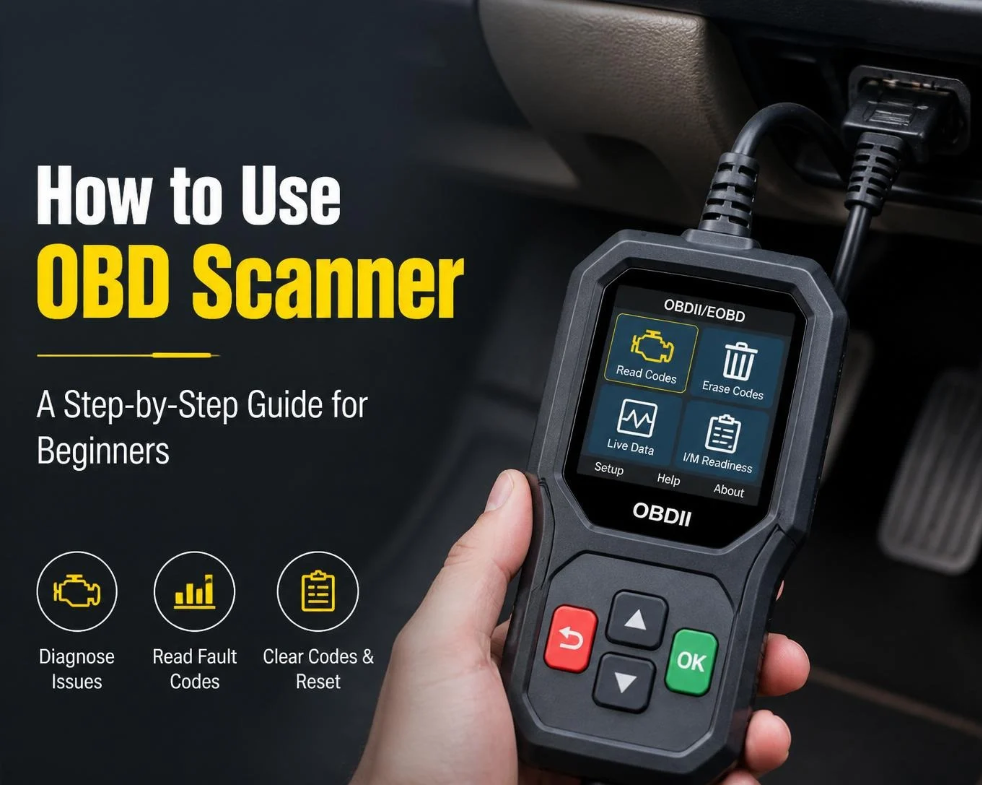
An OBD2 scanner can detect catalytic converter problems mainly by reading trouble codes and live data from the engine computer. The converter itself does not usually have a sensor inside it, so the scanner relies on signals from the upstream and downstream oxygen sensors to judge how well the converter is working.
When the catalytic converter starts to fail, the engine computer often notices that the exhaust gases are not being cleaned efficiently. That can trigger codes like P0420 or P0430, which are common catalyst efficiency codes. In simple terms, the scanner helps the car “talk” about what is going wrong, even if it cannot physically inspect the converter.
Here is what the scanner can often reveal:
- P0420 or P0430 codes, which usually point to low catalytic converter efficiency
- Oxygen sensor readings that suggest the converter is not storing or smoothing exhaust gases
- Fuel trim data that may hint at a rich or lean condition damaging the converter
- Misfire codes that may be the real cause behind the converter warning
- Pending codes that show a problem is developing before the light stays on
In my experience, the biggest mistake people make is blaming the converter too early. A scanner can point you in the right direction, but it is only one piece of the diagnosis.
What a catalytic converter actually does
A catalytic converter is part of the exhaust system, and its job is to reduce harmful emissions. It turns pollutants like carbon monoxide, hydrocarbons, and nitrogen oxides into less harmful gases before they leave the tailpipe.
Think of it like a filter with chemistry involved. It does not just trap waste; it helps change it. That is why a damaged converter can affect emissions, performance, fuel economy, and even engine smoothness in some cases.
The converter depends on:
- A healthy air-fuel mixture
– Proper ignition and combustion - Working oxygen sensors
- No exhaust leaks before or near the converter
If any of those parts are off, the converter may look bad when it is really just being blamed for another issue.
What codes point to catalytic converter issues
The most common codes related to converter efficiency are:
- P0420, Catalyst System Efficiency Below Threshold Bank 1
- P0430, Catalyst System Efficiency Below Threshold Bank 2
These codes do not always mean the converter is dead. They mean the computer has noticed that the catalyst is not doing its job as expected.
Other codes may also support a converter diagnosis, such as:
- P0130 to P0167, oxygen sensor circuit issues
- P0300 to P0308, misfire codes
- P0171 or P0174, lean fuel mixture
- P0172 or P0175, rich fuel mixture
- P0401 or related EGR codes, depending on the vehicle
A good scanner helps you see the full picture. If you only read one code and stop there, you may miss the real cause.
Can an OBD2 scanner tell if the catalytic converter is clogged?
An OBD2 scanner can sometimes suggest a clogged catalytic converter, but it cannot confirm it by itself. A clogged converter may create symptoms like reduced power, poor acceleration, overheating, or strange exhaust behavior, but those signs usually need more testing.
Scanner data may show:
- High exhaust backpressure clues through engine behavior
- Unusual fuel trims
- Oxygen sensor patterns that do not make sense
- Misfire or efficiency codes
But a clogged converter often needs a pressure test, temperature test, or visual inspection for a real answer. I’ve seen cars with P0420 that only needed a bad upstream oxygen sensor, and I’ve also seen cars that had a truly blocked converter and could barely climb a hill. The scanner was helpful in both cases, but not final.
How to read oxygen sensor data for converter diagnosis
This is where an OBD2 scanner becomes really useful. On most vehicles, the upstream oxygen sensor before the converter should switch quickly between rich and lean. The downstream sensor after the converter should be steadier if the converter is working well.
What to look for:
- Upstream sensor switching rapidly is normal
- Downstream sensor staying flatter is usually a good sign
- Downstream sensor mimicking the upstream sensor may suggest weak converter efficiency
- Slow sensor response may point to sensor aging or exhaust issues
A failing converter often lets the downstream sensor act too much like the upstream sensor. That is one of the main reasons the computer flags a catalyst efficiency code.
Still, don’t jump to conclusions. Exhaust leaks, bad sensors, and engine misfires can all distort the readings.
Common causes of catalytic converter trouble
A catalytic converter usually does not fail on its own for no reason. In many cases, something else damages it first.
Common causes include:
- Engine misfires that send raw fuel into the exhaust
- Oil burning from worn piston rings or valve seals
- Coolant burning from a head gasket issue
- Rich fuel mixture that overheats the converter
- Long-term oxygen sensor problems
- Exhaust leaks that confuse sensor readings
- Contamination from bad fuel additives or sealants
One lesson I learned early in diagnostics is this: when a converter fails, the real problem may have started miles or even months earlier. Replacing the converter without fixing the root cause is like putting a new bucket under a leaky roof and not repairing the roof.
Signs that match catalytic converter problems
Besides scanner codes, you may notice real-world symptoms. These often help confirm that something is wrong.
Watch for:
- Check engine light on
- Loss of power, especially on hills
- Rotten egg smell from the exhaust
- Rattling sound from inside the converter
- Poor fuel economy
- Failed emissions test
- Engine running hotter than normal
Not every bad converter causes all of these symptoms. Some cars only show a code and feel almost normal, especially in the early stages.
What an OBD2 scanner cannot detect
This is the part people often overlook. An OBD2 scanner is powerful, but it has limits.
It cannot directly:
- See inside the catalytic converter
- Measure exact internal damage
- Confirm blockage without other tests
- Distinguish every failed sensor from every failed converter
- Prove the cause of failure without supporting evidence
That is why a scanner should be used with other diagnostic checks. The scan tool gives clues, not a final verdict in every case.
Best way to diagnose catalytic converter problems
If you suspect a catalytic converter issue, use a step-by-step approach. That saves money and prevents unnecessary part replacement.
A practical process looks like this:
- Read all stored and pending codes
- Check freeze frame data to see when the fault happened
- Inspect live oxygen sensor data
- Look at fuel trims for rich or lean clues
- Check for misfires, vacuum leaks, or exhaust leaks
- Inspect the converter for heat damage or rattling
- If needed, perform a backpressure or temperature test
This approach is much safer than replacing the converter based on one code alone. I’ve seen drivers spend a lot of money on a new catalytic converter only to find the real issue was a bad ignition coil or a leaking exhaust manifold.
When you should not trust the code alone
A P0420 or P0430 code is a clue, not a confession. The converter may be bad, but so may the oxygen sensor, spark plugs, injectors, or exhaust system.
Be extra careful if:
- The vehicle also has misfire codes
- Fuel trim numbers are very high or very low
- The car has a recent exhaust repair
- There are signs of sensor wiring damage
- The engine runs rough or smells strongly of fuel
If more than one code is present, solve the engine issue first. A converter often suffers because of another fault upstream.
Real-world example from the shop
I once worked on a sedan that kept returning with a P0420 code. The owner had already been told the catalytic converter was bad, and he was ready to replace it. After checking live data, I found a lazy upstream oxygen sensor and a small exhaust leak near the manifold.
After repairing those issues and clearing the codes, the car passed its monitors and the warning light stayed off. That car taught me a simple truth: the scanner can point at the converter, but good diagnosis means asking why the converter looks bad in the first place.
Benefits of using an OBD2 scanner for converter diagnosis
An OBD2 scanner saves time, money, and guesswork. Even a basic scanner can help you avoid random parts replacement.
Main benefits include:
- Fast code retrieval
- Early warning of efficiency loss
- Access to live sensor data
- Better emissions troubleshooting
- Fewer unnecessary repairs
- Smarter decisions before smog testing
For everyday drivers, that can mean the difference between a simple fix and an expensive mistake.
Limitations to keep in mind
An OBD2 scanner is useful, but it is not magic. It works best when paired with basic mechanical understanding.
Limitations include:
- It depends on the vehicle’s sensors and computer logic
- It may miss physical damage with no active code
- It may confuse symptoms from other engine faults
- It cannot replace hands-on testing in difficult cases
That is why professional technicians often combine scan data with smoke testing, temperature readings, backpressure checks, and visual inspection.
Frequently Asked Questions of Can an OBD2 scanner detect catalytic converter problems?
What code usually means a bad catalytic converter?
The most common codes are P0420 and P0430. They often point to low catalyst efficiency, but they do not always mean the converter itself is bad.
Can a bad oxygen sensor look like a catalytic converter problem?
Yes, absolutely. A failing oxygen sensor can send bad data to the engine computer and trigger a converter code even when the converter is still okay.
Will an OBD2 scanner tell me if the converter is clogged?
Not directly. It may show clues like strange sensor readings or performance issues, but a clogged converter usually needs extra testing to confirm.
Can I drive with a catalytic converter code?
Sometimes you can drive short distances, but it is not smart to ignore it for long. If the car is losing power, running rough, or flashing the check engine light, get it checked right away.
Do I need a professional scanner to diagnose converter problems?
A basic scanner can read trouble codes, but a better scanner with live data makes diagnosis much easier. If you want to compare oxygen sensor behavior and fuel trims, upgraded tools are very helpful.
Can a faulty catalytic converter cause other problems?
Yes. It can reduce engine performance, hurt fuel economy, increase emissions, and sometimes make the car fail inspection. In severe cases, it can also overheat and damage nearby parts.
Conclusion
An OBD2 scanner can detect catalytic converter problems, but it works best as a guide, not as the final answer. It can reveal important codes, sensor patterns, and clues that point toward a failing converter, but it cannot fully diagnose the part on its own.
If you remember one thing, make it this: always look at the whole system, not just one code. Check the sensors, fuel trims, misfires, and exhaust condition before spending money on a replacement. If you want to stay ahead of costly repairs, keep learning how your scanner reads the car and use that knowledge to make smarter repair decisions.
If this guide helped you, explore more diagnostic tips, share your experience in the comments, or subscribe for more simple car repair advice.