Why Is My Treadmill Belt Moving to One Side
If you're asking why is my treadmill belt moving to one side, the answer is almost always a misaligned rear roller. That's the roller at the back of the machine, and it controls tracking. You can fix this yourself in about ten minutes with basic tools.
Manufacturer specifications indicate that a properly tensioned belt should lift about 2 to 3 inches off the deck at the center. As of 2026, most home treadmills still use the same crowned rear roller design. Let's walk through it step by step.
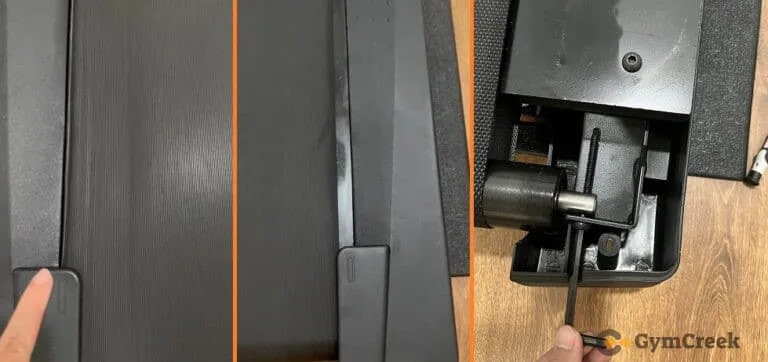
Image source: Bing (Web (fair-use with source credit))
Quick Answer: Why Your Treadmill Belt Drifts to One Side
Your treadmill belt moves to one side because the rear roller is misaligned. The belt follows the side with looser tension. You fix it with quarter-turn adjustments to the rear roller bolts.
Most belts re-center in under ten minutes.
How Treadmill Belt Tracking Actually Works
The reason a treadmill belt stays centered comes down to one part: the crowned rear roller. A crowned roller is slightly thicker in the middle, like a low, wide dome. The belt naturally wants to climb the highest point, so it keeps returning to center.
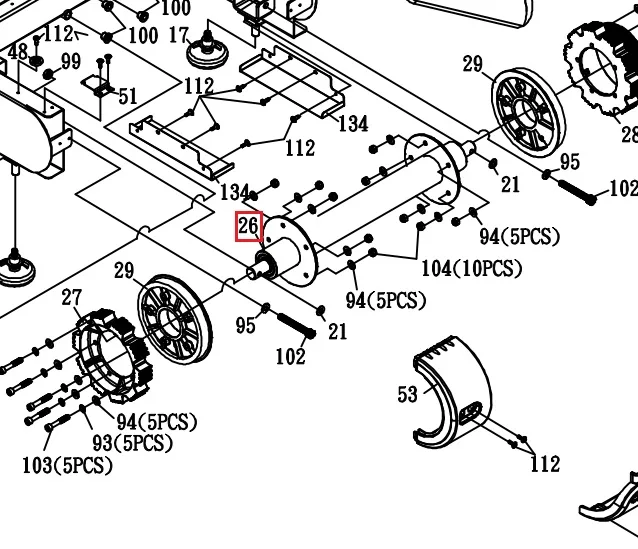
Image source: Bing (Web (fair-use with source credit))
That system works until something changes. A rear roller that is no longer perpendicular to the deck overrides the crown effect. The belt follows the path of least resistance and creeps toward whichever side is running looser.
The relationship between belt tension and belt tracking
Tension and tracking are not the same thing, but they constantly affect each other. If the whole belt is too loose, it can slip and wander side to side. If it's too tight, you put extra strain on the motor, and the belt may still drift because the rear roller isn't aligned.
Manufacturers design tracking systems to meet standards like ISO 20957, which governs stationary fitness equipment. When a belt drifts, it's almost always an alignment issue rather than a design flaw.
How installation or moving affects alignment
Treadmills are heavy. Sliding them across the floor, or bumping the back end when you move furniture, can knock the rear roller out of square. Even a brand-new treadmill can arrive with the roller seated incorrectly after shipping.
That's why so many owners notice drift within the first few weeks.
Regular upkeep matters on any cardio machine, whether you're maintaining a treadmill belt or following a maintenance schedule for your elliptical. Moving parts need attention to stay true. The same logic applies to other home fitness equipment too.
Diagnose the Drift: Which Way, How Far, and What's Underneath
Before adjusting anything, figure out what's actually causing the drift. It's likely one of three things: the floor, the belt tension, or the rear roller alignment. Follow these checks in order.
Check the deck is level first
Place a carpenter's level on the running deck, both front to back and side to side. If your treadmill sits on a carpet pad or uneven floor, that alone can pull the belt to one side. Use the leveling feet under the machine to adjust each corner.
Watch the belt at low speed
Set the treadmill to 1 or 2 mph and watch the gap between the belt and the deck rails on each side. If the belt is slowly climbing one side, that side's roller bolt needs adjustment. If it's already rubbing at speed, stop the belt before you run again.
Check tension with the five-finger rule
With the treadmill off, lift the center of the belt at the middle of the deck. A properly tensioned belt should rise between 2 and 3 inches off the deck. If it lifts higher than 3 inches, it's too loose.
If it barely moves, it's too tight.
If you hear a clicking or rubbing sound while the belt runs, that's a clue much like the kind you'd chase down on a squeaky elliptical. The noise usually sits near the roller, waiting for you to fix the alignment. The Consumer Product Safety Commission also recommends checking your equipment for loose parts and belt stability before each workout.
Step-by-Step Guide: Re-Centering Your Treadmill Belt
Here's the workflow that fixes most belt drift. You'll need a few basic tools, and each step takes a couple of minutes. Always unplug the treadmill before touching the rear roller bolts, then plug it back in briefly to test.
| Tool | Why You Need It |
|---|---|
| Allen wrench (5mm or 6mm) | Most rear roller bolts |
| Phillips-head screwdriver | Alternate roller bolt design |
| Clean rag | Wipe dust from the deck and roller |
| Carpenter's level | Confirm the machine is level |
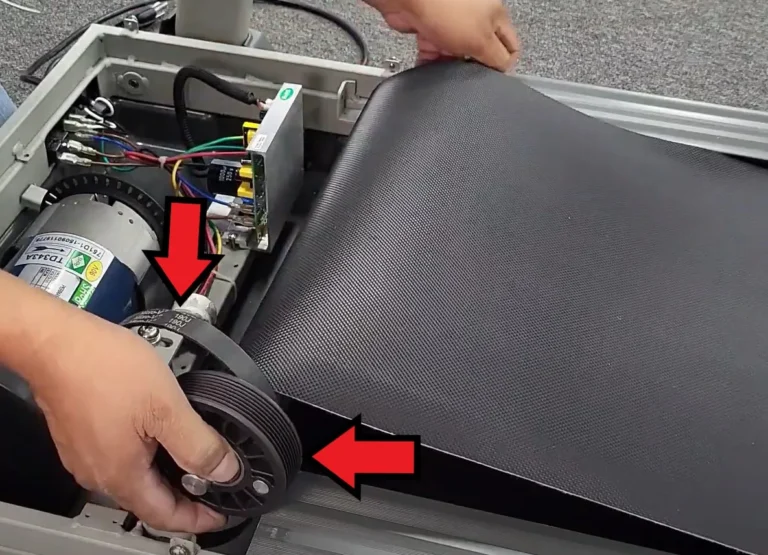
Start by checking your owner's manual, just like you would before adjusting an elliptical. Then locate the two rear roller bolts.
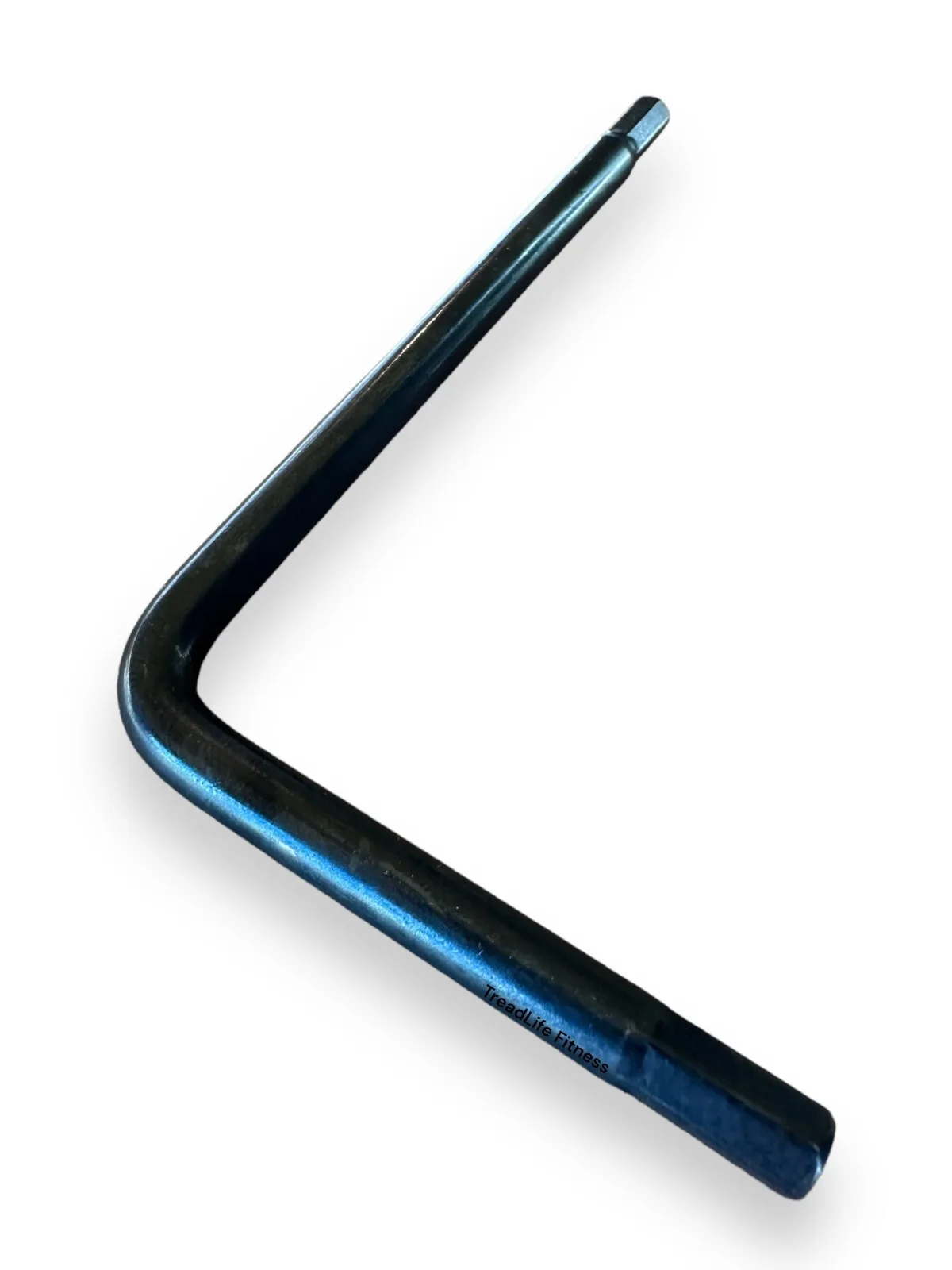
Image source: Bing (Web (fair-use with source credit))
If the belt is drifting left
Turn the left rear roller bolt a quarter-turn clockwise. This increases tension on the left side of the roller and nudges the belt back toward center. If your manufacturer specifies the opposite direction, follow your manual.
Run the belt at 2 mph for a minute and watch the tracking.
If the belt is drifting right
Turn the right rear roller bolt a quarter-turn clockwise. Again, follow your manual's exact direction if it differs. Keep adjustments small.
A half-turn is usually too much and can send the belt careening to the other side.
Test under body weight
Once the belt runs centered with no load, step on and walk slowly for a couple of minutes. Your weight naturally applies lateral forces, so a small drift may return. If that happens, unplug the machine and repeat the quarter-turn process.
Common Mistakes That Make Belt Drift Worse
Let's look at the errors that happen most often. Most are harmless once caught, but a few can damage the belt or roller.
Over-tightening the belt to fix a tracking problem
Too many people crank both rear bolts until the belt feels rigid. That's the worst thing you can do. An over-tightened belt strains the motor, flattens the crowned roller's contact area, and actually worsens drift.
Use the 2 to 3 inch lift rule instead.
Adjusting when the deck isn't level
You can chase a drift for hours if the machine is tilted. Before making any changes, put a carpenter's level on the deck and use the leveling feet to fix everything. You'd do the same when placing any new machine in your home.
Skipping belt lubrication
A dry belt creates extra drag on one side, especially if you've cleaned the deck with a harsh cleaner. Silicone lubrication should be part of your regular schedule. If you're not sure how, follow a care routine similar to an elliptical cleaning checklist but adapted for your treadmill.
Ignoring debris and pet hair
Dust, hair, and tiny debris collect between the belt and the deck. That can create a high-friction spot that pulls the belt sideways. Wipe the deck, vacuum under the treadmill, and clean the side rails regularly.
Turning the bolts too far
A half-turn on most treadmills sends the belt flying to the opposite rail. Always work in quarter-turn increments. Then let the belt run for a full minute before deciding whether it needs another adjustment.
When to Stop DIY: Signs You Need a New Belt or a Service Call
Most drift problems end with a quarter-turn fix. But not all of them. If you've adjusted significantly and the belt still won't track, you're dealing with something bigger.
Belt is frayed, glazed, or cracked at the edges
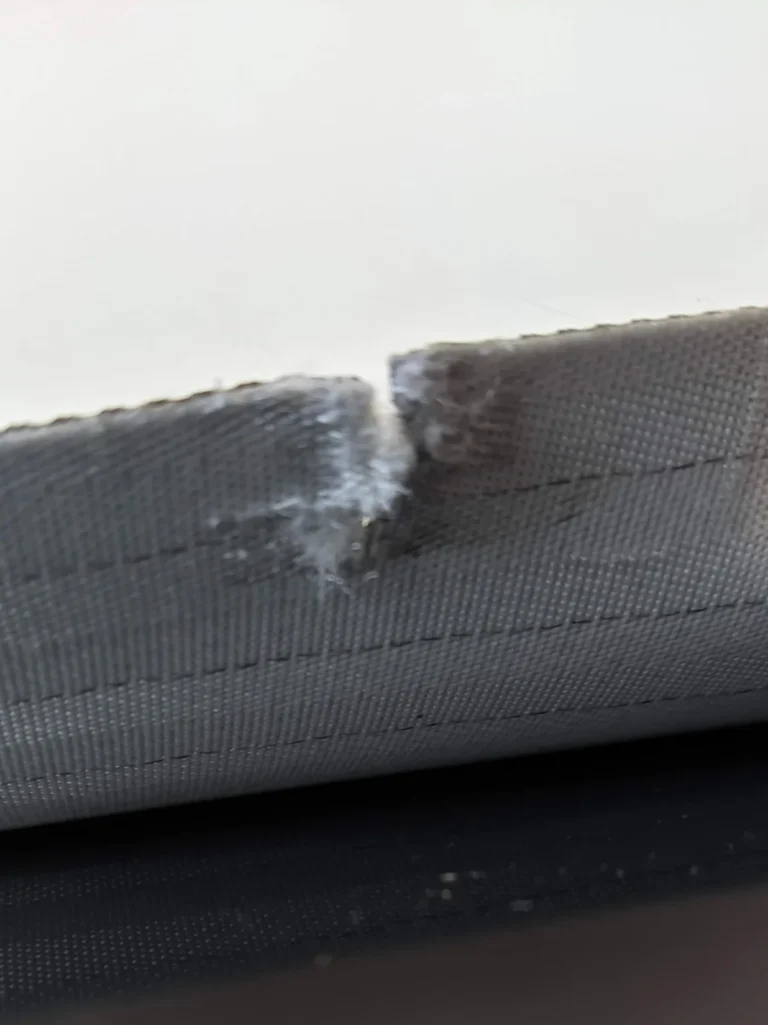
Inspect the belt's edges closely. A belt that has been rubbing against the deck rails for a long time will show fraying, glazing, or visible cracks. This is a worn belt that won't hold a straight track.
The rubber has lost its grip and the fabric layers are beginning to break down. Once that happens, no amount of tension adjustment helps.
You've adjusted multiple times but drift returns immediately
If you tighten the roller bolts and the belt centers for only a minute or two before drifting again, something is mechanically wrong. This is a common symptom of a bent rear roller or a worn front roller bearing. Both are parts with a fixed lifespan, typically around 1,500 to 2,000 miles of running depending on weight and usage.
Worn rollers and bearings
Spin each roller by hand with the belt removed. It should rotate freely and quietly, with no rough spots or grinding sounds. If you notice resistance or a wobble, the roller is worn out.
A bent front roller will also cause the belt to track aggressively toward one side, because the belt follows the roller's out-of-round surface. Replacement rollers are inexpensive, usually between $30 and $100, and available directly from the manufacturer.
How to find the right replacement part
Search the model number, usually printed on a sticker on the frame or under the motor cover. Search "treadmill belt [model number]" or "rear roller [model number]" on the manufacturer's site. For service calls, compare the cost against the machine's age.
If your treadmill is over ten years old and needs both a belt and a roller, replacement cost often approaches half the price of a new machine. That's when a new treadmill starts making sense.
Frequently Asked Questions
How tight should a treadmill belt be?
A properly tensioned belt lifts about 2 to 3 inches off the center of the deck when you pull upward with moderate force. If it lifts more than 3 inches, it's too loose. If it barely moves, it's too tight and the motor will struggle.
Tension bolts move in small increments, so adjust gradually and test after each quarter-turn.
Can I use furniture polish or silicone spray on the belt?
No. Furniture polish leaves a slippery residue that can contaminate the belt surface and cause dangerous slipping underfoot. Use only a silicone-based treadmill lubricant specifically designed for treadmill decks.
Apply it sparingly along the center of the deck, then run the belt at low speed to spread it evenly.
How often should I align and center my treadmill belt?
Check alignment every few weeks, especially if you use the treadmill daily. A quick visual inspection at low speed takes less than a minute. Several factors affect tracking frequency, including deck levelness, belt condition, and how consistently you run in the center.
If your belt drifts once a month, a single quarter-turn typically solves it.
Can a drifting belt permanently damage the motor or deck?
Yes. If the belt rubs against the side rails continuously, it can wear through the deck coating and damage the frame. The extra friction also makes the motor work harder and run hotter, which shortens motor life.
The earlier you catch the drift, the less expensive the repair becomes. Squeaks and unusual noises are early warning signs, so listen for changes in running sound.
Will walking on the same side of the belt cause drift?
Not directly. The belt centers itself based on roller alignment and tension, not where your feet land. However, if your stride tends to push the belt sideways constantly, you may notice a slight drift over time.
Proper tracking and regular maintenance will handle this. Keep the deck clean and the belt aligned, and running consistently will stay comfortable.