How to Stop a Treadmill Safely
A treadmill injury lands over 24,000 Americans in the emergency room each year, and a surprising number of those accidents happen not while running, but while stopping. That's why knowing how to stop a treadmill safely is the first real skill you should learn, before you even press start. It's not just about hitting the right button.
It's about your body, your machine, and a split second of decision-making.
The Consumer Product Safety Commission tracks these incidents closely, and their data shows that falls during treadmill use are a leading cause of injury in home fitness equipment. The good news is that most of these incidents are completely avoidable. Once you understand the mechanics of your treadmill's stop system, you'll never step off a moving deck again.
Why Stopping a Treadmill Correctly Actually Matters
Your body isn't expecting the sudden change. When you're running or walking, your brain locks into a rhythm. Your foot strike, your stride, and your balance all account for a belt moving beneath you.
The instant that belt stops, your momentum keeps pushing you forward. There's nothing under your feet to catch you.
That's why a controlled stop matters more than a fast one. Most treadmills are built to decelerate over three to five seconds, per the ASTM F2115 standard for exercise treadmill safety. That delay is intentional.
It gives your body time to adjust from the moving belt to a stationary platform. Skip that window, and you're asking your knees, ankles, and hips to absorb forces they weren't braced for.
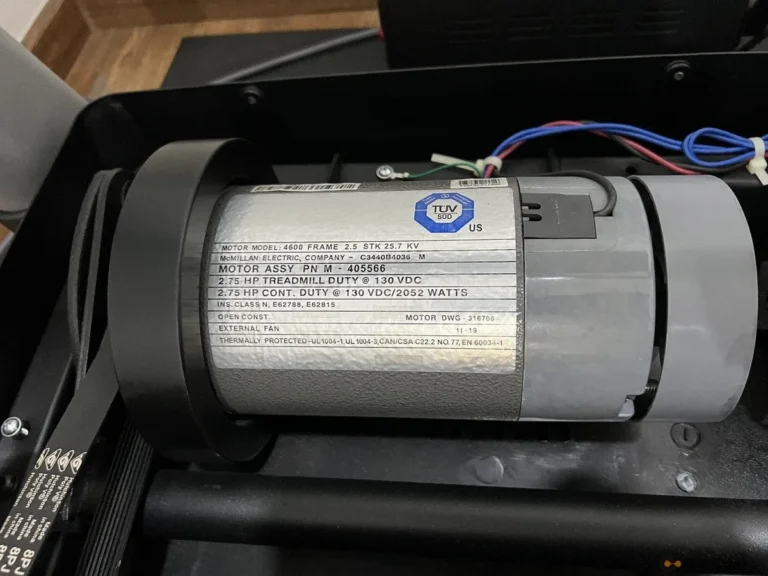
There's also the mechanical side. Emergency stops, when used constantly, stress the belt, rollers, and motor. The system can handle it, but it wasn't designed to be your everyday stop button.
Using it for every workout sets a bad habit and increases wear over time. You want one muscle memory for a normal finish and a separate one for real emergencies.
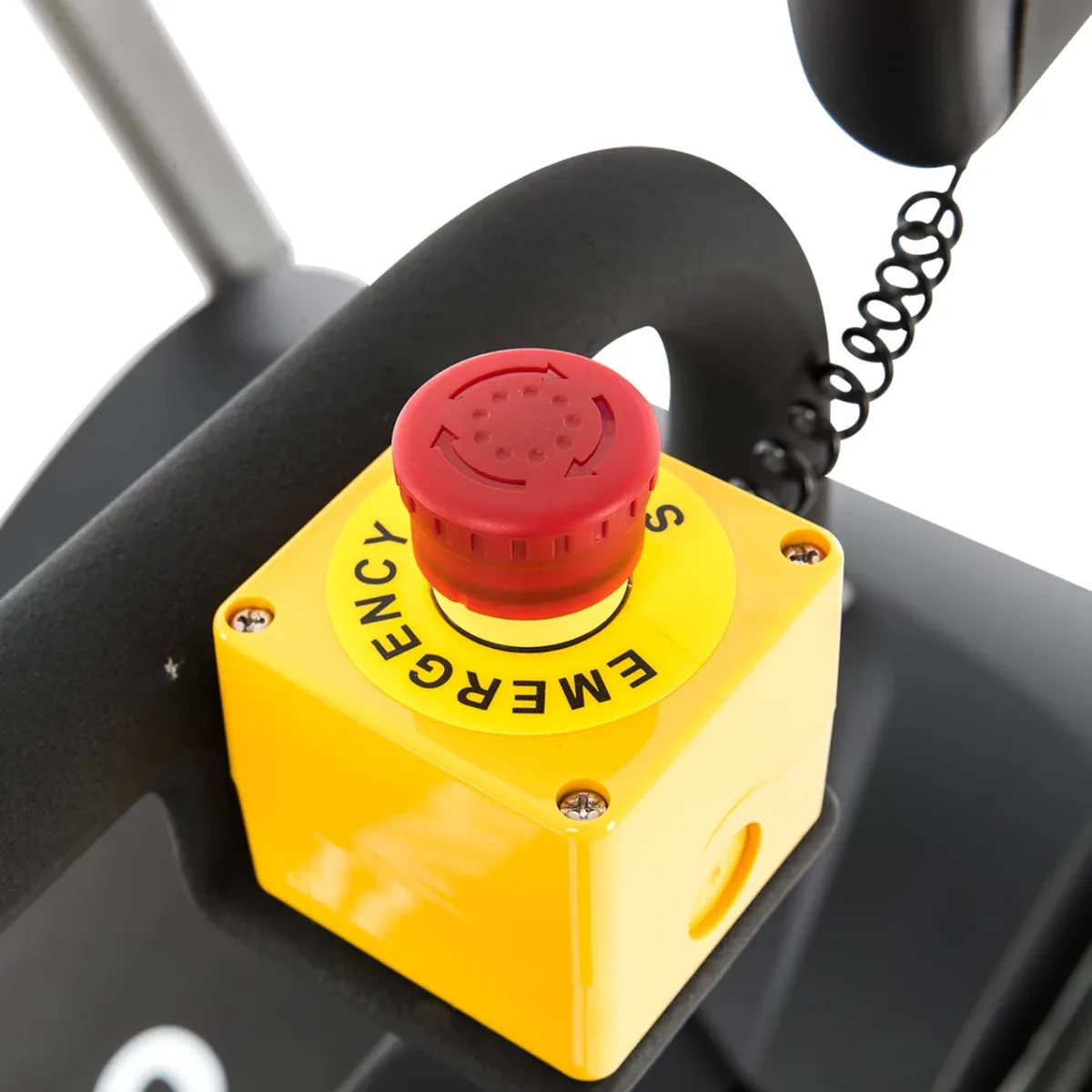
Image source: Bing (Web (fair-use with source credit))
Normal Stop vs. Emergency Stop: Know the Difference
These are two entirely different actions, and mixing them up can cause a fall. The normal stop is the standard way to end a workout. It uses the console's pause or stop button, or the speed decrease button, to ease the belt to a halt over several seconds.
This is what you should use ninety-nine percent of the time.
The emergency stop is for dangerous situations. You're stumbling, you feel a cramp, something's caught in the belt, or you need to stop instantly. This is the red button on the console, or the safety lanyard you pull.
It engages the motor brake and stops the belt in a fraction of a second. It's abrupt, it's jarring, and that's exactly what it's designed to be.
Here's the difference in practice:
| Action | How it stops | When to use it |
|---|---|---|
| Normal stop | Press stop or pause, belt glides to a halt over 3–5 seconds | Finishing a workout, taking a break |
| Emergency stop | Press red button or pull lanyard, belt locks up fast | Stumbles, falls, dizziness, any sudden hazard |
| Speed decrease | Arrow keys or quick-speed buttons, gradual reduction | Slowing down before a full stop |
The lanyard works by clipping to your shirt and pulling a magnetic key out of the console if you move away or fall. On most treadmills, that instantly cuts power to the motor. It's the only stop method that works without you reaching for anything.
Every session should start with that clip attached, even if you never need it.
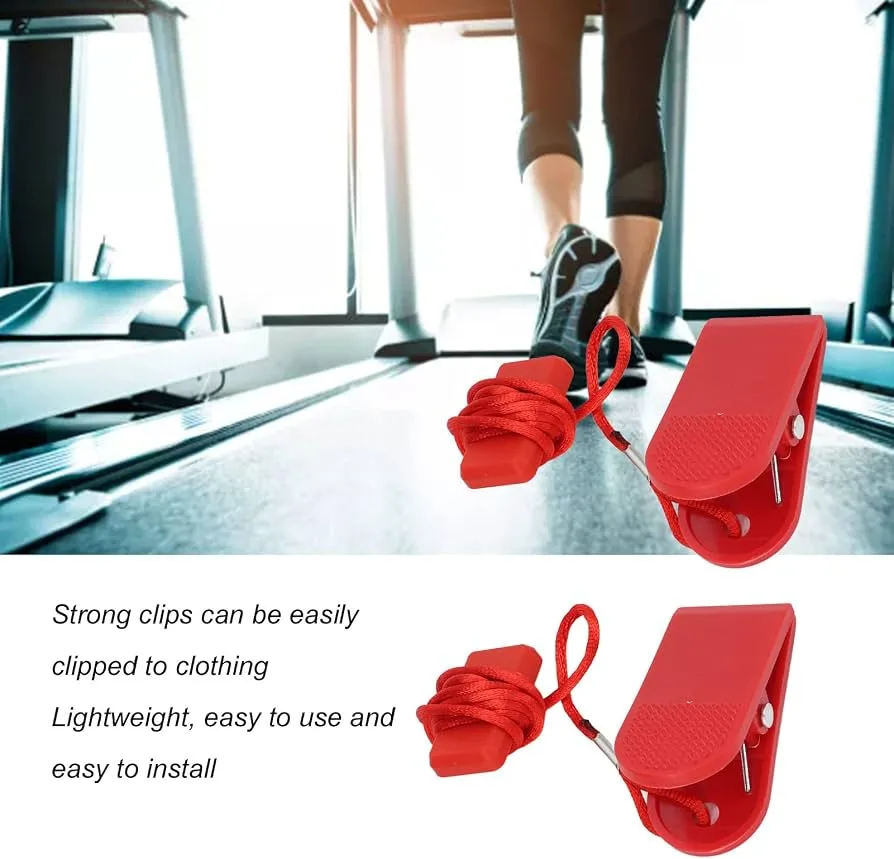
Image source: Bing (Web (fair-use with source credit))
How to Stop a Treadmill Safely: Step-by-Step Routine
Let's walk through the exact sequence for a normal, controlled stop. You'll use this every single workout. It takes about five seconds.
- Hit the speed decrease button first. Drop your speed down to a slow walking pace, around 2 mph. Keep your feet moving at the new pace as the belt slows.
- Grab the handrails. Lightly. You're not pulling yourself up. You're just steadying your balance for the belt change.
- Press the stop button. Only after the belt has slowed to that walking speed. Don't jump from 6 mph straight to a dead stop. Your body needs that ramp-down.
- Let the belt finish. Do not step off yet. The belt is still moving, even slowly. Wait until you can see the deck surface clearly still.
- Step off backward. Put one foot on the side platform, then the other. Never step off the front, near the motor cover. That's where you're most likely to snag your shoe.
- Remove the safety lanyard. Unclip it from your shirt before you walk away. If you leave it clipped, a stray brush could pull the key mid-run next time.

Image source: Web (Bing) / pxhere.com (Web image (fair-use with source credit))
If you want a truly low-impact alternative for your off days, check out how these machines compare to an elliptical for impact. The principle of finishing your workout with low impact is the same: you don't want to jump straight off the treadmill and onto a hard floor.
Common Mistakes That Lead to Treadmill Falls
Most treadmill accidents aren't caused by equipment failure. They're caused by predictable human errors. After looking through incident reports and gym safety records, these are the same patterns again and again.
Stepping off before the belt stops. This is the biggest one. The belt may look still. It might be crawling so slowly you don't feel it.
But even a slow-moving belt can catch your foot and pull you back. Wait for the full stop.
Fumbling for the stop button. Your eyes drop down to the console mid-run. You lose your rhythm. Now you're off balance and looking away from the deck.
To fix this, know exactly where the stop button sits on your machine before you start moving.
Hitting the emergency stop instead of the normal stop. A shock stop throws you forward. You see the red button and pound it. The belt locks, your body keeps moving, and you're suddenly not over your feet.
Use the red button only when falling or ill.
Starting at a speed you can't handle. When you start your workout at a fast pace, you'll feel uncomfortable quickly. Then you're trying to stop while your stride is still too fast for your ability.
Not clipping the safety lanyard. We get it, the clip is plastic and annoying. But aggregate user reports show the lanyard is exactly what prevents broken collarbones during a stumble. It cuts the power before you hit the belt.
Stepping off the back. The rear roller area is open on many models. Shoes can catch there. Always step off to the side platforms.
Treadmill Safety Features: What to Check Before You Run
Before you even press start, spend 30 seconds inspecting the machine. Your pre-run checklist should become as automatic as clipping the lanyard. As of 2026, most modern home treadmills include a magnetic safety key, so there's no excuse to skip it.
| Feature | What to check | Why it matters |
|---|---|---|
| Safety lanyard | Clip is intact, magnet attaches to console | Cuts power if you fall or pull away |
| Emergency stop button | Presses cleanly, returns to position | Stops belt instantly in an emergency |
| Pause/stop button | Visible and reachable from your stride position | Lets you end a session safely |
| Handrails | Firm, no wobble, not blocked by a towel | Steadies you during slow-down |
| Belt | No frayed edges, dry and grippy | Prevents slips and snags |
The lanyard is the most overlooked feature. It's the only system that works when you can't reach the console. Many home treadmill owners take it off because it feels restrictive.
Then a distraction happens at the wrong moment.
Your console layout matters too. Read the owner's manual for the exact location of your stop controls. Some machines route the stop button near the heart-rate sensors.
Some put the pause button far from the speed arrows. Know your map.
And if you ever feel unsure about your balance on cardio equipment in general, it's worth reading about how a stationary bike handles stopping compared to a treadmill. The risk profile is completely different.
That pre-run routine takes less than a minute. It's the difference between a controlled, comfortable finish and a confident walk out of the gym. Routine maintenance also goes a long way here.
A squeaky belt or sticky button is a warning sign. If your treadmill is acting up, don't ignore it. Proper upkeep keeps every safety feature ready when you need it.
Special Situations: Kids, Pets, Gym Use, and Stumbles
Most safety guides assume you're a solo adult on your own machine. But real life is messier than that. If kids, pets, or other people share your space, your stopping routine needs an extra layer of caution.
If you've got children at home, the safety lanyard isn't optional. It's the law of the house. Clip it to your shirt every time.
Kids are fast, curious, and drawn to moving belts. A moment of inattention on your end combined with a wandering toddler creates a real danger. The CPSC specifically flags unsupervised treadmill access by children as a recurring injury pattern.
Pets pose a different risk. Cats and small dogs may dart near or under the machine while it's running. If your treadmill sits in an open area, consider a barrier or gate around it during use.
When a pet appears near the belt, that's what the emergency stop is for. Don't hesitate.
In a gym setting, most people aren't using their own machine. That means the lanyard may be missing, the console layout might be unfamiliar, and you don't know how fast the belt decelerates. Before you get on, do a 30-second check.
Find the stop button. Find the emergency stop. Attach the lanyard if it's there.
If it's not, ask staff. It's a reasonable request and most gyms have replacements behind the front desk.
For context on cardio machine safety beyond treadmills, it's worth understanding how ellipticals handle stopping mechanics or how to keep your cardio equipment running smoothly over time. The habits carry over.
Frequently Asked Questions
How long does the belt take to stop after pressing stop?
Most treadmills take three to five seconds for the belt to come to a full halt after you press the normal stop button. Commercial models at higher speeds may take a bit longer. Wait until the belt is completely still before stepping off.
Should I use the emergency stop button every time?
No. The emergency stop is designed for dangerous situations only, like dizziness or a fall. Frequent use jolts your body and stresses the motor.
Use the normal stop button for routine finishes and reserve the red button or lanyard pull for genuine hazards.
What if my treadmill doesn't have a safety lanyard?
Some budget or older models skip the lanyard. In that case, you need to be extra careful about maintaining your balance during deceleration. Never run at a speed you can't comfortably walk down from.
Consider purchasing a compatible safety key from your treadmill manufacturer.
Can I just jump off a moving treadmill?
Don't. Jumping off a moving belt is one of the leading causes of treadmill injuries. Even at walking speed, the belt can catch your shoe.
Slow down first, hold the handrails, and wait for the belt to stop before stepping to the side.
Is it safe to stop the treadmill mid-run during an interval?
Yes, but do it the right way. Hit the speed decrease button to bring the pace down gradually. Don't slam the emergency stop unless you feel unsafe.
A controlled slowdown protects your joints and keeps your footing solid. If you're doing frequent intervals, adjusting your machine's settings for quick transitions can help keep things smooth.
What should I do if I accidentally pull the safety lanyard mid-run?
Stay calm. The belt will stop abruptly, and your body will keep moving forward. Grab the handrails immediately and let your feet catch up to the stationary belt.
Don't try to restart right away. Catch your breath, reattach the lanyard, and start at a slower speed than before.
The Bottom Line: Build the Habit Before You Need It
Stopping a treadmill safely comes down to repetition. The more you practice the controlled slowdown, the more automatic it becomes. You'll stop glancing at the console when you press the button.
You'll stop gripping the handrails like you're on a cliff edge. It becomes routine.
But the emergency actions need practice too. Know where the red button is. Know how the lanyard feels when it pulls.
Run through a mental rehearsal on your next workout. That split second of recall is what saves you when something unexpected happens.
The research is honestly pretty clear here. Most treadmill injuries are avoidable when people understand the machine's stop systems and respect the belt's momentum. Treat the stop routine as a core part of your workout, not an afterthought.
You wouldn't skip warming up. Don't skip finishing properly.
As for the gear itself, keep an eye on wear. A worn or loose belt makes stopping less predictable. The same way a squeaky machine signals trouble on other cardio equipment, a treadmill that hesitates or lurches needs attention before your next run.
And if you're weighing treadmill workouts against other cardio options, plenty of research shows that low-impact alternatives like ellipticals are gentler on the joints while still building serious endurance.
Every workout has a start, a middle, and an end. The safest runners are the ones who treat all three parts with equal care. Stop deliberately.
Step off only when the belt is still. That's the whole trick, and it works every single time.