How To Use A Tread Depth Gauge: Easy Step-By-Step Guide
A tread depth gauge measures tire wear fast, helping you spot safety issues before they become costly.
If you have ever wondered how to use a tread depth gauge, you are already doing the right thing by paying attention to tire safety. I have checked a lot of tires over the years, and the pattern is always the same: the people who measure tread early save money, avoid stress, and drive with more confidence. This guide will walk you through the process step by step, so you can measure tire tread the right way and know what the numbers really mean.

What a tread depth gauge does and why it matters
A tread depth gauge is a simple tool that tells you how much tread is left on your tire. Tire tread is the patterned rubber that grips the road, moves water away, and helps your car stop and turn with control. When tread gets too low, wet roads become more dangerous, stopping distances grow, and the tire can wear out unevenly.
Using a tread depth gauge is one of the easiest ways to check tire health at home. It gives you a real number instead of a guess. That matters because tire wear does not always look the same from the outside.
I have seen tires that looked “fine” at a glance but were worn down in the center or on one edge. A gauge catches that. It is a small tool, but it gives you a big safety signal.
Types of tread depth gauges
There are a few common types of tread depth gauges, and they all do the same basic job. The difference is how they show the measurement.
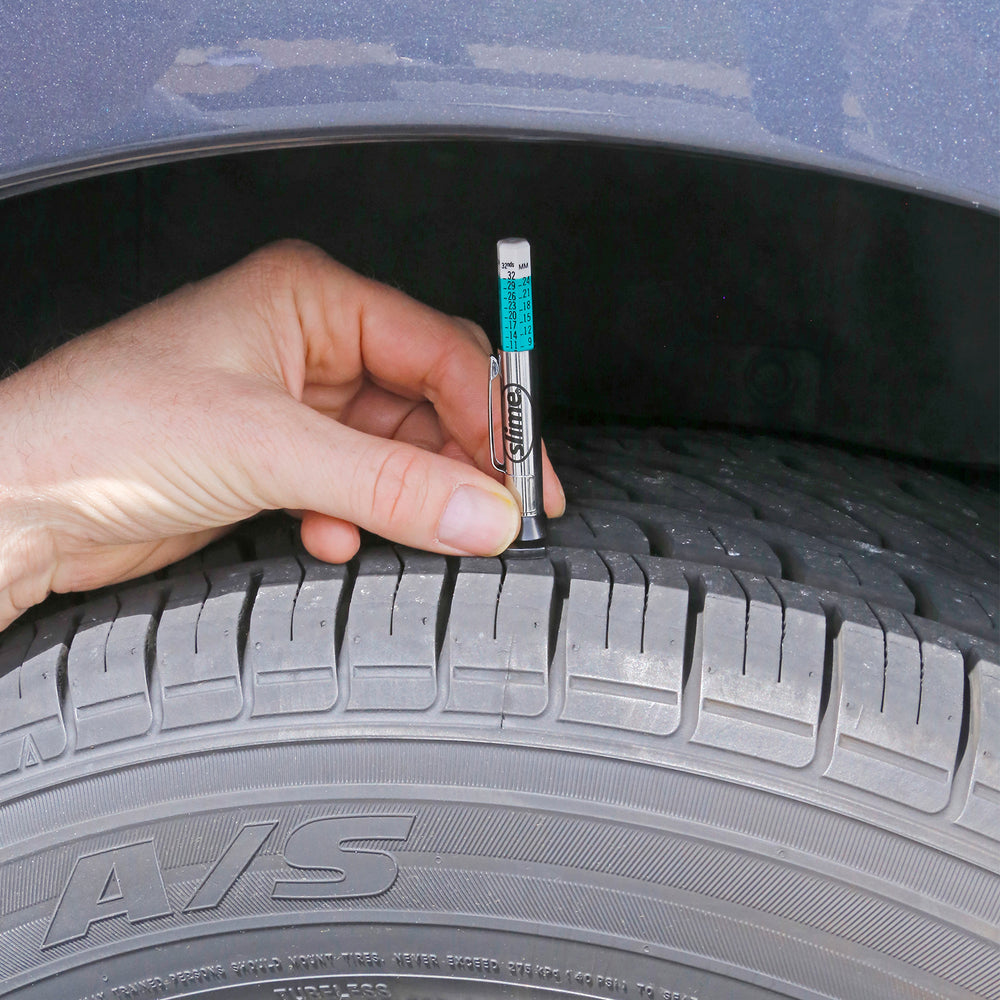
• Pencil-style gauge: This is the most common and budget-friendly option. It uses a spring-loaded rod that slides out and shows the tread depth on a small scale.
• Digital gauge: This one gives a clear number on a screen. It is easy to read and good for people who want fast results with less chance of reading the scale wrong.
• Dial gauge: This style uses a needle and dial face. It can be very precise and is popular in some shops.
For most drivers, a pencil-style or digital tread depth gauge is enough. If you only check your tires a few times a year, simplicity matters more than fancy features. The best tool is the one you will actually use.
How to use a tread depth gauge step by step
Learning how to use a tread depth gauge is simple once you know the routine. I always tell people to treat it like checking a ruler on your tire. Go slow, keep the tool straight, and take your time on each tread groove.
1. Park on a flat surface
Start with the car parked on level ground. Make sure the parking brake is set. This keeps the tire stable and makes the reading easier.
2. Find the main tread grooves
Look for the deep grooves between the tread blocks. These are the places where water moves out from under the tire. You want to measure the depth of these grooves, not the raised bars between them.
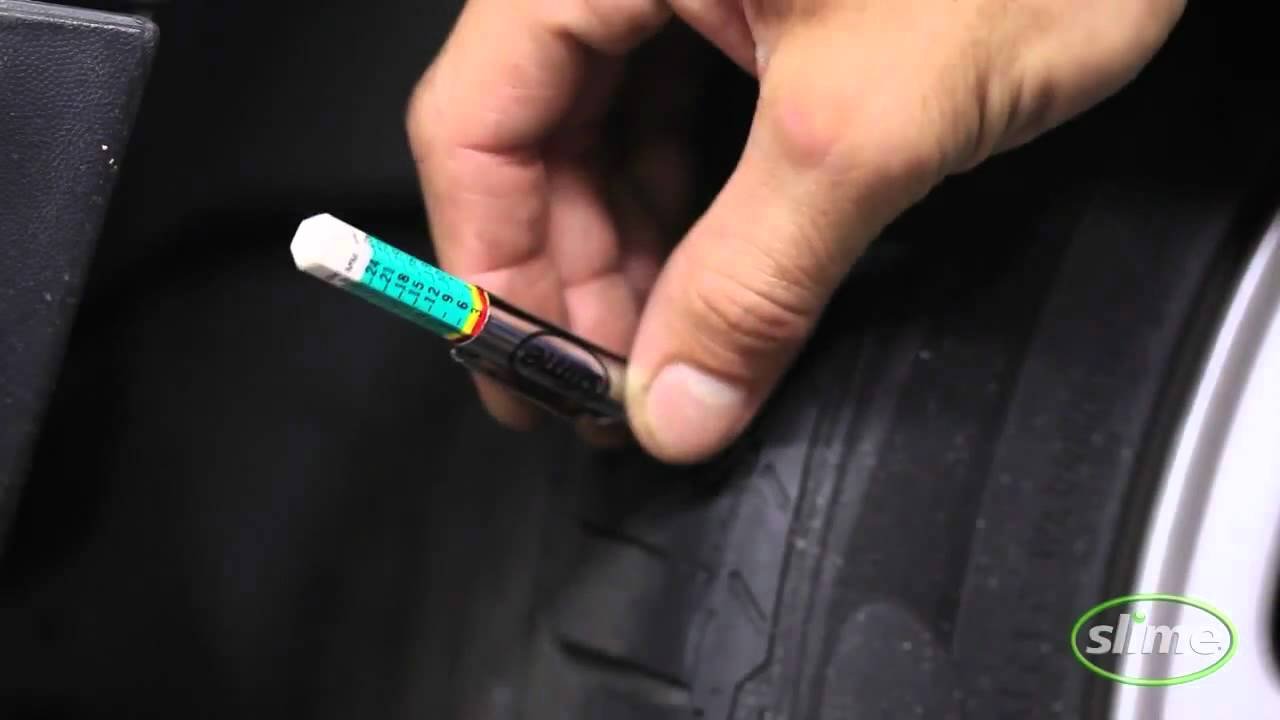
3. Insert the gauge straight into the groove
Place the gauge tip into the groove until the base of the tool rests flat on the tread surface. Keep it straight and steady. If the gauge tilts, the reading may be off.
4. Press gently and read the number
For a pencil-style gauge, the rod will slide out and show a number. For a digital gauge, the measurement appears on the screen. Read the result right away before moving the tool.
5. Check more than one spot
Measure the tread in at least three places across the tire:
• Outer edge
• Center
• Inner edge
This helps you spot uneven wear. If one side is lower, that can point to alignment, inflation, or suspension issues.
6. Repeat on all four tires
Do not stop after one tire. Tires wear at different rates, so check each one. I have found more than one issue this way, especially on front tires that wear faster than rear tires.
7. Write down the numbers
Keep a simple note in your phone or glove box. Write the date and each tire’s tread depth. Tracking the numbers over time helps you see wear patterns before they become a problem.

How to read tread depth measurements
Once you know how to use a tread depth gauge, the next step is understanding the numbers. Tread depth is usually measured in 32nds of an inch in the United States. A new passenger tire often starts around 10/32 to 12/32 of an inch, though it can vary by design.
Here is a simple way to think about it:
• 10/32 to 12/32 inches: Deep tread, usually plenty of life left
• 6/32 inches: Still usable, but you should start watching it closely
• 4/32 inches: Wet-weather performance begins to drop more sharply
• 2/32 inches: This is the legal minimum for most passenger tires in the U.S.
• Below 2/32 inches: The tire is legally bald and should be replaced
That legal minimum comes from common U.S. safety standards and tire industry guidance. Even before a tire reaches 2/32, performance can already fall off in rain and slush. In my experience, waiting until the legal limit is rarely the smart move.
When to replace tires based on tread depth
Tread depth alone does not tell the whole story, but it gives you a strong warning sign. Many drivers wait too long because the tire still “looks okay.” The problem is that worn tread can lose grip long before the tire looks obviously bad.
A good rule of thumb is this:
• Replace soon if tread is at 4/32 inches and you drive in rain or snow often
• Replace at 2/32 inches or before if the tire is worn unevenly or damaged
• Replace sooner if you see cracks, bulges, cuts, or exposed cords
Some winter tires need more tread to perform well, and all-season tires still struggle as they get close to the legal limit. If you are unsure, compare all four tires and look at the weakest one first. One bad tire can affect how the whole vehicle handles.
Common mistakes when using a tread depth gauge
Even a simple tool can give bad results if you rush. I have made a few of these mistakes myself early on, so I know how easy it is.
• Measuring on the wear bar instead of the groove: Wear bars are raised indicators, not the place to measure.
• Tilting the gauge: The tool must sit flat for an accurate reading.
• Checking only one spot: Tires can wear unevenly, so one reading is not enough.
• Forgetting to clean debris: Small stones or dirt can change the result.
• Ignoring all four tires: One tire may be worn much faster than the rest.
If your results seem strange, measure again in a different groove. A second check takes only a few seconds and can save you from a bad call.
What uneven tread wear can tell you
A tread depth gauge does more than tell you when to replace a tire. It can also help you spot vehicle problems. That is one reason I like this tool so much. It gives you a clue, not just a number.
• More wear in the center: Often points to overinflation
• More wear on both edges: Often points to underinflation
• More wear on one edge: Can suggest alignment issues
• Patchy or cupped wear: May point to suspension or balance problems
These patterns are worth paying attention to. If you notice them, a tire shop or mechanic should inspect the car. Fixing the cause can help your next set of tires last longer.

How often to check your tread depth
For most drivers, checking tread depth once a month is a smart habit. It also makes sense to check before a long trip, after you hit a curb hard, or if your car starts pulling to one side. If you drive in heavy rain, snow, or rough roads, check more often.
This is one of those small habits that pays back fast. A monthly check can help you catch slow wear, nail punctures, and bad alignment early. It is a five-minute job that can prevent a much bigger headache.
Helpful tips for getting the best reading
Here are a few practical tips from real-world use:
• Use the gauge in multiple grooves on each tire
• Measure when the tires are cool for consistency
• Clean the tread first if it is muddy or packed with stones
• Compare all four tires to spot patterns
• Keep the gauge in the glove box or trunk so it is easy to grab
If you have never used one before, do your first check in good light. Once you see how the gauge sits in the groove, the process becomes almost automatic. It is a bit like learning to check a blood pressure cuff; the tool is simple, but the habit is powerful.
Why tread depth checks are part of smart car care
Tire tread affects braking, steering, traction, and hydroplaning resistance. That means tread depth is not just a tire issue. It is a whole-car safety issue. The National Highway Traffic Safety Administration and tire manufacturers both stress that tire condition matters a lot for safe driving, especially in wet weather.
From a practical side, keeping an eye on tread depth can also save money. Worn tires can make your car less efficient, increase the chance of uneven wear, and lead to premature replacement. A gauge helps you time tire changes better instead of guessing.
I like to think of it as reading the “health chart” for your tires. The numbers are small, but the meaning is big.
Frequently Asked Questions
How do you use a tread depth gauge correctly?
Place the gauge straight into the tire groove until the base sits flat on the tread. Then read the measurement and repeat in a few spots across the tire for accuracy.
What is a good tread depth for tires?
New passenger tires often start around 10/32 to 12/32 of an inch. Many drivers should begin planning for replacement around 4/32, especially if they drive in rain or snow often.
Can I use a tread depth gauge on all tires?
Yes, you can use it on passenger cars, SUVs, light trucks, and many motorcycle or trailer tires. Just make sure you are measuring the tread grooves and not the raised wear bars.
How accurate is a tread depth gauge?
A quality gauge is usually very accurate for home use, especially if you measure carefully and keep the tool straight. Digital models are easy to read, while pencil-style gauges are reliable and simple.
Where should I measure tire tread depth?
Measure in the main grooves, not on the wear bars or outside edge alone. Check the inner, center, and outer sections of each tire to catch uneven wear.
How often should I check tire tread depth?
Once a month is a good habit for most drivers. You should also check before long trips and anytime you suspect uneven wear or reduced traction.
Conclusion
Using a tread depth gauge is one of the easiest ways to stay ahead of tire trouble. It helps you know when tires are safe, when they are wearing unevenly, and when it is time to replace them. Best of all, it takes only a few minutes and gives you real peace of mind.
If you make this a regular habit, you will drive smarter and safer. Grab a tread depth gauge, check all four tires, and start tracking the numbers today. If you want to take your car care further, explore more tire maintenance tips or leave a comment with your own experience.