How To Use A Fuel Pressure Tester: Easy Step-By-Step Guide
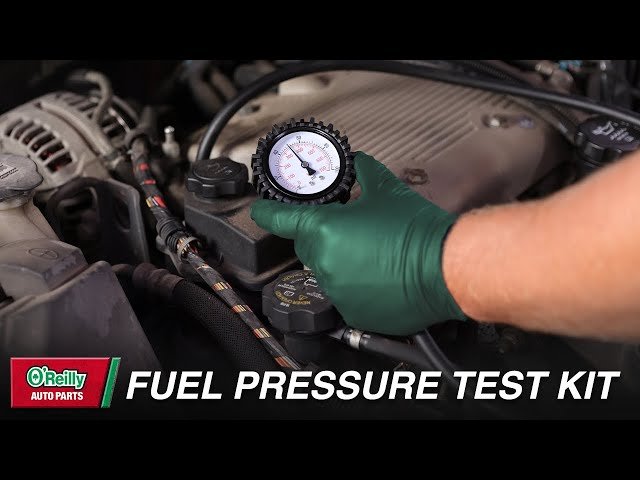
A fuel pressure tester shows whether your fuel system is holding the correct pressure or hiding a problem.
If your engine cranks too long, hesitates, stalls, or loses power under load, a fuel pressure tester can help you find out why fast. I’ve used one on everything from tired daily drivers to stubborn no-start cases, and the pattern is always the same: when fuel pressure is off, the engine tells on itself. In this guide, I’ll walk you through how to use a fuel pressure tester the right way, what the numbers mean, and how to avoid the common mistakes that can send you in the wrong direction.
What a fuel pressure tester does
A fuel pressure tester measures the pressure inside your fuel delivery system. That pressure helps fuel reach the injectors at the right rate, so the engine can run smoothly.
If pressure is too low, the engine may run lean, stumble, or fail to start. If it is too high, you may get rough running, rich fuel trims, or even fuel leaks in bad cases. Knowing how to use a fuel pressure tester gives you a clear first check before you replace pumps, filters, regulators, or injectors.

Why fuel pressure matters
Fuel pressure is like water pressure in a hose. If the pressure is weak, the spray is poor. If it is too strong, things can overflow or break.
Modern fuel systems need the right pressure to keep air and fuel balanced. That balance affects:
- Starting
- Idle quality
- Acceleration
- Fuel economy
- Emissions
I have seen people replace a fuel pump too quickly when the real issue was a clogged filter or a bad pressure regulator. A fuel pressure tester helps you stop guessing and start checking.

Tools and safety gear you need
Before you learn how to use a fuel pressure tester, gather the right tools. It keeps the job cleaner, faster, and safer.
You will usually need:
- A fuel pressure tester kit with the correct adapter
- Safety glasses
- Gloves
- A shop towel or rag
- A scan tool or service manual, if available
- A container for captured fuel, if your setup calls for it
You also need a safe work area. Fuel is flammable, so work away from sparks, open flame, and hot exhaust parts. If the engine has been running, let it cool a bit first.
How to use a fuel pressure tester step by step
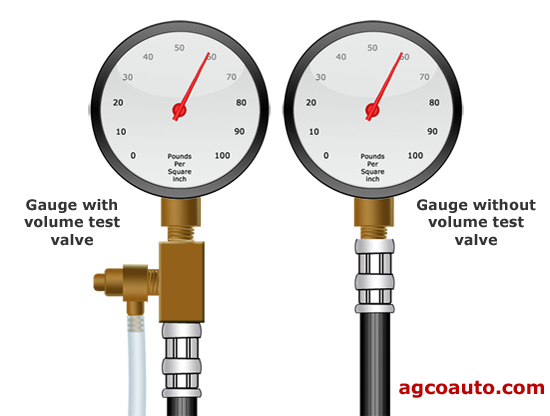
Using a fuel pressure tester is not hard, but the details matter. The exact process depends on your vehicle, especially whether it has a Schrader valve on the fuel rail or needs an inline adapter.
1. Find the right test point
Check the fuel rail for a Schrader valve. It looks a lot like a tire valve stem, and many vehicles use it for testing. Some cars and trucks do not have one, so you may need to connect the tester inline or at a service port.
If you are not sure, check the service manual first. This saves time and helps you avoid forcing the wrong adapter onto the system.
2. Relieve fuel system pressure
Before attaching the tester, relieve pressure if your vehicle requires it. Some systems hold pressure even after shutdown.
Common ways to do this include:
- Removing the fuel pump fuse or relay and running the engine until it stalls
- Using the manufacturer’s bleed procedure
- Following the service manual exactly
This step matters more than people think. I once saw a beginner crack a line loose on a pressurized system and get a fuel shower across the engine bay. It was a simple mistake, but a dangerous one.
3. Attach the fuel pressure tester
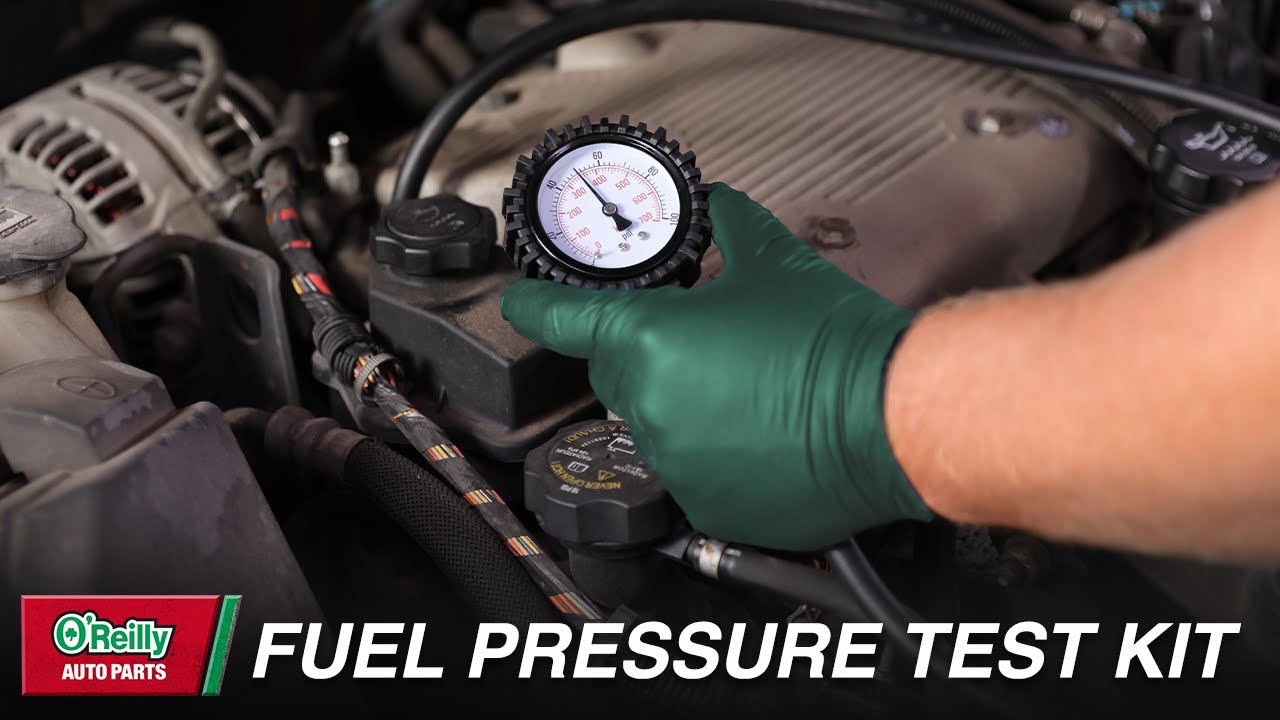
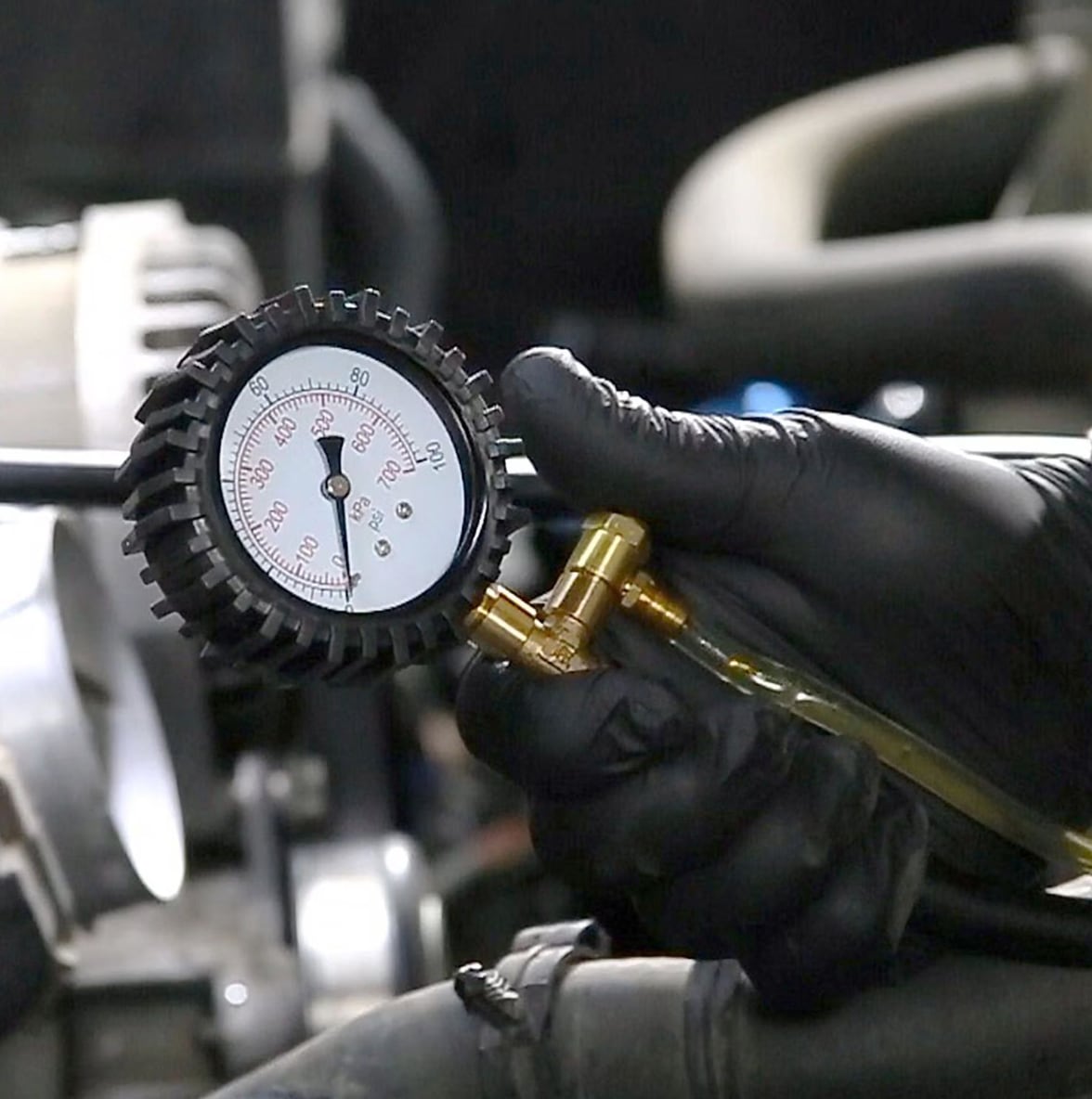
Connect the gauge securely to the Schrader valve or approved adapter. Make sure the connection is tight, but do not force it.
Keep the gauge where you can read it clearly from the driver seat or engine bay. A good seal is important because a loose connection can give a false reading and make you chase a fake problem.
4. Key on and read the initial pressure
Turn the key to the ON position without starting the engine. Many fuel pumps prime for a few seconds and build pressure.
Watch the gauge and note the reading. Then compare it to the vehicle’s specified fuel pressure range. That spec is the key. A reading that looks “pretty good” is not enough if the spec says otherwise.
5. Start the engine and observe pressure at idle
Start the engine and let it idle. The pressure may drop slightly or remain steady, depending on the system design.
Look for:
- Stable pressure
- Sudden drops
- Hunting or bouncing on the gauge
- Pressure that is far below or above spec
If the gauge swings wildly, that can point to a weak pump, a bad regulator, air in the line, or an electrical issue.
6. Test under load if possible
Some fuel problems only show up when the engine needs more fuel. Light throttle snap tests or road tests may reveal a pressure drop under load.
If your vehicle allows a safe test setup, watch the gauge while the engine is being revved or driven. A healthy system should maintain pressure when demand increases. If pressure falls off, the fuel delivery system may be struggling.
7. Check pressure after shutdown
Turn the engine off and watch how fast pressure drops. A good system usually holds pressure for a short time.
If pressure bleeds down too quickly, common causes include:
- Leaking injector
- Faulty fuel pump check valve
- Bad pressure regulator
- Leaky line or fitting
This is one of the most useful parts of how to use a fuel pressure tester. It can point you toward a leak that only shows up after shutdown.
How to read fuel pressure tester results
Reading the gauge is where the real diagnosis starts. The number on the dial is only useful if you compare it with the manufacturer spec and the engine’s behavior.
Here is a simple way to think about it:
- Low pressure often means poor fuel delivery
- High pressure often means regulation trouble
- No pressure often means pump, relay, fuse, wiring, or major blockage problems
- Pressure that drops quickly after shutdown often means a leak or failed check valve
A good fuel pressure tester gives you a clear snapshot, but it does not diagnose every cause by itself. For example, low pressure could come from a weak pump, a clogged filter, bad wiring, or a pinched line. That is why pressure testing works best as part of a full diagnosis.

Common fuel pressure values and what they mean
Different engines use different pressure specs. Many port fuel injection systems sit somewhere around 35 to 60 psi, but you should never assume a number without checking the service data.
Here are some broad examples:
- Many gasoline port injection systems: often in the 35 to 60 psi range
- Some returnless systems: pressure can vary by design and load
- Direct injection systems: often require much higher pressure, usually tested with special tools and procedures
If the spec is not clear, use the vehicle service information. Do not compare a modern direct injection system to an older port injection system. They do not work the same way, and the fuel pressure tester setup may be different too.

Signs your fuel system may need testing
If you are wondering when to use a fuel pressure tester, look for real symptoms first. Fuel problems often show up in small, annoying ways before they become full no-start issues.
Common signs include:
- Long crank times
- Hard starting after sitting
- Stalling at idle
- Hesitation during acceleration
- Loss of power on hills
- Poor fuel economy
- Engine misfires
- Rough idle
- Check engine light with lean fuel codes
I like to treat these symptoms like clues, not guesses. A fuel pressure tester helps you turn those clues into a real direction.
Mistakes to avoid when using a fuel pressure tester
I have seen a few repeat mistakes over the years. Most of them are easy to avoid once you know what to watch for.
Avoid these common errors:
- Testing without checking the service spec
- Using the wrong adapter
- Forgetting to relieve fuel pressure first
- Reading the gauge before the pump has fully primed
- Ignoring pressure drop after shutdown
- Assuming pressure alone proves the pump is good
- Letting a leak at the connection affect the reading
The biggest mistake is rushing. A fuel pressure tester is simple, but diagnosis needs patience. Slow down and read the numbers in context.

What to do if fuel pressure is too low
Low fuel pressure is one of the most common findings during testing. It does not always mean the pump is bad.
Possible causes include:
- Weak fuel pump
- Clogged fuel filter
- Faulty fuel pressure regulator
- Bad pump relay or fuse
- Corroded wiring or poor ground
- Restricted fuel line
- Low voltage to the pump
A good next step is to check power and ground at the pump, then inspect the filter and lines. If pressure is low and the pump is noisy, that often points to pump wear. Still, verify before replacing parts.
What to do if fuel pressure is too high
High fuel pressure can be just as bad as low pressure. It can make the engine run rich and waste fuel.
Common causes include:
- Stuck fuel pressure regulator
- Blocked return line on return-style systems
- Wrong replacement part
- Faulty vacuum reference to the regulator
- Control issue in a returnless system
If pressure is too high, do not ignore it. Rich running can foul spark plugs, hurt fuel economy, and damage the catalytic converter over time.
Personal tips from real-world testing
One thing I learned early is that the gauge tells the truth, but only if you give it time. A lot of weak pumps still look okay for the first few seconds and then fall apart under steady demand.
My best habit is to test in three states:
- Key on, engine off
- Idle
- Slight load or snap throttle
That simple pattern has saved me from changing parts too early more than once. I have also learned to watch the gauge after shutdown, because a pressure bleed-down can point straight to the problem even when the engine still runs.
How a fuel pressure tester fits into a full diagnosis
A fuel pressure tester is not the whole story. It is one tool in a bigger process that may include:
- Reading trouble codes
- Checking fuel trims
- Inspecting injector pulse
- Testing pump current draw
- Verifying voltage at the pump
- Checking for vacuum leaks
- Looking at the fuel filter and regulator
This layered approach is what makes diagnosis reliable. Pressure testing helps you separate fuel delivery problems from ignition or air intake problems. That saves time, money, and frustration.
Frequently Asked Questions
How do I know what fuel pressure my car should have?
Check the service manual or a trusted repair database for the exact spec. The correct pressure depends on the engine, fuel system type, and whether it is return-style, returnless, or direct injection.
Can I use a fuel pressure tester on any car?
Not always. Some cars have a Schrader valve and are easy to test, while others need special adapters or an inline setup. Always confirm the connection type before you start.
What does it mean if fuel pressure drops after I shut off the engine?
A fast pressure drop usually means fuel is leaking somewhere internally or externally. Common causes include a bad check valve in the pump, a leaking injector, or a faulty regulator.
Is low fuel pressure always a bad fuel pump?
No, and this is a common trap. Low pressure can also come from a clogged filter, bad wiring, weak voltage, or a restricted line.
How long should I leave the fuel pressure tester connected?
Long enough to test key on, idle, and shutdown pressure behavior. If you are checking for a driveability issue, you may need to keep it connected during a road test, as long as the setup is safe and secure.
Conclusion
Learning how to use a fuel pressure tester gives you a real edge in diagnosing hard starts, stalling, misfires, and power loss. It helps you check the fuel system with facts instead of guesses, which is exactly what good repair work is built on.
The key is simple: use the right adapter, follow safety steps, compare readings to the correct spec, and look at pressure in more than one condition. If you take your time and read the gauge carefully, you can save money and avoid replacing parts you do not need.
Try the steps above the next time your engine acts up, and use the tester as part of a full diagnosis. If you found this guide helpful, keep learning, share it with someone who works on cars, or leave a comment with your own testing experience.