How to Store Kitchen Utensils
Figuring out how to store kitchen utensils can transform a cluttered drawer into a well-oiled cooking machine. With so many gadgets, spatulas, whisks, and knives, it’s easy for things to get chaotic. Getting your kitchen tools organized is achievable with the right approach.
Our research indicates that implementing a good system saves time searching for specific tools and protects utensils, especially knives, from damage. According to U.S. Food and Drug Administration (FDA) guidelines on food preparation, maintaining sanitary conditions includes proper storage of all kitchen equipment to prevent contamination.
Let's explore how to achieve kitchen organization.
Quick Answer
Properly storing kitchen utensils involves regular decluttering and using specialized organizers. Drawer dividers, utensil crocks, and magnetic strips keep items accessible and safe. Good organization speeds up cooking and protects tools.
Aim for accessible, clean, and protected storage for all your cooking essentials.
Why Your Utensil Drawer is a Mess (and How to Fix It Visually)
The common problem of a jumbled utensil drawer, filled with a chaotic pile of spoons, spatulas, and obscure gadgets, stems from a lack of dedicated storage solutions and infrequent decluttering. This visual chaos is frustrating and actively slows down meal prep.
When you can't immediately grab the right tool, minutes spent rummaging add up, making cooking feel like a chore.
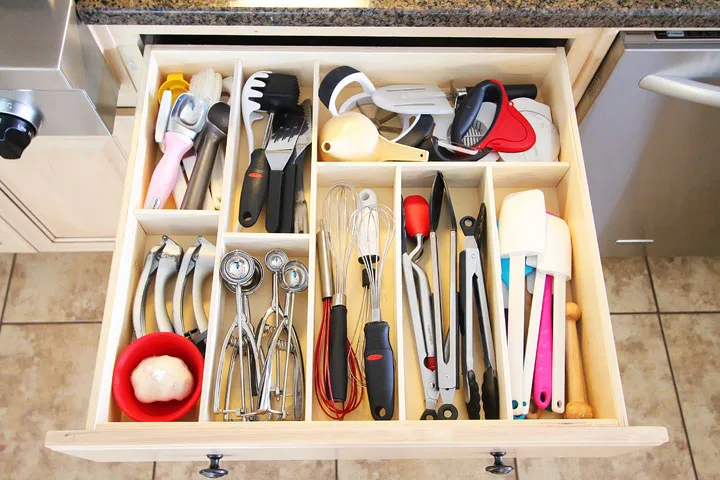
The solution often lies in seeing how others tackle this problem. Visual examples are incredibly helpful because they show how different organizers fit into real kitchens and how they hold utensils. It’s one thing to read about drawer dividers; it's another to see them neatly segmenting a drawer, giving each utensil its own space.
This visual guidance helps you understand spatial relationships and how much can fit where, transforming abstract advice into a concrete plan for your kitchen. Understanding these visual cues is key to transforming that chaotic drawer.
The Clutter Problem: Finding What You Need, When You Need It
Staring into a jammed utensil drawer is a universal kitchen pain point. You know that spatula is in there somewhere, buried beneath whisks, peelers, and stray bottle openers. This constant rummaging isn't just annoying; it disrupts your workflow.
Wasting precious minutes digging through a disorganized drawer during cooking can be incredibly frustrating.
This disarray leads to:
- Wasted Time: Every second spent searching is time taken from cooking.
- Utensil Damage: Items get knocked around, potentially bending spatulas or dulling knife edges.
- Safety Hazards: Sharp knives or pointy tools can become unsecured, leading to accidental cuts.
- Reduced Enjoyment: A messy kitchen makes cooking feel more stressful.
The core issue is a lack of structure. Without designated homes for items, everything blends together, creating frustrating visual and practical mess.
Seeing is Believing: How Visual Storage Makes a Difference
Reading instructions only gets you so far with utensil organization. Seeing storage methods in action truly demonstrates their effectiveness. Visual aids, like photographs, offer a clear understanding of space utilization and item arrangement.
For instance, a picture of a drawer organizer with compartments clearly shows how different utensils can be separated and kept upright or flat, making them instantly identifiable.
Our editorial analysis confirms visual guides are significantly more impactful, highlighting:
- Spatial Efficiency: How organizer types maximize drawer space.
- Accessibility: Demonstrating how tools are positioned for easy grabbing.
- Aesthetic Appeal: Showing how neat storage contributes to a cleaner kitchen.
Visual references demystify options and provide inspiration for your own setup.
Choosing the Right Home for Your Kitchen Tools
Deciding where your kitchen utensils will live is the first step toward an organized kitchen. It depends on your kitchen's layout, the number of utensils, and your working style. Our research indicates people fall into a few main storage camps, each with advantages.
The key is matching the storage solution to your specific needs. Do you have ample drawer space, or are you limited? Are knives or spatulas your most-used tools?
Answering these questions guides you toward an effective system, creating a logical flow where everything has its place, making your kitchen time smoother and more efficient.
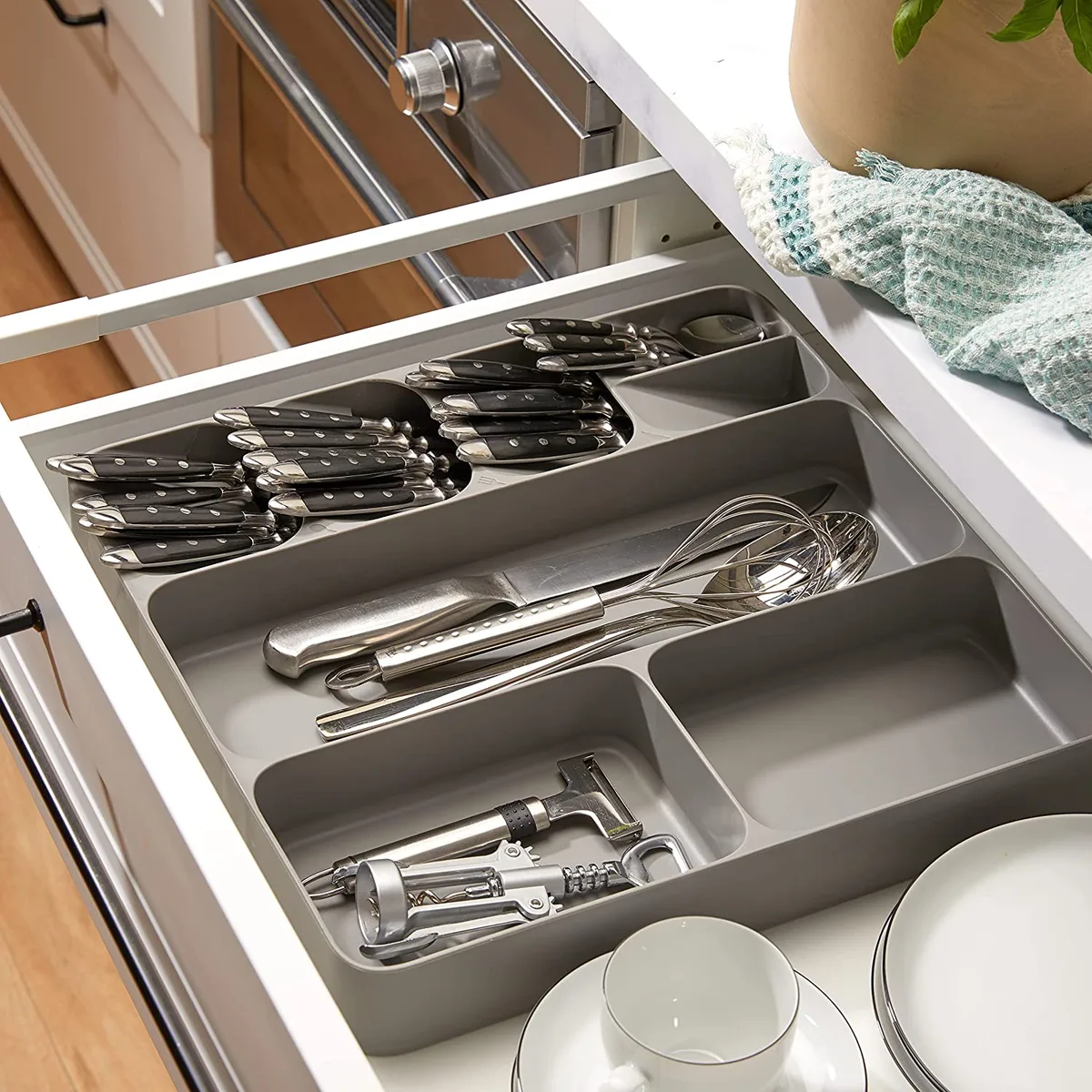
If you have deep drawers, consider vertical storage to use that height. If counter space is limited, wall-mounted options become a clear winner. It's about maximizing the utility of available space.
Drawer Organization: The Go-To Solution
When most people think about storing kitchen utensils, their minds go to drawers. It's a classic for a reason; when done right, it keeps countertops clear and everything neatly tucked away. The goal is to transform that jumbled mess into compartments where every spoon, fork, and spatula has its designated spot.
This makes finding what you need a breeze; you can simply glance into the drawer and pull out the correct item.
The main advantage of drawer organization is keeping kitchen surfaces clutter-free, contributing to a tidier look. It's effective for flatware, smaller gadgets, and knives if proper safety measures are taken. Organized drawers make the entire kitchen feel streamlined, and meal preparation becomes less frustrating.
Types of Drawer Organizers: From Dividers to Trays
Drawer organizers are essential for taming utensil chaos. They come in various styles, and our research indicates the best choice depends on drawer dimensions and utensil types. Adjustable drawer dividers are fantastic because you can customize their placement to fit different utensil lengths and quantities, creating bespoke sections for everything from whisks to tongs.
Sectional trays, typically molded plastic or bamboo, offer pre-defined slots. These are great for standard items like flatware but can be limiting for oddly shaped or bulkier cooking tools. Many systems are designed for combined use; you might use a long divider for spatulas and a smaller sectional tray for gadgets like peelers and graters.
The key is creating distinct zones within the drawer so items don't spill into each other.
Common types include:
- Adjustable Dividers: Wood, bamboo, or plastic, slid and locked into place for custom compartments.
- Sectional Trays: Pre-molded trays with fixed slots, ideal for flatware and smaller, uniform utensils.
- Expandable Organizers: Spring-loaded mechanisms fit a range of drawer sizes.
- Tiered Organizers: Add a vertical element within a drawer, allowing stacking of items like measuring cups or smaller gadgets.
In-Drawer Knife Storage: Safety First!
Storing knives in a utensil drawer without protection is a major safety hazard, a critical point flagged by our research. Loose knives can lead to accidental cuts when reaching into the drawer, and their blades can become dull or damaged from banging against other utensils. Investing in specific in-drawer knife storage is highly recommended and often a requirement for a safe kitchen.
Manufacturer specifications for knife blocks and in-drawer organizers emphasize blade protection and user safety. Common solutions:
- In-Drawer Knife Blocks: Sit flat in a drawer with slots that securely hold individual knives. They have a compact design that fits without taking excessive vertical space.
- Blade Guards/Sleeves: Individual protective covers that slide over each knife blade. They are a universal solution if you prefer not to commit to a fixed block, excellent for travel or shared kitchens.
- Magnetic Strips (Inside Drawers): Some mount magnetic strips inside drawers for knife storage, but this requires careful consideration to ensure knives are securely seated and won't dislodge.
Regardless of the method, the primary goal is ensuring sharp edges are covered and knives are held in place, preventing injury and damage.
Countertop & Wall Storage: When Drawers Aren't Enough
When drawers are insufficient, especially with many frequently used utensils or limited drawer space, utilizing walls is a smart move. Countertop and wall-mounted utensil racks and magnetic strips are excellent for freeing up prime kitchen real estate. They keep cooking tools visible and accessible, adding a professional, organized feel.
This approach is beneficial for smaller kitchens or those preferring a minimalist aesthetic with clear counters.
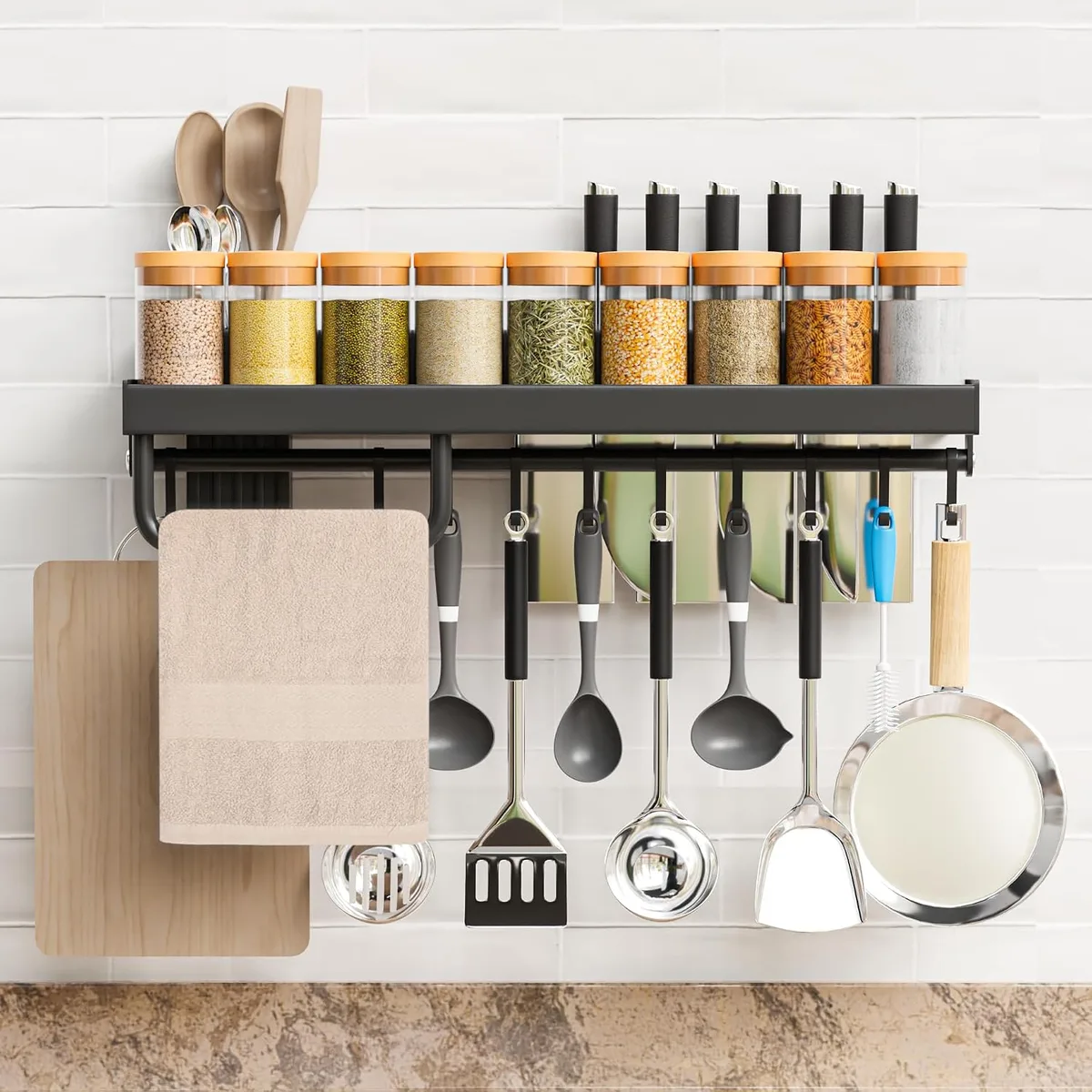
Magnetic knife strips are perhaps the most well-known wall storage. They securely hold knives, keeping them away from other items and making it easy to find the exact knife needed. Many strips use strong magnets capable of holding various knife sizes and weights.
Here's why they're popular:
- Space Efficiency: Utilize vertical wall space, keeping drawers and counters clear.
- Visibility and Access: Frequently used items are easily seen and grabbed.
- Safety (for Knives): Properly mounted strips keep knives secure, preventing accidents and protecting blades.
- Aesthetics: An organized rack or strip looks professional and tidy.
When installing wall-mounted solutions, ensure they are securely fastened to wall studs or appropriate anchors to support utensil weight, especially for heavy items.
Utensil Crocks and Holders: Quick Access Favorites
Utensil crocks, also known as utensil holders, are perfect for keeping most-used cooking tools readily accessible on your countertop. These are sturdy containers, often ceramic, metal, or wood, designed to stand upright and hold spatulas, whisks, ladles, and spoons. Simply drop clean, dry utensils into the crock.
The primary advantage of a utensil crock is immediate access. When mid-recipe and needing to stir, grab a spatula, or measure, the tool is within arm's reach. This eliminates drawer rummaging.
Our research finds many culinary enthusiasts prefer this for everyday cooking essentials.
Here's why they work:
- Convenience: Tools are always visible and easy to grab.
- Space Saving: Consolidate multiple utensils, saving drawer space.
- Aesthetics: A well-chosen crock can complement kitchen decor.
- Versatility: Holds a variety of tools, from large ladles to small whisks.
Select a crock that comfortably holds your most frequently used items without overcrowding. Aim for one that complements your kitchen's style.
Practical Steps to Utensil Harmony
We've discussed problems and storage types. Now, let's get down to implementation. Transforming a chaotic utensil drawer or cluttered countertop into an organized system is a surprisingly satisfying process.
Think of it as giving every tool a proper home.
The steps are straightforward. By following them, you'll create a system that's tidy and makes your cooking smoother and more efficient. We’ll cover decluttering, planning your space, and arranging everything. It's about creating a workflow that makes sense for how you cook.
Decluttering Your Utensil Collection
Before buying new organizers, the most crucial first step is to critically assess all your kitchen utensils. Our research suggests much kitchen clutter comes from too many duplicates, broken items, or tools you never use. Pull everything out and lay it out where you can see it.
Be ruthless. Ask yourself for each item:
- Do I use this regularly? If you haven't touched it in over a year, let it go.
- Do I have multiples? Keep the best one and discard duplicates unless genuinely needed.
- Is it broken or damaged? Bent handles, chipped edges, or broken mechanisms mean it's time for it to go.
- Does it serve a purpose I can't replicate? Niche gadgets are often redundant.
This decluttering phase is vital. It reduces the items you need to store and helps you understand exactly what you need to organize. You might be surprised how much space you gain.
Measuring and Planning Your Space
Once decluttered, measure your space. This is critical for choosing the right storage solutions, especially for drawers. Know the exact dimensions: width, depth, and height.
Account for obstructions like drawer slides or existing dividers.
For countertop or wall storage, measure available space. How much width next to the stove? How much clear wall space above the backsplash?
Consider proximity to cooking zones. If you sauté often, spatulas and whisks near the stovetop are ideal.
Planning checklist:
- Measure Drawer Dimensions: (Width x Depth x Height). Note hardware.
- Measure Countertop Space: Identify clear areas near prep/cooking zones.
- Measure Wall Space: Check for available backsplash or adjacent wall areas.
- Assess Utensil Inventory: Group similar items (long spatulas, small gadgets, knives).
- Consider Workflow: How do you move around your kitchen when cooking?
This measurement phase ensures you buy organizers that fit and serve your needs, preventing wasted money on ineffective solutions.
Arranging Your Utensils for Peak Efficiency
With your space measured and clutter culled, arrange utensils in their new homes. For drawer organizers, place items so they are easily identifiable and accessible. Group similar items within compartments: whisks in one section, spatulas in another, small gadgets like peelers and can openers in their own spots.
If using a utensil crock, arrange taller tools towards the back or center, and shorter ones in front. This prevents smaller items from getting lost. For magnetic strips or wall racks, consider proximity to your primary cooking area.
Knives should be stored safely, ideally with blades facing down or away from hands.
Arrangement tips:
- Group Like with Like: Keep similar items together for easy selection.
- Prioritize Frequently Used Items: Place these in accessible spots (front of drawers, top of crocks, easiest wall spots).
- Consider Utensil Shape: Longer items may need deeper compartments or taller holders.
- Safety First for Knives: Always ensure blades are covered or securely seated.
The goal is a system where you can reach for what you need without hesitation, making your cooking process smoother.
Common Utensil Storage Mistakes to Dodge
It's easy to fall into common traps when organizing kitchen utensils. These mistakes can undermine your efforts, leading back to clutter and frustration. Our analysis highlights recurring pitfalls you can avoid with awareness.
The core issue with many mistakes is treating all utensils the same or failing to consider long-term usability. A quick fix might create bigger problems later.
Overcrowding and Cramming
A common mistake is stuffing too many utensils into one space. Whether a drawer organizer or countertop crock, overfilling defeats the purpose. When items are jammed together, they're difficult to retrieve, can get damaged, and the system looks messy.
This often happens when decluttering isn't effective. Keeping everything, even rarely used gadgets, leads to space struggles. Instead, aim for a system where each item has breathing room.
If an organizer is consistently overflowing, reassess your inventory or consider a different solution.
This can also happen with countertop crocks; fitting every spoon and spatula results in a jumbled mess. It's better to have two smaller, organized crocks or designate one for cooking tools and another for serving utensils.
Ignoring Different Utensil Needs (e.g., knives)
Failing to acknowledge that not all utensils are equal is another significant mistake. The most critical example is knife storage. Our research consistently shows that storing sharp knives loose in a drawer is dangerous and damaging to blades.
Dull knives can be more hazardous than sharp ones because they require more force, increasing the risk of slipping.
Beyond knives, other utensils have specific needs. Delicate silicone spatulas can bend if crammed with rigid tools. Long, thin whisks can tangle.
Failing to provide adequate space and protection means items won't last or perform as well.
Consider materials and sharpness. Knives need secure slots or sleeves. Silicone or plastic items might benefit from upright storage to prevent bending.
Forgetting About Ease of Cleaning
Organization isn't just about neatness; it's about hygiene. A common oversight is choosing storage solutions that are difficult to clean. Utensil drawers and crocks can accumulate crumbs, grease, and food particles.
If the organizer is hard to maintain, it can become a breeding ground for bacteria, a serious concern for food safety.
For instance, a drawer organizer with many small nooks and crannies is a nightmare to deep clean. A porous wooden crock might absorb odors or moisture. When selecting storage, consider how easily you can wipe or wash them.
Bamboo organizers are easy to wipe clean; some plastic ones might be dishwasher safe.
Always opt for non-porous or easily accessible materials for regular cleaning. This ensures your organized utensils remain hygienic and safe for food preparation.
Expert Tips for Utensil Organization That Lasts
Getting kitchen utensils organized isn't a one-time project; it's about setting up a system you can easily maintain. Based on research and expert feedback, key strategies make your system stick. The goal is to make tidiness second nature.
Integrate organizational tools into your regular cleaning routine. Wipe down drawers and organizers weekly. This prevents build-up and keeps everything hygienic.
Periodically reassess your utensil collection. Like your initial declutter, a quick check every six months for new duplicates or unused items prevents clutter from returning.
Pro tips for lasting utensil storage:
- Assign a "Home": Every utensil needs a designated spot. Without one, it becomes clutter.
- Think Vertically: Use tiered drawer inserts or stackable containers to maximize vertical space, especially for smaller gadgets.
- Label if Necessary: For shared kitchens or similar-looking items, subtle labels help maintain the system.
- Regular Purge: Schedule quick decluttering sessions. Maintenance is easier than overhauling a messy drawer again.
- Match the Tool to the Task: Store most frequently used tools in the most accessible locations. Less-used items go in the back of drawers or higher cabinets.
Frequently Asked Questions About Utensil Storage
How often should I clean my utensil organizers?
Aim to clean utensil organizers, whether drawer inserts or countertop crocks, at least once a week as part of general kitchen cleaning. This prevents food particle and bacteria buildup, keeping tools hygienic. For deeper cleaning, consider wiping down or washing them monthly, depending on material.
What's the best way to store sharp knives?
The safest and most effective way to store sharp knives is in an in-drawer knife block or using individual blade guards/sleeves. Storing them loosely in a drawer is dangerous and dulls blades. Manufacturer specifications emphasize secure placement and blade protection.
Can I use old coffee cans or jars as utensil holders?
Yes, upcycling items like coffee cans or sturdy jars can be a budget-friendly way to create utensil holders. Ensure they are thoroughly cleaned and dried before use. For stability, place heavier items at the bottom or use multiple containers to avoid overcrowding.
Make sure they are wide enough to hold utensils without spilling.
How do I organize a tiny kitchen with limited storage?
For tiny kitchens, prioritize vertical storage. Utilize wall racks, magnetic strips, and tiered drawer organizers to maximize every inch of space. Consider multi-functional tools and regularly declutter to keep only essentials.
Countertop crocks are also great for frequently used items if drawer space is minimal.