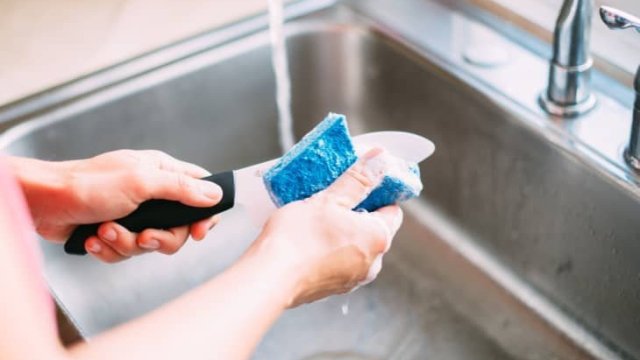
How To Clean Kitchen Knives
Cleaning kitchen knives takes about 2 minutes per knife, costs under $5 in basic household supplies, and ranks as an easy task that needs care around the sharp edge. The only mandatory item you need before starting is a non-abrasive sponge or soft dishcloth. If you don’t have warm running water ready, set the blades aside on a flat surface rather than tossing them into a crowded basin.
Supplies to clean your kitchen knives
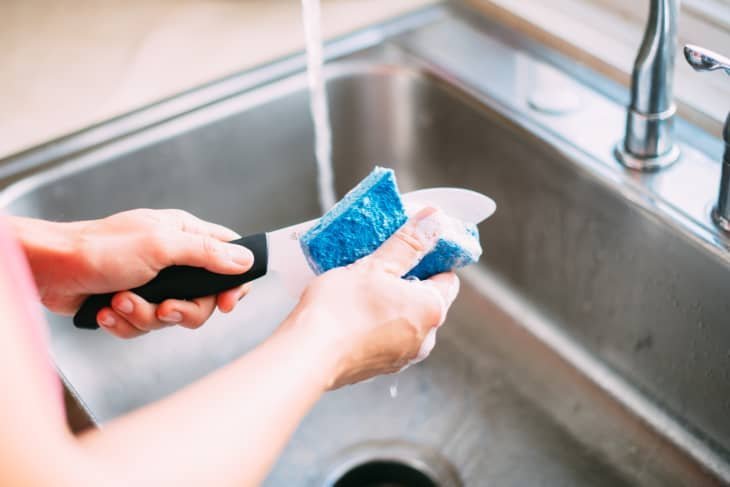 Photo: www.thekitchn.com on Google
| Item | How much | Why it’s needed | A substitute |
|---|---|---|---|
| Mild liquid dish soap | 1 to 2 drops per blade | Cuts surface oils and food residue | none — don’t swap this |
| Soft sponge or washcloth | 1 clean piece | Lifts debris without scratching blade steel | Soft cotton rag |
| Dry kitchen towel | 1 clean cotton towel | Removes lingering moisture to prevent spotting | Microfiber dish drying cloth |
| Warm tap water | About 105°F to 115°F flow | Loosens sticky grease and dried starch | none — don’t swap this |
| Food-grade mineral oil | 1 drop per high-carbon blade | Shields reactive metal against ambient humidity | Camellia knife oil |
Before you start
- Clear all dishes, pans, and glasses out of the sink basin so you have an open workspace.
- Keep children and pets away from the wash station until every sharp blade is stored.
- Lay your drying towel flat on the counter directly beside the sink before turning on the tap.
- Never leave loose knives submerged in a sink full of soapy, cloudy water; reaching into the basin blind causes severe cuts that may require medical stitches.
- If a knife blade has deep structural chips or a broken tang, take it to a professional bladesmith instead of attempting home repairs.
Step by step
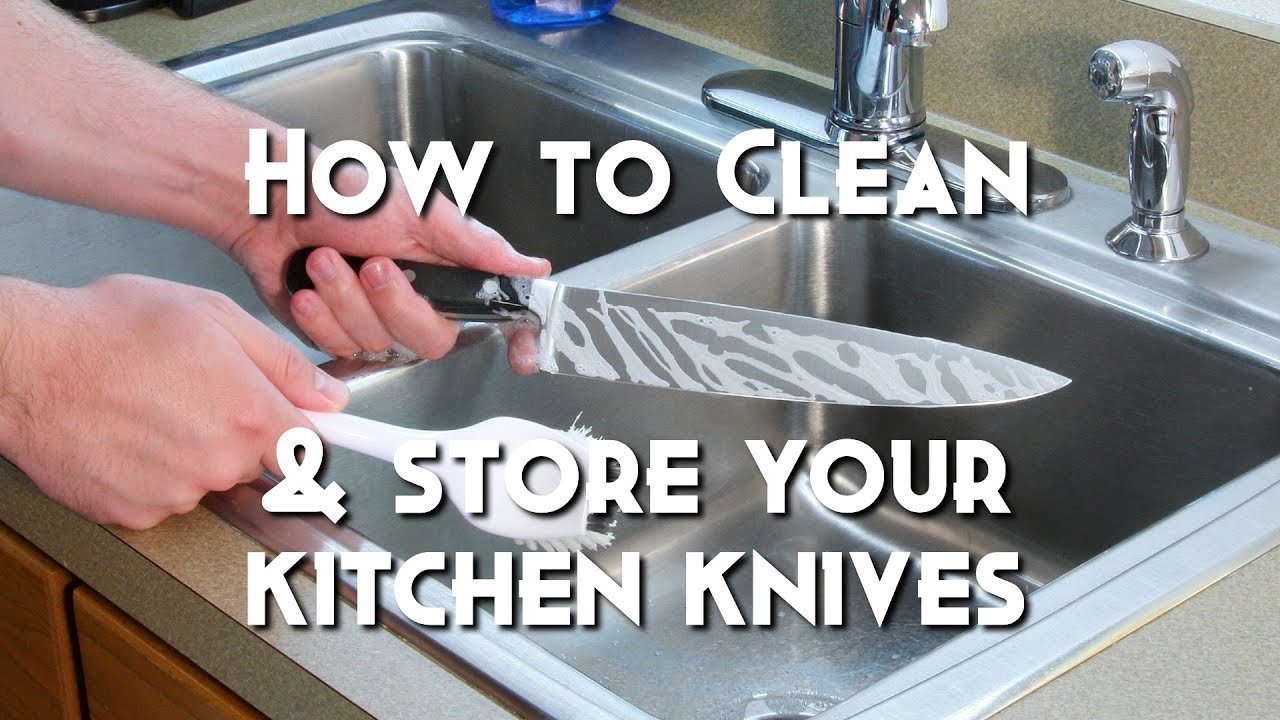 Photo: www.youtube.com on Google
- Point the knife blade downward and hold the handle firmly by your dominant hand. Check that your fingers don’t extend past the bolster or touch the sharp edge.
- Rinse the entire blade under warm running tap water for 5 seconds. Look closely to confirm that loose surface sauces, crumbs, and juices have washed into the drain.
- Squeeze 1 drop of mild dish soap onto the soft side of a damp sponge. Work the sponge between your fingers until a light, soapy lather appears.
- Fold the soapy sponge gently over the dull spine of the knife blade. Keep the sharp cutting edge facing outward away from your hand and your body.
- Wipe down the flat sides of the steel from the handle toward the knife tip. Confirm the surface looks slick and smooth before flipping the blade over.
- Scrub the knife bolster, the handle, and the rivets using small circular motions. Verify that sticky residue and meat juices are fully lifted from the handle seams.
- Rinse the blade and handle completely under warm running water for 5 to 10 seconds. Check that all visible soap suds and bubbles wash down the drain.
- Set the clean knife flat onto your dry cotton towel on the counter. Fold half of the towel over the spine and press gently along both sides until bone-dry.
- If you use stainless steel, store the blade immediately; if you use high-carbon steel, wipe 1 tiny drop of mineral oil across the metal before putting it away.
How to know it worked
 Photo: www.youtube.com on Google
A properly washed blade feels completely smooth and shows zero greasy streaks when held under kitchen light. Run a clean paper towel lightly down the spine; it will come away white with no brown, orange, or yellow spots. If the steel feels sticky near the handle or smells faintly of onions or raw garlic, wash that area a second time with another drop of soap. If water beads fail to wipe away instantly, switch to a fresh, dry towel so no moisture sits on the metal.
If something goes wrong
| What happened | Why | What to do |
|---|---|---|
| Blade shows orange rust spots | Water sat on carbon steel | Rub gently with a baking soda paste |
| Metal surface has fine scratches | An abrasive scouring pad was used | Polish out surface marks using metal paste |
| Wooden handle turns dull gray | Harsh hot water stripped natural oils | Rub with food-safe butcher block oil |
| Blade edge dulls very quickly | Edge banged into sink walls | Sharpen blade with a fine whetstone |
| Handle feels loose or wobbly | Water entered the rivet pin holes | Stop using knife and visit bladesmith |
| Water spots cloud the steel | Air-drying allowed minerals to deposit | Wipe blade clean using distilled white vinegar |
How often to do this
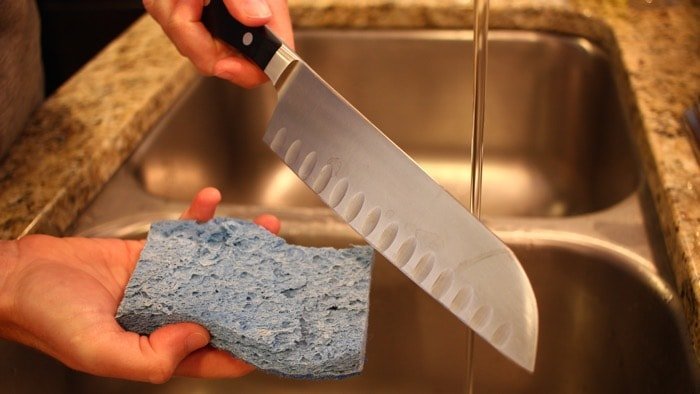 Photo: www.mychefknives.co.uk on Google
Clean kitchen knives immediately after every single use, washing them within 2 to 3 minutes of finishing your cutting prep. Never let a knife sit dirty on a cutting board while you eat your meal. Two key things change this timing: working with raw meat and cutting acidic fruits. Cutting raw poultry requires immediate washing to eliminate bacteria before touching other foods. Similarly, cutting high-acid foods like lemons or tomatoes speeds up metal corrosion, so rinse the steel right away. This care varies by model and steel type — check the manufacturer label for specific steel limits.
Frequently asked questions
Can kitchen knives go in the dishwasher?
No. Dishwasher detergent contains harsh abrasive salts that pit the blade, while high heat warps wooden handles and loosens scale rivets. The strong water jets also slam the sharp edge against plastic racks, dulling the metal within one cycle. Always wash good kitchen knives by hand in the sink.
Why do kitchen knives rust so quickly?
Water, salt, and acidic food juices react with iron in the steel to create iron oxide. Stainless steel resists rust better than high-carbon steel, but lingering moisture causes surface oxidation on both types. Drying the blade immediately with a towel stops this chemical reaction from starting.
How long can a dirty knife sit unwashed?
Under 5 minutes. Letting food sit on the blade allows acids to etch the steel, while starches and sugars dry into rock-hard crusts that require hard scrubbing to remove. Dried residue forces you to scrape aggressively, raising your risk of slipping and cutting your hand.
Is it safe to soak kitchen knives in the sink?
No. Soaking knives hides sharp edges under cloudy suds where you can’t see them, creating a severe cut hazard when reaching in. Prolonged soaking also forces water deep into wooden handles, which expands the wood grain and causes it to crack permanently.
What happens if you use bleach on knives?
Bleach pits and corrodes stainless steel, leaving permanent gray spots and microscopic craters along the delicate edge. The trade-off between sanitizing power and metal care is steep here; strong chemicals destroy the blade. Plain mild dish soap and warm running water remove bacteria effectively without damaging steel.
Does water temperature matter when washing knives?
Yes. Warm tap water between 105°F and 115°F dissolves animal fats, butter, and food starches quickly without burning your fingers. Boiling water is dangerous because it softens handle glues and can cause sudden burns if it splashes off the wide blade during the rinse.
Can you use baking soda on knife blades?
Yes, but only as a thick paste to lift fresh surface rust spots. Mix 1 tablespoon of baking soda with a few drops of water, spread it gently with a soft cloth, and rinse. Rubbing dry baking soda directly onto polished metal can leave fine scratch patterns.
Who is carbon steel knife care not for?
This maintenance routine isn’t for cooks who prefer low-effort cleanup or rely entirely on dishwashers. Carbon steel demands immediate drying and occasional oiling after every single slice. If you dislike active kitchen maintenance, stick to modern stainless steel knives instead.
Related guides






2 Comments