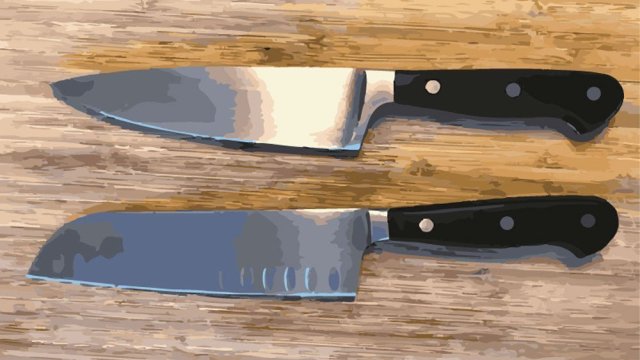
Chef Knife Vs Santoku
A traditional Western blade wins the chef knife vs. santoku debate for most home kitchens because its curved belly lets you rock-chop tough items easily. You’ll prefer a Japanese santoku knife if you work mostly with raw vegetables or boneless meat and want paper-thin, straight slices.
The options compared
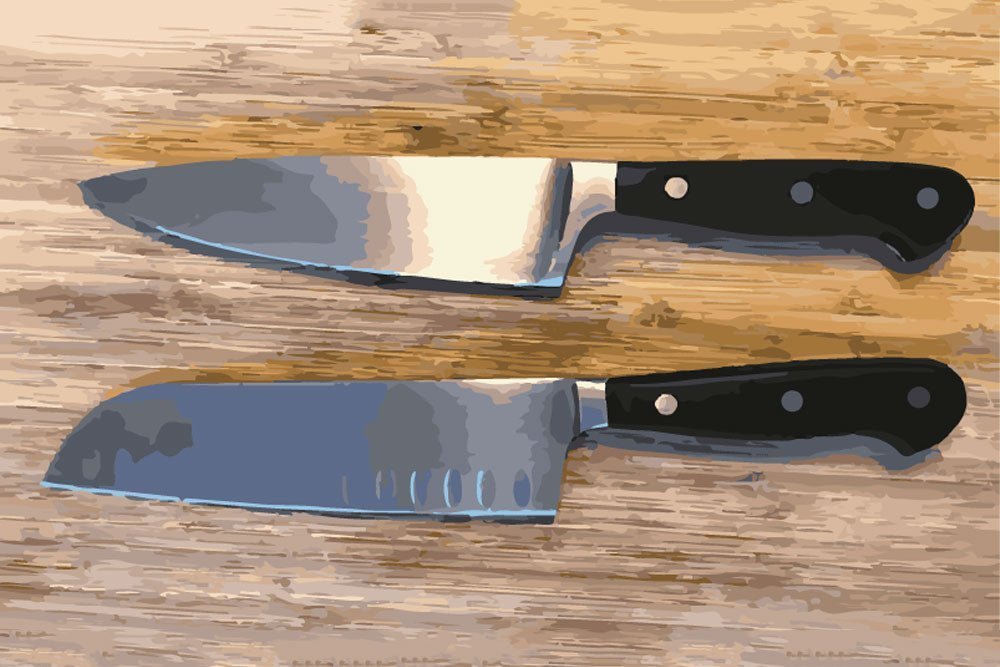 Photo: santokuknives.co.uk on Google
Here is how the three main general-purpose kitchen blades compare across everyday kitchen tasks:
| Method | How long | Effort | Cost | Best for |
|---|---|---|---|---|
| Western Chef Knife | Standard speed | Low | Medium | Tough squashes, dense roots, and rock-chopping |
| Japanese Santoku | Fastest on thin slices | Medium | Medium | Precise vegetable cuts and boneless meat |
| Gyuto Knife | Fast push-cutting | High | High | Thin slicing with some rocking ability |
Using a Western chef knife
Western chef knives carry a wide heel and a distinct belly curve designed for heavy-duty kitchen prep.
- Rest the blade tip firmly against the cutting board at an angle of roughly 20 degrees.
- Push forward and downward through your food in one continuous arc, keeping the tip down.
- Bring the heel back up toward you without lifting the tip off the cutting board surface.
- Repeat the rolling motion smoothly down the full length of the ingredient.
This tool works well for splitting hard butternut squash, halving large cabbages, and mincing herbs quickly. Its thicker spine and softer German-style steel stand up to accidental contact with bones without fracturing. The main trade-off is weight: the heavy bolster and thick steel tire your wrist faster during prolonged slicing sessions. This heavier knife isn’t for cooks who need razor-thin carpaccio cuts.
Using a Japanese santoku
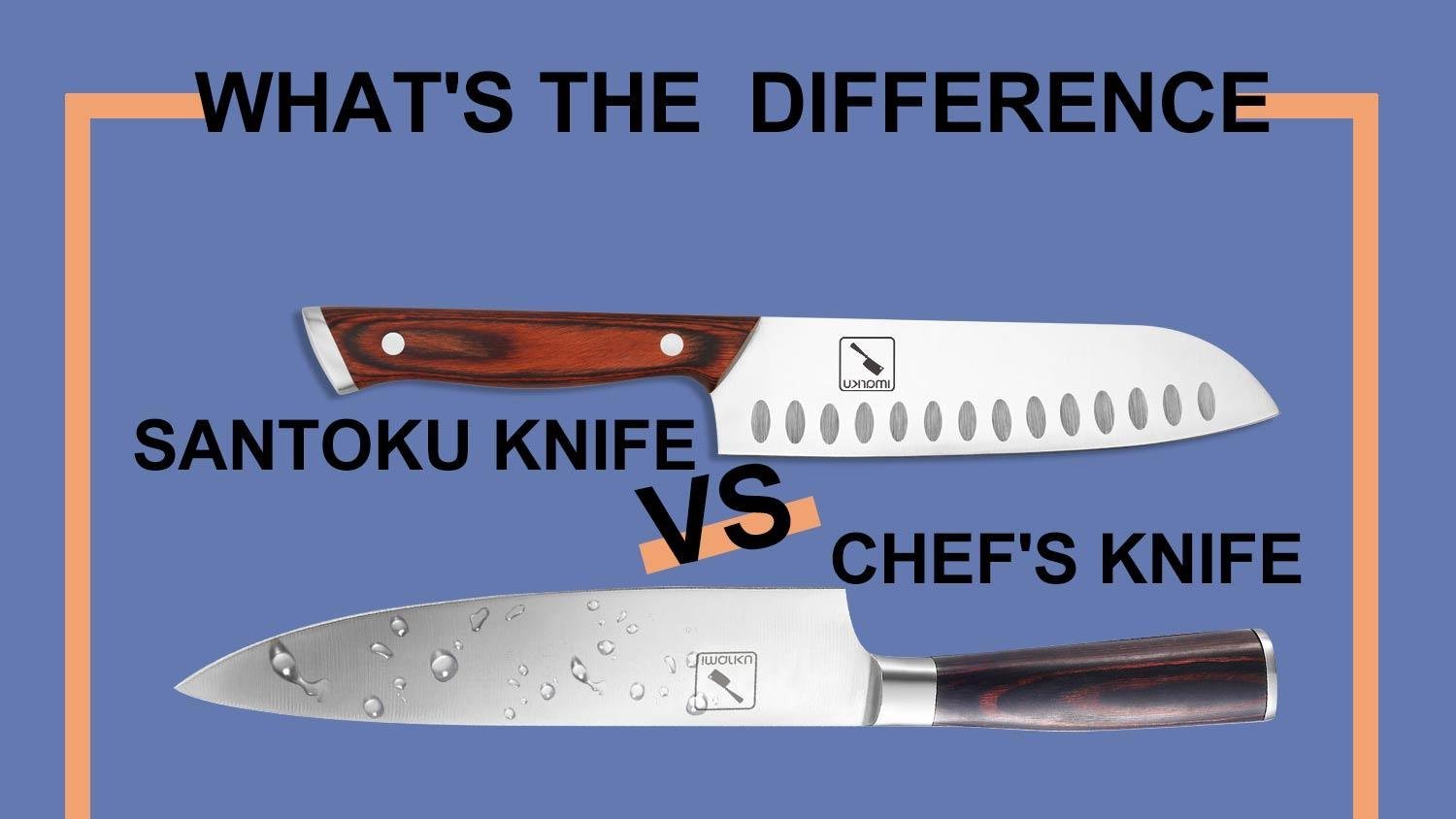 Photo: imarku.net on Google
A santoku features a flat cutting edge, a sheepsfoot tip, and a thinner blade profile.
- Place your index finger and thumb firmly around the base of the blade just forward of the handle in a standard pinch grip.
- Line the flat edge parallel above the ingredient you plan to cut.
- Push the entire blade downward and slightly forward in a direct, single push-cut stroke.
- Lift the blade clean off the board entirely before starting your next downward cut.
This tool creates exceptionally clean, paper-thin cuts on onions, cucumbers, and boneless chicken breasts. The wide blade face also lets you scoop sliced ingredients directly into a hot pan. Its honest weakness is brittleness: hard seeds, frozen blocks, or bone strikes easily chip the delicate edge. If a job involves hacking through poultry joints, don’t reach for this blade.
Using a hybrid gyuto
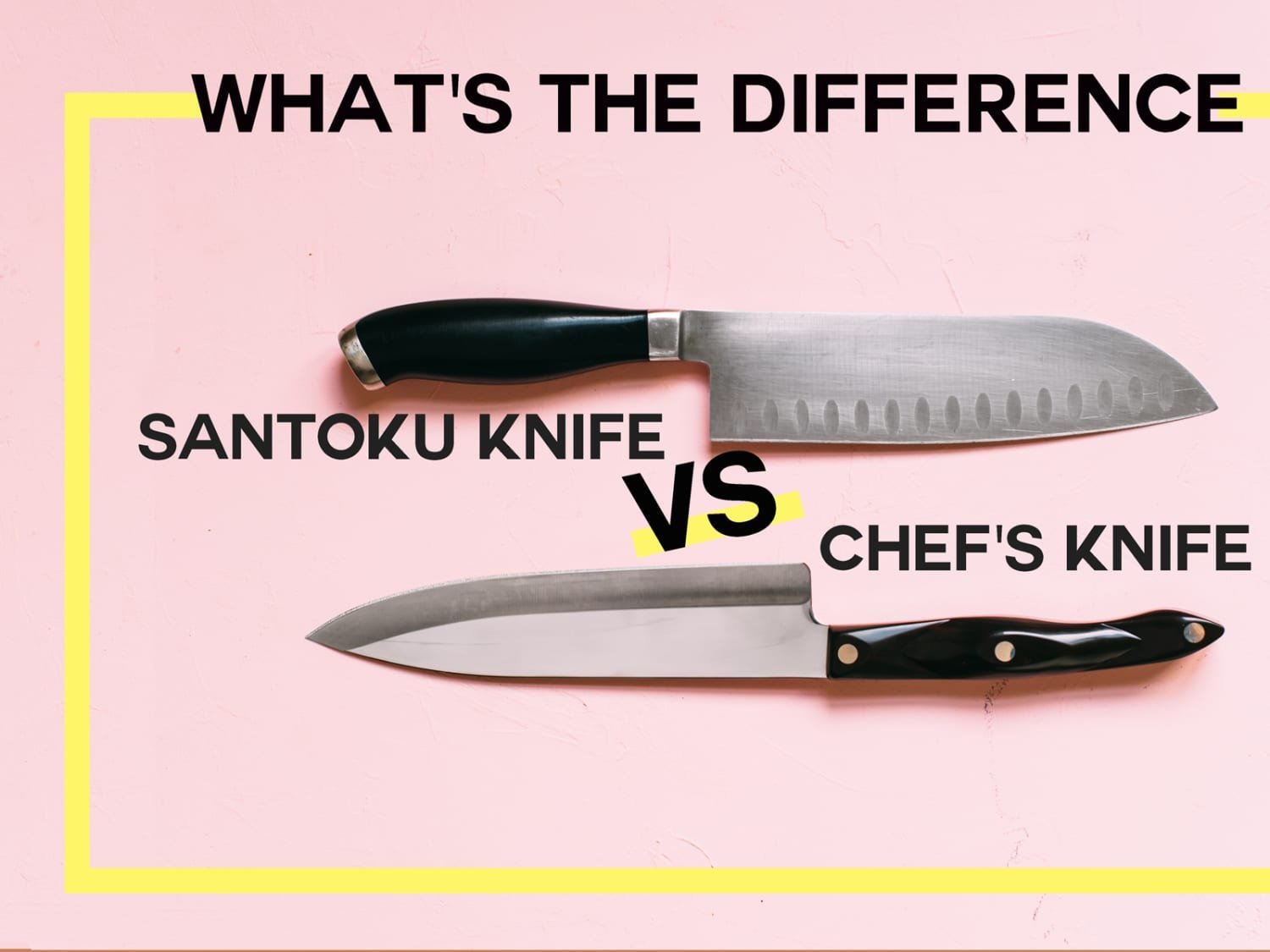 Photo: www.thekitchn.com on Google
A gyuto blends the lighter Japanese steel construction with the curved profile of a European blade.
- Grip the blade base just forward of the handle to balance its tip-heavy profile.
- Set the cutting edge flat against soft produce, drawing back slightly to initiate thin cuts.
- Switch directly to a rolling pivot when mincing soft herbs or small garlic cloves.
The gyuto gives you the thinness of Japanese cutlery while keeping the useful pointed tip of a Western knife. It cuts clean slices through tender proteins without tearing fibers. Its main weakness is the vulnerable, thin tip, which bends easily if you pry open packaging or strike a cutting board too hard.
A traditional Chinese cleaver also handles everyday chopping, but its tall, heavy rectangle demands specialized wrist control that few beginners enjoy.
Which one should you use?
Your choice depends on your daily cutting style, speed, and ingredients. If you’re in a hurry, pick the Western chef knife because its curved edge lets you rock-chop large bunches of herbs and root vegetables rapidly without lifting the steel from the board.
When you’re cutting food for the first time, choose the santoku; its shorter length and lightweight balance give you better control, making slips far less likely. If you want the best possible result whatever it takes, pick the gyuto for its surgical precision and refined Japanese edge retention.
Remember the trade-off: thicker Western steel handles bone impact and tough squashes safely, while thinner Japanese steel offers sharper edges at the cost of brittle steel that chips under sideways pressure.
The rules that apply whichever way you choose
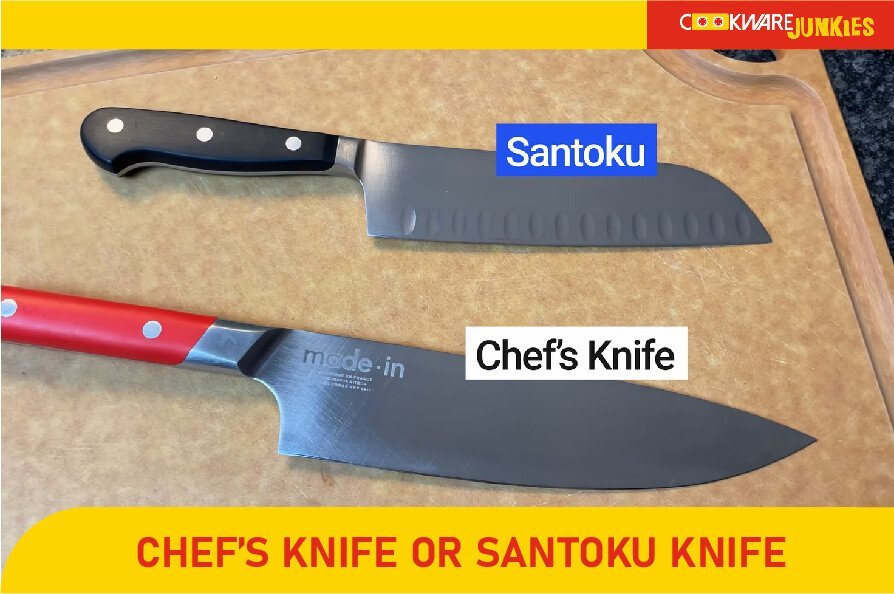 Photo: www.cookwarejunkies.com on Google
Always set a wet paper towel under your board to stop it from sliding across your counter. When working with raw meat, avoid cross-contamination by following clean board handling steps outlined on the FoodSafety.gov safe food handling guide.
Check your edge alignment partway through prep using an ungrooved ceramic rod if the knife starts pushing rather than gliding through tomato skins.
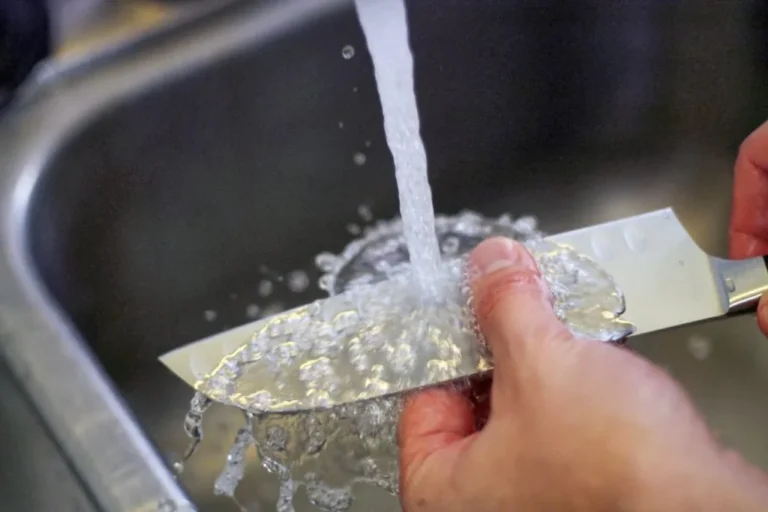
Never drop high-carbon or stainless knives into a soapy sink where hidden edges cause severe cuts. Hand-wash each blade individually using warm water and a non-abrasive sponge immediately after use, then dry the steel completely. If you spot a deep chip along the edge, don’t try grinding it out on coarse oil stones without training; take the damaged blade to an experienced professional sharpener.
Frequently asked questions
Can a santoku cut through bone?
No, you should never cut bone with a santoku. The thin, hardened steel chips or shatters upon heavy impact with hard animal bones. Use a heavy meat cleaver or bone saw instead.
Why do santoku blades have dimples?
The oval dimples, known as a Granton edge, create small air pockets between the steel and your food. These pockets reduce suction, which stops wet potato or cucumber slices from clinging to the blade.
How long does a chef knife stay sharp?
A standard German chef knife stays sharp for about two to three months of regular home use before it requires a stone sharpening. Honing the blade every few uses keeps the edge aligned much longer.
Is it safe to wash these knives in a dishwasher?
No, you should never run quality kitchen knives through a dishwasher. The harsh detergents, high heat, and churning water bang the edge against racks, dulling the metal and cracking wooden handles.
What happens if you rock-chop with a santoku?
The flat edge will dig directly into the wooden board rather than rolling forward. This sudden stop twists the edge sideways, which chips the brittle, high-hardness Japanese steel.


One Comment