How to Cook Vegetables in a Slow Cooker
If you've ever wondered how to cook vegetables in a slow cooker without ending up with mush, you're in good company. The slow cooker is a workhorse for braises and soups, but vegetables run on their own clock. The fix isn't a secret setting.
It's knowing that every vegetable has a different density, moisture level, and cooking window.
Once you understand that, the slow cooker becomes one of the easiest ways to batch-cook vegetables. Manufacturer specs and USDA food safety guidance agree on the basics: low heat, minimal liquid, and timing do the heavy lifting. Cooked food should hold at 140°F or above.
Dense roots need hours, tender ones need minutes, and the gap between them is where most pots go wrong.
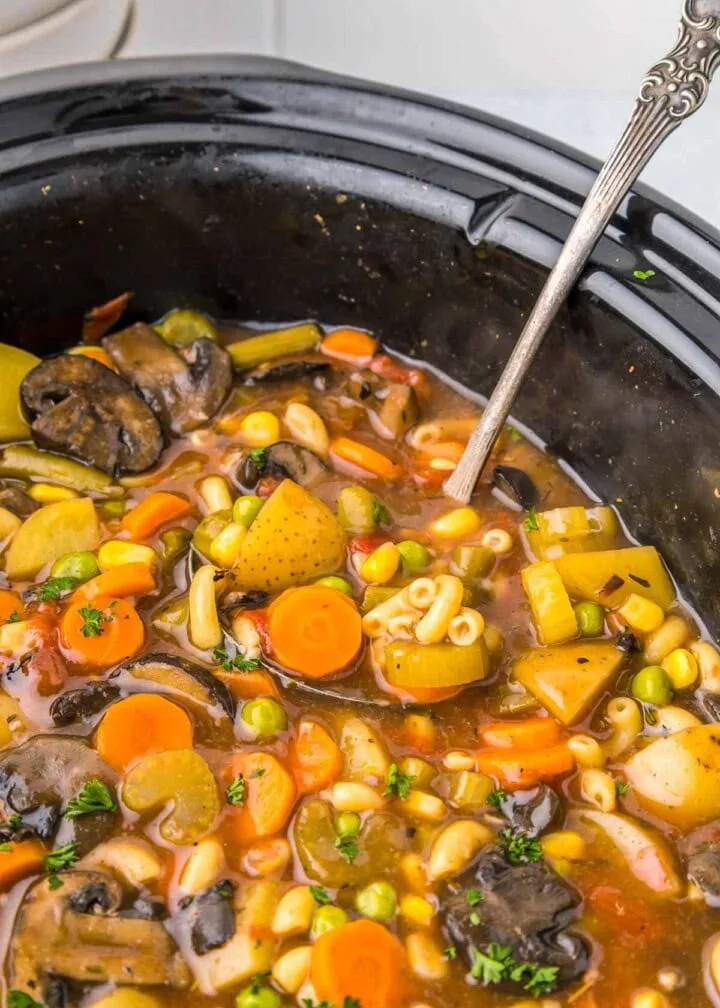
Image source: Bing (Web (fair-use with source credit))
Quick Answer
To cook vegetables in a slow cooker, sort them by density. Put dense root vegetables on the bottom with broth. Cook on low for 4 to 6 hours.
Add tender vegetables in the last 30 to 45 minutes. Season and serve.
Why Slow Cooker Vegetables Turn to Mush (And When They Don't Have To)
The slow cooker traps steam and heat, which is great for tough meat. For vegetables, that same environment breaks down cell walls fast. Delicate pieces can go from perfectly tender to baby food in half an hour.
The Density Problem
Dense vegetables like carrots, potatoes, and winter squash hold their structure. Tender vegetables like zucchini and spinach collapse quickly. When they share one pot, you can't treat them the same way.
One needs time. The other needs mercy.
Moisture and Steam
Manufacturer specifications indicate that slow cookers release very little steam. That trapped moisture keeps the surface hot enough to soften tissue. Root vegetables get creamy and sweet.
Broccoli and green beans turn dull and waterlogged.
When It Works
It works when you accept the trade-off. Slow-cooked vegetables are comfort food, not crisp-tender side dishes. If you want roasted edges or snappy bites, reach for the oven or stovetop instead.
The Four Variables That Change Every Cook: Density, Cut Size, Moisture, and Timing
Four variables decide whether your vegetables come out right. Change any one, and the whole pot changes with it.
Density
Vegetable density is the biggest factor. Potatoes, carrots, parsnips, beets, and winter squash are dense. They need hours to turn tender.
Zucchini, peas, spinach, and cauliflower are light. They need minutes.
Cut Size
Smaller pieces cook faster, but they also overcook faster. If you're mixing dense and tender vegetables, cut the dense ones smaller than usual. That gives the tender pieces a shorter exposure window.
Uniform cuts matter more here than in any other cooking method.
Moisture
Vegetables release water as they cook. Mushrooms and tomatoes give off a lot. Potatoes absorb it.
A full cup of broth over a pot of mushrooms turns dinner into soup. About half a cup per side dish is usually enough. If you're measuring small amounts of liquid or seasoning, picking a scale you trust makes the job quick.
Timing
Low and high settings reach the same final temperature. They just get there at different speeds. On low, a dish needs roughly twice as long.
On warm, cooking continues slowly, so don't treat it as a pause button.
The Vegetable-by-Vegetable Decision Tree: What to Add, When, and on Which Setting
This is the flowchart part. Pick your vegetable, then follow the branch.
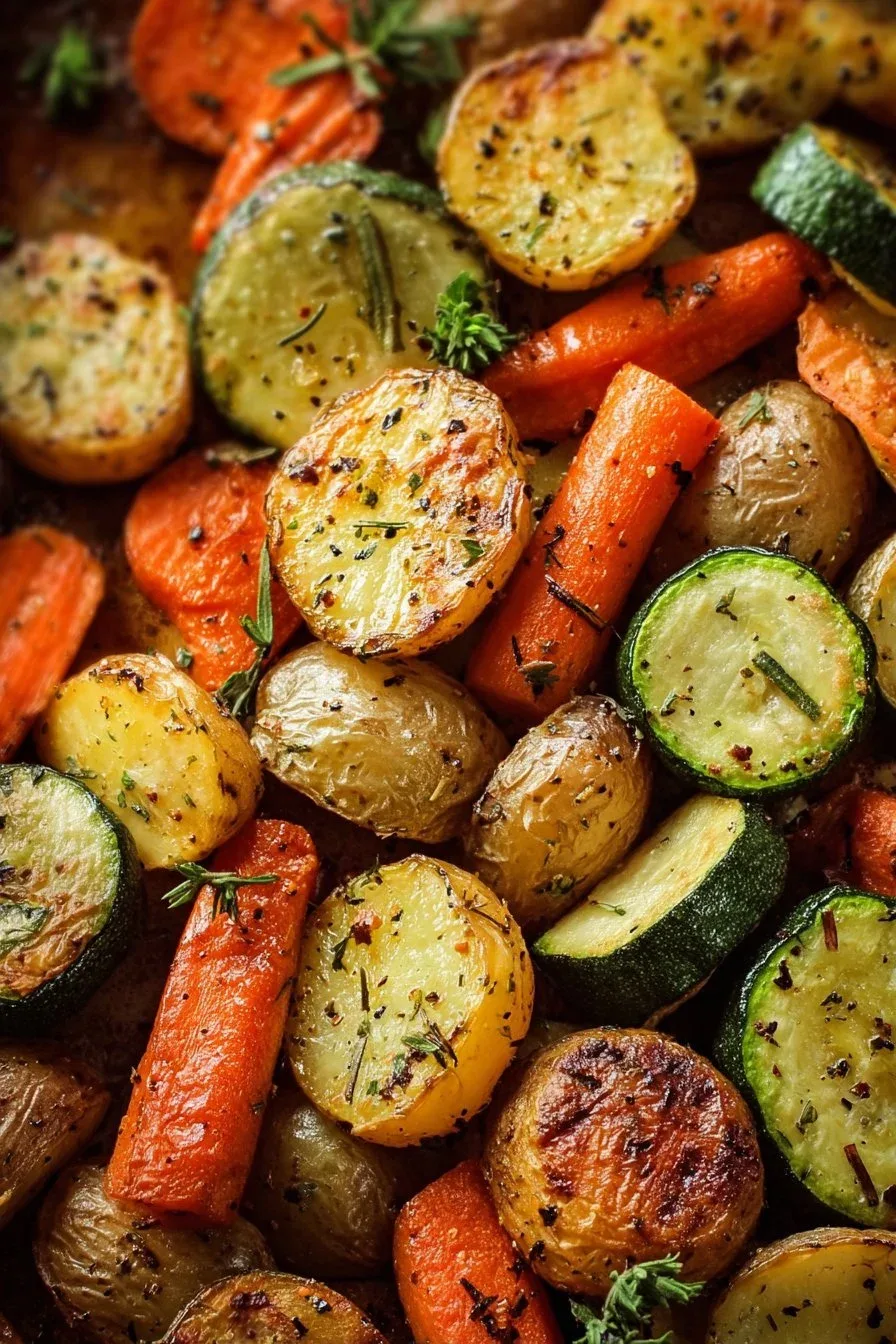
Image source: Bing (Web (fair-use with source credit))
Dense Vegetables
Potatoes, carrots, parsnips, beets, and winter squash. Add them at the start. Cook on low for 4 to 6 hours or high for 2 to 3 hours.
Cut them into chunks no larger than 1 inch for even results.
Medium-Density Vegetables
Onions, mushrooms, green beans, and bell peppers. Add at the start if you want them soft. Add halfway through if you want some bite left.
They handle 3 to 4 hours on low.
Tender Vegetables
Zucchini, broccoli, cauliflower, peas, and spinach. Add them during the final 30 to 45 minutes. They need just enough time to warm through.
In our research, five extra minutes can be the difference between perfect and mushy.
| Vegetable Type | Examples | When to Add | Time on Low |
|---|---|---|---|
| Dense | Potatoes, carrots, beets, squash | Start | 4 to 6 hours |
| Medium | Onions, mushrooms, bell peppers | Start or halfway | 3 to 4 hours |
| Tender | Zucchini, broccoli, peas, spinach | Final 30 to 45 minutes | Until just tender |
What About Frozen Vegetables?
Frozen vegetables arrive partly cooked from blanching. They cook faster than fresh, so add them late. Tip them straight from the bag into the pot in the last 20 minutes.
There's no need to thaw first.
The Step-by-Step Slow Cooker Workflow (From Prep to Finish)
Here's a routine that works every time.
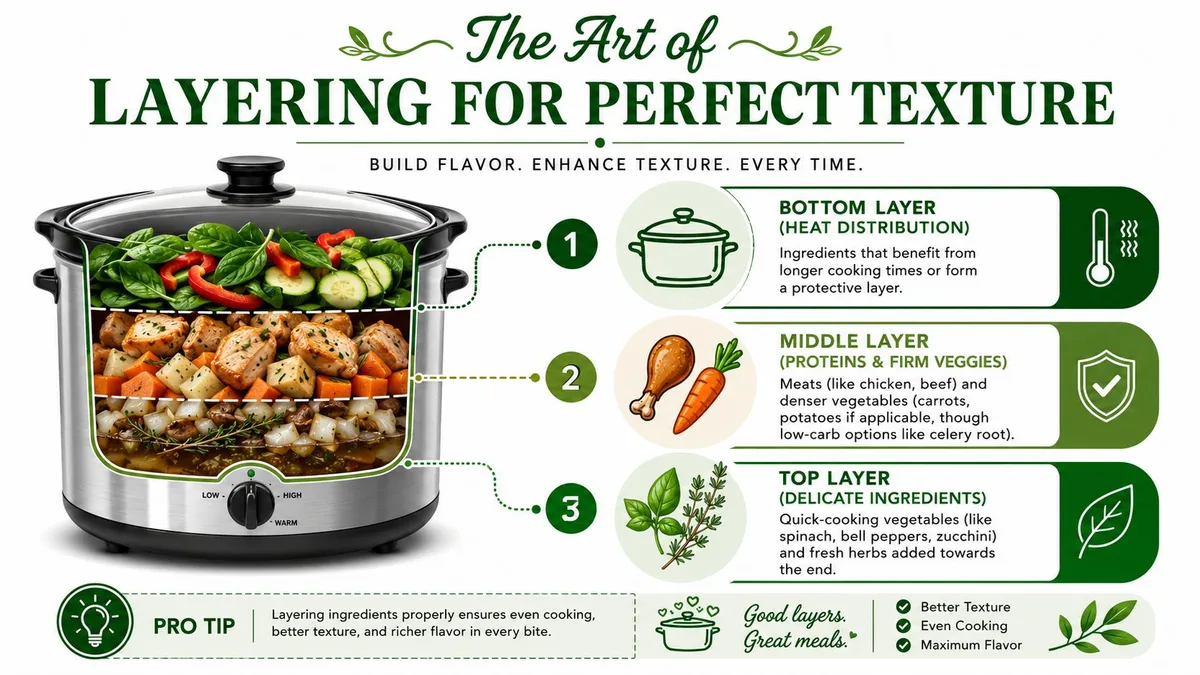
Image source: Bing (Web (fair-use with source credit))
- Prep and cut. Wash, peel if needed, and cut everything into uniform pieces. Dense vegetables go smaller than tender ones.
- Layer dense vegetables low. Put potatoes, carrots, and squash at the bottom. The heat source sits at the base, so this gives them the hottest spot.
- Add liquid and seasonings. Use about half a cup of broth for a side dish. Add salt and spices now, but hold a little back for the end.
- Set the timer. Low is the friendlier setting because it gives you a wider error window. High works in a push but makes timing tighter.
- Add tender vegetables later. Set a phone timer for 30 to 45 minutes before the end. Stir in zucchini, broccoli, peas, or spinach.
- Check for doneness. Pierce a dense piece with a fork. Taste a tender piece. If one is ready before the other, pull the whole pot off the heat.
- Finish with acid and salt. A squeeze of lemon or a splash of vinegar brightens long-cooked vegetables. Season just before serving.
Food safety matters here too. Keep cooked vegetables above 140°F if you're leaving them on warm, per USDA food safety guidance. If you're weighing portions for the fridge, zeroing the scale before each container keeps your numbers honest.
Best Uses: Soups, Stews, Side Dishes, and Meal Prep
The slow cooker isn't the best tool for every vegetable job. For a few things, though, it's genuinely great.
Soups and Stews
This is where slow-cooked vegetables shine. Carrots, potatoes, and onions simmer into a rich base. Tender greens and peas go in at the end.
You get deep flavor without standing over a pot.
Holiday and Weeknight Side Dishes
Root vegetables with butter and herbs are a classic slow cooker side. Feeding a crowd becomes set-and-forget work. Portioning by weight after cooking keeps your meal-prep containers consistent.
Batch Cooking and Vegan Mains
Cook a big pot of vegetable stew on Sunday and eat it through the week. Slow cooker mashed potatoes work well too, and you can mash them right in the pot. A quick wipe after each use keeps the stoneware from holding onto smells.
When to Choose a Different Method
If you want crispy edges or crisp-tender bites, skip the slow cooker. Roasting or steaming gives better results there. Save this appliance for textures you can't get any other way.
Melting, savory, deeply tender vegetables are its whole personality.
Common Mistakes and Fast Fixes
Adding tender vegetables at the start is the most common failure. Zucchini, broccoli, and peas turn to mush within a couple of hours. Tuck them in during the final 30 to 45 minutes instead.
Too much liquid is the second big issue. Slow cookers trap nearly all the moisture, and vegetables release their own water on top of that. For a side dish, half a cup of broth is plenty.
Only add more if the recipe genuinely calls for it.
Uneven cuts cause uneven doneness. A 2-inch potato chunk takes twice as long as a half-inch cube. Keep every piece close to the same size, around 1 inch for dense varieties.
A few more errors worth dodging:
- Expecting browning. The slow cooker is a moist-heat environment. You won't see caramelized edges unless you sear the vegetables first.
- Letting it ride on warm for hours. Warm still cooks, just slowly. Turn it off once the vegetables are tender.
- Peeking every half hour. Every lid lift lets heat escape and pushes your timing back. Trust the timer and keep the lid on.
If you do overcook a batch, salvage it. Blend it into soup, add a splash of lemon juice or a spoonful of miso, and call it dinner.
Slow Cooker vs. Steaming, Roasting, and Pressure Cooking
Each method produces a completely different vegetable. You pick based on texture, not convenience.
Steaming keeps vegetables crisp-tender and bright. It takes 5 to 10 minutes. Best for green beans, broccoli, and asparagus.
Roasting gives caramelized edges and deep flavor. It needs 20 to 40 minutes at high heat. Best for potatoes, carrots, Brussels sprouts, and cauliflower.
Pressure cooking is the fastest route to very soft root vegetables. It can turn potatoes creamy in 15 minutes or less. Timing is tight, though, and a minute too long can shred a floret.
The slow cooker sits in the middle. It melts dense roots into silky, sweet pieces, but tender vegetables have to go in late. If you're after a smooth, lump-free mash, a hand mixer does the job in seconds.
| Method | Texture | Time | Great For |
|---|---|---|---|
| Slow cooker | Creamy, soft | 4 to 6 hrs on low | Soups, stews, meal prep |
| Steaming | Crisp-tender | 5 to 10 min | Quick green sides |
| Roasting | Caramelized, crisp | 20 to 40 min | Flavorful side dishes |
| Pressure cooking | Very soft | 1 to 15 min | Fast, fall-apart roots |
So who should choose what? Pick steaming when you want bright green and crunchy. Pick roasting when the oven is free and you want flavor.
Pick pressure cooking when time is short. Pick the slow cooker when you want hands-off comfort food or a batch of deeply flavored roots.
Frequently Asked Questions
How long do vegetables take in a slow cooker?
Dense vegetables take 4 to 6 hours on low. Medium-density ones take 3 to 4 hours. Tender vegetables need only 30 to 45 minutes.
Cut dense pieces into 1-inch chunks to speed things along.
Can you put frozen vegetables straight into a slow cooker?
Yes, but add them late. Frozen vegetables are already blanched, so they need just 20 to 30 minutes to heat through. Adding them at the start turns them mushy every time.
Why are my slow cooker vegetables mushy?
Mushy usually means overcooked or cut too small. Tender vegetables cooked too long collapse, and too much liquid makes it worse. Use the density guide, keep cuts uniform, and add delicate pieces at the end.
Do you need liquid to cook vegetables in a slow cooker?
Not much. Vegetables release water as they cook. About half a cup of broth is enough for a side dish.
For soups, follow the amount your recipe calls for.
Can you cook vegetables on high without ruining them?
Yes, but watch the clock. Dense vegetables take 2 to 3 hours on high. Tender vegetables still go in at the end.
High works best when you're nearby to check doneness.