How to Clean a Slow Cooker Lid
How to clean a slow cooker lid without wrecking the glass or loosening the knob? It comes down to three things: material check, short soaks, and the right tools. That little piece of glass takes more abuse than the stoneware itself, catching steam and grease with every meal.
Manufacturer care guides for brands like Crock-Pot and Instant Pot consistently recommend a maximum soak time of 30 minutes for the lid. Any longer, and the adhesive that holds the metal rim and plastic knob in place starts to weaken. That single number changes how you approach every cleaning session.
Let's walk through the exact steps that keep your lid clear, sealed, and ready for the next batch.
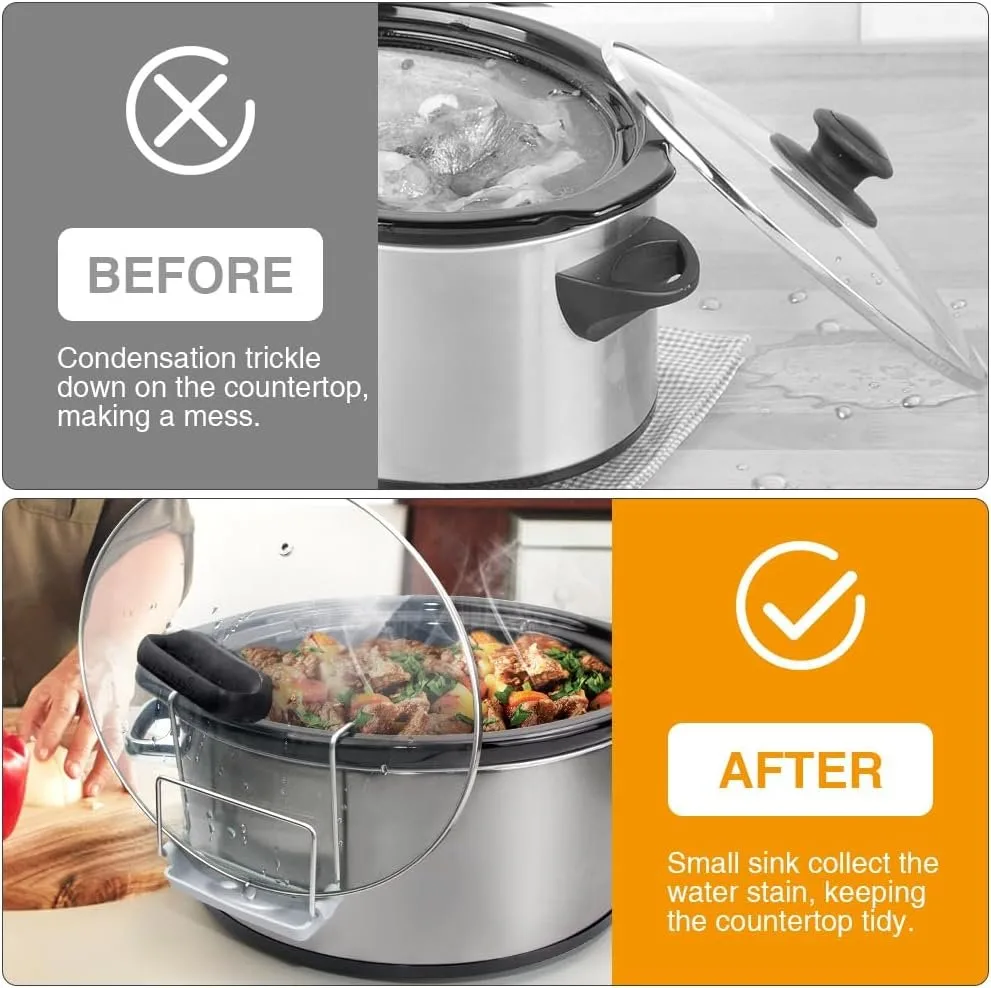
Image source: Bing (Web (fair-use with source credit))
The 30-Second Quick Answer for Daily Cleaning
The safest daily routine takes about 30 seconds. Let the lid cool completely, then wash it with dish soap and warm water. A non-abrasive sponge is all you need.
Rinse it under running water and dry it upright so no water collects under the rim.
That works for most lids after a normal evening meal. If you've got baked-on mess, skip to the deep-clean section below. For now, the key is avoiding long soaks when you don't need them.
This same mindset carries over to the rest of your countertop gear. If you're already careful with maintaining a kitchen scale, you'll find the slow cooker lid is just as easy when you know the rules.
Step 1: Run the Material Check: Glass, Metal Rim, and Plastic Knob
Before you touch any cleaning product, inspect your lid. Most slow cooker lids are borosilicate glass, which tolerates temperature swings. The metal rim is usually stainless steel or a coated steel alloy.
The knob is typically phenolic plastic, which is heat-resistant but not indestructible.
Check if the knob is removable. Some models have a screw underneath, while others are riveted. Also, check the rim for a gasket.
If there's a rubber seal, it needs gentle care.
Here's the decision point. If the lid is one solid piece with no gasket and the knob is removable, you can choose between hand-washing and the dishwasher. If the knob is fixed or the rim has a sealed gap, hand-washing is the safer route.
The same logic applies to other kitchen gadgets. A digital scale has a plastic housing and a stainless steel surface that you don't want to submerge. Knowing how to clean a kitchen scale properly teaches you which parts can take water and which just need a wipe.
That awareness is exactly what saves your slow cooker lid.
Step 2: The Hand-Wash Route That Prevents Cloudy Glass
Image source: Bing (Web (fair-use with source credit))
Hand washing is the best way to keep that glass crystal clear. Fill your sink with warm water, not hot. Add a drop of dish soap.
Submerge the lid and let it soak for no more than five minutes. Then wipe it with a non-abrasive sponge.
For stuck-on food, make a baking soda paste. Mix three parts baking soda with one part water. Spread it over the glass and let it sit for ten minutes.
The paste lifts grease without scratching.
Rinse the lid thoroughly under warm running water. Avoid the cold water tap. A sudden temperature change can crack the glass.
This thermal shock rule applies across your kitchen tools. When you learn how to clean a food scale properly, you're really learning to respect materials like plastic and stainless steel. Same philosophy here, just on a bigger, rounder object.
Step 3: The Dishwasher Route: Safe Lids, Top Rack, and Hard Water
Many slow cooker lids are dishwasher-safe, but only the glass part. Place the lid on the top rack, facing down. The metal rim should never touch the heating element.
Skip the sanitize cycle and heated dry option. Those high temperatures can damage the glass over time.
Hard water is the main enemy in dishwasher cleaning. It leaves white mineral deposits that are difficult to remove. If your area has hard water, consider a rinse aid or switch to hand washing altogether.
Some brands, like Crock-Pot, specify that dishwasher use is okay but not preferred.
After the wash cycle, inspect the metal rim for rust spots. If you see any, stop using the dishwasher and go back to hand washing. Rust can work its way under the glass and ruin the entire lid.
A consistent routine matters here, just as it does with precision tools. For example, you'd calibrate a kitchen scale for accuracy to get reliable readings. Checking your lid after each dishwasher cycle is the same habit in disguise.
Step 4: The Deep-Clean Fix for Baked-On Grease and Lingering Odors
Image source: Bing (Web (fair-use with source credit))
Baked-on grease and odors happen to the best of us. The solution is a white vinegar soak. Mix one part vinegar with three parts warm water.
Submerge the lid for up to 30 minutes, but no longer. Vinegar breaks down the grease and neutralizes odors from curry, fish, or garlic.
After the soak, scrub gently with a baking soda paste if needed. Then rinse with warm water and dry upright. For tough odors, place the dry lid in direct sunlight for a few hours.
UV rays help kill odor-causing bacteria.
According to food safety guidelines from the USDA, proper cleaning and sanitizing of kitchen surfaces is essential. A vinegar solution is a cost-effective way to handle both grease and germs without harsh chemicals.
Finally, let every piece dry completely before you put the lid back on the slow cooker. Moisture under the metal rim is a magnet for mold and rust. The same logic applies to storing your other appliances.
For instance, storing a hand mixer with a wrapped cord and dry beaters keeps it working for years. Your slow cooker lid deserves the same kind of care.
Mistakes That Warp Seals, Loosen Knobs, and Crack Glass
Slow cooker lids fail in predictable ways. Most of those failures happen because of one wrong move. Let's name the culprits so you avoid each one.
Bad habit one: shocking a hot lid with cold water. The glass contracts too fast. That causes micro-cracks that spread later.
Wait at least 15 to 20 minutes after cooking.
Bad habit two: soaking beyond 30 minutes. The glue under the metal rim dissolves. You'll notice a wobbly knob in a few months.
The fix is soaking short and scrubbing longer.
Bad habit three: using steel wool. It scratches glass and leaves cloudy streaks. Use a non-abrasive sponge or a nylon scrub pad instead.
Bad habit four: running the dishwasher bottom rack. The heating element sits inches away. Rim rust and glass fogging are almost guaranteed.
Bad habit five: storing a locking lid on its side. That can bend the hinge. Keep it upright if you can.
If any of these sound familiar, you're not alone. Small habits make the difference. The same simple upkeep habits that keep a kitchen scale reading accurately will preserve your slow cooker lid too.
Maintenance Between Cooks: Keep the Seal Tight and the View Clear
A clean lid isn't just about looks. It keeps the seal tight so your slow cooker holds moisture properly. Ten minutes of upkeep after each use saves you from deep cleaning later.
Right after you transfer the food out, let the lid cool. Then give it a quick wipe inside with a damp cloth. This catches steam residue before it dries into film.
Once a week, inspect the knob. If it wiggles, tighten the screw underneath. Most brands use a standard screwdriver head.
Once a month, check the rubber gasket if you have one. Cracks mean it's time for a replacement. A quick test: place the lid on the slow cooker and drop a tissue at the edge.
Pull the tissue gently. If it slides out easily, the seal is weak.
Here's a simple maintenance schedule you can stick to.
| Task | How often | Time needed |
|---|---|---|
| Wipe inner glass after cooling | Every use | 30 seconds |
| Inspect knob tightness | Weekly | 15 seconds |
| Check gasket for cracks | Monthly | 20 seconds |
| Deep clean with vinegar | Monthly | 30 minutes |
When cleaning a food scale, you avoid submerged internals. The same logic protects your lid. Respect the parts you can't easily replace.
FAQs: What About Rust, White Film, and Loose Knobs?
How do I remove the white film on the glass?
White film usually means hard water minerals. Make a paste with baking soda and water. Rub it over the glass with a soft cloth.
Rinse with warm water and dry. Vinegar also works if the film is greasy.
Can I fix rust spots on the metal rim?
Small rust spots can be scrubbed off with a paste of baking soda and white vinegar. Rinse and dry completely. If the rust has eaten through or pitted the rim, replace the lid.
Rust under the glass seals is a health risk.
Why is my lid knob loose after washing?
The screw holding the knob loosens with heat and moisture. Use a screwdriver to tighten it. If it's still loose, the plastic threads are worn.
A replacement knob kit is affordable and easy to install.
Is dishwashing the slow cooker lid safe for every brand?
No. Some brands, especially older models, use lids that are not dishwasher-safe. Check the bottom of your stoneware or your manual.
If it's not listed as dishwasher-safe, hand wash with warm soapy water. Wiping down other countertop appliances, like a hand mixer, follows the same rule. The manual always wins.