Kitchen Knife Problems
Most kitchen knife problems stem from a rolled or blunt edge, which you can fix immediately by realigning the metal with a honing steel or sharpening on a water stone. When a blade slides off an onion skin or squashes a tomato, the thin cutting apex has bent or worn away completely.
Why this happens
 Photo: urbanedc.com on Google
Blades lose their bite because steel bends against hard surfaces. Every time an edge strikes a surface, microscopic pieces of steel fold over or chip away. Cutting boards made of glass, marble, or ceramic dull metal almost instantly because they’re much harder than cutlery steel.
Corrosion also destroys a sharp apex. Moisture and acidic food juices eat away at fine steel at a microscopic level. Dishwasher heat and harsh detergents accelerate this rust, weakening the edge until tiny pieces break off during normal slicing. Storing loose cutlery in a cluttered utensil drawer causes blades to bang against other metal tools, blunting the tip and nicking the sides before you even start prepping a meal.
Realignthe edge with a honing rod
This fix is for blades that feel dull but don’t show visible chips or heavy wear. A honing rod doesn’t remove metal; it straightens the microscopic teeth that bend during daily prep. Hold the steel vertically with the plastic tip planted firmly on a damp towel over your counter.
Swipe the blade downward from heel to tip along the rod at a steady 15 to 20-degree angle. Five light strokes on each side are enough. If you press too hard, you’ll warp the steel rather than straighten it. You’ll know it worked when the knife cleanly slices printer paper without catching or tearing. This technique isn’t for ceramic knives, as ceramic can’t bend and will shatter under pressure.
Sharpen the bevel on a whetstone
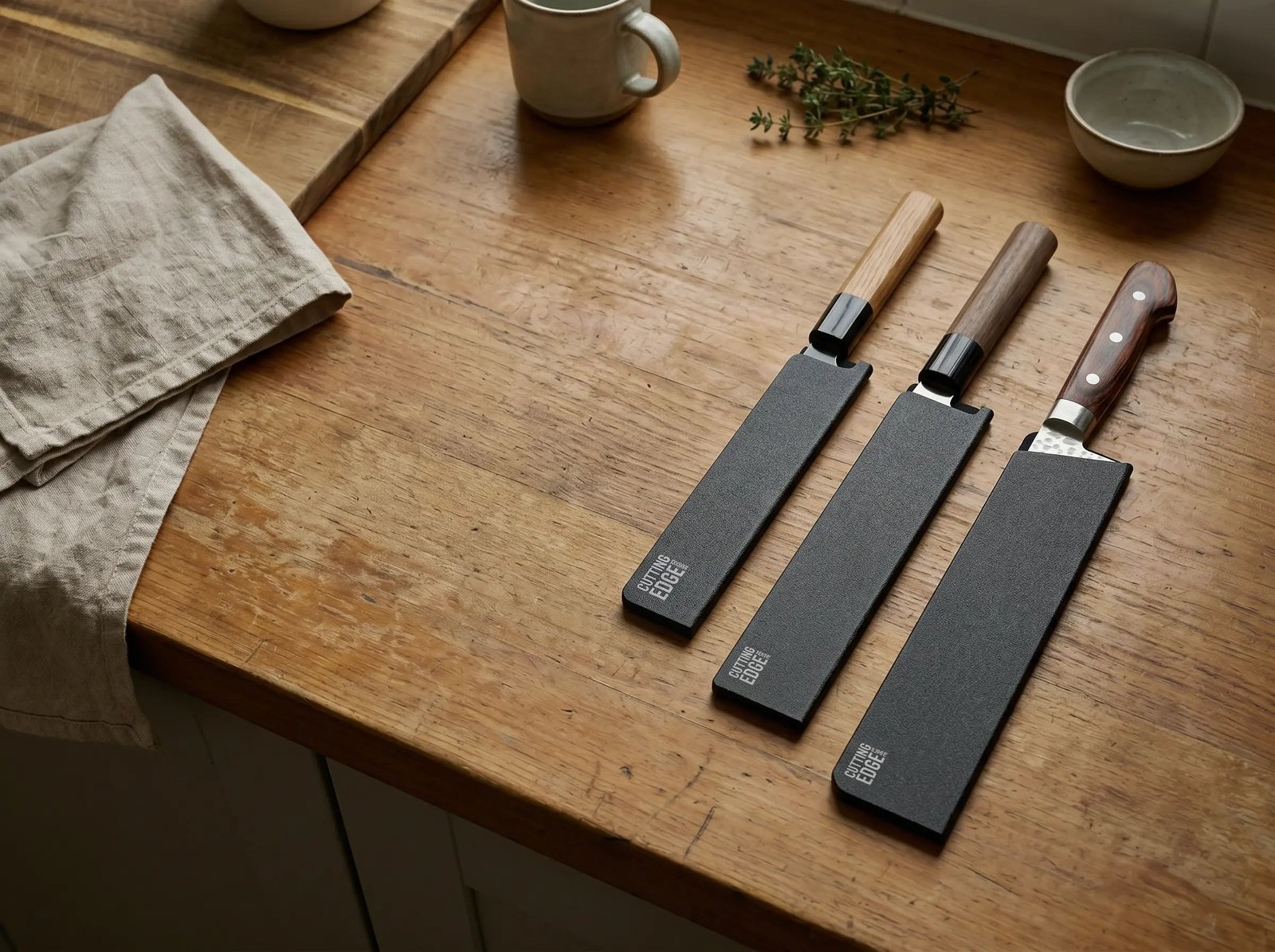 Photo: cuttingedgeknives.co.uk on Google
When honing fails to restore the bite, the steel apex is completely worn away and needs fresh metal ground down. Soak a medium 1,000-grit water stone in water until bubbles stop rising. Rest the stone on a non-slip rubber base.
Hold the blade at an angle between 15 and 20 degrees against the wet surface. With moderate finger pressure, push the edge forward across the stone across 10 to 15 even passes per side. Keep the surface wet by splashing clean water as needed. You’ll feel a slight metal ridge, called a burr, form on the opposite side of the edge. When that burr runs evenly from bolster to tip, flip the knife and repeat the passes. The trade-off is simple: whetstones give the cleanest edge, but they require practice to keep angles steady.
Reshape damaged tips and chips on coarse grit
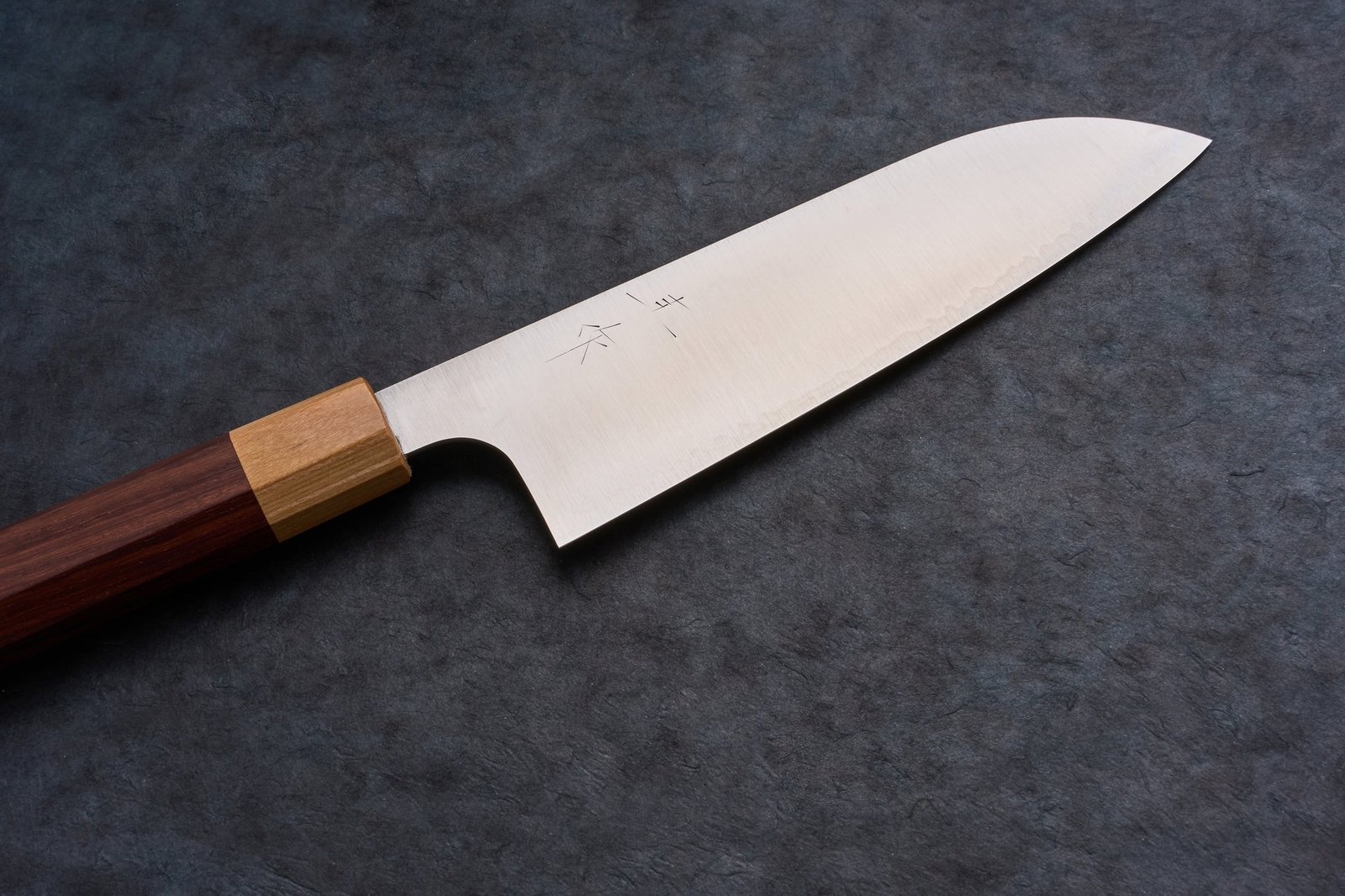 Photo: knifewear.com on Google
Deep chips, broken tips, or severely neglected bevels require aggressive metal removal using a coarse 220 to 400-grit stone. Grind the edge perpendicular to the coarse stone to reset the profile past the depth of the chip, then create a brand-new edge bevel.
This repair takes patience and muscle control. It’s worth doing for high-end carbon or forged stainless steel, but not for cheap stamped utility knives that cost less to replace than the stone itself. If the blade has a thick bolster running all the way down into the heel, home stones can’t easily grind it back; send that knife to a professional cutler with a belt grinder so you don’t ruin the profile.
What not to do
- Never wash quality cutlery inside an automated dishwasher because harsh alkaline detergent pits the steel, while intense heat can crack wooden handles.
- Avoid cutting on glass, stone, or stainless steel countertops because hard surfaces instantly fold fine cutting edges.
- Don’t scrape chopped ingredients across the board using the cutting edge; use the flat spine instead so you don’t roll the burr.
- Never twist a chef’s knife through hard bones or frozen food blocks, as twisting sideways snaps brittle hardened steel.
How to stop it happening again
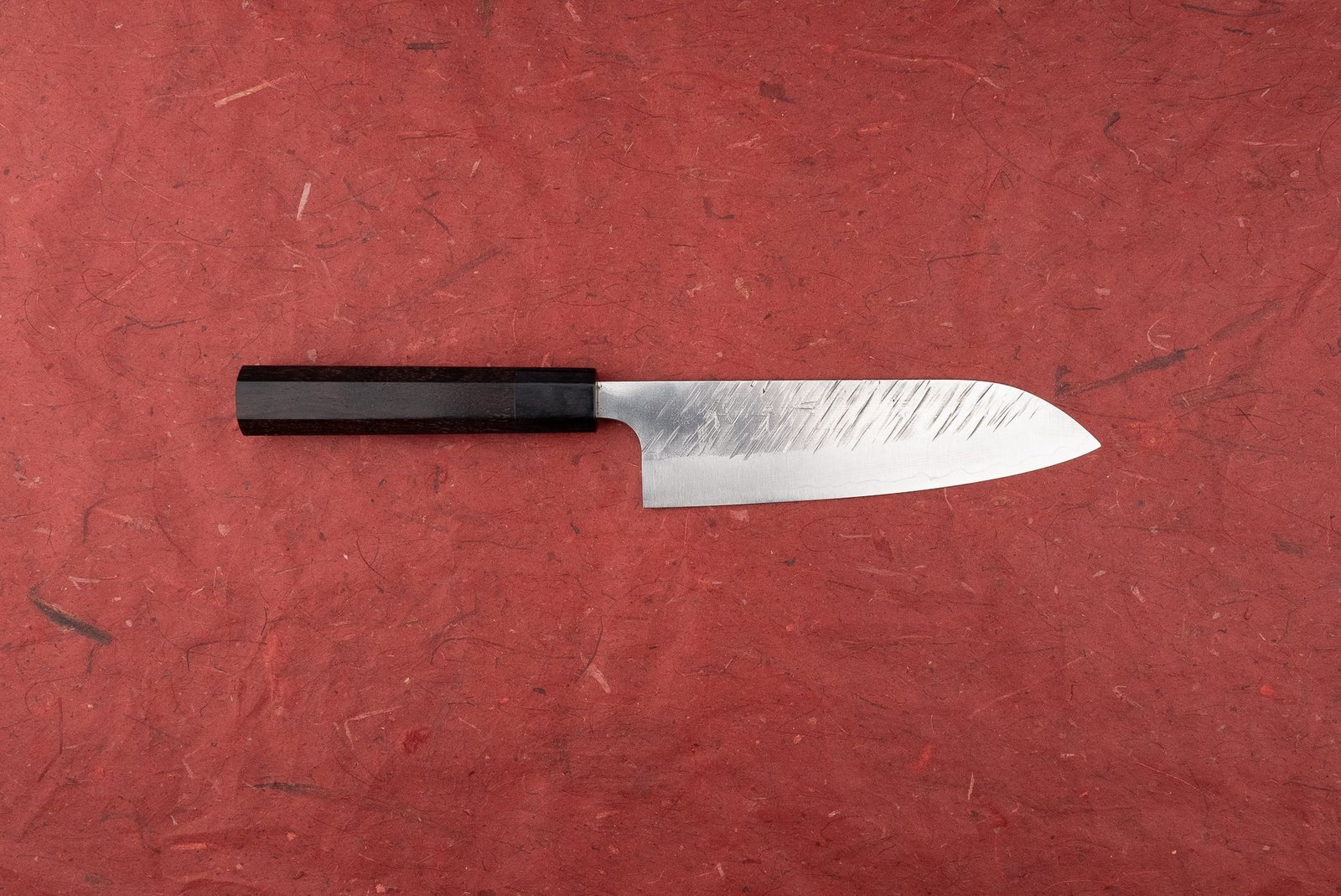 Photo: knifewear.com on Google
Good daily prep habits keep sharp edges intact for months between stone sharpenings.
| If you’re doing this | Do this instead | Why |
|---|---|---|
| Cutting on glass or granite | Use end-grain wood or soft plastic boards | Hard surfaces roll the cutting edge instantly |
| Storing blades loose in a drawer | Use an edge guard, in-drawer tray, or magnetic strip | Loose blades collide with metal tools and chip |
| Leaving acidic juice on the blade | Wipe clean with a damp rag immediately | Acid pits carbon and stainless alloys quickly |
| Soaking cutlery in a sink | Wash, rinse, and hand-dry right after prep | Soaking rusts steel and creates handling hazards |
| Hacking through frozen meat | Use a heavy cleaver or thaw food completely | Standard chef bevels crack under lateral torque |
Frequently asked questions
Can you fix a chipped knife edge at home?
Yes, if the chip is smaller than two millimeters. You must grind the entire edge back using a coarse 220-grit whetstone until the chip disappears, then build a new bevel on finer stones. Deeper gouges require a professional sharpener with a water-cooled motorized grinding wheel.
Why does my knife dull after one use?
Your cutting board is likely too hard, or your sharpening angle was too thin for the steel type. Cutting on glass, ceramic, or granite rolls edges immediately. Check your board material, and hone at a slightly wider 20-degree angle to create a more durable apex.
How long should a sharp edge last?
About two to four months under normal home cooking conditions, provided you cut on soft wood and store the blade safely. If you hone every few uses, you’ll rarely need full stone sharpening. Edge retention varies by model and steel hardness—check the manufacturer label.
Is it safe to use a rusted kitchen knife?
No, because rust creates pitted, rough surfaces that trap food residue and bacteria while weakening the steel core. Light surface rust wipes away easily with a paste of baking soda and water on a cork. If deep pits remain along the cutting edge, discard or regrind the blade.
What happens if you sharpen at the wrong angle?
A bevel that sits too flat weakens the edge, causing it to chip on simple vegetables like carrots. If you hold the angle too steep, the blade won’t slice cleanly through produce skins. Keep your angle consistent by using an angled guide block resting against the stone.





2 Comments