How to Fold a Treadmill
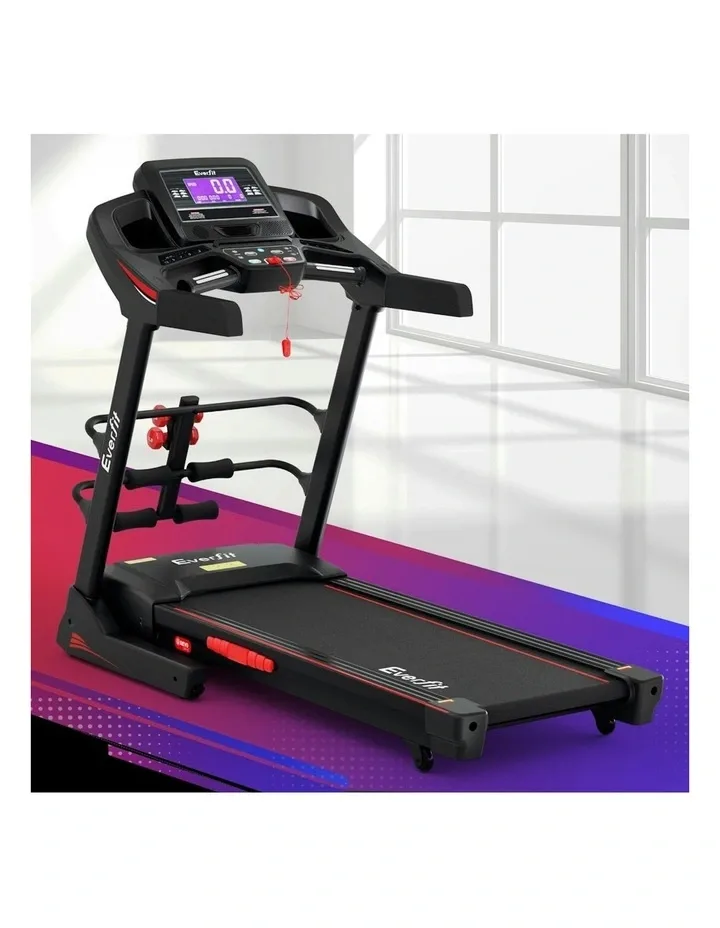
Folding a treadmill shouldn't require a manual, a YouTube video, and a prayer. But too many people hurt their backs or break the latch because they just grab the deck and yank. The correct way to fold a treadmill depends entirely on the mechanism underneath it.
Using the wrong technique can damage the frame or send the deck crashing down.
In our research across manufacturer specifications and owner's manuals, the key difference comes down to hydraulic-assist systems versus manual pin locks. As of 2026, most mid-range folding treadmills use a hydraulic gas shock for a soft drop. Budget models rely on a simple pull-pin and your own muscle.
Both are easy once you know which type you're dealing with. Let's figure that out first.
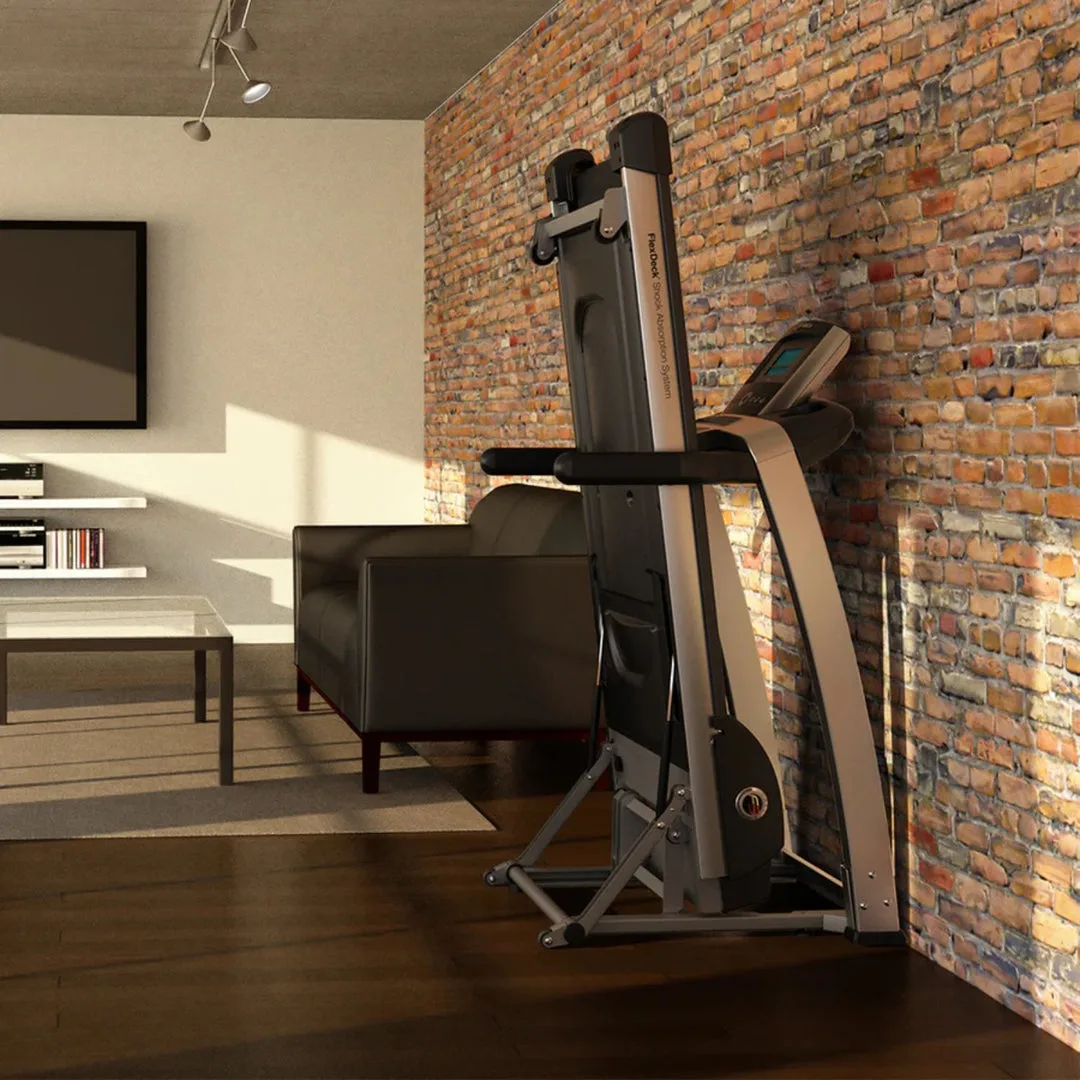
Image source: Bing (Web (fair-use with source credit))
Quick Answer
Turn off the treadmill and remove the safety key. Set the incline to zero. Stand beside the machine, release the latch, and lift the deck until the lock engages.
Tug downward to confirm it's locked.
Never fold a treadmill at an incline. The extra angle makes the deck heavier and misaligns the latch. A falling deck can crack the frame or crush your fingers.
How to Identify Your Treadmill's Folding System
Look under the deck near the front of the machine. A thick metal cylinder or gas spring connecting the deck to the frame means you have a hydraulic-assist system. This is the most common setup on treadmills priced over $500.
The gas shock controls how fast the deck lowers, which makes the fold smoother and safer.
If there's no shock, look for a metal pin, a spring-loaded button, or a locking bar near the hinge. That's a manual pin-lock system. These are common on lighter and budget models.
You pull the pin, lift the deck by hand, and the frame locks into a detent. It takes more effort, but the mechanism is simple and rare to fail.
Some apartment-friendly treadmills use a push-up bar at the base. You press it with your foot to release the catch, then lift. That's still a manual system.
If you can't tell by looking, check the owner's manual. Search for the words "folding" or "storage" in the PDF. The proper technique is always documented there.
The Right Way to Fold a Hydraulic Treadmill
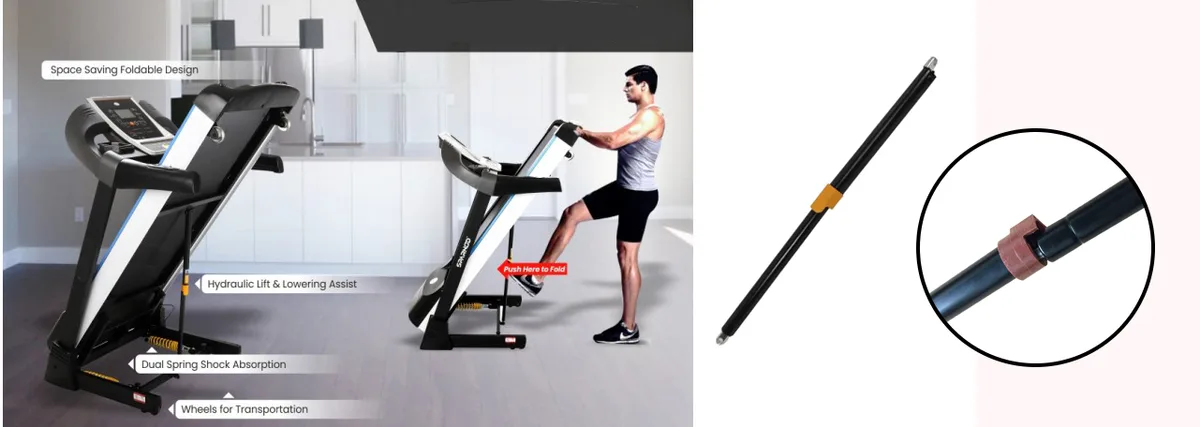
Image source: Bing (Web (fair-use with source credit))
Hydraulic-assisted treadmills are the easiest to fold, but only if the shock works. Here's the full process:
- Turn off the treadmill and unplug it. Remove the safety key from the console.
- Set the incline to 0 percent. Hold the incline down button until the deck is flat.
- Clear the floor behind the treadmill. You want nothing in the path where the deck will swing.
- Stand beside the deck near the front of the machine. The release lever is usually a recessed bar or trigger against the frame.
- Grip the handle on the underside of the deck. This handle is a bar or strap welded to the frame near the hinge.
- Pull the release lever and lift the deck with your legs, not your back.
- Raise the deck until it clicks into the upright lock. The gas shock suspends most of the weight.
- Tug downward once on the deck. If it doesn't move, the lock is engaged.
The common mistake is grabbing the console to pull the deck up. That snaps the plastic mounts. Always lift from the dedicated deck handle.
The Right Way to Fold a Pin-Lock or Manual Treadmill
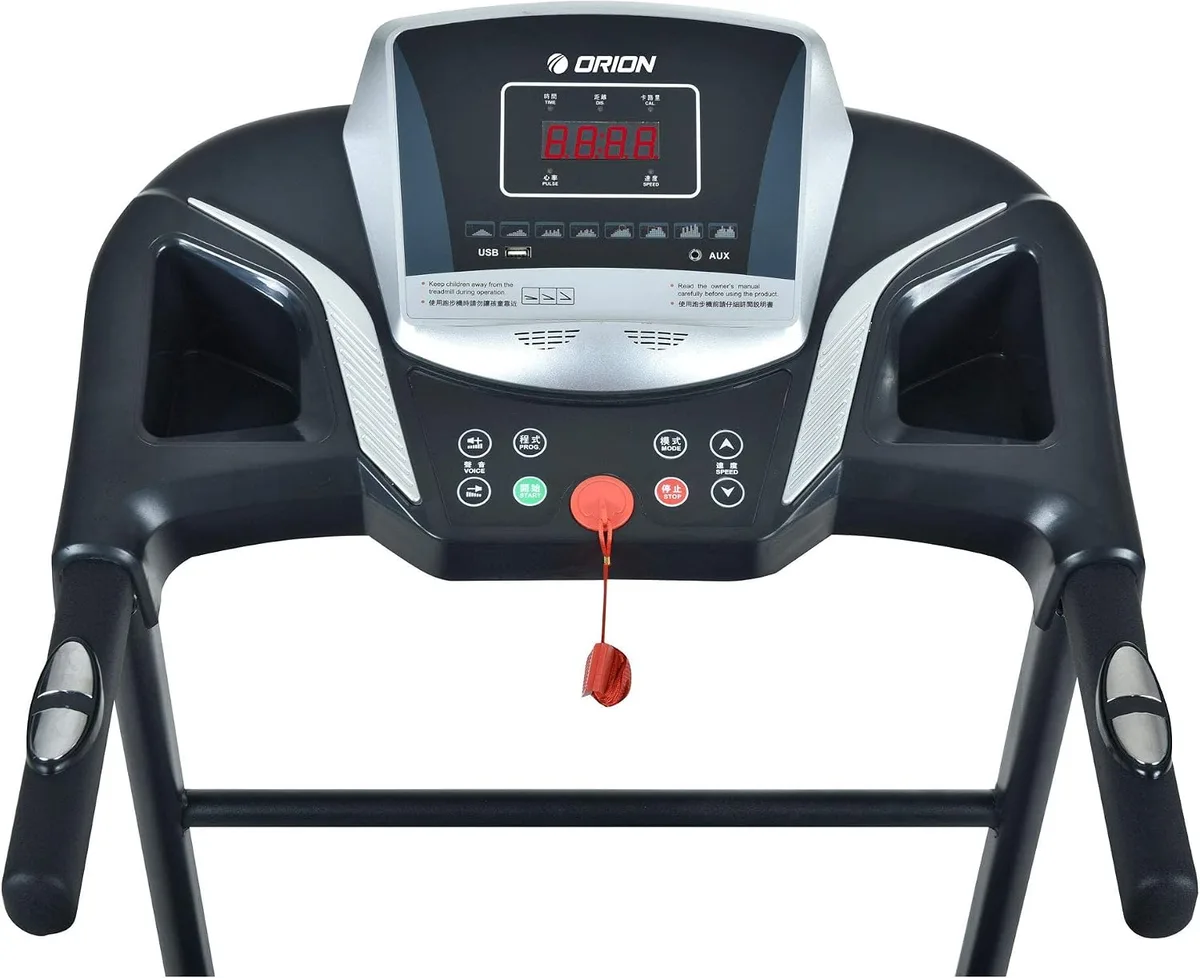
Image source: Bing (Web (fair-use with source credit))
Manual treadmills need more force, and the steps are slightly different. You're lifting the full deck weight, so form matters.
- Turn off the machine, unplug it, and set the incline to 0 percent.
- Stand at the rear of the deck, or beside it if space is tight. Don't stand directly behind the deck. It swings up and can hit you.
- Locate the pull-pin or latch release. It's usually a spring-loaded cord or a metal lever at the hinge.
- Pull the pin or squeeze the release lever. Keep one hand on the underside handle to control the deck.
- Lift the deck steadily with both hands. Use your thighs to press up, not your lower back.
- Push the deck upward until you hear the latch click. The pin should slide back into its hole automatically.
- Give the deck a firm tug downward. If it drops even a little, the pin isn't seated. Push it up again and re-lock it.
Some manual treadmills have a locking bar that swings over the hinge. Raise the deck, swing the bar down, and the deck rests on top. Test it before walking away.
If the deck feels unusually heavy, check that the incline is at zero before lifting.
How to Unfold and Lower the Deck Without Slamming It
Lowering a treadmill is where most accidents happen. The deck drops fast, and a slip can pinch your fingers or crack the board. Slow and controlled is the only safe way.
For a hydraulic system, place one hand on the release lever and the other on the deck handle. Gently pull the lever and let the gas shock control the descent. The deck should touch the floor softly.
If it drops hard, the shock is failing and needs replacement.
For a manual pin-lock, keep both hands on the deck. Pull the pin with one hand while the other supports the weight. Lower the deck slowly, keeping your back straight and knees bent.
Let it rest fully on the floor before stepping away.
Never let the deck free-fall. Even on hydraulic models, a fast drop stresses the hinge bolts and can crack the frame. Buyers across major retailers report that lowering the deck too quickly is the leading cause of frame damage on folding treadmills.
If you're storing the treadmill in a closet or under a bed, sweep the floor first. Dust and grit under the deck will grind into the belt and bearings over time. A quick sweep keeps the machine running smoothly and protects the moving parts.
Common Mistakes That Damage Your Treadmill or Your Body
- Folding at an incline. The deck is heavier and the latch misaligns. If the pin doesn't seat, the deck can crash down later.
- Pulling the console to lift. Plastic console mounts snap under the deck's full weight. Always use the dedicated handle.
- Letting the deck drop. Free-fall impacts the hinge bolts and frame welds. Even one hard slam can bend the frame.
- Standing behind the deck while folding. When the deck releases, it swings up toward you. Stand beside it.
- Ignoring the safety key. Leaving it in risks powering the motor while the deck is vertical. That's how belts get torn.
One more: forcing the latch. If the pin won't slide, don't hammer it. Something is misaligned.
Forcing it bends the metal and guarantees a repair bill.
The same lifting form applies when you're handling any heavy weight in a home gym. Keep your back straight and your legs involved.
Troubleshooting: Stuck Latches, Failed Struts, and Loose Locks
The pin won't pull or slide
Check the deck angle first. If the treadmill is at an incline, the pin hole won't align with the frame. Set the incline to zero and try again.
If it's still stuck, spray the pin with silicone lubricant and work it back and forth. Skip WD-40; it attracts dust and gums up later.
The horizontal lock won't engage
This usually means the deck isn't high enough. Push the deck higher until you feel the pin click. On manual treadmills, the detent sometimes needs a sharp push.
If the pin still won't catch, inspect it for a burr or a bent tip. File it smooth or replace the pin assembly.
The hydraulic shock slams the deck down
That's a failed gas strut. The deck drops quickly instead of easing down. Manufacturer documentation rates these struts for roughly 5,000 to 10,000 folding cycles.
Replace the strut with the exact part number from your owner's manual. They are not universal.
The latch rattles when running
A loose latch isn't dangerous mid-run, but it means the deck isn't fully seated. Tighten the bracket bolts. If the threads are stripped, order a replacement bracket directly from the manufacturer.
Don't improvise with a bolt unless the thread pitch matches exactly.
Consumer safety guidance from the CPSC highlights that exercise equipment injuries often involve falls, overexertion, and improper setup. You can review their recommendations at cpsc.gov.
Storage Reality Check: Folding a Treadmill vs. Leaving It Flat
Folding isn't always the right move. It depends on your space, your back, and how often you run.
| Factor | Folded upright | Left flat |
|---|---|---|
| Floor space needed | Minimal (a few square feet) | Full footprint (often 8 x 3 feet) |
| Frame wear | Hinge and latch experience stress | Minimal mechanical stress |
| Belt wear | Less dust and debris on the belt | Belt exposed to ambient dust |
| Time per workout | 1–2 minutes to fold and unfold | Zero setup time |
| Kid/pet safety | Safer when stored upright | Trip hazard when idle |
| Ceiling clearance | Requires 7+ feet of height | No height requirement |
If you run every day, leave it flat. That reduces stress on the latch and hinge. If you run twice a week in a shared living room, fold it upright to clear the space and protect kids and pets.
When storing upright on carpet, use a thin plywood board or a hard plastic mat under the rear feet. That prevents permanent compression marks and makes the treadmill easier to slide when you need to move it.
If you're building a compact home gym, you'll face the same storage question with other equipment. The same measurement-first rule applies to a compact exercise bike or a folding dumbbell rack.
Frequently Asked Questions
How much effort does folding a treadmill take?
Hydraulic models need about 10 to 20 pounds of lift once the shock engages. Manual models require lifting the full deck weight, often 60 to 100 pounds. If you have back issues, stick with a hydraulic-assisted treadmill.
Can I fold my treadmill while it's at an incline?
No. Set the incline to zero before folding. Folding at an incline prevents the latch from aligning, makes the deck heavier, and can damage the incline motor.
It's the most common cause of folding damage in service forums.
How do I know if my treadmill is safe to store upright?
Check the manufacturer's specifications in your owner's manual. Most folding treadmills are designed for upright storage, but not all are. Some models require a wall anchor or a floor mat to stabilize the deck.
If the manual says "not for vertical storage," keep it flat.
Why does my treadmill deck slam down even with a hydraulic shock?
The gas strut has failed. These struts lose pressure over time, especially after years of use. Replace the strut with the manufacturer-approved part.
Never swap in a stronger or weaker strut. That changes the fold mechanics and may void the warranty.
Should I fold my treadmill after every use?
Only if you need the floor space. Folding and unfolding adds wear to the hinge, latch, and gas shock. If the treadmill has a permanent spot, leaving it flat is better for the frame and saves you two minutes of effort each workout.