CTEK Vs NOCO Battery Charger: Which One Is Best For You
CTEK vs NOCO Battery Charger: CTEK excels at long-term care, while NOCO offers faster charging and broader everyday convenience.
Choosing between a CTEK vs NOCO Battery Charger is not as simple as picking the brand with the most features. Both make smart chargers that can charge, maintain, and protect 12-volt batteries, but they serve slightly different needs.
CTEK is known for refined battery maintenance and strong support for cars, motorcycles, classics, and stored vehicles. NOCO focuses on easy setup, fast charging, compact designs, and useful extras such as repair modes and USB power on some models. This guide compares their charging performance, safety, battery support, real-world use, and value so you can buy with confidence.
CTEK vs NOCO Battery Charger: Quick Comparison
The best CTEK vs NOCO Battery Charger depends on your battery type, vehicle, storage habits, and charging speed needs.
| Feature | CTEK | NOCO |
|---|---|---|
| Main strength | Long-term battery maintenance | Fast, simple, flexible charging |
| Common users | Classic car owners, garages, powersports users | Daily drivers, RV owners, DIY users |
| Charging style | Smooth multi-step charging | Multi-stage charging with strong automation |
| Battery repair features | Available on selected models | Available on selected models |
| Lithium support | Model dependent | Model dependent |
| Compact options | Yes | Yes |
| Built-in power bank | Less common | Available on some models |
| Best for storage | Excellent | Very good |
| Best for fast top-ups | Good | Often better |
| Accessory range | Strong vehicle connection systems | Strong clamps, adapters, and portable options |
A charger is not a jump starter. A battery charger slowly restores energy, while a jump starter gives a short burst of power to crank an engine. Some NOCO products combine charging and starting functions, but you should check the exact model before buying.
How Smart Battery Chargers Work
A smart battery charger uses sensors and software to adjust current and voltage as the battery changes. It does not simply send power at one fixed rate.
Most quality chargers use several stages:
- Initial testing checks battery voltage and condition.
- Bulk charging sends higher current to restore most of the capacity.
- Absorption charging lowers the current as the battery nears full charge.
- Float or maintenance charging holds the battery at a safe level.
- Monitoring pauses or resumes charging as needed.
This process helps reduce overcharging. It also makes the charger useful for vehicles that sit for weeks or months.
A battery maintainer is especially helpful during winter storage. It can help reduce the slow drain caused by alarms, computers, keyless entry systems, and other standby electronics. Still, a maintainer cannot fix a battery with a damaged cell or severe internal failure.
When I compare a CTEK vs NOCO Battery Charger, I always start with the battery label. Confirm the voltage, chemistry, and capacity before connecting anything. A safe charger cannot compensate for choosing the wrong charging mode.

CTEK Battery Chargers: Strengths and Limits
CTEK has built a strong reputation around battery care. Its chargers often use clear, automatic stages that suit long-term connection. This makes CTEK popular with owners of classic cars, motorcycles, boats, and collector vehicles.
Many CTEK models include features such as:
• Automatic multi-stage charging
• Battery maintenance mode
• Temperature compensation on selected units
• Reconditioning or repair modes on selected units
• Motorcycle and small-battery settings
• Eyelet and quick-connect accessories
• Spark protection and reverse-polarity protection
One major CTEK advantage is its ecosystem of permanent battery leads. You can install an eyelet cable on a hard-to-reach battery, then connect the charger without removing panels each time. That small feature matters when a vehicle lives in a garage.
CTEK chargers are not perfect for every buyer. Some models charge more slowly than high-output NOCO units. Also, lithium iron phosphate batteries require a charger with a lithium setting, so never assume a lead-acid charger is suitable for lithium.
CTEK is often the better choice when your main goal is careful, long-term maintenance rather than the fastest possible recharge.

NOCO Battery Chargers: Strengths and Limits
NOCO chargers are designed for simple operation and broad everyday use. The brand offers compact maintainers, high-output chargers, portable units, and combination charger and jump starter products.
Common NOCO advantages include:
• Easy button-based controls
• Strong visual indicators
• Multiple charging modes
• Reverse-polarity protection
• Spark-resistant connections
• Support for selected lead-acid and lithium batteries
• Higher-output choices for larger batteries
• USB charging or jump-start functions on certain products
A NOCO charger can be a practical choice for a family garage. One unit may serve a car, lawn tractor, motorcycle, boat, or small RV, provided the model supports the correct battery type and size.
Some NOCO products include a repair mode. This mode may help with certain batteries affected by sulfation, but it is not a guaranteed cure. A battery with a shorted cell, cracked case, or major loss of capacity usually needs replacement.
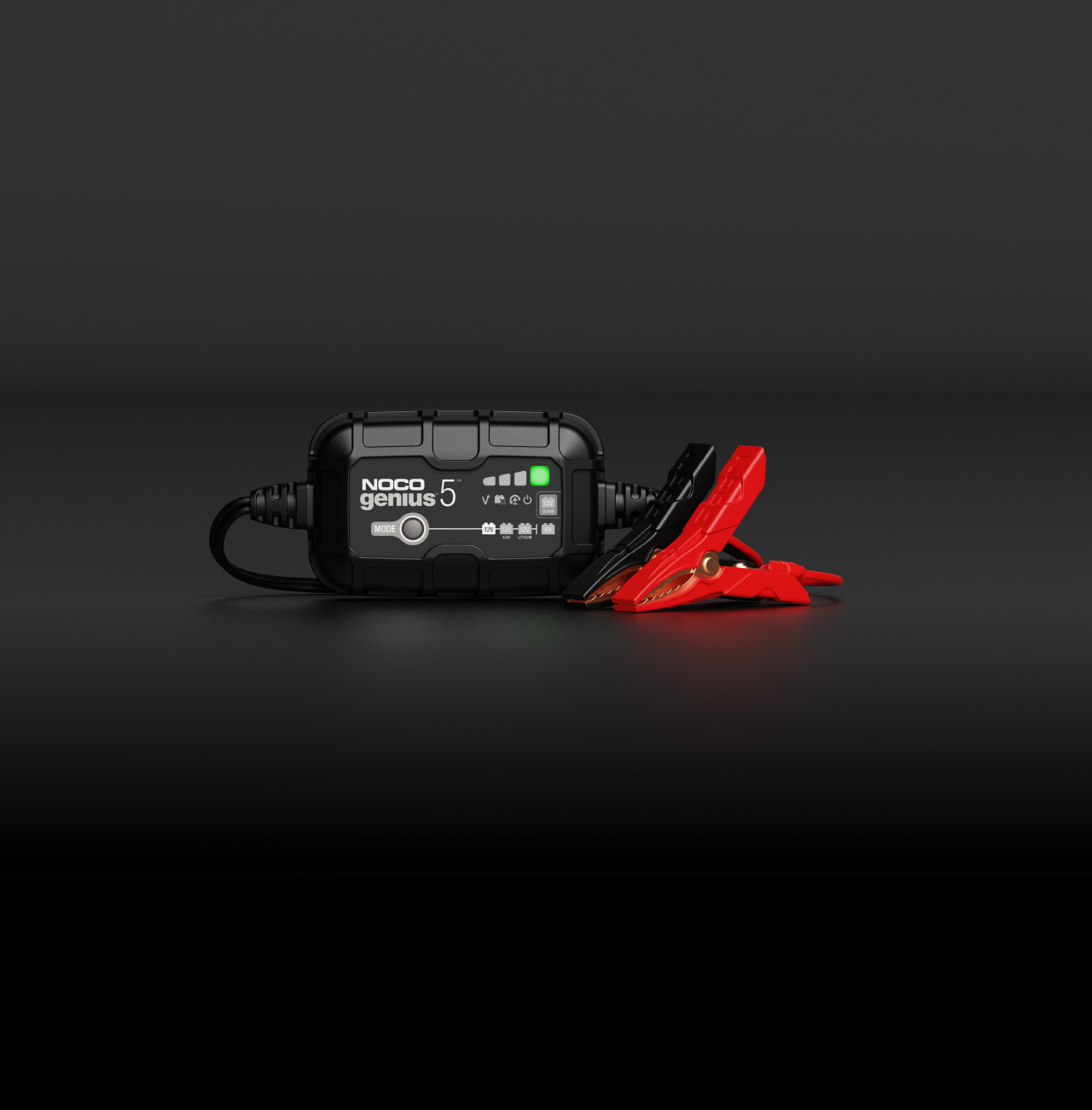
In a CTEK vs NOCO Battery Charger comparison, NOCO often wins for users who want speed, simple controls, and extra functions in one package.

CTEK vs NOCO Battery Charger: Charging Performance
Charging speed depends on amperage, battery size, battery condition, temperature, and the vehicle’s electrical load. A 2-amp charger may maintain a motorcycle battery well, but it can take a long time to charge a deeply discharged truck battery.
For example:
• A 1 to 2 amp charger suits small batteries and maintenance.
• A 4 to 5 amp charger works well for many cars and motorcycles.
• A 7 to 10 amp charger is better for larger automotive batteries.
• Higher output may suit trucks, boats, RVs, and frequent charging.
NOCO often provides more high-output choices, so it may have an advantage when you need a faster recharge. CTEK focuses heavily on controlled charging and maintenance, though it also sells higher-output models.
Do not choose only by amperage. A large charger can be unsuitable for a small battery if it lacks the correct mode or if the manufacturer sets strict charging limits. The battery maker’s instructions should always take priority.
A useful rule is simple: use a maintainer for storage and a higher-output smart charger for regular recovery. If a battery is fully dead, allow the charger time to test it. Some smart chargers will not begin if the voltage is extremely low.

Battery Compatibility and Charging Modes
The battery chemistry matters more than the logo on the charger. Common 12-volt battery types include flooded lead-acid, AGM, gel, and lithium iron phosphate.
Flooded lead-acid batteries
These batteries are common in older cars, trucks, boats, and lawn equipment. They may tolerate a standard 12-volt charging mode, but ventilation is important because charging can produce gas.
AGM batteries
AGM batteries are sealed lead-acid batteries often used in modern vehicles with start-stop systems. They normally require an AGM-specific charging profile or a voltage that matches the battery maker’s instructions.
Gel batteries
Gel batteries need careful voltage control. The wrong charging profile can damage the battery, so use a charger with a dedicated gel setting when required.
Lithium iron phosphate batteries
Lithium batteries need a lithium-compatible charger. They have different charging behavior from lead-acid batteries and may include a battery management system. Never use a repair or desulfation mode unless the manual clearly says it is safe for that battery.
The CTEK vs NOCO Battery Charger choice should come after checking compatibility. Look for the exact model’s support for AGM, gel, lithium, motorcycle batteries, and battery capacity.

Safety Features and Ease of Use
Both brands offer smart safety features, but the exact protection depends on the model. Useful features may include reverse-polarity protection, spark-free connection, short-circuit protection, overheat protection, and automatic shutoff.
Connection order also matters. A safe general process is:
- Turn off the vehicle and remove the keys.
- Confirm the charger is unplugged.
- Connect the positive clamp or eyelet first.
- Connect the negative clamp to the battery negative terminal or an approved chassis ground.
- Select the correct mode.
- Plug in the charger.
- Check the indicator lights.
For many modern vehicles, a chassis ground is preferred over the negative battery post. Follow the vehicle manual, especially when the battery is in the trunk or connected to a battery monitoring sensor.
One mistake I often see is leaving a charger in the wrong mode. A lithium setting on an AGM battery, or a 24-volt setting on a 12-volt system, can cause serious damage. Take ten seconds to read the label before pressing the start button.
Which Charger Is Better for Your Vehicle?
The best CTEK vs NOCO Battery Charger depends on the job.
Choose CTEK if:
• Your vehicle sits in storage for long periods.
• You own a classic car or collectible vehicle.
• You want a dedicated battery maintainer.
• You prefer permanent eyelet connections.
• Smooth, careful charging matters more than maximum speed.
• You mainly use lead-acid, AGM, or powersports batteries.
Choose NOCO if:
• You want a faster charge for a car, truck, or boat.
• You prefer simple controls and bright status indicators.
• You want one charger for several battery sizes.
• You need a compact charger for travel or roadside use.
• You want extra functions such as USB power or jump-start capability.
• You use both lead-acid and lithium batteries and choose a compatible model.
For a motorcycle stored over winter, a low-amp CTEK or NOCO maintainer can work well. For a truck that needs regular charging after short trips, a higher-output NOCO model may save time. For a valuable classic car, CTEK’s maintenance-focused design may feel more reassuring.

CTEK vs NOCO Battery Charger: Value and Ownership Cost
Price is only part of charger value. Consider the included cables, warranty, charging output, battery support, and how often you will use the unit.
A cheaper charger may appear attractive but lack a motorcycle mode, lithium support, or a permanent connection cable. If you later buy extra adapters, the final cost may be higher.
Also check the charger’s environmental rating. A garage charger may not be suitable for outdoor rain, damp boat storage, or dusty workshop use. Look for the stated ingress protection rating and follow the instructions for placement.
Warranty terms can change by region and model. Keep your receipt and register the product when the manufacturer offers registration. A good charger can last for years, but damaged cables and cracked cases are reasons to stop using one immediately.
In my practical comparison of CTEK vs NOCO Battery Charger options, the best value usually comes from buying the correct output and chemistry support, not the most expensive model.

Common Mistakes to Avoid
A charger can protect a healthy battery, but it cannot replace good battery care.
Avoid these common errors:
• Using a 12-volt charger on a 24-volt battery bank.
• Selecting a lithium mode for a lead-acid battery.
• Charging a frozen, swollen, leaking, or cracked battery.
• Covering the charger while it is operating.
• Leaving clamps loose or poorly connected.
• Running the charger near fuel, sparks, or open flames.
• Assuming repair mode will restore every weak battery.
• Ignoring a vehicle that repeatedly drains the battery.
• Using a charger with damaged insulation.
• Charging indoors without reasonable ventilation.
If a battery loses power again soon after charging, test the battery and the vehicle’s charging system. The alternator, starter, wiring, or parasitic drain may be the real cause.
A fully charged battery that drops below normal voltage overnight may have a failing cell. In that case, switching from CTEK to NOCO, or the other way around, will not solve the underlying problem.
How to Test Your Battery Before Buying a Charger
A basic voltage test can provide useful clues, though it does not replace a proper load test.
After the vehicle has been off for several hours:
• About 12.6 volts often indicates a fully charged lead-acid battery.
• Around 12.4 volts suggests a partial charge.
• Around 12.2 volts indicates a low state of charge.
• Below 12 volts may indicate deep discharge or battery trouble.
These values can vary with temperature, battery age, and measurement method. Lithium batteries also show different voltage patterns, so use the battery manufacturer’s guidance.
If the battery charges but quickly falls back to a low voltage, have it tested. A smart charger may show “full” because the battery reaches voltage quickly, even though it cannot hold useful capacity.
This is one of the most important lessons in a CTEK vs NOCO Battery Charger decision: a charger maintains battery health, but it does not diagnose every electrical problem.
Frequently Asked Questions About CTEK vs NOCO Battery Charger
Is CTEK better than NOCO for battery maintenance?
CTEK is often favored for long-term maintenance, especially for classic cars, motorcycles, and stored vehicles. NOCO also offers reliable maintainers, so the exact model and battery compatibility matter more than the brand alone.
Is NOCO faster than CTEK?
Some NOCO chargers provide higher amperage and can recharge larger batteries faster. Charging time still depends on battery size, condition, temperature, and the vehicle’s electrical load.
Can I use a CTEK or NOCO charger on an AGM battery?
Yes, if the charger has a suitable AGM mode or charging profile. Check the product manual and the AGM battery label before connecting it.
Can a NOCO or CTEK charger charge a lithium battery?
Selected models from both brands support lithium iron phosphate batteries. You must choose a model that clearly lists lithium compatibility and avoid lead-acid repair modes unless the manual approves them.
Can a battery charger fix a dead battery?
A charger may restore a deeply discharged battery if the battery is still healthy. It cannot repair a shorted cell, physical damage, severe capacity loss, or a battery that cannot hold a charge.
Should I leave a smart charger connected overnight?
A suitable smart maintainer can usually remain connected when the manual allows continuous maintenance mode. Keep the battery and charger in a safe, dry, ventilated area and inspect the cables regularly.
Do I need to disconnect the car battery before charging?
Not always. Many smart chargers are designed to charge a battery while it remains connected, but modern vehicles may require a specific grounding point or procedure. Follow the vehicle and charger instructions.
Conclusion
The CTEK vs NOCO Battery Charger comparison has no single winner. CTEK is a strong pick for careful long-term maintenance, stored vehicles, and permanent connection systems. NOCO is often better for fast charging, simple controls, broad everyday use, and added portable features.
Before buying, match the charger to your battery voltage, chemistry, size, and intended use. Check the charging modes, output, safety features, warranty, and included cables. Choose the model that fits your real routine, then use it correctly to extend battery life and avoid costly surprises.
Share your vehicle type and battery chemistry in the comments, or explore more battery care guides before making your purchase.