BLACK+DECKER BC15BD Vs Schumacher SC1281: Which Wins?
The Schumacher SC1281 charges faster and starts larger engines, while the BLACK+DECKER BC15BD is simpler and more compact.
Choosing between the BLACK+DECKER BC15BD vs Schumacher SC1281 comes down to charging speed, engine-start power, battery type, and ease of use. Both are 6- and 12-volt battery chargers with automatic operation, but their power ratings and best uses are different. This guide compares their features, real-world value, safety points, and limits so you can buy with confidence.

BLACK+DECKER BC15BD vs Schumacher SC1281: Quick Comparison
The BLACK+DECKER BC15BD and Schumacher SC1281 are automatic battery chargers designed for cars, trucks, motorcycles, boats, and other vehicles with lead-acid batteries. Both models can charge 6-volt and 12-volt batteries.
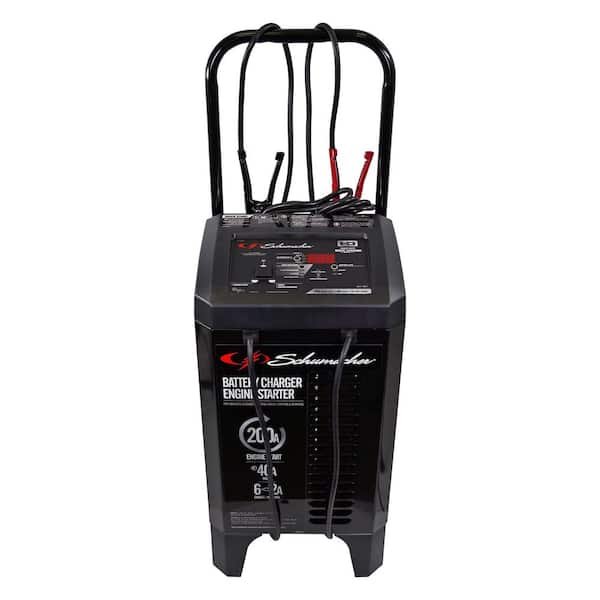
The main difference is output power. The BC15BD offers a 15-amp charging rate and a 40-amp engine start function. The SC1281 also provides a 15-amp charge rate, but its engine start function can deliver up to 100 amps.
| Feature | BLACK+DECKER BC15BD | Schumacher SC1281 |
|---|---|---|
| Battery voltage | 6V and 12V | 6V and 12V |
| Main charging rate | 15 amps | 15 amps |
| Engine start function | 40 amps | 100 amps |
| Automatic charging | Yes | Yes |
| Battery maintenance | Yes, when connected correctly | Yes, when connected correctly |
| Digital display | Yes | Yes |
| Reverse-polarity protection | Yes | Yes |
| Alternator testing | Yes | Yes |
| Best for | Cars, small trucks, home use | Cars, trucks, SUVs, larger engines |
| Ease of storage | More compact | Larger and heavier-duty |
The BLACK+DECKER BC15BD is a good fit for routine charging and occasional starting help. The Schumacher SC1281 is better for a deeply discharged battery or a larger engine that needs more starting power.
BLACK+DECKER BC15BD Features
The BLACK+DECKER BC15BD is built for drivers who want one charger for regular battery care. Its automatic charging system helps reduce the chance of overcharging when the unit is used as directed.
The charger can work with common 6-volt and 12-volt lead-acid batteries. That includes many flooded, AGM, and gel-cell batteries, although you should always check the manual and battery label before charging.
Key BC15BD functions
• 15-amp fast charging for a 12-volt battery
• 40-amp engine start assistance
• Automatic charge control
• Digital display for charge status and voltage information
• Alternator test function
• Reverse-polarity warning
• Battery type and voltage selection
• Built-in protection against common charging errors
The 40-amp engine start mode can help when a battery is weak but still connected to the vehicle. It is not the same as a portable jump starter. The BC15BD must be plugged into household power, and the vehicle battery must meet the conditions listed in the instructions.
A useful feature is its alternator test mode. This can give you an early clue about charging system trouble. Still, it does not replace a professional electrical test, especially when the car has a warning light or repeated battery failure.

Schumacher SC1281 Features
The Schumacher SC1281 is a heavier-duty automatic charger and engine starter. Its 15-amp charging mode is similar to the BC15BD, but its 100-amp engine start rating gives it a clear advantage for larger vehicles.
The SC1281 supports both 6-volt and 12-volt batteries. It can charge and maintain compatible batteries while adjusting the charging process through microprocessor-controlled operation.
Key SC1281 functions
• 15-amp automatic charging
• 30-amp boost mode
• Up to 100-amp engine start assistance
• 6-volt and 12-volt operation
• Digital display
• Automatic voltage detection
• Reverse-hookup protection
• Alternator testing
• Battery maintenance mode
The 30-amp boost setting is helpful when a battery needs more support than normal charging can provide. The 100-amp engine start mode is aimed at vehicles with larger engines, such as full-size trucks and SUVs.
The SC1281 is also a better choice for a garage or workshop. It is less focused on compact storage and more focused on starting power. That extra output also means you should take cable placement, ventilation, and timing instructions seriously.
Charging Performance Compared
When comparing the BLACK+DECKER BC15BD vs Schumacher SC1281, normal charging performance is close because both offer a 15-amp charge setting. In everyday use, the battery’s condition, size, temperature, and chemistry have a greater effect on charging time than the brand name.
A healthy 12-volt car battery may charge in several hours when it is only partly discharged. A severely drained battery can take much longer. A charger does not force energy into a battery like filling a cup with water. The battery accepts power at its own rate.
Which charger charges faster?
Neither model has a major advantage in its standard 15-amp mode. The Schumacher SC1281 may feel faster when its boost mode is suitable, but boost mode is not meant to replace a full charging cycle.
Use normal charging when:
• The battery is low but not completely dead
• You want a controlled, steady charge
• The vehicle will sit for several hours
• You want to maintain the battery over time
Use the higher-power starting function only when the vehicle needs immediate help and the manual allows it. Repeated engine-start attempts can overheat the charger and place stress on the battery.

Engine Starting Power
The biggest performance difference in the BLACK+DECKER BC15BD vs Schumacher SC1281 comparison is engine-start output. The BC15BD provides 40 amps, while the SC1281 provides up to 100 amps.
That does not mean the SC1281 can start every vehicle in every condition. Cold weather, thick engine oil, poor cable connections, a damaged battery, and a faulty starter can all prevent a start. A high amp rating improves the odds, but it cannot fix a mechanical or electrical problem.
BLACK+DECKER BC15BD starting ability
The BC15BD is suitable for many passenger cars and smaller SUVs. It can provide useful assistance when the battery has enough remaining capacity to accept a charge.
It may struggle with:
• Large diesel engines
• Very cold batteries
• Completely failed batteries
• Vehicles with poor battery terminals
• Repeated start attempts
Schumacher SC1281 starting ability
The SC1281 is the stronger choice for trucks, SUVs, vans, and larger engines. Its 100-amp start rating offers more reserve power than the BC15BD.
However, do not treat the rating as a guarantee. Engine-start modes often work for a short period, not continuously. Follow the recommended wait time between attempts, and stop if the charger or cables become hot.
Battery Compatibility and Safety
Both chargers are designed mainly for common lead-acid battery types. That does not automatically make them suitable for every battery on the market.
Before connecting either charger, confirm these points:
• The battery voltage matches the charger setting
• The battery chemistry is supported
• The battery is not cracked, leaking, frozen, or swollen
• The charging area has good airflow
• The charger is on a dry, stable surface
• The positive and negative clamps are connected correctly
Never charge a frozen battery. Charging can produce gas, and sparks near a battery may cause an explosion. Keep cigarettes, flames, and other ignition sources away from the work area.
A common mistake is connecting the charger before selecting the correct voltage. Another is placing the negative clamp on a painted surface. Clean metal makes a better connection and reduces heat at the clamps.
Ease of Use and Display Controls
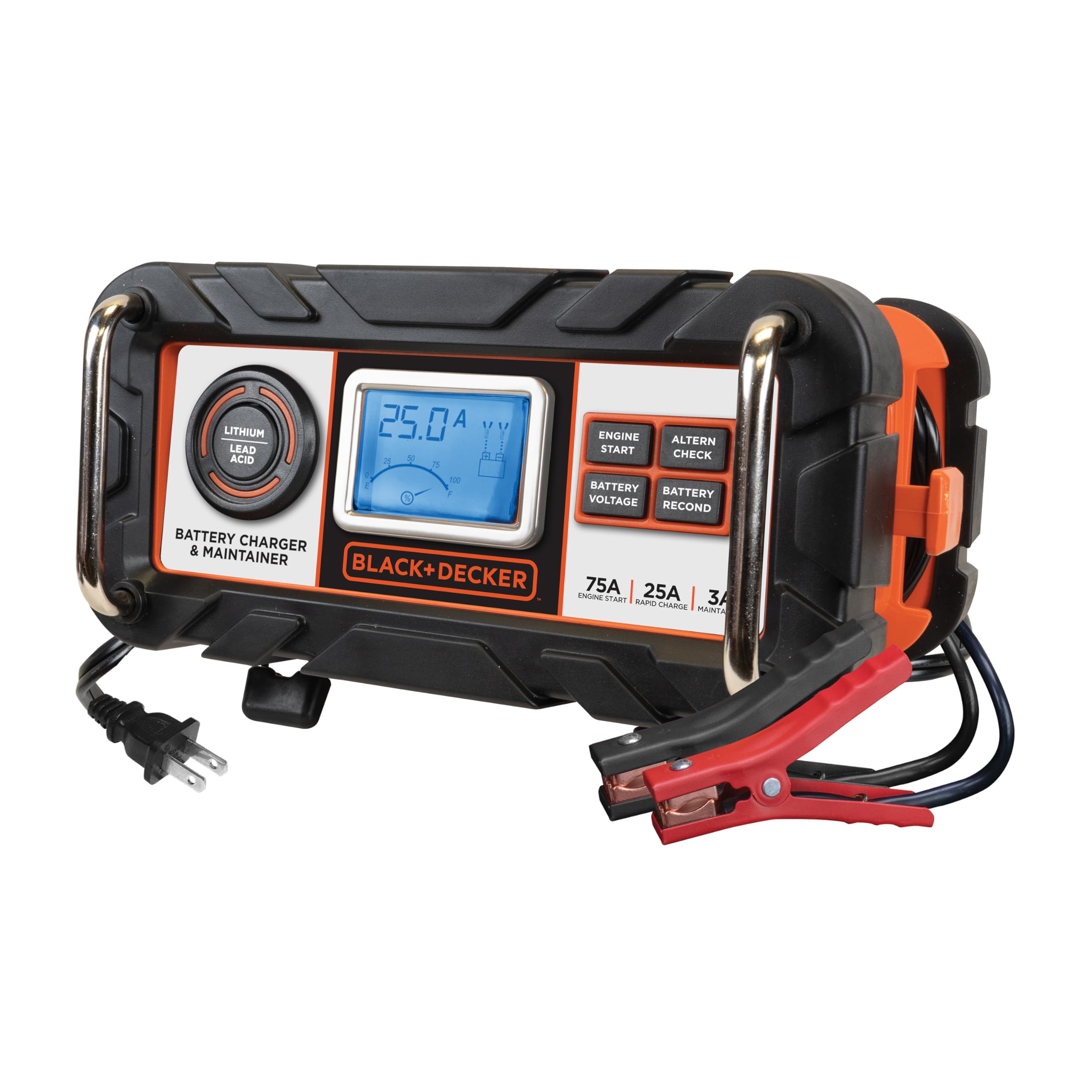
The BLACK+DECKER BC15BD vs Schumacher SC1281 comparison is close in daily operation. Both models use digital controls and provide information on the display.
The BC15BD may appeal to first-time users because its layout feels simple. It is a practical choice for someone who wants to charge a family car without learning many settings.
The SC1281 has more power modes, so it may take a little longer to understand. That extra control is helpful in a garage, but it can feel like too much for a user who only needs basic charging.
Simple charging steps
-
Turn off the vehicle and remove the keys.
-
Check the battery for damage or leaks.
-
Choose the correct voltage and battery type.
-
Connect the positive clamp to the positive terminal.
-
Connect the negative clamp to the negative terminal or a clean chassis ground, as directed.
-
Plug the charger into a grounded outlet.
-
Start the charging program.
-
Disconnect the power before removing the clamps.
This process sounds basic, but careful setup prevents many problems. In practical garage work, loose clamps are one of the most common causes of poor charging and false error readings.

Size, Portability, and Build Quality
The BLACK+DECKER BC15BD is the more convenient choice for home users who need a charger that is easy to move and store. It still requires an electrical outlet, so it is not portable in the same way as a battery-powered jump starter.
The Schumacher SC1281 has a more workshop-oriented design. Its larger output system and stronger starting function make it useful in a garage, but the unit may take more shelf space.
Choose the BC15BD when:
• You want a simple home charger
• You mainly service passenger cars
• You value easier storage
• You need occasional engine-start help
Choose the SC1281 when:
• You own a truck, SUV, or van
• You often deal with weak batteries
• You want stronger engine-start support
• You prefer a heavier-duty charger
Neither product should be left outdoors in rain or snow. Store the charger indoors and keep the cables free from sharp bends and oil.
:strip_exif():no_upscale():format(webp):quality(65)/1650044858013/schumacher.jpg)
BLACK+DECKER BC15BD vs Schumacher SC1281: Real-World Use
In a normal driveway situation, both chargers can handle a partly discharged car battery well. The difference appears when the battery is very weak or the engine is large.
For example, a sedan that was left with its lights on may respond well to the BC15BD after a short charge. A full-size pickup with a deeply drained battery is a better match for the SC1281, especially if the vehicle must start soon.
A practical lesson is to avoid judging a charger only by its maximum amp number. The battery’s age matters just as much. A battery that is five or six years old may be unable to hold a charge, even when a powerful charger is connected.
Before buying, think about your real problem:
• Do you need routine charging?
• Do you need emergency starting power?
• Do you own a large engine?
• Do you need a charger for long-term maintenance?
• Do you have a safe outlet near the vehicle?
These questions usually lead to a better choice than simply buying the unit with the biggest number.
Which One Is Better for You?
The BLACK+DECKER BC15BD is the better option for most basic car owners. It offers automatic charging, useful safety features, a digital display, and enough power for many passenger vehicles.
The Schumacher SC1281 is the better option for drivers who want more starting power. Its 100-amp engine-start rating and boost mode make it more suitable for trucks, SUVs, vans, and demanding garage work.
Choose the BLACK+DECKER BC15BD if:
• You want a straightforward charger
• You mainly drive a car or small SUV
• You need 15-amp charging
• You want a smaller unit for home storage
• You only need occasional starting assistance
Choose the Schumacher SC1281 if:
• You need stronger engine-start support
• You own a large truck or SUV
• You want a boost mode
• You work on more than one type of vehicle
• You prefer extra reserve power
For many households, the BC15BD offers better simplicity. For mixed vehicle ownership or frequent battery problems, the SC1281 offers better capability.
Common Mistakes to Avoid
Even the best battery charger cannot make an unsafe setup safe. Follow the manual and avoid these common errors.
• Do not charge a damaged or leaking battery.
• Do not use the wrong voltage setting.
• Do not connect clamps backward.
• Do not cover the charger during operation.
• Do not use engine-start mode for long periods.
• Do not place the charger near fuel or open flames.
• Do not assume a charged battery is healthy.
• Do not ignore repeated alternator or battery test failures.
If a battery repeatedly goes flat, test the battery and charging system. The problem may be a parasitic drain, a weak alternator, corroded terminals, or an old battery.
Frequently Asked Questions
Is the BLACK+DECKER BC15BD better than the Schumacher SC1281?
The BC15BD is better for simple home charging and smaller vehicles. The Schumacher SC1281 is better when you need higher engine-start power or work with trucks and SUVs.
Can the BLACK+DECKER BC15BD charge a completely dead battery?
It may charge a deeply discharged battery if the battery can still accept power and the charger recognizes it. A battery with an internal failure may not charge, regardless of the charger used.
Does the Schumacher SC1281 work with both 6-volt and 12-volt batteries?
Yes, the SC1281 is designed for 6-volt and 12-volt battery systems. Select the correct voltage before charging and confirm that the battery type is supported.
Can either charger replace a portable jump starter?
No. Both are plug-in chargers, so they need household AC power. A portable jump starter uses its own internal battery and is more suitable when no outlet is available.
Which model is better for a truck?
The Schumacher SC1281 is usually the better choice for a truck because its engine-start function provides more power. Battery size, engine type, weather, and battery condition still affect the result.
Can these chargers maintain a battery?
Yes, both models include automatic charging and maintenance functions for compatible batteries. Use maintenance mode only with a battery in good condition and follow the maker’s connection instructions.
Is a higher amp rating always better?
No. Higher output can help with larger engines, but it does not repair a bad battery or alternator. Correct voltage, safe connection, battery condition, and proper charging time are just as important.
Conclusion
The BLACK+DECKER BC15BD vs Schumacher SC1281 decision is easy once you match the charger to your vehicle and needs. The BC15BD is a practical, user-friendly choice for routine charging, family cars, and occasional starting assistance. The Schumacher SC1281 costs its advantage in extra size with stronger engine-start power and more useful support for trucks and larger vehicles.
Choose the BC15BD for simple home battery care. Choose the SC1281 when starting power matters more. Check your battery type, inspect the cables, and use the correct setting every time. Explore your vehicle maker’s battery guidance, and share your experience if you have used either charger.