Clore Automotive Charger Vs NOCO Genius10: Best Choice
Clore Automotive Charger models offer more charging power, while NOCO Genius10 wins on compact size and lithium-battery support.
Choosing between the Clore Automotive Charger vs NOCO Genius10 is not simply a battle of brand names. The better charger depends on your battery type, charging speed, storage space, and need for repair or power-supply features. This guide compares the two in practical terms, using the Clore Automotive Pro-Logix PL2320 as the main Clore example because “Clore Automotive Charger” covers several models.
Clore Automotive Charger vs NOCO Genius10 at a glance
The Clore Automotive Charger vs NOCO Genius10 comparison becomes much clearer when you look at their main purpose. The Pro-Logix PL2320 is a larger, higher-output charger built for cars, trucks, shops, and demanding charging work. The NOCO Genius10 is a smaller 10-amp smart charger made for everyday home use.
| Feature | Clore Automotive Pro-Logix PL2320 | NOCO Genius10 |
|---|---|---|
| Typical output | Up to 20 amps | Up to 10 amps |
| Battery voltage | 6V and 12V | 6V and 12V |
| Battery chemistry | Lead-acid types and some AGM applications | Lead-acid, AGM, gel, and lithium-ion |
| Charging role | Fast charging, diagnostics, repair, and shop use | Smart maintenance, charging, and battery repair |
| Lithium support | Model-dependent; verify the manual | Yes, with a dedicated lithium mode |
| Size | Larger and heavier | Compact and portable |
| Weather resistance | Model-dependent | IP65-rated housing |
| Best for | Bigger batteries and faster charging | Home garages, powersports, and mixed battery types |
The Clore unit generally has twice the maximum charging current. That matters when you need to charge a large truck battery or reduce waiting time. The NOCO Genius10 uses less space and offers a simpler fit for many home users.
Neither charger is automatically better for every driver. The right answer in the Clore Automotive Charger vs NOCO Genius10 debate depends on how often you charge batteries and what batteries you own.

What is a smart battery charger?
A smart battery charger uses sensors and software to control the charging process. It checks battery voltage, adjusts current, and reduces or stops charging when the battery is full. This is safer and more useful than an old fixed-output charger.
Most modern smart chargers use several stages:
• Diagnosis checks the battery before charging.
• Bulk charging sends higher current into a low battery.
• Absorption charging lowers the current as voltage rises.
• Float or maintenance charging keeps the battery ready without continuous overcharging.
• Repair or recondition modes may apply controlled pulses or higher voltage to some lead-acid batteries.
The Clore Automotive Charger and NOCO Genius10 both use automatic charging logic. Still, their controls and battery modes differ. A charger cannot repair every dead battery. A battery with a shorted cell, cracked case, or severe sulfation may need replacement.
This is an important safety point. Always match the charger mode to the battery label. Lithium batteries, flooded lead-acid batteries, AGM batteries, and gel batteries do not all accept the same charging profile.
Clore Automotive Charger review
The Pro-Logix line is designed with repair shops, service technicians, and serious DIY users in mind. The PL2320 provides up to 20 amps of charging power, which can cut charging time compared with a 10-amp unit when battery size and condition allow it.
Its main strengths include:
• Higher charging output for larger automotive batteries.
• Support for common 6V and 12V battery systems.
• Automatic charging control.
• Battery testing and charging information on supported models.
• Repair or reconditioning functions for certain lead-acid batteries.
• A design aimed at repeated garage or shop use.
The stronger output is useful for full-size trucks, work vans, marine batteries, and vehicles that sit for long periods. For example, a deeply discharged 100 amp-hour battery may take much longer on a 10-amp charger than on a 20-amp charger. Real charging time still depends on battery health, temperature, and the charger’s tapering process.
The Clore Automotive Charger is usually less pocket-friendly than the NOCO. It may also feel like too much equipment for someone who only maintains one small sedan or motorcycle battery.
Clore Automotive Charger limitations
Higher output does not mean better in every situation. A larger charger can be less convenient to store, and it may require more care when used with small batteries. Always follow the battery maker’s recommended charge rate.
Also, confirm the exact Clore model before buying. Clore Automotive sells several chargers and booster products. Features such as lithium support, engine-start assistance, output ratings, and repair modes can vary widely between models.

NOCO Genius10 review
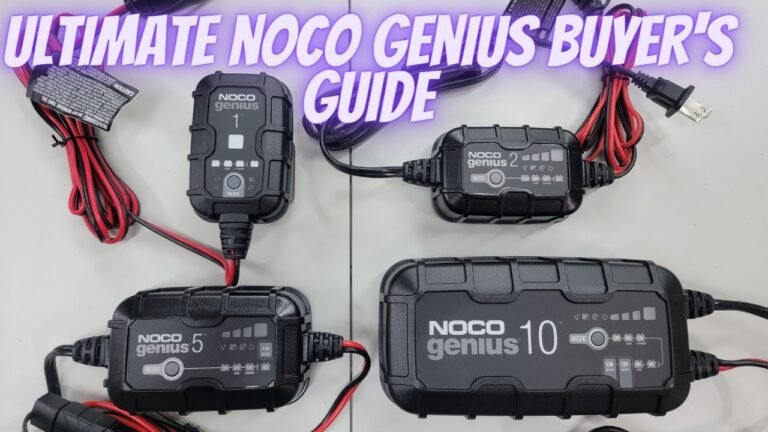
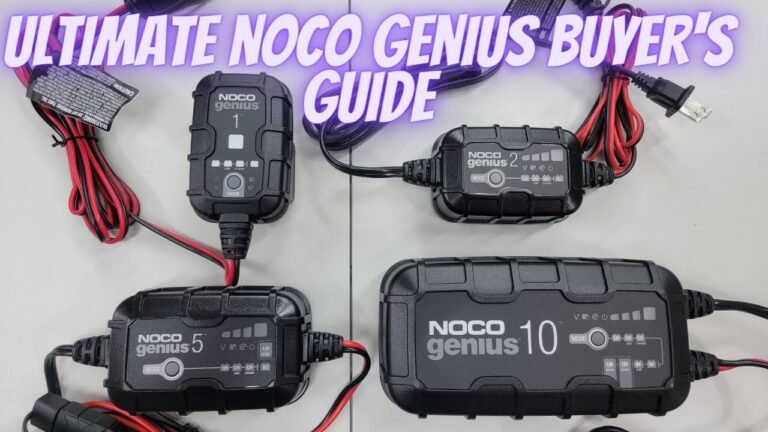
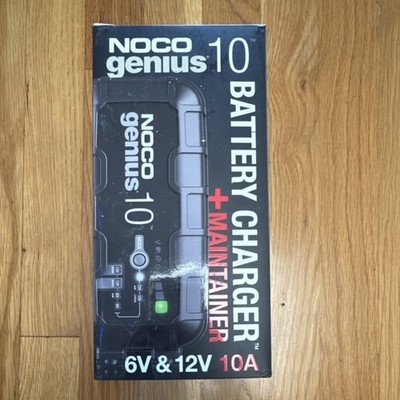
The NOCO Genius10 is a popular compact smart charger with a maximum output of 10 amps. It is made for 6V and 12V batteries and includes selectable modes for different battery chemistries.
Its strongest features include:
• A compact and lightweight design.
• 10-amp charging for many cars, trucks, boats, and powersports vehicles.
• Dedicated modes for AGM, lithium, and other battery types.
• Automatic maintenance charging.
• A battery repair mode for selected lead-acid batteries.
• Reverse-polarity protection.
• Spark-resistant connection behavior.
• IP65-rated protection against dust and water jets.
The lithium mode makes the Genius10 appealing to owners of lithium iron phosphate, or LiFePO4, batteries. That feature can save you from buying a second charger. However, lithium batteries often need a battery-management system, and not every lithium pack is suitable for automotive charging.
The NOCO Genius10 also works well as a seasonal maintainer. You can connect it to a stored car, boat, ATV, or motorcycle battery and let its automatic system monitor the charge. Use the correct mode and inspect the connections first.
NOCO Genius10 limitations
The 10-amp output is enough for many vehicles, but it is slower than the Clore Automotive Charger when both units are charging similar batteries. It may also struggle to start charging a battery that has fallen below the charger’s detection threshold.
NOCO includes a force mode for some very low-voltage batteries. This feature can bypass normal detection, but it removes some automatic safeguards. Use it only when the battery is known to be safe and the manual allows it.

Charging speed and battery size
Charging speed is one of the biggest differences in the Clore Automotive Charger vs NOCO Genius10 matchup. The Clore Pro-Logix PL2320 can deliver up to 20 amps, while the Genius10 delivers up to 10 amps.
A simple estimate is:
Charging time = battery capacity ÷ charging current
For example, a 60 amp-hour battery might appear to take:
• About six hours at 10 amps.
• About three hours at 20 amps.
Real-world time will be longer. Charging is not perfectly efficient, and the charger reduces current near full charge. A worn battery may also accept current poorly.
Choose the Clore Automotive Charger when:
• You regularly charge large batteries.
• You manage several vehicles.
• You work on trucks, vans, or marine equipment.
• Faster recovery matters.
Choose the NOCO Genius10 when:
• You mainly charge one or two vehicles.
• Overnight charging is acceptable.
• You want a small unit for travel.
• You own both lead-acid and lithium batteries.

Battery compatibility and charging modes
Battery compatibility deserves close attention. A charger must use the correct voltage and charging profile for the battery.
The NOCO Genius10 has a clear advantage if you need one charger for several battery chemistries. Its modes are designed for common lead-acid batteries, AGM batteries, lithium batteries, and 6V applications.
The Clore Automotive Charger may be excellent for lead-acid service, but compatibility depends on the exact model. Some Clore units support advanced battery types, while others focus mainly on conventional automotive batteries. Read the product label and manual rather than relying on the brand name alone.
Before charging, check:
• Battery voltage.
• Battery chemistry.
• Battery capacity.
• Manufacturer charging instructions.
• Whether the battery is damaged or frozen.
Never charge a frozen battery. Do not charge a battery with a cracked case or leaking electrolyte. For flooded batteries, work in a ventilated area and keep sparks away from the battery.

Repair modes: what they can and cannot do
Both products may include a repair or recondition function, but this feature is often misunderstood. It cannot restore a battery that has lost active material, suffered a shorted cell, or reached the end of its service life.
A repair mode may help with some lead-acid batteries affected by sulfation. Sulfation occurs when lead sulfate crystals build up after a battery stays undercharged. Controlled charging can sometimes improve performance, but results vary.
In my experience advising people on battery equipment, the most common mistake is using repair mode as a last-minute cure for every dead battery. A better process is:
-
Inspect the battery for swelling, cracks, leaks, or corrosion.
-
Test resting voltage with a multimeter or battery tester.
-
Charge it with the correct standard mode first.
-
Test the battery again after it rests.
-
Use repair mode only if the battery is suitable and the manual recommends it.
If the battery drops quickly after charging, the problem is often internal damage rather than a charging-mode issue.

Ease of use and portability
The NOCO Genius10 is easier to carry and store. Its compact case fits well in a home garage, trunk, boat locker, or workshop drawer. The controls are simple, though the small buttons and indicator lights may require a quick look at the manual.
The Clore Automotive Charger feels more like shop equipment. Its larger body and higher output make sense beside a workbench or service cart. It is not the charger most people want to carry on a long road trip.
For occasional home use, the Genius10 feels less demanding. For repeated work, the Clore’s higher capacity may be more valuable than its extra size.
A useful lesson is to buy for your real routine, not your imagined emergency. If you mostly maintain a family car, compact equipment is usually easier to use. If you charge several large batteries each week, the more powerful Clore unit can save time.

Safety and correct charging practice
A smart charger reduces risk, but it does not replace careful setup. Incorrect connections can still damage equipment or cause sparks.
Use these steps with either charger:
-
Turn off the vehicle before connecting the charger.
-
Confirm the charger voltage matches the battery.
-
Select the correct battery mode.
-
Connect the positive clamp to the positive terminal.
-
Connect the negative clamp to the negative terminal or a suitable chassis ground, as directed by the manual.
-
Plug in the charger and start the selected program.
-
Check for unusual heat, swelling, odor, or noise.
-
Disconnect power before removing the clamps.
Keep the charger dry unless its rating permits outdoor exposure. The NOCO Genius10 has IP65 protection, but that does not mean it should sit in standing water. The exact Clore protection rating varies by model.

Which charger is better for your needs?
The Clore Automotive Charger is the better choice for users who value power and faster charging. It is especially appealing for larger vehicles, busy garages, and people who work with several lead-acid batteries.
The NOCO Genius10 is the better choice for users who want portability, simple maintenance charging, and broad battery-chemistry support. Its lithium mode gives it extra flexibility for modern powersports and recreational equipment.
Choose the Clore Automotive Charger if:
• You need up to 20 amps of charging power.
• You often charge large or deeply discharged batteries.
• You prefer a shop-style charger.
• You want more charging speed than a compact maintainer can provide.
Choose the NOCO Genius10 if:
• You want a small charger for home or travel.
• You need lithium battery support.
• You maintain cars, motorcycles, ATVs, or boats.
• You prefer a weather-resistant, simple design.
For many households, the Genius10 is the more practical purchase. For frequent heavy use, the Clore Automotive Charger is likely the better tool.
Value, warranty, and buying advice
Price should not be the only factor. A cheaper charger may cost more if it lacks the battery mode you need or takes too long for your regular work.
Before buying, compare:
• Maximum amperage.
• Supported battery chemistries.
• 6V and 12V compatibility.
• Cable length and clamp quality.
• Warranty terms.
• Repair and maintenance functions.
• Outdoor protection rating.
• Replacement availability.
Check the current manufacturer specifications because product versions can change. In particular, verify the exact Clore model. “Clore Automotive Charger” is a broad search term, not one single product.
Also remember that a charger is not a jump starter. A charger slowly restores battery energy. A jump starter provides a short burst of current to help start an engine. Some Clore products combine charging and starting functions, while the Genius10 is primarily a charger and maintainer.
Frequently Asked Questions: Clore Automotive Charger vs NOCO Genius10
Is the Clore Automotive Charger faster than the NOCO Genius10?
Yes, the Pro-Logix PL2320 can provide up to 20 amps, compared with the Genius10’s 10 amps. Actual speed depends on battery size, condition, temperature, and the charging stage.
Can the NOCO Genius10 charge lithium batteries?
Yes, the Genius10 includes a lithium charging mode for compatible 12V lithium batteries. Confirm that your battery is a supported LiFePO4 type and follow the battery manufacturer’s instructions.
Which is better for a car battery, Clore Automotive Charger vs NOCO Genius10?
Both can work well for a standard 12V car battery when used in the correct mode. The Clore is better when speed matters, while the NOCO is easier to store and better suited to mixed battery types.
Can either charger repair a dead battery?
A repair mode may improve some sulfated lead-acid batteries, but neither charger can repair every failed battery. A battery with a bad cell, physical damage, or severe internal wear usually needs replacement.
Is the NOCO Genius10 safe to leave connected?
It is designed for automatic charging and maintenance, so it can remain connected when used correctly. Still, inspect the battery, choose the proper mode, and follow the manual before leaving it unattended.
Does the Clore Automotive Charger work with AGM batteries?
Many Clore Pro-Logix models support AGM batteries, but the exact options vary by model. Check the charger label and manual before connecting it to an AGM battery.
Do these chargers replace a jump starter?
No. A charger restores battery energy over time, while a jump starter supplies temporary starting power. Some Clore products may include starting assistance, but the Genius10 is not a traditional jump starter.
Conclusion
The Clore Automotive Charger vs NOCO Genius10 decision comes down to power, portability, and battery type. The Clore Pro-Logix PL2320 offers higher output and suits larger batteries or frequent shop work. The NOCO Genius10 is compact, easy to store, and more flexible for users with lead-acid and lithium batteries.
If you want faster charging and often work on trucks or multiple vehicles, choose the Clore Automotive Charger. If you want a simple charger for everyday maintenance, powersports equipment, or travel, the NOCO Genius10 is the more convenient option.
Check your battery type, charging needs, and the exact model specifications before buying. A well-matched charger can extend battery life, prevent wasted money, and make winter storage much easier.