BatteryMINDer Vs Battery Tender: Which Is Better?
BatteryMINDer offers stronger battery recovery features, while Battery Tender provides simple, reliable long-term charging.
Choosing between BatteryMINDer vs Battery Tender is not just a brand decision. The right charger depends on your battery type, storage time, vehicle, climate, and whether you need maintenance charging or battery recovery. After comparing their charging methods, safety features, costs, and real-world uses, one clear lesson stands out: Battery Tender is often easier for daily owners, while BatteryMINDer can be more useful for neglected or aging lead-acid batteries.

BatteryMINDer vs Battery Tender: What Is the Main Difference?
BatteryMINDer and Battery Tender are both smart battery chargers and maintainers. They monitor battery voltage and adjust the charge as the battery fills. This helps prevent the overcharging that can happen with basic trickle chargers.
The main difference is their focus:
• BatteryMINDer often emphasizes desulfation, battery recovery, temperature compensation, and long-term battery care.
• Battery Tender focuses on simple automatic charging and maintenance for cars, motorcycles, boats, ATVs, lawn equipment, and other vehicles.
• BatteryMINDer models vary widely in output and features, so the exact model matters.
• Battery Tender also has many models, including small motorcycle chargers, higher-output automotive chargers, and lithium-compatible units.
In simple terms, Battery Tender is like a dependable caretaker. BatteryMINDer is more like a caretaker with extra tools for dealing with battery age and neglect.
Still, neither charger can repair every dead battery. A battery with a shorted cell, broken plates, severe corrosion, or physical damage may need replacement.
How Smart Battery Chargers Work
A smart charger does more than send a fixed electrical current into a battery. It checks the battery’s voltage and changes its charging pattern as needed.
Most lead-acid smart chargers use several stages:
-
Bulk charging sends most of the needed energy into the battery.
-
Absorption charging slows the current as the battery approaches full charge.
-
Float or maintenance charging keeps the battery full without forcing a high current into it.
Some chargers also include a battery test stage. This stage checks whether the battery can hold voltage after charging.
A standard lead-acid battery can lose charge while sitting unused. This happens because of natural self-discharge and small electrical draws from alarms, clocks, computers, and other vehicle systems. A maintainer can offset that loss.
However, charging is not the same as testing. A charger may show that a battery is full, but the battery may still fail when the starter demands high current. A proper load test gives a better view of starting ability.

BatteryMINDer Features and Benefits
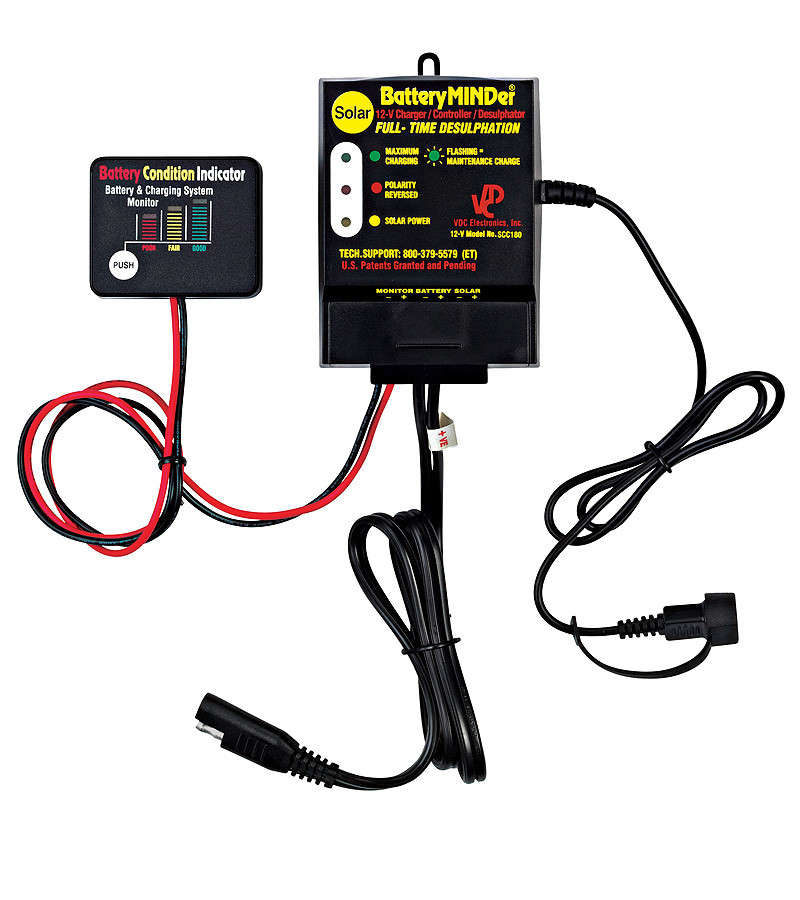
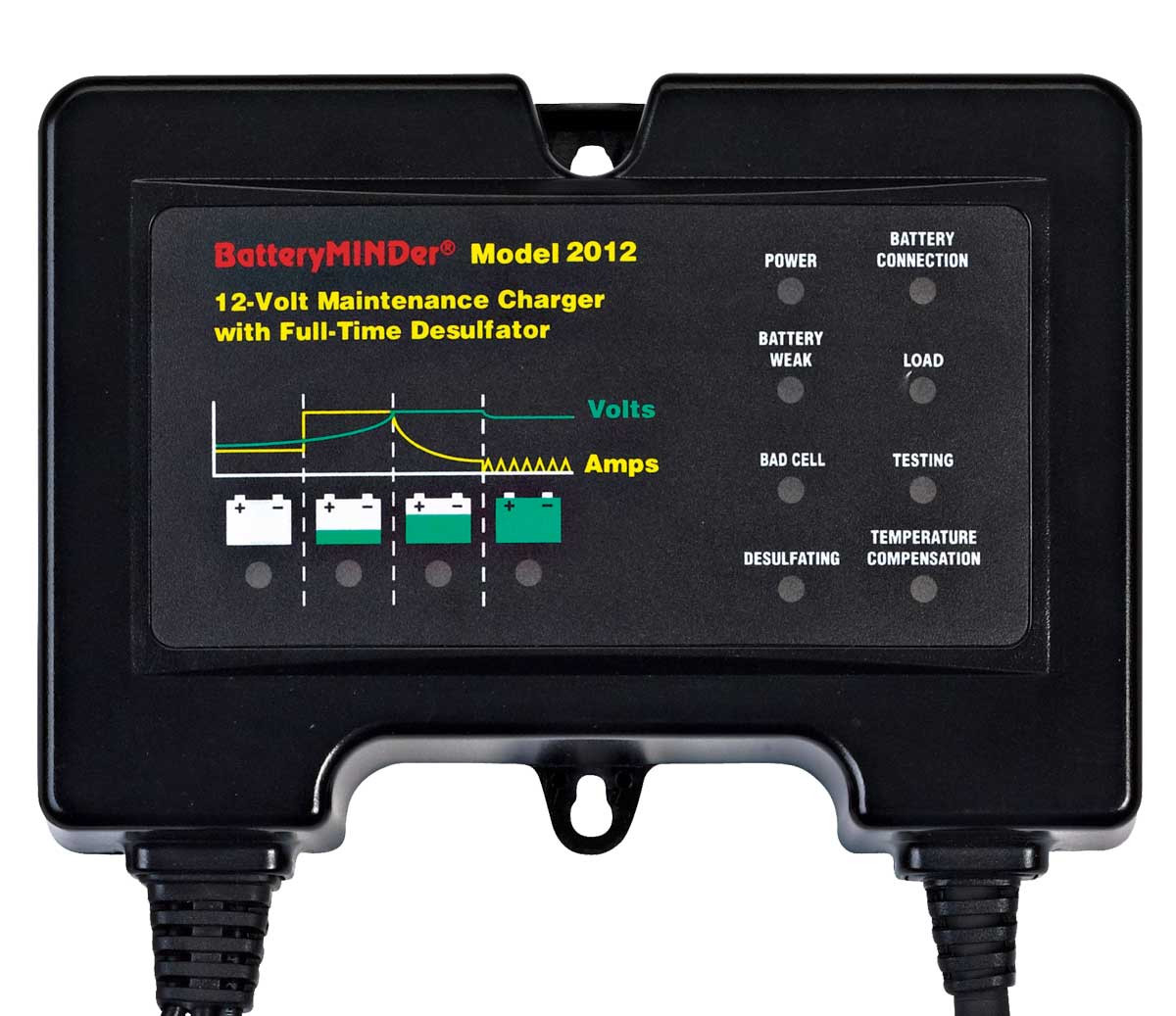
BatteryMINDer chargers are known for features aimed at long-term battery care. Exact functions depend on the model, so always check the product manual before buying.
Desulfation and battery recovery
Lead-acid batteries can develop lead sulfate crystals when they remain partly discharged. A process called sulfation can reduce capacity and make the battery harder to charge.
Many BatteryMINDer models use a pulse or desulfation mode. The goal is to reduce some sulfate buildup and improve battery acceptance of charge. This may help a lightly or moderately sulfated battery.
The result is not guaranteed. Desulfation cannot restore plates that are badly damaged. It also cannot fix a battery with a shorted cell or a cracked case.
Temperature compensation
Battery charging needs change with temperature. A battery may require different charging voltage in freezing weather than in hot weather.
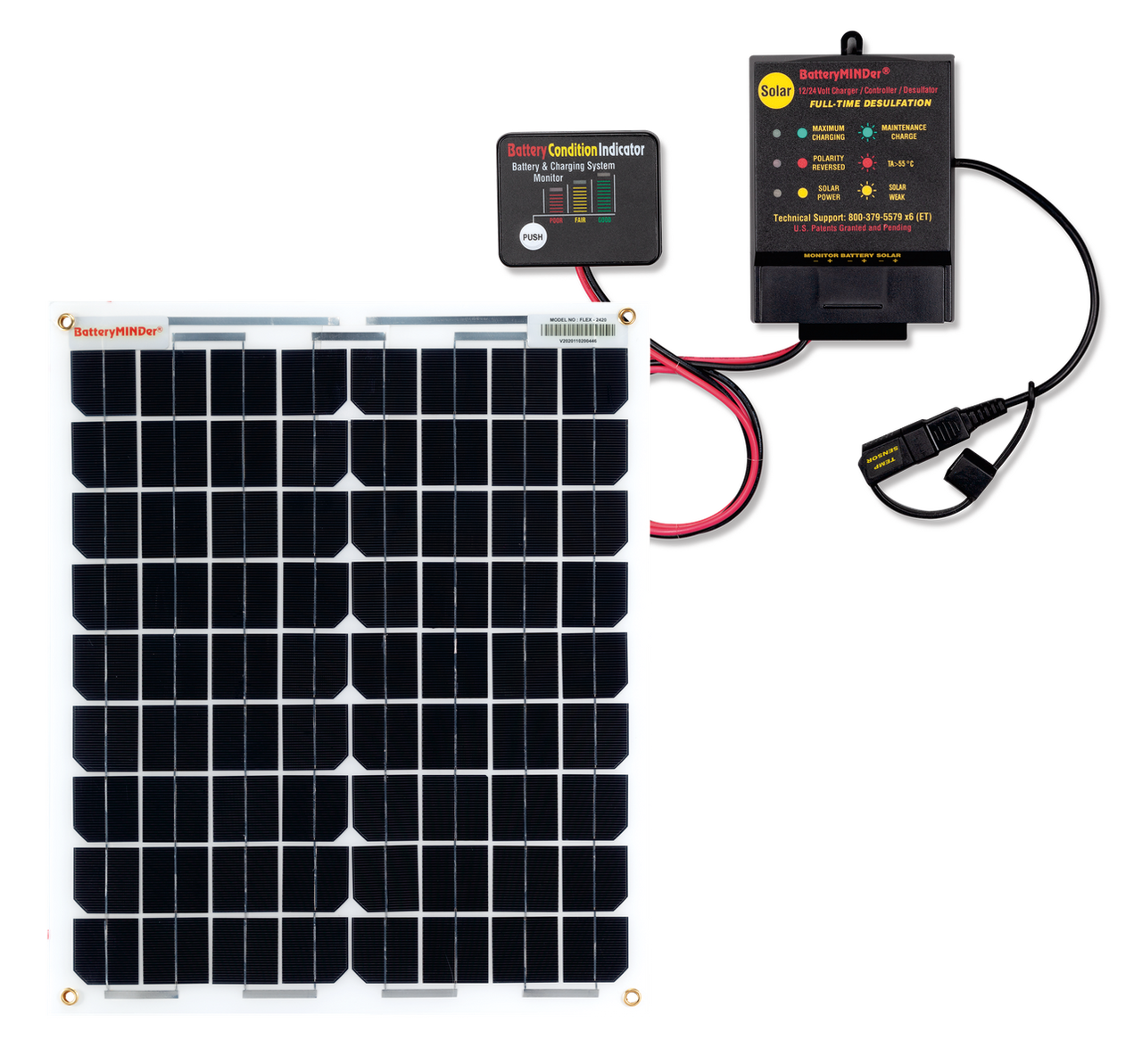
Some BatteryMINDer models use a temperature sensor or built-in temperature compensation. This can help reduce the risk of undercharging in cold conditions or overcharging in high heat.
This feature is especially useful for:
• Unheated garages
• Boats stored through winter
• Recreational vehicles
• Classic cars
• Batteries in areas with large temperature changes
Multiple battery types
BatteryMINDer offers models for different battery systems. These may include flooded lead-acid, AGM, gel, and certain other battery designs.
Do not assume every BatteryMINDer charger supports every chemistry. Gel batteries, AGM batteries, lithium batteries, and flooded batteries can have different charging needs. Selecting the wrong mode may reduce battery life or create a safety risk.
Long-term storage support
BatteryMINDer chargers are often chosen for vehicles that sit for weeks or months. Examples include collector cars, motorcycles, backup generators, boats, and seasonal equipment.
A good maintainer can help keep a stored battery ready. It may also reduce the need to remove the battery for repeated charging.
My practical lesson here is simple: storage is easier when the charger has a clear status light, proper polarity protection, and a connector that stays attached to the battery. Fancy features matter less if the setup is hard to use.
Battery Tender Features and Benefits
Battery Tender is widely used because its products are simple to connect and easy to understand. Many units automatically switch from charging to maintenance mode after the battery reaches a suitable level.
Simple automatic charging
Battery Tender chargers generally follow an automatic charging cycle. They charge the battery, monitor its voltage, and maintain it when needed.
This makes them useful for owners who want a “connect it and leave it” solution. The charger still needs to be used in a safe, dry, ventilated area and according to the manual.
Small chargers for motorcycles and powersports
Battery Tender Junior models are popular for motorcycles, scooters, ATVs, riding mowers, and small boats. Their lower output is suitable for many small batteries.
A small charger is not always better for a large automotive battery. It may take longer to charge, especially if the battery is deeply discharged. For larger batteries, a higher-output Battery Tender model may be more practical.
Automotive and marine options
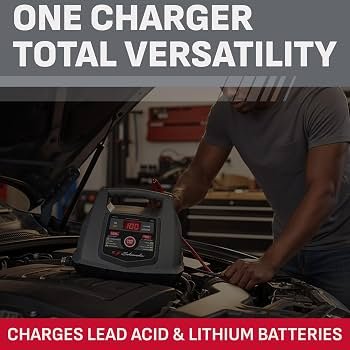
Battery Tender offers chargers with higher current ratings for cars, trucks, boats, and recreational vehicles. Some include selectable modes for AGM or lithium batteries.
The product label matters more than the brand name. Before purchasing, check:
• Voltage, such as 6 volts or 12 volts
• Battery chemistry
• Recommended battery capacity
• Charging current
• Indoor or outdoor rating
• Connector type
Familiar accessories
Many Battery Tender units include ring-terminal leads and alligator clips. Ring terminals are useful for a vehicle that stays connected to a maintainer. Alligator clips are convenient when you charge several batteries.
In real use, a permanent ring-terminal lead often saves time. It reduces the need to remove a seat, open a battery compartment, or reach into a crowded engine bay.

BatteryMINDer vs Battery Tender: Charging Performance
Both brands can maintain a healthy battery. The difference becomes more noticeable when the battery is old, deeply discharged, or affected by sulfation.
Charging speed
Charging speed depends on the charger’s amperage and the battery’s condition. A 0.75-amp charger will usually charge more slowly than a 4-amp or 8-amp charger.
For example, a small motorcycle battery may work well with a low-current maintainer. A large truck battery that is significantly discharged may need a higher-output charger.
BatteryMINDer vs Battery Tender is not a fair speed comparison unless you compare models with similar amperage. A high-output Battery Tender may charge faster than a low-output BatteryMINDer, and the reverse can also be true.
Maintenance charging
Both brands can be effective for maintenance charging when the model matches the battery. This is the main job for a vehicle that sits unused.
A maintainer should not be used as a substitute for a weak alternator, damaged wiring, or a battery that is already failing. If the battery loses voltage quickly after charging, investigate the battery and vehicle rather than leaving the charger connected indefinitely.
Desulfation performance
BatteryMINDer usually has a stronger reputation for desulfation-related features. Some Battery Tender models may include recovery or special charging functions, but this varies by product.
Desulfation is most likely to help when the battery has been undercharged for a limited period. It is less likely to help when the battery is very old or physically damaged.
Temperature control
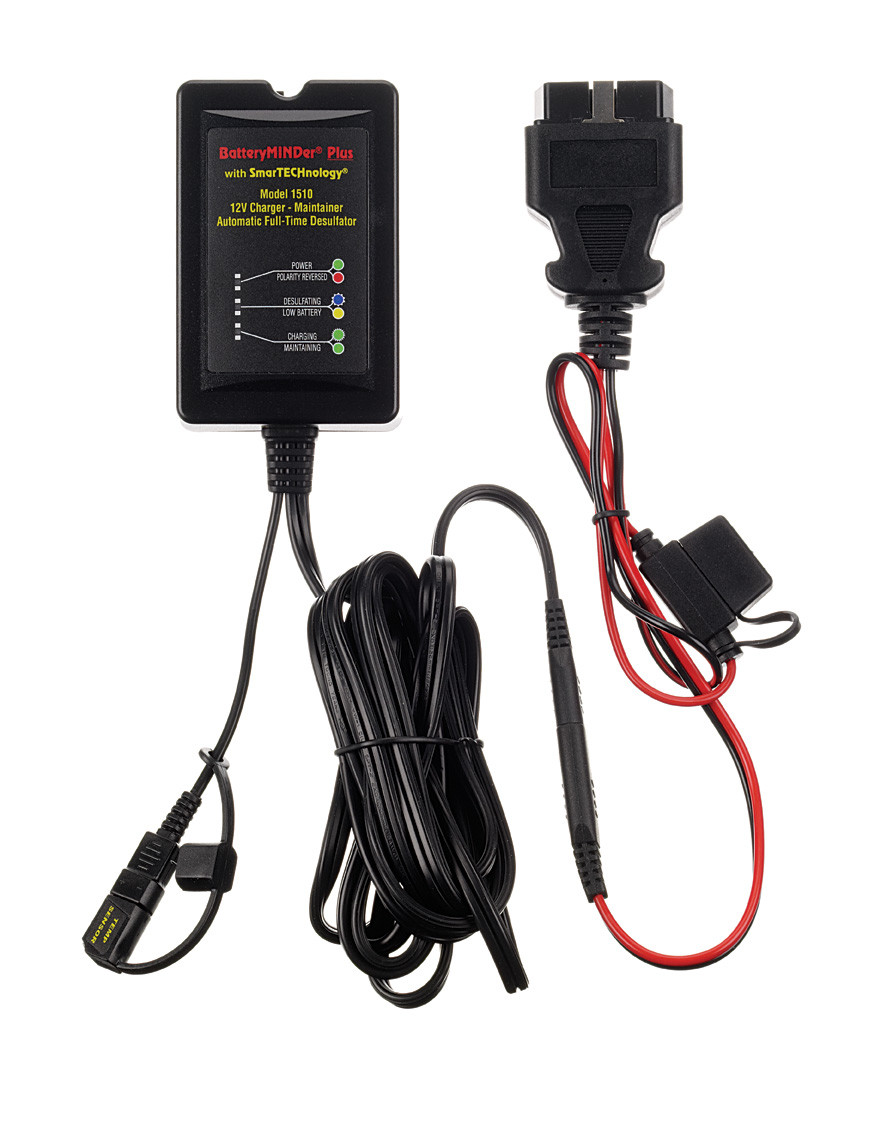
Some BatteryMINDer chargers include an external temperature sensor. Some Battery Tender products use temperature-related protections or compensation, depending on the model.
If your battery lives in a hot garage or cold shed, temperature management deserves more attention. Heat is especially hard on lead-acid batteries and can shorten their service life.
BatteryMINDer vs Battery Tender for Different Vehicles
The best choice changes with the vehicle and battery.
Cars and trucks
For a daily-driven car, either brand can work well as long as the charger has the correct voltage and enough output. Battery Tender is often attractive for simple maintenance. BatteryMINDer may be a better fit for an older vehicle that sits for long periods.
A vehicle with parasitic drain may still lose charge while connected to a small maintainer. In that case, use a charger with enough capacity or have the electrical system checked.
Motorcycles
Motorcycles often use small AGM or conventional lead-acid batteries. A low-current Battery Tender or BatteryMINDer can be suitable for winter storage.
Make sure the charger does not exceed the battery maker’s recommendations. Also, confirm that the battery is not a lithium battery before using a lead-acid charging mode.
Boats and recreational vehicles
Marine and RV batteries may be larger and may use deep-cycle designs. They can require more charging time than a small starter battery.
For these applications, compare the charger’s output, battery bank size, and charging profile. One small maintainer may not be enough for a large bank of batteries.
Classic and collector vehicles
Classic vehicles often sit for long periods and may have older wiring. BatteryMINDer can appeal to owners who want desulfation and temperature monitoring. Battery Tender can be a good choice for owners who want a familiar, simple maintainer.
Use an inline fuse when recommended. Keep the charger away from fuel, water, and moving engine parts.
Lawn equipment and powersports
For riding mowers, generators, ATVs, and similar equipment, a small automatic maintainer is often enough. The key is matching the charger to the battery size and type.
A common mistake is leaving a charger connected to a battery with a loose or dirty terminal. Clean connections allow the charger to read voltage correctly and reduce heat at the connection point.

BatteryMINDer vs Battery Tender: Safety Comparison
Battery chargers are useful tools, but batteries can release hydrogen gas during charging. Lead-acid batteries can also contain corrosive electrolyte.
Follow these safety steps:
• Charge in a well-ventilated area.
• Keep sparks, cigarettes, and open flames away from the battery.
• Inspect the case for cracks, swelling, or leaks.
• Stop charging if the battery becomes unusually hot.
• Check polarity before connecting the charger.
• Use the correct charger mode for the battery chemistry.
• Keep cables away from belts, fans, exhaust parts, and sharp edges.
• Do not cover the charger during operation.
• Follow the vehicle and charger manuals.
Both BatteryMINDer and Battery Tender include safety protections on many models, such as short-circuit protection, reverse-polarity protection, and automatic control. Features differ by unit, so do not rely on the brand alone.
A swollen battery is not a normal charging problem. It is a warning sign. Disconnect power safely and replace the battery after checking the equipment.
Cost, Warranty, and Ease of Use
Battery Tender often has a broad range of products at different prices. This makes it easy to find a basic unit for a motorcycle or a stronger charger for a car.
BatteryMINDer may cost more when the model includes a temperature sensor, desulfation mode, or advanced battery-care functions. The extra cost may be worthwhile for a seasonal vehicle or a battery that needs closer monitoring.
When comparing prices, look beyond the charger itself:
• Is a temperature sensor included?
• Does it include ring-terminal and clip leads?
• Is the cable long enough?
• Does it support your battery chemistry?
• What is the warranty period?
• Is the unit rated for your charging environment?
A cheaper charger is not a bargain if it cannot support your battery. In my experience advising people on stored vehicles, the most common buying mistake is choosing by price or brand color instead of checking voltage, chemistry, and amperage first.

BatteryMINDer vs Battery Tender: Which One Should You Buy?
Choose BatteryMINDer if:
• You want desulfation or recovery features.
• Your vehicle sits for long periods.
• You store a battery in a changing climate.
• You want a temperature sensor on a compatible model.
• You are maintaining older lead-acid batteries.
Choose Battery Tender if:
• You want a simple automatic maintainer.
• You need a widely available charger.
• You are maintaining a motorcycle, car, ATV, or lawn mower.
• You prefer a straightforward setup.
• You want several output and battery-type options.
Choose neither until you verify:
• The battery voltage
• The battery chemistry
• The charger’s output current
• The recommended battery capacity
• Whether the battery is damaged
For many owners, Battery Tender is the easy default. For owners focused on long-term lead-acid care, BatteryMINDer may offer more useful tools.
How to Use a Battery Maintainer Correctly
Using a quality charger does not guarantee good results if the connection is poor. Follow this basic process:
-
Read the charger and battery manuals.
-
Inspect the battery for swelling, leaks, cracks, or corrosion.
-
Clean dirty terminals with the correct battery-cleaning method.
-
Confirm the charger voltage matches the battery.
-
Select the correct chemistry or battery mode.
-
Connect the positive lead and then the negative lead, unless the manual says otherwise.
-
Plug in the charger and check the status lights.
-
Place the charger where it will stay dry and cool.
-
Check the battery and charger from time to time.
-
Disconnect the power before removing the leads.
Do not use a maintainer on a battery that cannot hold voltage. If the charger remains in bulk mode for an unusually long time, the battery may be deeply discharged or damaged.
A vehicle that drains a battery overnight may have a parasitic draw. The charger can hide the problem for a while, but it will not repair the cause.
Common Mistakes to Avoid
Using the wrong battery mode
AGM, gel, flooded lead-acid, and lithium batteries do not always use the same charging profile. Selecting the wrong mode can cause poor charging or battery damage.
Expecting a maintainer to revive every battery
A charger may recover a battery with mild sulfation. It cannot reverse all forms of battery failure.
Leaving a damaged battery connected
A leaking, cracked, or swollen battery should not remain on charge. Replace it and inspect the charger before using it again.
Ignoring cable placement
Loose cables can create resistance and heat. Keep connectors clean and secure.
Comparing charger amperage incorrectly
A 1.25-amp charger and a 4-amp charger serve different needs. Compare similar models when judging BatteryMINDer vs Battery Tender.
Treating all lithium batteries as the same
Lithium iron phosphate batteries often need a charger designed for lithium use. Never assume a lead-acid charger is suitable.
Battery Life: What a Charger Can and Cannot Do
A maintainer can reduce the harm caused by long periods of low charge. This matters because lead-acid batteries tend to sulfate when left partly discharged.
A charger can also help keep a battery ready for use. It may reduce repeated deep discharge, which is hard on many starter batteries.
But battery life also depends on:
• Heat exposure
• Vibration
• Charging system health
• Driving habits
• Battery quality
• Terminal condition
• Depth and frequency of discharge
• Storage time
A charger is one part of battery care. It is not a cure for poor electrical connections or an aging battery.
BatteryMINDer vs Battery Tender should therefore be viewed as a maintenance choice, not a replacement for regular battery testing.
Frequently Asked Questions About BatteryMINDer vs Battery Tender
Is BatteryMINDer better than Battery Tender?
Neither brand is always better. BatteryMINDer may be better for desulfation, temperature monitoring, and long-term lead-acid care, while Battery Tender may be better for simple automatic maintenance.
Can BatteryMINDer and Battery Tender stay connected all winter?
Many compatible models are designed for long-term maintenance charging. The battery must be healthy, the charger must match its chemistry, and the setup must stay dry, ventilated, and safe.
Does BatteryMINDer really remove sulfation?
Some BatteryMINDer models use desulfation technology that may help batteries with mild sulfate buildup. It cannot reliably repair a battery with severe internal damage, a shorted cell, or broken plates.
Can I use Battery Tender on an AGM battery?
You can use a Battery Tender model that specifically supports AGM batteries. Check the label and manual because not every Battery Tender charger has the same charging profile.
Can I use BatteryMINDer on a lithium battery?
Only use a BatteryMINDer model approved for your lithium battery type. A lead-acid charging mode may not be safe or suitable for lithium batteries.
Which charger is better for a motorcycle?
Both can work well for motorcycles when the voltage, chemistry, and charging current match the battery. Battery Tender is popular for simple motorcycle maintenance, while BatteryMINDer may appeal to riders who want extra battery-care features.
Will a battery maintainer charge a completely dead battery?
It may charge a deeply discharged battery if the charger can detect it and the battery is still healthy. If the battery has very low voltage or internal damage, the charger may refuse to start, and replacement may be necessary.
Does BatteryMINDer vs Battery Tender matter for a daily driver?
The difference is usually small for a healthy battery in a vehicle used often. A maintainer is more useful when the vehicle sits for weeks, has a small electrical drain, or is stored seasonally.
Conclusion
BatteryMINDer vs Battery Tender comes down to your battery, your storage habits, and the features you value most. Battery Tender is usually the simpler choice for reliable automatic maintenance. BatteryMINDer is often the stronger option for lead-acid battery care, desulfation support, and temperature-aware storage.
Before buying, confirm the battery voltage, chemistry, size, and condition. Pick the charger that fits those details rather than choosing by brand alone. Explore the manufacturer’s current model guides, compare compatible units, and share your experience if you have used BatteryMINDer or Battery Tender.