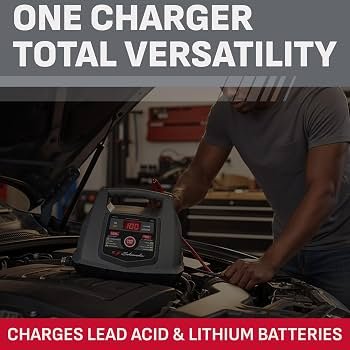
Schumacher SC1281 Vs NOCO Genius10: Which Charger Wins?
The NOCO Genius10 is safer for smart, gentle charging, while the Schumacher SC1281 wins for speed and engine starts.
Choosing between the Schumacher SC1281 vs NOCO Genius10 depends on more than amp ratings. Both are smart battery chargers, but they serve different drivers: the SC1281 is a powerful garage tool for quick charging and engine starting, while the Genius10 is a compact maintainer for cars, trucks, motorcycles, boats, and many lithium batteries. This guide compares their real strengths, limits, safety features, charging speed, battery support, and best use cases so you can buy with confidence.

Schumacher SC1281 vs NOCO Genius10 at a glance
The Schumacher SC1281 and NOCO Genius10 are automatic battery chargers for 6 volt and 12 volt systems. They monitor battery voltage and adjust the charge to reduce the risk of overcharging.
The biggest difference is output. The SC1281 offers much more power for larger batteries and emergency starting. The Genius10 provides a steady 10 amp charge and focuses on safe, accurate charging in a small body.
| Feature | Schumacher SC1281 | NOCO Genius10 |
|---|---|---|
| Main use | Fast charging and engine starting | Smart charging and maintenance |
| Battery voltage | 6V and 12V | 6V and 12V |
| Maximum listed charge rate | Up to 30A | 10A |
| Engine start function | Yes, high-current engine start mode | No direct engine start mode |
| Battery types | Common lead-acid batteries | Lead-acid and compatible 12V lithium batteries |
| Battery maintenance | Yes | Yes |
| Repair or reconditioning mode | Limited compared with NOCO | Yes, depending on battery and mode |
| Size and portability | Larger and heavier | Smaller and lighter |
| Best for | Cars, trucks, work vehicles, weak batteries | Daily vehicles, powersports, storage, and lithium batteries |
The SC1281 is closer to a compact shop charger. The Genius10 is closer to a smart battery caretaker. Neither is automatically better for every driver.

Schumacher SC1281 review
The Schumacher SC1281 is a 6V and 12V automatic charger designed for people who need more charging power. It is often chosen for cars, pickup trucks, SUVs, tractors, and other vehicles with larger lead-acid batteries.
Its major advantage is the higher charge output. A 30 amp charge mode can restore a weak battery faster than a 10 amp charger, although the actual time depends on battery size, condition, temperature, and how deeply it is discharged.
Key Schumacher SC1281 features
The SC1281 commonly includes several useful modes:
• Automatic 6V and 12V charging
• A 30 amp boost or rapid-charge mode
• A high-current engine start function
• Alternator testing on supported versions
• Reverse connection protection
• Automatic voltage monitoring
• Support for standard lead-acid, AGM, and gel batteries
The engine start feature is useful when a vehicle battery is low but not completely damaged. It is not the same as a modern lithium jump starter. The charger normally needs to be connected to a suitable power outlet and may need a short charging period before the start mode works.
What the SC1281 does well
The strongest reason to choose the SC1281 is speed. If a family car has a large battery that is low after sitting for weeks, the SC1281 can put energy back into it much faster than a 10 amp maintainer.
It also suits people who work on several vehicles. A home mechanic, small farm owner, or repair shop may value the extra output and engine-start setting more than compact size.
The Schumacher SC1281 can also be a good choice when a vehicle uses a 6V battery. Many modern smart chargers focus on 12V systems, while the SC1281 supports both common voltage ranges.
Limits of the SC1281
The SC1281 is not designed for every battery chemistry. Always check the manual and the battery label before connecting it to lithium iron phosphate, or LiFePO4, batteries.
It is also larger and less travel-friendly than the Genius10. The fan, cables, and higher current output may feel excessive if your only goal is to maintain a motorcycle battery in winter.
One important safety point is that a charger cannot repair a battery with a shorted cell, severe plate damage, or a failed internal connection. A “fully charged” reading may appear briefly on a worn battery, but the battery can still fail a load test.

NOCO Genius10 review
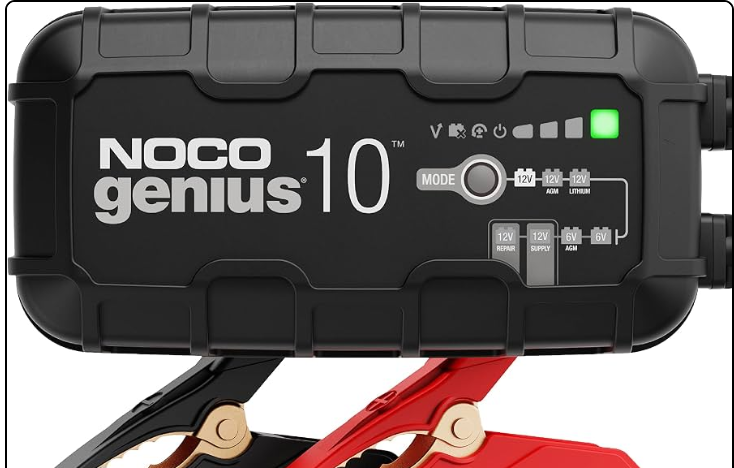
The NOCO Genius10 is a compact 10 amp smart charger for 6V and 12V batteries. It is built for accurate charging, long-term maintenance, and broad battery compatibility.
The Genius10 is popular with car owners who want one charger for a daily driver, motorcycle, boat, ATV, or stored vehicle. It can also support compatible 12V lithium batteries, which gives it an advantage over many traditional lead-acid chargers.
Key NOCO Genius10 features
The Genius10 typically provides:
• 6V and 12V charging modes
• A 10 amp maximum output
• Automatic charging control
• Lead-acid, AGM, gel, and maintenance-free battery support
• A lithium mode for compatible 12V lithium batteries
• Battery repair or force-charge functions
• Temperature-aware charging control
• Spark-resistant connection design
• Reverse-polarity protection
• An IP65-rated housing for resistance to dust and water spray
The lithium mode matters because lithium batteries need a different charging profile from lead-acid batteries. Never select lithium mode for a battery that is not designed for it.
What the Genius10 does well
The Genius10 is easy to store in a vehicle or workshop drawer. Its simple controls and clear indicators make it friendly for first-time users.
It is also a strong choice for maintenance charging. For example, if you store a classic car for three months, the Genius10 can keep the battery at a healthy charge without the constant attention that a basic trickle charger may require.
The Genius10 is quieter and less bulky than many high-output chargers. It works well in small garages, apartments with approved outdoor outlets, and workshops where space matters.
Limits of the Genius10
The 10 amp output is slower than the SC1281’s high-current modes. If a large truck battery is nearly flat, the Genius10 may need many hours to restore it.
The Genius10 does not provide the same direct engine-start function as the SC1281. It may charge a weak battery enough to start the vehicle, but it is not a substitute for a jump starter or high-current starting charger.
The lithium feature also has limits. The Genius10 is intended for compatible 12V lithium batteries with the proper battery management system. It should not be used to charge unknown lithium packs or damaged batteries.

Charging speed comparison
Charging time depends on battery capacity and condition. A useful estimate is:
Charging time in hours = battery capacity in amp-hours ÷ charger output in amps
Real charging takes longer because the charger slows down near full charge. Energy loss, battery age, temperature, and the charger’s absorption stage also affect the result.
For a healthy 60 amp-hour battery:
• A 10 amp charger may need roughly 7 to 9 hours from a low state of charge.
• A 30 amp charger may need roughly 3 to 5 hours under similar conditions.
These are estimates, not promises. A deeply discharged battery may refuse to accept a high current. A damaged battery may never reach a stable full-charge state.
The Schumacher SC1281 is the clear winner for faster charging. The NOCO Genius10 is better when speed is not the main concern and careful maintenance matters more.

Engine starting: which charger is better?
The Schumacher SC1281 wins this category because it includes a high-current engine start feature. This can help start a vehicle when the battery is weak but still usable.
Use the engine-start mode only as directed in the manual. Connect the clamps correctly, use a properly rated outlet, and keep the charger away from fuel vapors. Do not treat this feature as a way to rescue a battery with physical damage.
The NOCO Genius10 does not compete directly here. It is a charger, not a traditional engine-start booster. If your main problem is being stranded with a dead battery, a dedicated jump starter may be a better emergency tool.

Battery compatibility and chemistry
Battery chemistry is one of the most important differences in the Schumacher SC1281 vs NOCO Genius10 decision.
Lead-acid batteries
Both chargers are suitable for many lead-acid batteries, including flooded, AGM, and gel designs when the correct mode is selected. Lead-acid batteries are common in cars, trucks, boats, lawn tractors, and older motorcycles.
Flooded batteries may release gas while charging. Charge them in a well-ventilated space and keep sparks, flames, and cigarettes away from the battery.
AGM batteries
AGM batteries often need a charging profile that differs from a basic flooded battery. The Genius10 makes battery-type selection clear, while the SC1281 may use automatic logic or a specific AGM setting depending on the exact version.
Check the battery label and the charger manual. Choosing the wrong mode can reduce battery life.
Lithium batteries
The NOCO Genius10 has an advantage if you own a compatible 12V lithium battery. Its lithium mode is designed for supported lithium-ion batteries, usually LiFePO4 batteries used in vehicles, boats, powersports, and off-grid systems.
The Schumacher SC1281 should not be assumed to support lithium batteries. Unless the official manual for your exact unit clearly lists lithium compatibility, use a charger made for lead-acid batteries only.

Safety comparison
Both chargers include basic safety protections, but safe use still depends on the operator.
The Schumacher SC1281 and NOCO Genius10 can help protect against reverse polarity and improper connections. Smart charging also reduces the chance of overcharging when the charger remains connected after the battery reaches full charge.
Follow these habits with either unit:
-
Turn off the vehicle and remove heavy electrical loads.
-
Confirm the battery voltage before selecting a mode.
-
Connect the positive clamp to the positive terminal.
-
Connect the negative clamp to the negative terminal or an approved chassis ground.
-
Plug in the charger only after the clamps are secure.
-
Charge in a dry, ventilated area.
-
Inspect cables, clamps, and the battery case before use.
-
Stop if the battery becomes very hot, swells, leaks, or smells strongly.
Smart chargers are safer than old, simple chargers, but no charger can make a damaged battery safe. If the case is cracked or swollen, replace the battery instead of charging it.

Ease of use and portability
The NOCO Genius10 is easier to carry and store. Its compact design makes it practical for motorcycles, boats, classic cars, and vehicles kept away from a full workshop.
The Schumacher SC1281 is more suitable for a garage or service area. It has more powerful hardware, but that usually means a larger case and heavier cables.
In everyday use, the Genius10 feels like a tool you leave connected during storage. The SC1281 feels like a tool you bring out when a vehicle needs a fast charge or extra starting help.

Schumacher SC1281 vs NOCO Genius10: which is better for your vehicle?
Choose the Schumacher SC1281 if:
• You want faster charging.
• You need an engine-start function.
• You work on cars, trucks, tractors, or several vehicles.
• You use 6V and 12V lead-acid batteries.
• You prefer higher output over compact size.
Choose the NOCO Genius10 if:
• You want a small charger for home or travel.
• You need long-term battery maintenance.
• You own compatible 12V lithium batteries.
• You charge motorcycles, ATVs, boats, or classic cars.
• You prefer simple controls and broad smart-charging features.
For a typical car owner, the right choice depends on the most common problem. A driver who often finds a weak battery before work may prefer the SC1281. Someone who stores a vehicle for winter may prefer the Genius10.
Real-world examples
Imagine a pickup truck with a large AGM battery. It has been left with the interior lights on, and you need it running soon. The Schumacher SC1281 is the better fit because its higher output can restore usable charge more quickly.
Now imagine a motorcycle stored in a garage for four months. The NOCO Genius10 is the better match because it is compact, gentle, and designed for maintenance charging.
For a camper with a compatible 12V LiFePO4 battery, the Genius10 has another clear advantage. Its lithium mode may support that battery, while the SC1281 should not be used unless its manual specifically confirms lithium compatibility.
These examples show why amp rating alone does not settle the Schumacher SC1281 vs NOCO Genius10 question.
Practical lessons and mistakes to avoid
One common mistake is choosing the largest charger for every battery. High current is helpful for speed, but a small motorcycle battery may not need a 30 amp charge mode.
Another mistake is assuming that “automatic” means “safe for all batteries.” Automatic charging does not remove the need to select the correct voltage and chemistry.
A practical garage routine is simple:
• Test the battery before charging if it has been weak more than once.
• Clean corrosion from the terminals.
• Use the correct charging mode.
• Let the charger complete its cycle.
• Check whether the battery holds charge after sitting overnight.
• Replace the battery if it repeatedly loses voltage.
In professional service work, a charger is often used with a multimeter and a load tester. Charging alone can hide a weak battery for a short time, but a load test gives a better idea of starting performance.
Value, warranty, and long-term ownership
The Schumacher SC1281 may offer better value for users who need high output and engine-start support. The NOCO Genius10 may offer better value for users who need battery maintenance, lithium support, and a compact design.
Prices change by retailer, region, and promotion, so compare the current price with the features you will actually use. A cheaper charger is not a bargain if it lacks the battery mode you need.
Warranty coverage can also vary by product version and seller. Keep the receipt, register the product when required, and read the warranty terms before relying on the charger for commercial work.
Frequently Asked Questions about Schumacher SC1281 vs NOCO Genius10
Is the Schumacher SC1281 more powerful than the NOCO Genius10?
Yes. The SC1281 offers a higher charging output and includes an engine-start function, while the Genius10 is limited to a 10 amp charging rate. This makes the Schumacher better for fast charging and larger vehicle batteries.
Can the NOCO Genius10 charge a completely dead battery?
It may charge a deeply discharged battery if the battery can still accept energy and the charger detects it. If the battery voltage is extremely low, the charger may need a special force or repair mode, and a failed battery may not recover.
Can the Schumacher SC1281 charge lithium batteries?
Do not assume that it can. Use the SC1281 with lithium batteries only if the manual for your exact model clearly confirms compatibility and provides the correct charging instructions.
Which charger is better for AGM batteries?
Both can work with compatible AGM batteries when the correct mode is selected. The Genius10 is often easier for users who want a clearly defined AGM setting and smart maintenance cycle.
Does the NOCO Genius10 start a car?
No. The Genius10 is a battery charger and maintainer, not a high-current jump starter. It may charge a weak battery enough for a later start, but it does not provide the same direct engine-start function as the SC1281.
Which charger is better for winter storage?
The NOCO Genius10 is usually the better choice for winter storage because it is compact and designed for long-term maintenance. The Schumacher SC1281 can also maintain a battery, but its higher output may be unnecessary for this task.
Can either charger repair a bad battery?
Neither charger can repair serious internal battery damage. Repair modes may improve some lightly sulfated lead-acid batteries, but they cannot fix a shorted cell, cracked case, severe corrosion, or normal end-of-life wear.
Conclusion
The Schumacher SC1281 vs NOCO Genius10 comparison comes down to power versus flexibility. The SC1281 is the better choice for fast lead-acid charging, larger vehicles, 6V systems, and engine-start assistance. The Genius10 is the better choice for compact storage, long-term maintenance, AGM batteries, powersports use, and compatible 12V lithium batteries.
Before buying, identify your battery chemistry, voltage, size, and main use. Choose the SC1281 for speed and starting support, or choose the Genius10 for smart maintenance and broader modern battery support. Check your battery label and the latest product manual, then share this guide with anyone choosing a charger for their next vehicle.

One Comment