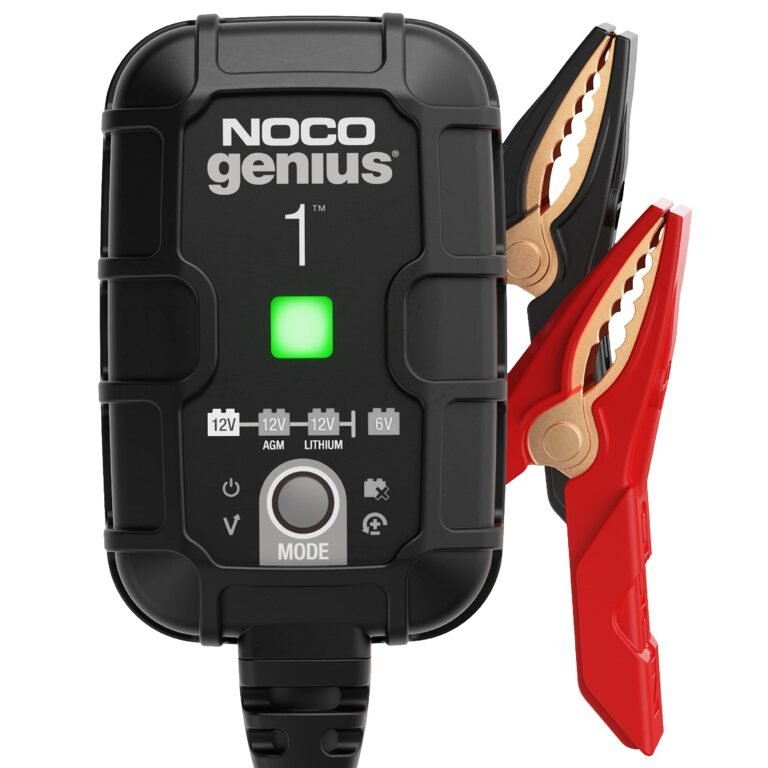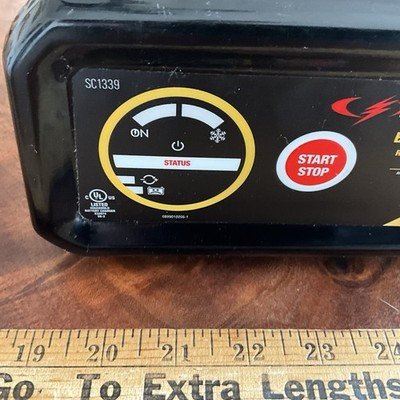
NOCO Genius5 Vs Schumacher SC1309: Which Charger Wins?
NOCO Genius5 is the better smart maintainer, while Schumacher SC1309 wins for fast charging and engine starting.
Choosing between the NOCO Genius5 vs Schumacher SC1309 depends on how you use your charger. The NOCO is small, quiet, and designed for safe long-term battery care. The Schumacher is a larger workshop-style unit with much more charging power and a strong engine-start function. This guide compares their features, charging speed, battery support, safety, cost, and real-world use so you can choose with confidence.

NOCO Genius5 vs Schumacher SC1309: Quick Comparison
The NOCO Genius5 and Schumacher SC1309 serve different users. The Genius5 is a compact smart charger and battery maintainer. The SC1309 is a heavier automatic charger with a high-current boost mode for vehicles that need faster service.
| Feature | NOCO Genius5 | Schumacher SC1309 |
|---|---|---|
| Main purpose | Smart charging and maintenance | Fast charging and engine starting |
| Charging output | Up to 5 amps | Up to 30 amps |
| Engine-start function | No | Yes, up to 200 amps |
| Battery voltage | 6V and 12V | 6V and 12V |
| Battery types | Lead-acid and lithium-ion, with limits | Common lead-acid battery types |
| Battery maintainer | Yes | Yes |
| Size | Small and portable | Large and shop-oriented |
| Best for | Cars, motorcycles, boats, ATVs, and storage | Cars, trucks, SUVs, and repair work |
| Lithium support | Yes, when correctly selected | Generally intended for lead-acid batteries |
| Noise level | Very quiet | Fan and transformer noise may be noticeable |
The largest difference is power. The NOCO Genius5 supplies a steady 5 amps, while the Schumacher SC1309 can deliver up to 30 amps in its rapid-charge setting. That does not make one universally better. It simply means they solve different battery problems.
The NOCO Genius5 vs Schumacher SC1309 comparison becomes easier when you think about your routine. Do you want to maintain a battery for weeks, or do you want to charge a weak battery quickly before starting a vehicle?
NOCO Genius5 Overview
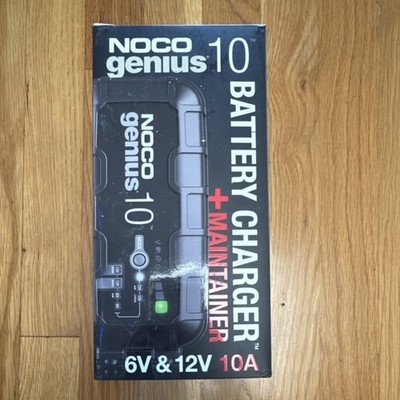
The NOCO Genius5 is a 6V and 12V smart battery charger. It can charge common lead-acid batteries, including flooded, gel, AGM, and enhanced flooded batteries. It also includes a lithium mode for compatible 12V lithium-ion batteries with a battery management system.
Its 5-amp output is suitable for many cars, motorcycles, lawn tractors, boats, ATVs, and recreational vehicles. It is not meant to act as a jump starter. Instead, it slowly restores a battery and then switches to maintenance mode when the battery is full.
Key NOCO Genius5 features include:
• Automatic voltage detection for supported 6V and 12V batteries
• Charging modes for lead-acid and lithium-ion batteries
• Battery maintenance for long storage periods
• A repair mode for some deeply discharged lead-acid batteries
• Reverse-polarity protection
• Spark-proof connection design
• An IP65-rated housing for protection from dust and water spray
• A compact body that fits easily in a glove box or tool bag
The Genius5 uses a controlled charging process. It checks the battery, supplies current, reduces the charge as the voltage rises, and then maintains the battery. This is useful for vehicles that sit unused, such as a classic car stored during winter.
A key limitation is its modest output. A 5-amp charger may need many hours to charge a large truck battery. It may also struggle with a battery that is badly damaged or below the charger’s detection threshold. In that case, the repair mode may help, but it cannot revive every failed battery.

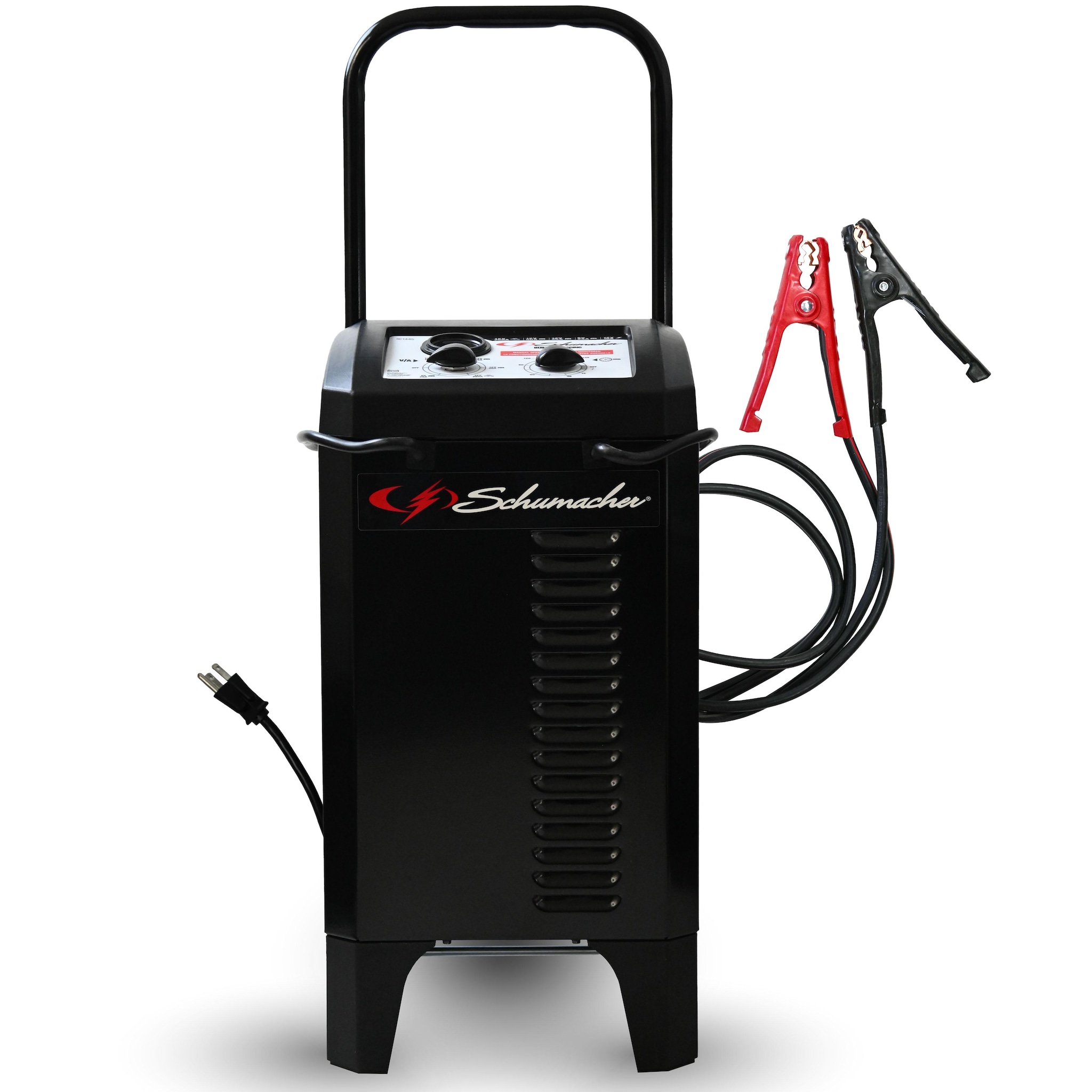
Schumacher SC1309 Overview
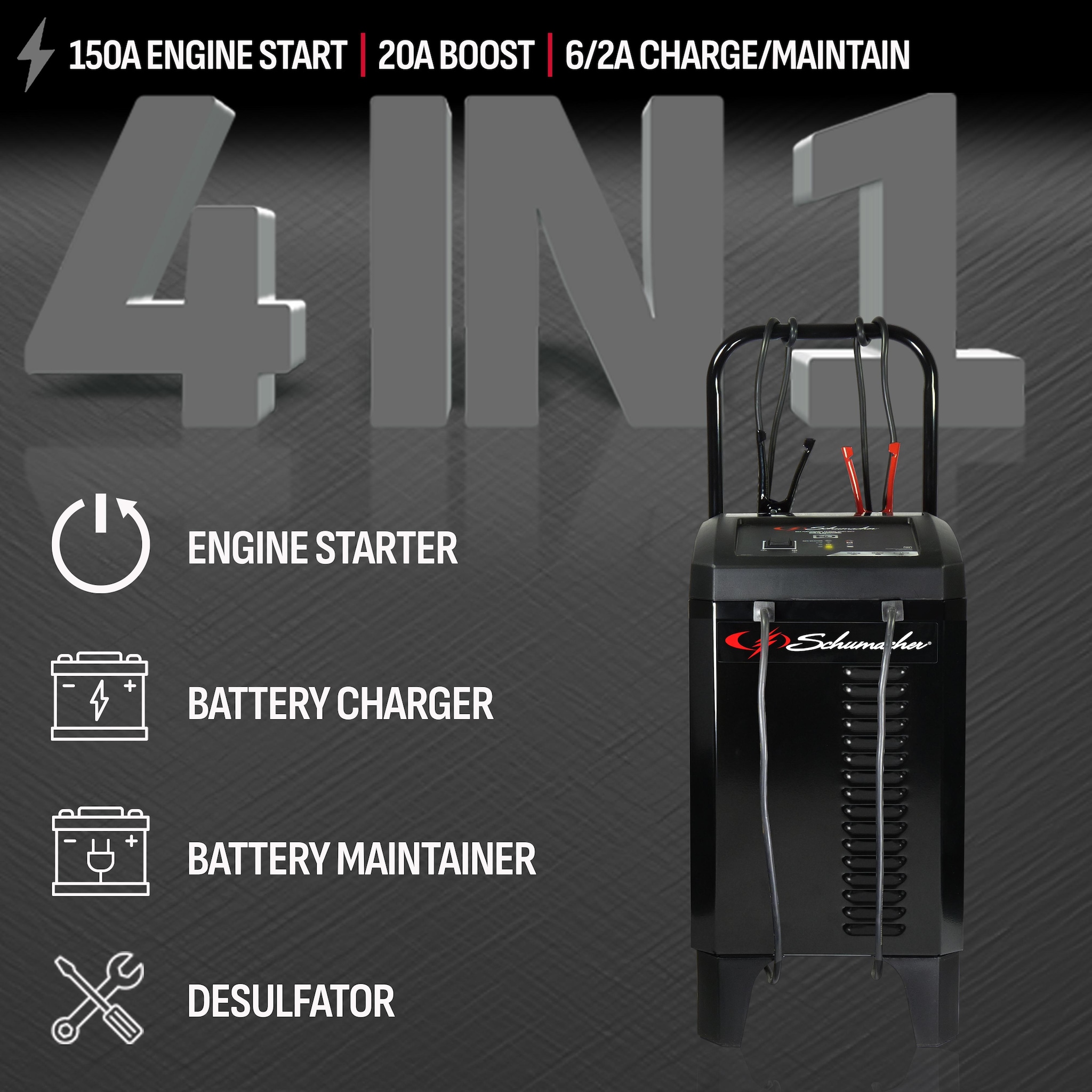
The Schumacher SC1309 is a high-output automatic battery charger with a built-in engine-start feature. It supports 6V and 12V batteries and offers charging settings that can deliver up to 30 amps. Its engine-start function can provide up to 200 amps for starting a vehicle with a weak battery.
This design suits a garage, farm, workshop, or driveway where charging speed matters. It can charge larger automotive batteries much faster than the NOCO Genius5 when the battery is healthy enough to accept a high current.
The Schumacher SC1309 commonly includes:
• Automatic charging control
• 6V and 12V selection
• High-output charging settings
• A 200-amp engine-start setting
• Alternator testing functions
• Reverse-polarity protection
• Overcharge protection
• A built-in display or indicator system
• Heavy-duty cables and clamps
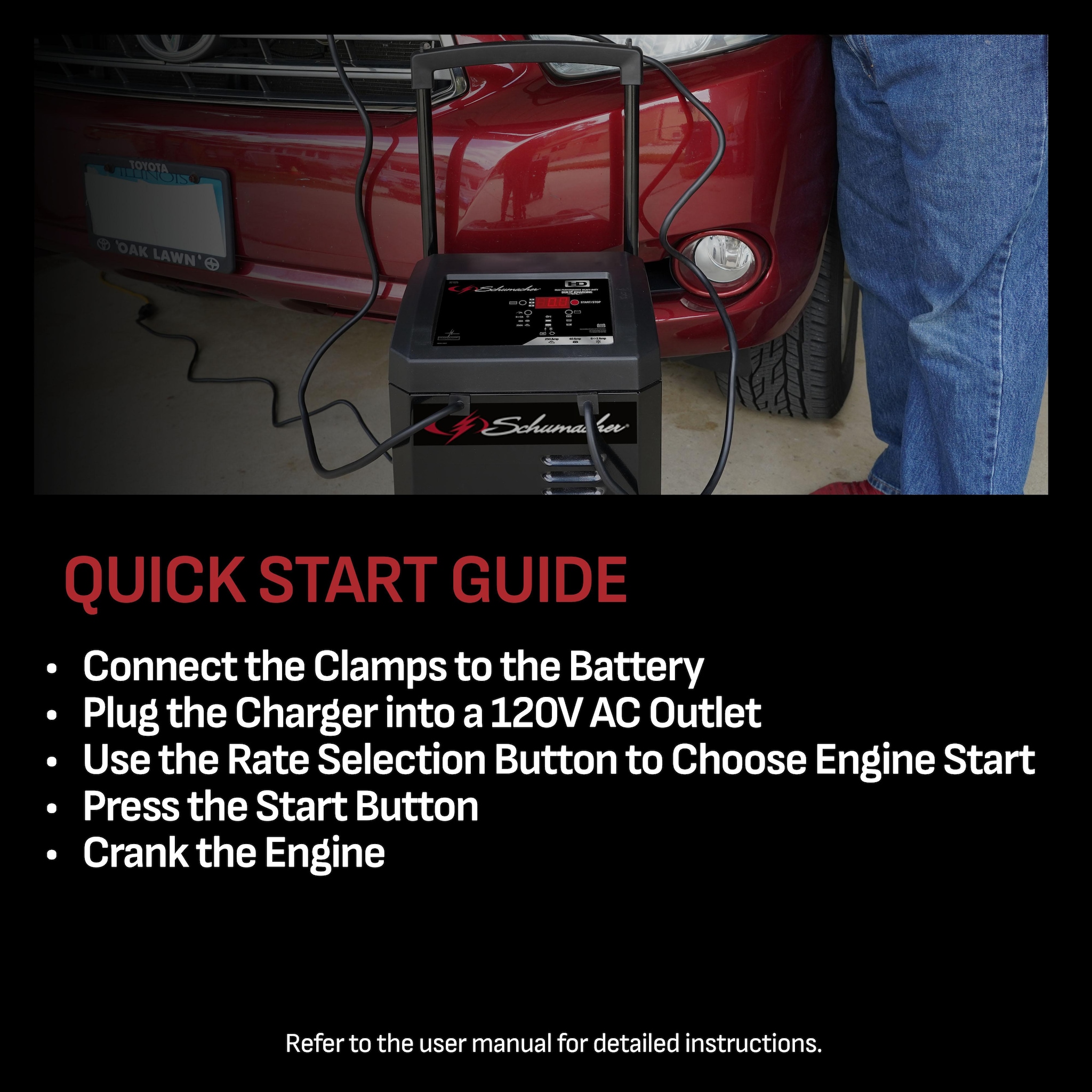
The engine-start mode is the feature that separates the SC1309 from the Genius5. It is not the same as a portable jump starter. The SC1309 usually needs to be connected to household AC power, and it should be used according to the manual’s time limits.
The SC1309 is also larger and less convenient to carry. It takes more space in storage and may be less practical for a motorcycle or small garage. It is best viewed as a service charger rather than a small maintenance tool.
Charging Speed: Which One Is Faster?
The Schumacher SC1309 is much faster when used with a suitable 12V automotive battery. Its 30-amp setting can restore a moderately discharged car battery in less time than the 5-amp NOCO Genius5.
Charging time still depends on several factors:
• Battery capacity in amp-hours
• Battery temperature
• Battery age and condition
• How deeply the battery is discharged
• The selected charging mode
• The vehicle’s electrical load
For example, a healthy 60 amp-hour car battery may take several hours with a 5-amp charger. The SC1309 may reduce that time when using its higher setting. The actual time will not be exact because the charger reduces current as the battery approaches full charge.
The NOCO Genius5 is slower, but slow charging is often gentler. It produces less heat and works well when the vehicle can remain connected overnight. For long-term storage, speed is less important than stable voltage control.
A common mistake is to assume that the highest amp setting is always best. High current can create heat and stress, especially in an old or damaged battery. Use the lowest practical setting when time allows, and follow the battery maker’s charging limits.

Engine Starting and Emergency Use
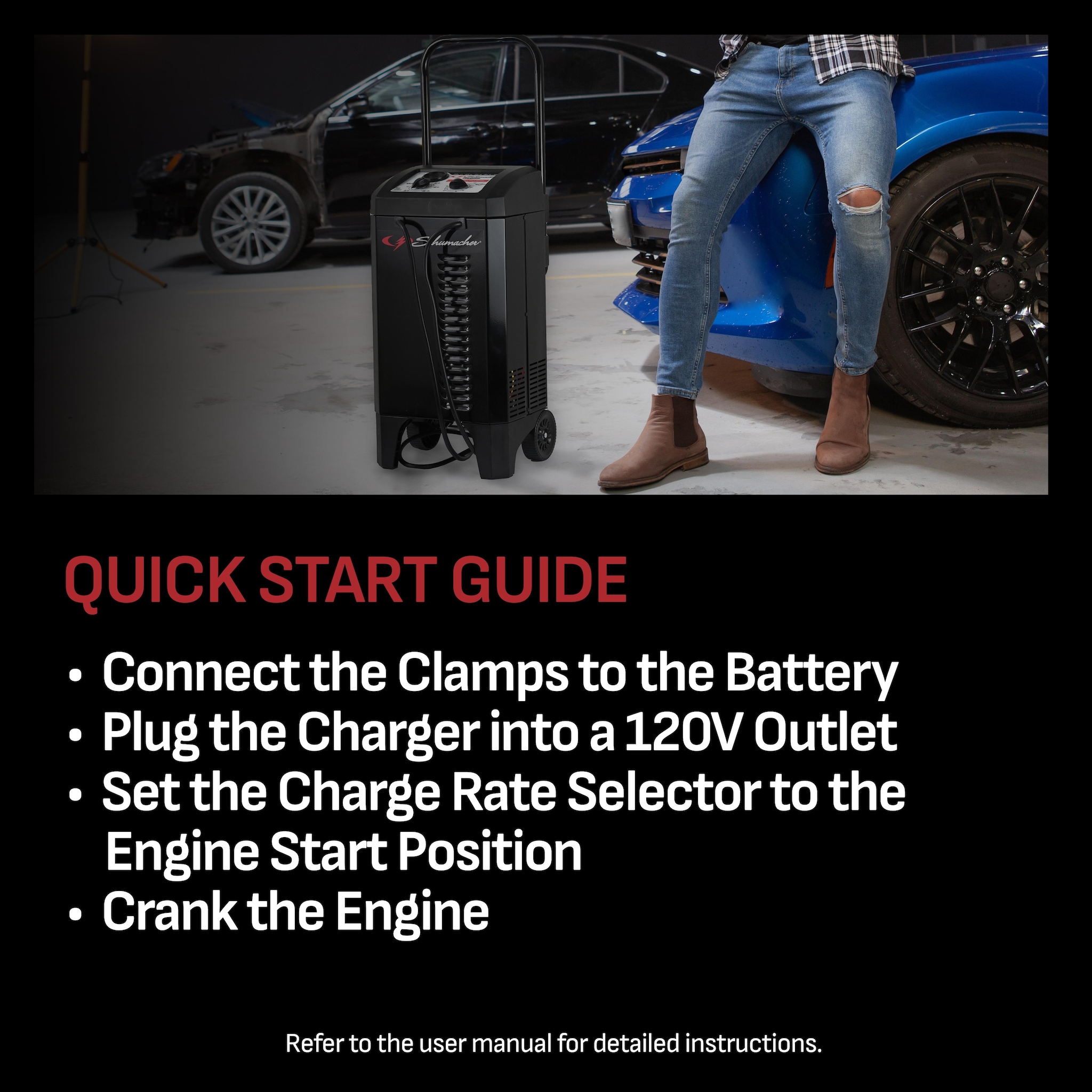
The Schumacher SC1309 is the clear winner for engine starting. Its 200-amp start setting is designed to assist a vehicle with a weak battery. It can be useful when a car will not crank but the battery still has some capacity.
The NOCO Genius5 does not provide an engine-start function. It charges the battery, but it does not deliver the short burst of current needed to crank an engine. If emergency starting is important, you need the Schumacher or a separate jump starter.
The SC1309 still has limits. It is not a magic solution for every no-start problem. A failed starter motor, bad alternator, damaged battery cable, or flooded engine may prevent the vehicle from starting even with extra current.
For safer use:
-
Check that the charger is set to the correct battery voltage.
-
Connect the clamps with the charger unplugged, unless the manual says otherwise.
-
Connect positive to positive and negative to the recommended ground point.
-
Keep the charger away from fuel vapors and water.
-
Use the engine-start setting only for the time listed in the instructions.
-
Let the charger cool between starting attempts.
Never use a charger in a closed space with poor airflow. Lead-acid batteries can release hydrogen gas while charging, and sparks near the battery can create a serious hazard.
Battery Compatibility
Battery compatibility is one of the most important parts of the NOCO Genius5 vs Schumacher SC1309 decision.
The NOCO Genius5 supports more battery types. It can work with many standard lead-acid designs and compatible 12V lithium-ion batteries. This makes it attractive for owners of motorcycles, boats, powersports vehicles, and newer equipment that uses lithium batteries.
The Schumacher SC1309 is mainly aimed at traditional automotive batteries. It is a strong match for flooded lead-acid, AGM, and similar 6V or 12V batteries. Do not assume that its lithium compatibility matches the NOCO. Check the current manual before connecting it to a lithium battery.
The battery chemistry matters because lithium batteries charge differently from lead-acid batteries. A charger must use the correct voltage profile and safety controls. Using the wrong mode can damage the battery or create a safety risk.
Before buying either unit, check:
• Battery voltage
• Battery chemistry
• Battery capacity
• Manufacturer charging instructions
• Whether the battery has a built-in management system
• Whether the charger supports the battery’s terminal type
The NOCO Genius5 vs Schumacher SC1309 comparison favors NOCO for mixed battery ownership. If you only maintain standard car and truck batteries, the Schumacher’s broader output may matter more than its chemistry options.
Battery Maintenance and Long-Term Storage
The NOCO Genius5 is better suited to long-term maintenance. Once the battery reaches the correct charge level, it can monitor the battery and provide small amounts of current as needed. This helps offset natural battery discharge during storage.
This feature is useful for:
• Classic cars
• Seasonal motorcycles
• Boats
• RVs
• Lawn equipment
• Backup vehicles
• Vehicles parked at airports or vacation homes
A maintainer should not replace basic battery care. Clean corrosion from the terminals, inspect the case for cracks, and make sure the battery is in a safe, ventilated area. Also check the charger from time to time instead of leaving any electrical device unattended for months.
The Schumacher SC1309 can also maintain a battery, but its larger design makes it less convenient for permanent connection. It works better when you bring it out for a charging session, then disconnect it after the battery is ready.
In my practical buying framework, this is where many shoppers make the wrong choice. They buy the bigger charger because its numbers look impressive, then discover that a small maintainer would better fit their storage routine. Choose the tool that matches your most common task, not just the highest amp rating.
Safety Features and Ease of Use
Both chargers include important safety protections, but their designs feel different.
The NOCO Genius5 is simple to carry and easy to place near a battery. Its compact cables and clear mode controls make it friendly for new users. Reverse-polarity and spark-proof features can reduce common connection mistakes, although they do not remove the need to connect the charger carefully.
The Schumacher SC1309 has a more traditional workshop design. Its larger clamps and higher output suit full-size vehicles. The display and controls provide useful information, but users must pay closer attention to the voltage and charging mode.
Neither charger should be treated as completely automatic in every situation. Automatic charging means the unit controls its charge cycle. It does not mean the user can ignore battery condition, ventilation, polarity, or cable placement.
Use these safety habits with either model:
• Read the charger and battery manuals first.
• Wear eye protection when working near a lead-acid battery.
• Keep metal tools away from the terminals.
• Do not charge a frozen, swollen, leaking, or cracked battery.
• Stop if the battery becomes very hot or produces a strong odor.
• Keep children and pets away from the cables.
The NOCO Genius5 vs Schumacher SC1309 safety difference is not dramatic when both are used correctly. The bigger risk comes from using the wrong battery mode or charging a battery that has already failed.

Size, Portability, and Build Quality
The NOCO Genius5 is the portable option. It can fit in a small storage compartment and is easy to move from one vehicle to another. Its sealed design also makes it more suitable for occasional outdoor use, although it should still be protected from heavy rain.
The Schumacher SC1309 is more like a shop machine. It has a larger case, heavier cables, and a design built around high output. That extra size is worthwhile if you work on several vehicles or need engine-start assistance.
The trade-off is simple:
• Choose NOCO for portability and easy storage.
• Choose Schumacher for power and workshop use.
• Choose NOCO for motorcycles and small vehicles.
• Choose Schumacher for trucks, SUVs, and frequent repair jobs.
• Choose NOCO when quiet operation matters.
• Choose Schumacher when charging time matters most.
A charger can last for years when stored dry and used within its limits. Keep clamps clean, coil cables loosely, and avoid pulling the charger by its wires. These small habits often matter more than the brand logo.
Price and Overall Value
The NOCO Genius5 often costs less than a high-output shop charger, but prices change by retailer and season. Its value comes from smart charging, battery maintenance, portability, and lithium support.
The Schumacher SC1309 may offer stronger value for someone who would otherwise need both a charger and an engine-start unit. Its higher output can save time when several vehicles need service.
Consider the cost of the complete setup, not only the purchase price. You may also need:
• A battery tester
• Replacement clamps
• A lithium-compatible charger
• A portable jump starter
• A long outdoor-rated extension cord
For a single daily driver, either charger may be enough. For a home mechanic, farm, or small workshop, the Schumacher’s extra power can justify the larger investment. For a seasonal vehicle owner, the NOCO’s maintenance function may deliver more useful value.
The best value in the NOCO Genius5 vs Schumacher SC1309 comparison comes from matching the charger to your actual needs. Paying for unused power is not a saving.
Which Charger Should You Buy?
Choose the NOCO Genius5 if:
• You want a compact battery maintainer.
• You own a motorcycle, ATV, boat, or classic car.
• You need support for compatible lithium-ion batteries.
• You store a vehicle for long periods.
• You prefer quiet operation and simple controls.
• You do not need an engine-start function.
Choose the Schumacher SC1309 if:
• You want faster charging.
• You work on cars, trucks, or SUVs.
• You need a high-current engine-start mode.
• You maintain several vehicles.
• You want a traditional workshop charger.
• You mainly use 6V and 12V lead-acid batteries.
For most people who want to protect one vehicle’s battery, I would choose the NOCO Genius5. It is easier to store, easier to use, and better for routine maintenance.
For a home garage or repair setting, I would choose the Schumacher SC1309. Its 30-amp charging output and 200-amp start function provide capabilities the Genius5 simply does not have.
The NOCO Genius5 vs Schumacher SC1309 choice is not really a contest between good and bad products. It is a choice between a compact smart maintainer and a powerful service charger.
Common Mistakes to Avoid
Many battery charger problems come from a poor diagnosis rather than a poor charger. A battery that repeatedly goes flat may have a parasitic drain, a weak alternator, loose terminals, or an internal failure.
Avoid these mistakes:
• Selecting 12V for a 6V battery.
• Using lithium mode on a lead-acid battery.
• Charging a battery that is frozen or damaged.
• Expecting a 5-amp charger to start an engine.
• Leaving a high-output charger connected without checking it.
• Treating a maintainer as a replacement for a new battery.
• Connecting clamps to dirty or loose terminals.
• Charging in a sealed garage with no ventilation.
A smart charger can maintain a healthy battery, but it cannot repair broken plates or replace lost capacity. If a fully charged battery loses power overnight, test the battery and the vehicle’s electrical system.
A basic multimeter can help, but a proper conductance battery tester gives better information about starting performance. A healthy charging system should also be checked while the engine runs. These tests can prevent you from blaming the charger for a problem elsewhere.
Frequently Asked Questions About NOCO Genius5 vs Schumacher SC1309
Is the NOCO Genius5 better than the Schumacher SC1309?
The NOCO Genius5 is better for compact charging, battery maintenance, and compatible lithium batteries. The Schumacher SC1309 is better for fast charging and engine starting, so the right choice depends on your main task.
Can the NOCO Genius5 start a car?
No, the NOCO Genius5 is a battery charger and maintainer, not a jump starter. It can restore charge over time, but it does not provide the high-current burst needed to crank an engine.
Can the Schumacher SC1309 charge a motorcycle battery?
Yes, it can charge suitable 6V or 12V motorcycle batteries when the correct mode and current setting are used. Use a low charging rate when possible, because small motorcycle batteries can be damaged by excessive current.
Does the Schumacher SC1309 support lithium batteries?
The SC1309 is mainly designed for traditional automotive lead-acid battery types. Check the current product manual before using it with lithium batteries, and use the NOCO Genius5 when confirmed lithium support is required.
Which charger is better for winter storage?
The NOCO Genius5 is usually the better choice for winter storage because it is compact and designed for long-term smart maintenance. The battery should still be inspected, charged in a ventilated area, and checked during storage.
Which charger works faster?
The Schumacher SC1309 works faster because it can deliver up to 30 amps, compared with the NOCO Genius5’s 5 amps. Actual charging time depends on battery size, condition, temperature, and depth of discharge.
Can either charger fix a dead battery?
Neither charger can guarantee a repair. A deeply discharged battery may recover with the correct repair process, but a battery with internal damage, a shorted cell, or severe sulfation may need replacement.
Conclusion
The NOCO Genius5 vs Schumacher SC1309 comparison comes down to purpose. The NOCO Genius5 is compact, gentle, easy to store, and well suited to smart maintenance. The Schumacher SC1309 offers far more charging power and adds an engine-start function for larger vehicles and workshop use.
Choose the Genius5 for long-term care and everyday convenience. Choose the SC1309 when speed, high output, and emergency starting matter more. Before buying, confirm your battery’s voltage and chemistry, then select the charger that fits your real routine.
Use this comparison as a checklist, inspect your battery before charging, and share your experience with either model in the comments.