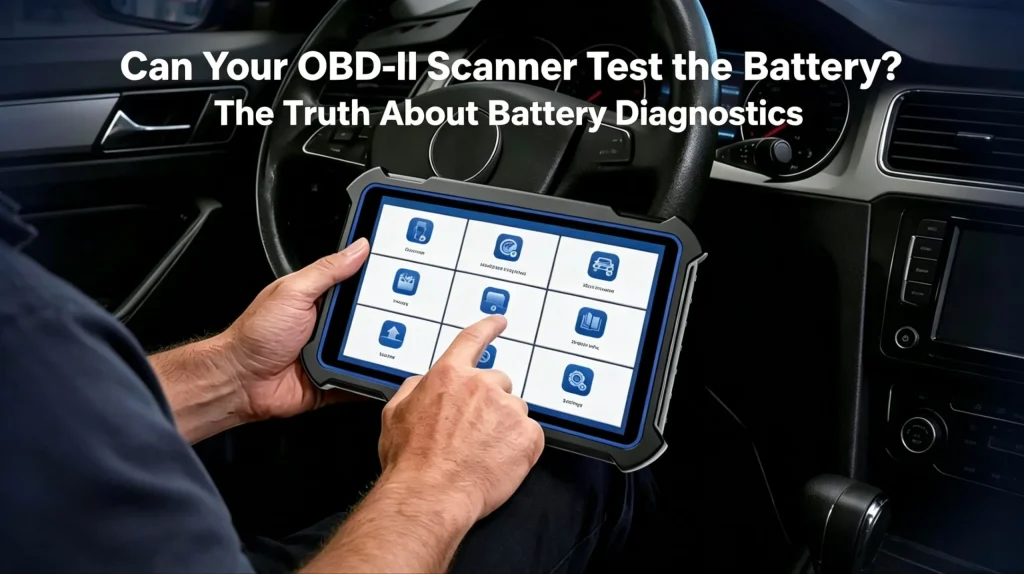
Can An OBD2 Scanner Test The Alternator: Simple Guide
An OBD2 scanner can spot charging issues, but it cannot fully test the alternator alone.
A scanner is a smart starting point, though. It can point you toward voltage problems, charging faults, and codes that suggest the alternator, battery, or wiring may be weak. If you want to know whether your alternator is truly healthy, you need to understand what an OBD2 scanner can see, what it cannot see, and how to confirm the diagnosis the right way.
How an OBD2 Scanner Relates to Alternator Testing
An OBD2 scanner is mainly a diagnostic tool for the vehicle’s computer system. It reads trouble codes, live data, and freeze frame data from modules like the engine control unit. That makes it very useful, but it is not the same thing as a dedicated electrical test tool.
In my experience, this is where a lot of drivers get confused. They plug in a scanner, see no alternator code, and assume the alternator is fine. That can be a costly mistake, because an alternator can still charge poorly without setting a code right away.
The short version is this:
• An OBD2 scanner can help detect charging system problems
• It may show voltage-related codes or abnormal live data
• It cannot directly measure alternator output under load as accurately as a multimeter or load tester

What an OBD2 Scanner Can Tell You About the Alternator
An OBD2 scanner can give you clues about the alternator through the vehicle’s charging data. Many modern cars monitor system voltage, battery state, and charging performance. If the alternator is undercharging or overcharging, the computer may store a related fault code.
Here are some common things a scanner can reveal:
• System voltage readings while the engine is running
• Stored or pending diagnostic trouble codes
• Charging system warnings from the ECU
• Battery management data on newer vehicles
• Evidence of voltage drops or unstable output
Some vehicles are especially helpful here. If the car has a smart charging system, the scanner may show alternator command data, battery current flow, or load control. That said, the scanner still depends on what the vehicle chooses to report.
A scanner is a bit like a weather app. It can tell you it is stormy, but it cannot stand in the rain and measure every drop itself.
What an OBD2 Scanner Cannot Test Directly
This is the part that matters most. An OBD2 scanner does not directly bench test the alternator. It cannot spin the alternator, check the diodes, measure ripple in the same way a specialist tool can, or fully confirm mechanical wear.
It also may miss problems such as:
• Worn brushes inside the alternator
• Failing diodes
• Loose belt tension
• Bad pulley bearings
• Intermittent wiring faults
• A weak alternator that still charges “enough” at idle
I have seen alternators that looked okay on a scanner but failed under real load. The voltage might appear normal in park, then drop badly when the headlights, blower motor, and rear defroster turn on. That is why a scan tool should be used as part of the diagnosis, not the final word.
Common Alternator-Related OBD2 Codes
An OBD2 scanner may show codes that point toward a charging system issue. These codes are not always proof that the alternator is bad, but they are strong hints.
Common examples include:
• P0560: System voltage malfunction
• P0562: System voltage low
• P0563: System voltage high
• P0620: Generator control circuit malfunction
• P0621: Generator lamp control circuit malfunction
• P0622: Generator field control circuit malfunction
These codes can point to the alternator, but they can also come from the battery, fuse box, wiring harness, ECU, or even a bad ground. In other words, the code is the start of the diagnosis, not the end of it.
Best Way to Test the Alternator
If you want a real answer, use the scanner and a few simple checks together. That is the most reliable method in the field.
A practical test plan looks like this:
-
Check battery voltage with the engine off
• A healthy fully charged battery usually reads around 12.6 volts -
Start the engine and check charging voltage
• Many systems should read around 13.5 to 14.8 volts -
Turn on electrical loads
• Headlights, blower motor, and rear defroster help reveal weak output -
Watch the scanner live data
• Look for voltage dips, charging control changes, or stored codes -
Inspect the belt and wiring
• A loose belt or corroded connection can mimic alternator failure -
Use a load tester or multimeter if needed
• This is the best way to confirm alternator performance
I always recommend checking the basics first. A bad battery can make a good alternator look bad, and a bad ground can create symptoms that feel like alternator failure. That lesson has saved me more than once.
Signs Your Alternator May Be Failing
Even without a scanner, your car often gives warning signs. These symptoms usually show up before the vehicle leaves you stranded.
Watch for these:
• Dim headlights
• Flickering interior lights
• Battery warning light on the dashboard
• Slow power windows
• Clicking sounds when starting
• Dead battery after driving
• Electronics acting strange or resetting
If you notice two or more of these, do not ignore them. A weak charging system can slowly drain the battery until the car will not restart. That is one of those problems that feels small at first, then becomes a big roadside headache.
Why the Battery and Alternator Are Often Confused
People often blame the alternator when the real issue is the battery, and sometimes the reverse is true. The battery starts the car. The alternator keeps it running and recharges the battery while you drive.
Here is the easy way to think about it:
• The battery is the starter
• The alternator is the power supplier
• The wiring is the highway between them
If the battery is old or weak, the alternator has to work harder. If the alternator is weak, the battery slowly drains. If the cables or grounds are poor, both can seem bad at the same time.
That is why an OBD2 scanner alone cannot always answer the question. It helps, but it does not replace a full charging system test.
When an OBD2 Scanner Is Enough
There are cases where a scanner gives you a pretty clear direction. If you see a voltage-related code, unstable live data, and obvious electrical symptoms, you are likely on the right path.
A scanner may be enough to:
• Confirm that a charging problem exists
• Show whether voltage is too low or too high
• Help decide whether to test the alternator next
• Save time before buying parts
If you are a DIY driver, this is a big advantage. The scanner can keep you from guessing. That said, it should still lead you to a real electrical test before you replace parts.
When You Need More Than an OBD2 Scanner
You need more than a scanner when the problem is vague, intermittent, or load-related. If the car starts fine in the morning but dies later, or if the voltage looks okay at idle but fails during driving, a scanner may not catch the full story.
You should go beyond the scanner if:
• The battery keeps dying with no clear code
• The alternator warning light comes and goes
• Voltage readings are borderline
• The car has smart charging software
• The symptoms happen only under load
A multimeter, battery tester, or alternator load test can uncover issues that the scanner cannot see. In repair work, that extra step often makes the difference between a correct fix and a parts-throwing guess.
Practical Tips From Real-World Diagnosis
A few habits make alternator diagnosis much easier. I learned these the hard way, and they can save time and money.
• Test the battery first, because a weak battery can mislead you
• Check belt condition and tension before replacing the alternator
• Inspect the main charging cable and ground connections
• Compare voltage at idle and at 2,000 RPM
• Test with electrical loads turned on
• Do not trust one reading alone
One mistake I see often is replacing the alternator because the battery light came on. Sometimes the issue is a blown fuse, corroded terminal, or poor ground strap. The alternator gets blamed, but it was never the real problem.
How Modern Cars Complicate Alternator Testing
Newer vehicles use smart charging systems that adjust alternator output based on demand. The alternator may not hold a constant voltage like older vehicles did. Instead, the ECU may reduce charging to improve fuel economy or increase charging under heavy load.
This means:
• Normal voltage may change during driving
• Scanner data can look unusual but still be correct
• A simple old-school voltage check may not be enough
• Manufacturer-specific scan data may be needed
That is why the question “Can an OBD2 scanner test the alternator?” has a careful answer. It can help a lot, but modern charging systems need a broader diagnosis.
Frequently Asked Questions of Can an OBD2 scanner test the alternator?
Can an OBD2 scanner tell if my alternator is bad?
It can suggest a problem, but it usually cannot confirm a bad alternator on its own. It may show voltage-related trouble codes or abnormal live data that point to charging system trouble.
What voltage should I see if the alternator is working?
Many vehicles charge between 13.5 and 14.8 volts with the engine running. The exact range can vary by make and model, especially on vehicles with smart charging systems.
Can a bad battery make the alternator look faulty on a scanner?
Yes, absolutely. A weak or failing battery can create low-voltage readings and charging codes that make the alternator seem like the problem when it is not.
Do I need a multimeter if I have an OBD2 scanner?
A multimeter is still very useful. The scanner gives you system data, but the multimeter gives you direct voltage readings that help confirm the problem.
Will an alternator always trigger a check engine light?
No, not always. Some charging problems trigger a warning light or a stored code, but others can fail quietly until the battery drains or electrical symptoms become obvious.
Can I drive with a bad alternator for a while?
Sometimes the car will keep running for a short time, but it is risky. Once the battery runs down, the vehicle can stall and leave you stranded.
Conclusion
An OBD2 scanner can absolutely help you diagnose alternator trouble, but it cannot fully test the alternator by itself. It is best used as a first step to look for voltage codes, charging data, and warning signs, then followed by a multimeter or load test for confirmation.
If your car is acting up, start with the scanner, then check the battery, wiring, belt, and charging voltage before buying parts. That simple process can save money, reduce stress, and help you fix the real problem faster. If this guide helped, keep learning about your vehicle’s charging system and share your experience or questions in the comments.