How To Use A Tow Strap: Safe Pulling Guide
A tow strap works by attaching two secure recovery points and pulling a stuck vehicle slowly and carefully.
Knowing how to use a tow strap can save you time, money, and a lot of stress when a car gets stuck in mud, snow, sand, or a ditch. I’ve seen a lot of roadside mistakes over the years, and most of them come from rushing, using the wrong gear, or skipping the safety basics. This guide walks you through how to use a tow strap the right way, so you can do it safely, confidently, and without turning a simple pull into a bigger problem.
What a tow strap is and when to use it
A tow strap is a strong, flexible strap made for pulling a vehicle that cannot move on its own. It is usually made from nylon or polyester and has reinforced loops or hooks at each end. People often use a tow strap for light recovery jobs, not for lifting or extreme off-road winching.
You should use a tow strap when a vehicle is stuck but still has working recovery points and can roll freely. Common situations include:
• A car stuck in mud
• A truck sunk in sand
• A vehicle trapped in snow
• A short pull from a shoulder or ditch
• A disabled vehicle that needs a slow tow to a safe spot
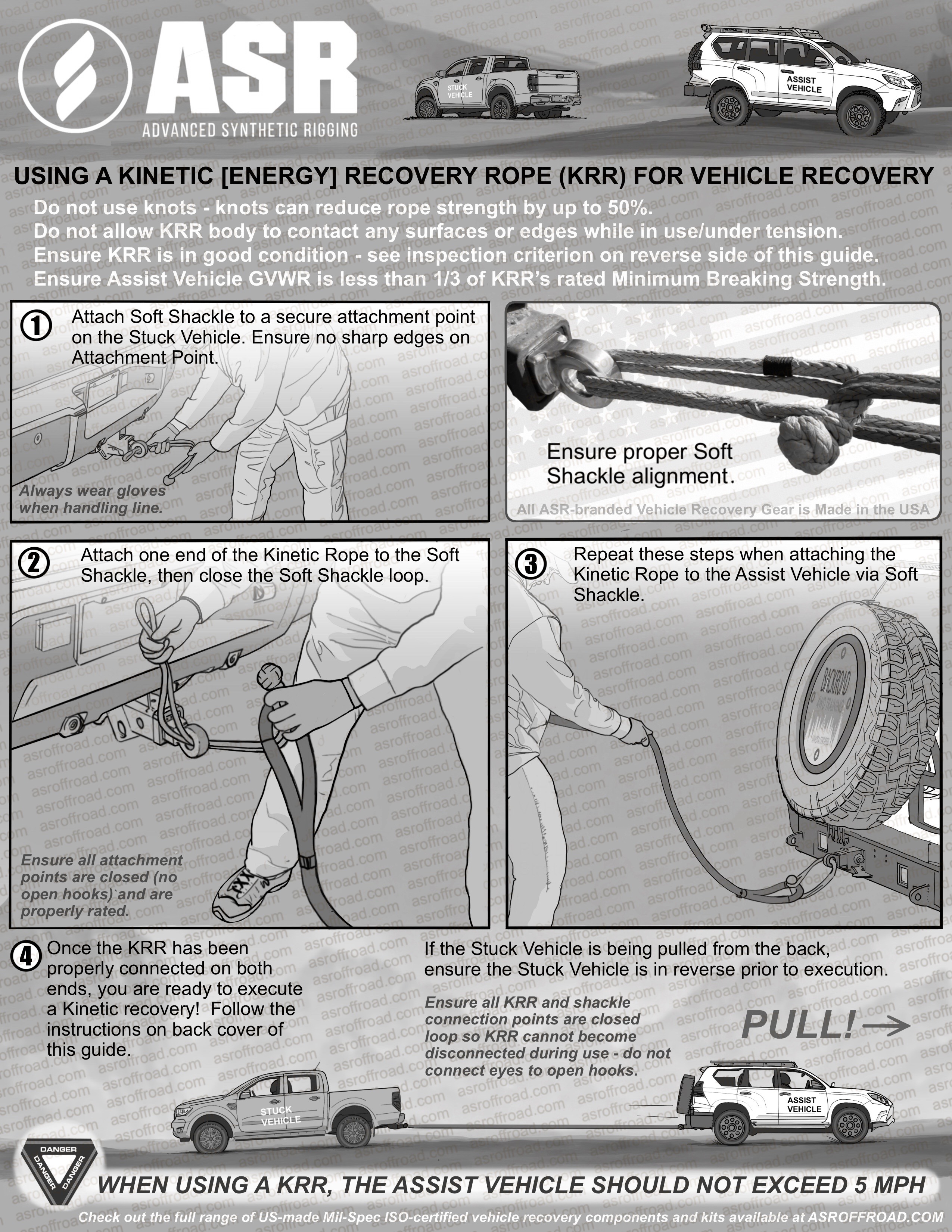
A tow strap is not the same as a tow rope or a recovery snatch strap. A tow strap is mainly for steady pulling, while a snatch strap is built to stretch and store energy for recovery pulls. That difference matters, because using the wrong tool can damage the strap or the vehicle.
Before you use a tow strap
Before anyone starts pulling, check the strap itself. Look for cuts, fraying, melted spots, broken stitching, or stretched webbing. If the strap looks worn out, do not use it.
Also check the vehicles. Both vehicles should have proper tow hooks or rated recovery points. Do not connect a tow strap to a bumper, suspension part, trailer hitch ball, axle, or control arm. Those parts can bend, break, or snap loose under load.
A few more things matter just as much:
• Make sure the pulling vehicle has enough weight and power
• Confirm both drivers can communicate clearly
• Clear people away from the tow line
• Plan the path so there are no poles, curbs, rocks, or traffic hazards
• Use gloves if possible, because wet webbing can be rough on your hands
I learned long ago that prep saves more time than speed. The first few minutes spent checking gear are usually the minutes that keep you from calling a tow truck later.
How to use a tow strap step by step
Using a tow strap is not hard, but it does need care. Think of it like tying a strong knot in a shoelace before a sprint. If one part is weak, the whole thing fails.
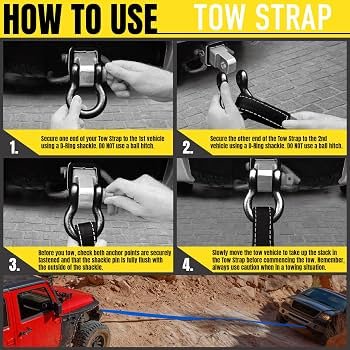
1. Find the correct recovery points
Locate the manufacturer-approved tow or recovery points on both vehicles. These are usually built into the frame or reinforced body structure. If you are unsure, check the owner’s manual before attaching anything.
Never guess at a connection point. A tow strap pulling from the wrong spot can rip sheet metal or break a component loose. That is one of the fastest ways to turn a stuck-car problem into a body shop problem.
2. Attach the strap securely
Thread each end of the tow strap through the recovery point or shackle if the strap design allows it. If you are using D-ring shackles, make sure they are properly rated for recovery use and tightened correctly.
Keep the strap flat and untwisted. A twisted strap can pull unevenly and wear faster. Make sure the connection is snug before moving the vehicle.
3. Remove slack slowly
The pulling vehicle should move forward very slowly at first. The goal is to take up slack gently, not yank the stuck vehicle. A slow start reduces shock load on the strap and the recovery points.
If the stuck vehicle has a driver, they should keep the wheels pointed straight and be ready to brake lightly if needed. Smooth teamwork matters more than force. In my experience, most recovery jobs go better when both drivers act like they are passing a fragile package, not dragging a dead weight.
4. Pull in a straight line
A tow strap works best when the pull is as straight as possible. Side pulls can strain the strap and yank the stuck vehicle in a bad direction. If the angle is wrong, stop and reset.
Keep the speed low and steady. The strap should stay under control the whole time. If the vehicle starts moving, continue slowly until it reaches firm ground.
5. Stop once the vehicle is free
As soon as the stuck vehicle is out, stop and disconnect the strap. Do not keep pulling just because the vehicle moved a little. Extra force after recovery can cause damage or create another stuck point.
Move both vehicles to a safe place before removing the strap. Then inspect the strap again for damage before packing it away.

Safety rules that matter every time
Tow strap safety is not optional. The biggest risk is stored energy in the strap if it fails. A snapped strap can whip backward fast enough to cause serious injury or vehicle damage.
Follow these safety rules every time:
• Use rated recovery gear only
• Never exceed the strap’s working load limit
• Keep bystanders far away
• Stand clear of the line of pull
• Do not wrap the strap around sharp edges
• Avoid using metal parts that are damaged or corroded
• Use a dampener or heavy blanket if local practice or conditions call for one
It also helps to check the vehicle manual and the strap label. Many manufacturers and safety guides stress that recovery should be done only from approved points and within the gear’s rated limits. That is not just a technical detail. It is the difference between controlled recovery and a dangerous launch.
Common mistakes to avoid
A lot of tow strap problems come from simple mistakes. I have seen people do nearly everything right and still make one small error that ruins the setup.
Avoid these mistakes:
• Using a tow strap with visible wear
• Hooking to a bumper or trailer ball
• Pulling too fast
• Using too much slack
• Letting people stand near the strap
• Using the strap for lifting
• Confusing a tow strap with a kinetic recovery strap
• Ignoring the vehicle’s weight and strap rating
Another common mistake is assuming “stronger is always better.” That is not true if the strap is too stiff, too short, or not suited for the job. The right strap is the one that matches the recovery task and the vehicle weight.
How to choose the right tow strap
Choosing the right tow strap is easier when you focus on a few key details. The most important one is the working load limit, which should match the type and weight of the vehicle you plan to recover. Light-duty cars need different gear than full-size trucks or SUVs.
Look for these features:
• Adequate working load rating
• Strong stitched loops or reinforced ends
• Durable webbing material
• Proper length for safe distance and control
• Clear labeling from the manufacturer
• Resistance to weather, dirt, and abrasion
For many drivers, a middle-length strap is easier to manage than an overly long one. Too short can limit movement. Too long can make communication and control harder.
If you off-road or travel in winter areas often, keep a recovery kit in the vehicle. A good kit usually includes a tow strap, gloves, D-ring shackles, and a flashlight. It is like a small safety toolbox you hope you never need.
Tow strap vs. tow rope vs. snatch strap
These terms get mixed up all the time, but they are not the same. A tow strap is usually meant for steady pulls and short recovery jobs. A tow rope may be similar in some cases, but the material and stretch can vary.
A snatch strap is designed to stretch more and help recover a vehicle that is deeply stuck. Because it stores energy, it must be used with extra care and the right technique. If you only need a simple pull from snow or loose dirt, a standard tow strap may be the better choice.
Here is the simple version:
• Tow strap: steady pull, short recovery, controlled use
• Tow rope: general term, may vary by design
• Snatch strap: stretches more, used for kinetic recovery
If you are unsure which one to use, read the product label. That small step can prevent a costly mistake.
Practical example of using a tow strap
Let’s say a sedan is stuck in a muddy parking area after heavy rain. The driver’s front wheels spin, but the car still rolls freely. A second vehicle with proper recovery points lines up directly in front.
The strap is connected to both approved tow points. The pulling vehicle moves forward slowly, just enough to remove slack. Once the strap tightens, it keeps a smooth pace until the sedan reaches dry pavement.
That is the kind of recovery that should feel boring. Boring is good. Boring means controlled, predictable, and safe.
Maintenance and storage tips
A tow strap lasts longer when you treat it well. Mud, grit, sun, and moisture can all shorten its life. After use, inspect it carefully before putting it away.
Good storage habits include:
• Letting the strap dry before storing it
• Keeping it clean and free of grit
• Rolling it neatly instead of stuffing it in a bag
• Storing it away from direct sunlight
• Checking the label and stitching before each use
If the strap has been overloaded or shock-loaded, replace it. Even if it looks fine, hidden damage can weaken the fibers. That is one of those things you do not want to learn the hard way.
Frequently Asked Questions of How to use a tow strap
Can you use a tow strap on a regular car?
Yes, you can use a tow strap on many regular cars if the vehicle has proper tow points. The key is to use the correct attachment points and a strap rated for the vehicle’s weight.
Is it safe to use a tow strap by yourself?
It can be done in some situations, but it is safer with two people and clear communication. Having one person drive and one person guide the recovery lowers the chance of mistakes.
Can a tow strap be used to tow long distance?
A tow strap is generally better for short recovery pulls, not long-distance towing. For longer towing, a proper tow bar or flatbed is usually the safer option.
What should I do if my strap gets muddy or wet?
Clean it gently, let it dry fully, and inspect it for damage before storing it. Mud and moisture can hide wear, so check the webbing and stitching closely.
How do I know if my tow strap is too weak?
Check the working load limit on the tag and compare it to the vehicle weight and recovery task. If the strap rating is unclear or missing, it is safer not to use it.
Can I attach a tow strap to a trailer hitch ball?
No, do not attach a tow strap to a trailer hitch ball. The ball can shear off under load and become a dangerous projectile.

Conclusion
Using a tow strap the right way is really about patience, good gear, and smart setup. When you choose proper recovery points, move slowly, and stay inside the strap’s limits, the job becomes much safer and easier. That simple approach can save your vehicle, your wallet, and maybe even your nerves.
If you are planning to keep a tow strap in your car, take a few minutes now to learn your vehicle’s recovery points and inspect your gear. That small bit of prep can make a big difference when the road gets messy. If you found this guide helpful, explore more recovery tips and share it with someone who drives in mud, snow, or rough weather.