How To Use A Kayak Roof Rack: Easy Loading Guide
A kayak roof rack secures your kayak to your vehicle safely, with proper loading, straps, and tie-downs.
If you want to drive to the water without worrying about your kayak shifting, scratching your car, or flying off at highway speed, learning how to use a kayak roof rack is essential. I’ve spent plenty of time loading boats in windy parking lots and on sleepy early mornings, and the same lesson always holds true: a good setup is only as safe as the way you use it. This guide walks you through the full process of using a kayak roof rack, from choosing the right carrier to strapping down your boat the right way, so you can travel with confidence and peace of mind.

What a kayak roof rack does
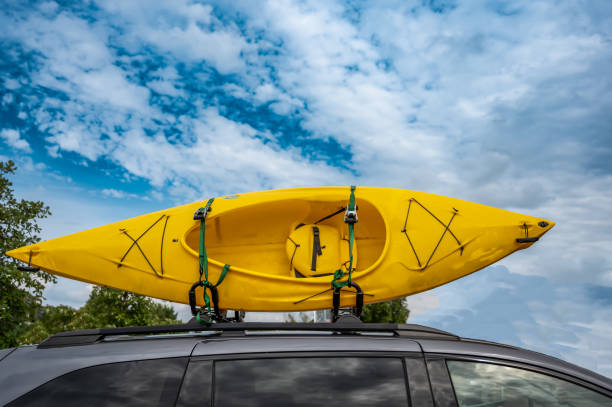
A kayak roof rack gives your vehicle a stable place to carry a kayak on top. It spreads the load across your roof system instead of letting the kayak rest loose on the vehicle.
Most setups use crossbars, plus a kayak carrier or padded mounts. Some systems hold the kayak flat, while others carry it on its side or at an angle. The right choice depends on your roof, your kayak shape, and how often you travel.
A kayak roof rack also helps protect your kayak from damage. Without one, the hull can rub, slide, or take stress in the wrong spots. That is why using a kayak roof rack the right way matters just as much as buying one.
Choosing the right kayak roof rack
The best kayak roof rack is the one that matches your vehicle and your kayak. A rack that works well on one SUV may not fit a sedan or a truck cab. Before you buy, check your roof type, crossbar shape, and load rating.
Here are the main types to know:
- J-style carriers: These hold the kayak on its side and save roof space. They are popular for solo paddlers and smaller vehicles.
- Stackers: These let you carry more than one kayak upright. They work well for group trips or families.
- Saddles: These cradle the kayak hull flat against the roof. They offer a very stable ride and are often a favorite for long trips.
- Foam block systems: These are simple and low-cost. They can work in a pinch, but they are not the best choice for frequent highway travel.
When I first started hauling kayaks, I tried to save money with the cheapest setup I could find. It worked once, maybe twice, but the noise, wobble, and stress were not worth it. A solid rack with proper crossbars made every trip easier and safer.
Also check weight limits. Your vehicle owner’s manual and rack instructions will list the maximum roof load. That number matters. A kayak roof rack cannot safely do its job if the total load goes over the limit.
How to use a kayak roof rack step by step
Using a kayak roof rack is simple once you learn the process. The key is to stay calm, go in order, and double-check every strap.
1. Prepare the rack and vehicle
Before loading, make sure the crossbars are tight and aligned. Inspect the carrier, straps, and tie-down points for wear, cracks, or frayed ends.
A quick walk-around helps catch problems early. I always do the same check before a trip, even if I used the rack just last weekend. That habit has saved me from loose buckles and one very annoying last-minute fix.
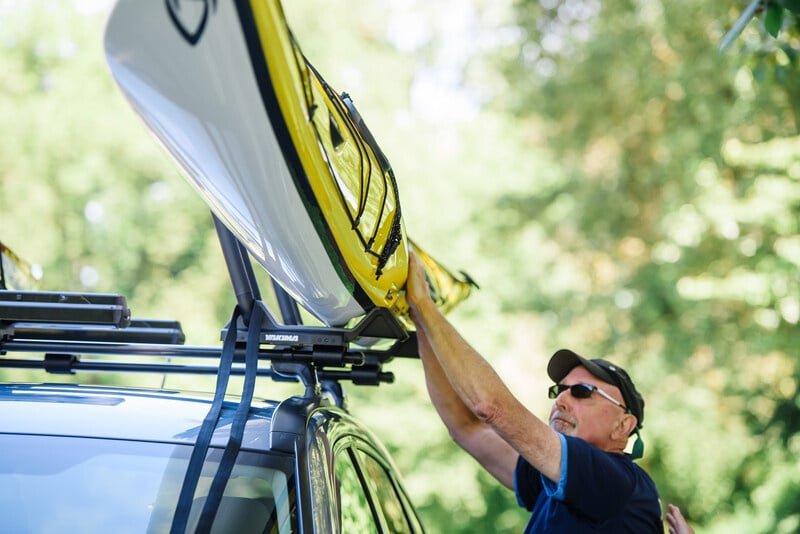
2. Lift the kayak onto the roof
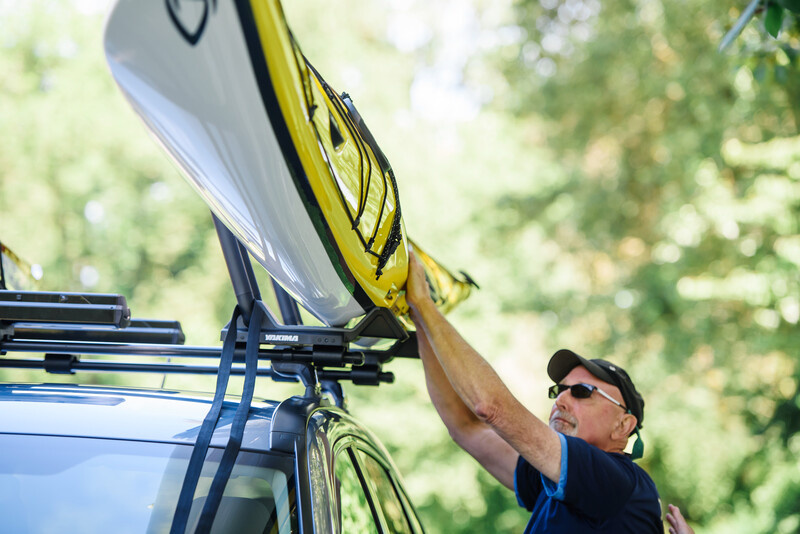
Lift with your legs, not your back. If the kayak is heavy, use a friend or a load-assist system. Place the kayak carefully on the rack in the correct position.
If you use a J-style carrier, angle the kayak into the cradle. If you use saddles, center the hull so it sits evenly. Try not to drag the boat across the roof, since that can scratch both the kayak and the vehicle.
3. Center the kayak
The kayak should sit centered from left to right and balanced front to back. Uneven placement can make the boat sway in wind or shift during turns.
A good rule is to leave the bow and stern with equal overhang, unless your rack instructions say otherwise. Centering also makes strap tension more even, which helps the kayak stay stable.
4. Secure the main straps
Use the straps that came with your kayak roof rack or approved replacement straps. Feed the strap through the rack or carrier and over the kayak, then tighten until snug.
The straps should hold the kayak firmly, but not crush it. Think firm handshake, not wrestling match. If you overtighten, you can warp the kayak or damage the rack pads.
5. Add bow and stern tie-downs
Bow and stern lines add extra security, especially at highway speeds or in strong wind. Attach them to approved anchor points on your vehicle, not to mirrors, plastic trim, or weak parts.
These lines do not replace the main straps. They support them. That little extra step can make a big difference when a crosswind hits or when you brake suddenly.
6. Check for movement
After loading, shake the kayak gently. It should not slide side to side or bounce much. If it moves, tighten the straps and check the placement again.
I learned this the hard way on a long trip to the coast. The boat felt fine in the driveway, but after a few miles I noticed a small shift. Since then, I test the load before leaving every time.
7. Drive carefully and recheck on the road
Take corners slowly and leave more space between you and the car ahead. Avoid hard braking and fast lane changes when you are carrying a kayak.
Stop after the first 10 to 15 miles and recheck the straps. Straps can settle a bit after you start driving, especially on a hot day or after a bumpy road. A quick check can prevent a bigger problem later.
How to load a kayak on a roof rack safely
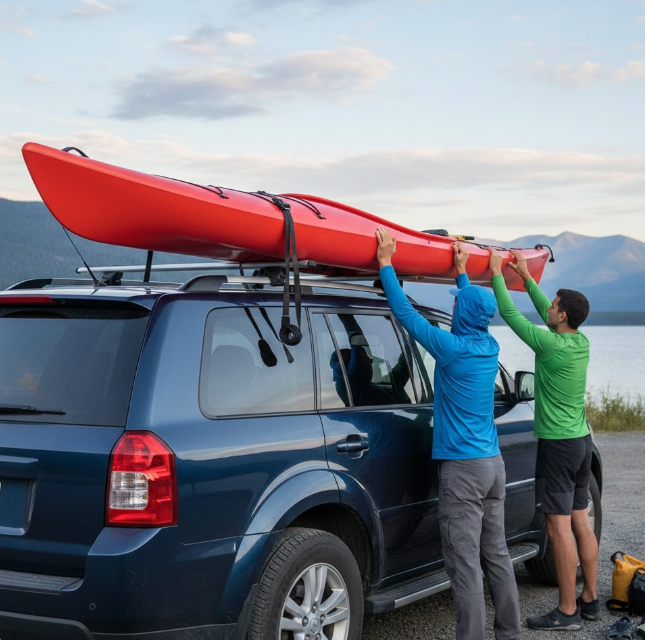
Loading a kayak roof rack safely is mostly about good body mechanics and good habits. A kayak is awkward more than it is dangerous, but awkward can still lead to scratches, bumps, or back strain.
Use these tips:
- Stand close to the kayak when lifting so you do not overreach.
- Keep the kayak level as you raise it.
- Ask for help if the boat is long, heavy, or above shoulder height.
- Use a step stool or loading assist if your vehicle sits high.
- Protect the hull with padding if your rack has hard contact points.
If you often paddle alone, a load-assist bar or roller can be a game changer. It turns a tough lift into a manageable one. For many people, that is the difference between paddling more often and leaving the kayak in the garage.
Common mistakes to avoid
A lot of kayak roof rack problems come from small mistakes, not bad gear. The good news is that these are easy to fix once you know them.
Watch out for these common issues:
- Loose straps: These can let the kayak shift or create loud flapping sounds.
- Over-tightening: This can damage the kayak or rack pads.
- Wrong anchor points: Never tie down to flimsy parts of the car.
- Poor centering: An uneven load can make the kayak unstable.
- Skipping rechecks: Straps can loosen after driving a short distance.
- Exposed strap tails: Loose ends can whip in the wind and wear out faster.
One of the most common errors I see is people assuming “tight enough” is automatic. It is not. With a kayak roof rack, every buckle and line should be checked by hand before the trip begins.
How to drive with a kayak roof rack
Once the kayak is loaded, your driving style matters. The kayak creates drag, which affects wind resistance, fuel use, and handling. Even a well-secured kayak can shift a vehicle’s balance slightly.
Keep these habits in mind:
- Drive slower than normal, especially on highways.
- Leave extra space for stopping.
- Avoid sudden lane changes.
- Watch for low branches, parking garages, and drive-throughs.
- Be extra careful in strong crosswinds.
Fuel economy may drop a bit because the kayak acts like a sail. That is normal. The best response is not to fight the wind, but to drive smoothly and stay alert.
Maintenance and care for your kayak roof rack
A kayak roof rack lasts longer when you keep it clean and check it often. Salt, sun, and dirt can wear down straps, pads, and hardware over time.
Simple maintenance helps a lot:
- Rinse the rack after saltwater trips.
- Dry straps before storing them.
- Check bolts and clamps for tightness.
- Replace frayed straps right away.
- Inspect foam, rubber pads, and buckles for cracks.
If you paddle often, keep a small gear kit in your car. I like to carry spare straps, a towel, and a basic tool for rack adjustments. That tiny kit has saved more than one trip for me.
Benefits of using a kayak roof rack
A kayak roof rack gives you more freedom and less hassle. It makes it easier to travel with your kayak without needing a trailer or truck bed.
Main benefits include:
- Better safety: Your kayak is secured and less likely to move.
- More convenience: You can transport the kayak on almost any trip.
- Less damage: Proper support protects the hull and vehicle.
- More storage space: You do not need to give up cargo room inside the car.
- More flexibility: Many racks can carry other gear too, like canoes, skis, or bikes.
For many paddlers, the biggest benefit is simple peace of mind. Once the kayak is strapped down correctly, you can focus on the drive and the water ahead.
Limitations to keep in mind
Even the best kayak roof rack has limits. Knowing them helps you use the system safely and avoid frustration.
Some common limitations are:
- Roof weight limits: Every vehicle has a maximum load rating.
- Vehicle height: Tall SUVs and trucks can be hard to load by yourself.
- Wind resistance: A kayak can affect handling and fuel use.
- Strap wear: Regular use means regular inspection.
- Fit issues: Not all racks fit all roof types without adapters.
If you travel often, it is worth reading both the vehicle manual and the rack instructions. That is not just fine print. It is the roadmap for safe use.
Frequently Asked Questions of How to use a kayak roof rack
How tight should kayak roof rack straps be?
The straps should be snug enough to stop movement, but not so tight that they deform the kayak. A firm, even pull is usually enough for most boats.
Do I need bow and stern lines with a kayak roof rack?
Yes, bow and stern lines are strongly recommended, especially for highway travel or large kayaks. They add extra security and reduce strain on the main straps.
Can I use a kayak roof rack without crossbars?
Some foam block systems work without permanent crossbars, but most roof racks need crossbars for safe use. Crossbars give you a more stable and reliable carry.
How fast can I drive with a kayak on the roof?
There is no universal speed limit, but slower is safer, especially in wind or rough weather. Always follow the rack maker’s guidance and drive with extra caution.
How do I stop my kayak roof rack from scratching my car?
Use proper padding, keep the rack clean, and avoid dragging the kayak across the paint. A careful load and unload routine prevents most scratches.
What should I do if the kayak shifts while driving?
Pull over as soon as it is safe and inspect the straps, placement, and tie-downs. Never keep driving if the kayak is loose or leaning.
Conclusion
Using a kayak roof rack is really about three things: the right gear, the right setup, and the right habits. When you center the kayak, tighten the straps correctly, and add bow and stern tie-downs, you make the whole trip safer and smoother. Small checks before and during the drive can prevent big headaches later.
If you are new to carrying a kayak, start slow and build a routine. Once you have the process down, loading your boat becomes second nature, almost like buckling a seat belt before a good road trip. Try these tips on your next outing, and if you want, explore more paddling gear guides or leave a comment with your own roof rack setup tips.