How to Cook Chicken in a Slow Cooker
Learning how to cook chicken in a slow cooker really comes down to two things. Pick the right cut, and make sure the meat hits 165°F. Get both right and you'll have tender chicken that pulls apart with a fork.
Miss either one and you're chewing through dry, chalky protein.
The USDA Food Safety and Inspection Service treats 165°F as the minimum safe internal temperature for all poultry. A slow cooker gets there eventually, but it does the job gently and slowly. That makes cut choice and timing more important than they'd be in a hot oven.
Here's how to get it right.
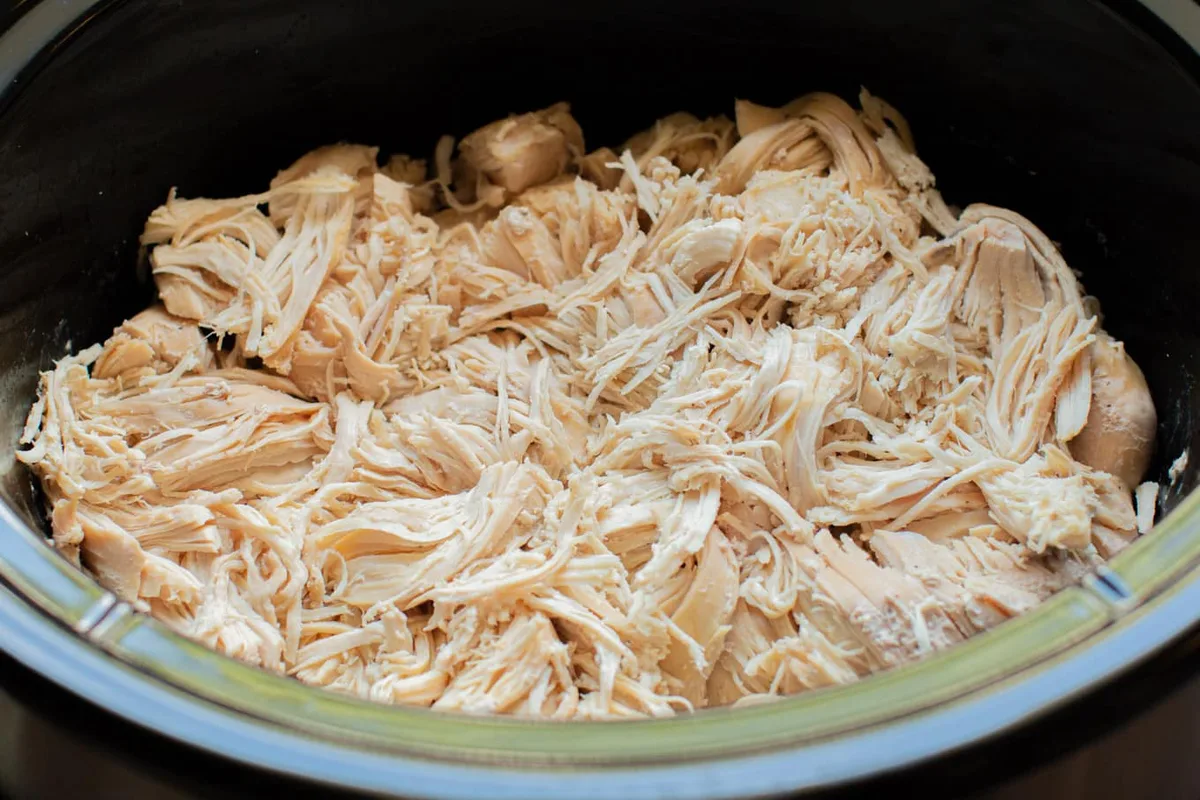
Image source: Bing (Web (fair-use with source credit))
Quick Answer
Place thawed chicken in the slow cooker in a single layer. Add about half a cup of broth or salsa. Cook on low for 4 to 6 hours.
Check that the thickest part reads 165°F. Shred and serve.
Why 165°F Matters More Than Any Slow Cooker Timer
165°F is the number that decides whether dinner is safe. Below it, bacteria like Salmonella and Campylobacter can survive. Slow cookers hold food in a warm range for hours, which is fine as long as the meat finishes above the line.
A timer can't tell you that. A thermometer can.
Chicken spends a long stretch in the range where bacteria multiply fastest. That range runs from 40°F to 140°F. A slow cooker heats gradually, so the window is wider than with pan-searing.
The fix isn't a different recipe. It's checking the meat yourself.
Here's how to check it properly:
- Insert an instant-read thermometer into the thickest part of the meat.
- Avoid touching bone, since bone heats faster and gives a false high reading.
- For a whole bird, test the thigh and the breast separately.
- Take readings in two spots on larger cuts.
Digital instant-read thermometers settle in 2 to 3 seconds, per manufacturer specifications. Leave it in until the number stops moving. If it reads 160°F, put the lid back on and give it another 15 minutes.
The same habit applies to other kitchen tools. If you rely on a reading, you should confirm the tool still reads true, whether that's checking a scale still weighs accurately or testing a thermometer in ice water.
Pick the Right Chicken Cut for Your Slow Cooker
Not every cut belongs in a slow cooker. The ones that do share one trait. They carry enough fat or connective tissue to survive a long, moist cook.
Boneless Breasts vs. Thighs
Boneless, skinless breasts are the leanest option and the least forgiving. They dry out fast because there's very little fat to protect them. Cook them on low for 4 to 5 hours, then stop.
Thighs are the opposite. They hold more fat and collagen, so they stay juicy even if you overshoot the timer by 30 minutes. For most people, thighs are the better slow cooker cut.
Bone-In Cuts and Whole Chicken
Bone-in thighs and drumsticks need longer, roughly 6 to 7 hours on low. The meat next to the bone takes the longest to reach temperature, so that's where you check.
A whole chicken works too, but it's fussier. The breast can finish before the thigh does. Plenty of cooks end up with dry white meat and underdone dark meat.
| Cut | Low setting | High setting | What to expect |
|---|---|---|---|
| Boneless breasts | 4 to 5 hours | 2 to 3 hours | Dries out quickly |
| Boneless thighs | 5 to 6 hours | 2 to 3 hours | Forgiving, stays juicy |
| Bone-in thighs or drumsticks | 6 to 7 hours | 3 to 4 hours | Check near the bone |
| Whole chicken | 6 to 7 hours | 3 to 4 hours | Test thigh and breast |
Sizing matters as much as the cut name. A 6-ounce breast and a 10-ounce breast won't finish together. If you want consistent results, confirming each piece's weight before it goes in takes about 30 seconds.
Slow Cooker Settings, Liquid, and Timing That Actually Work
Low runs about 170°F to 200°F. High runs about 200°F to 300°F. Manufacturer specifications vary by brand, so treat those as ranges, not guarantees.
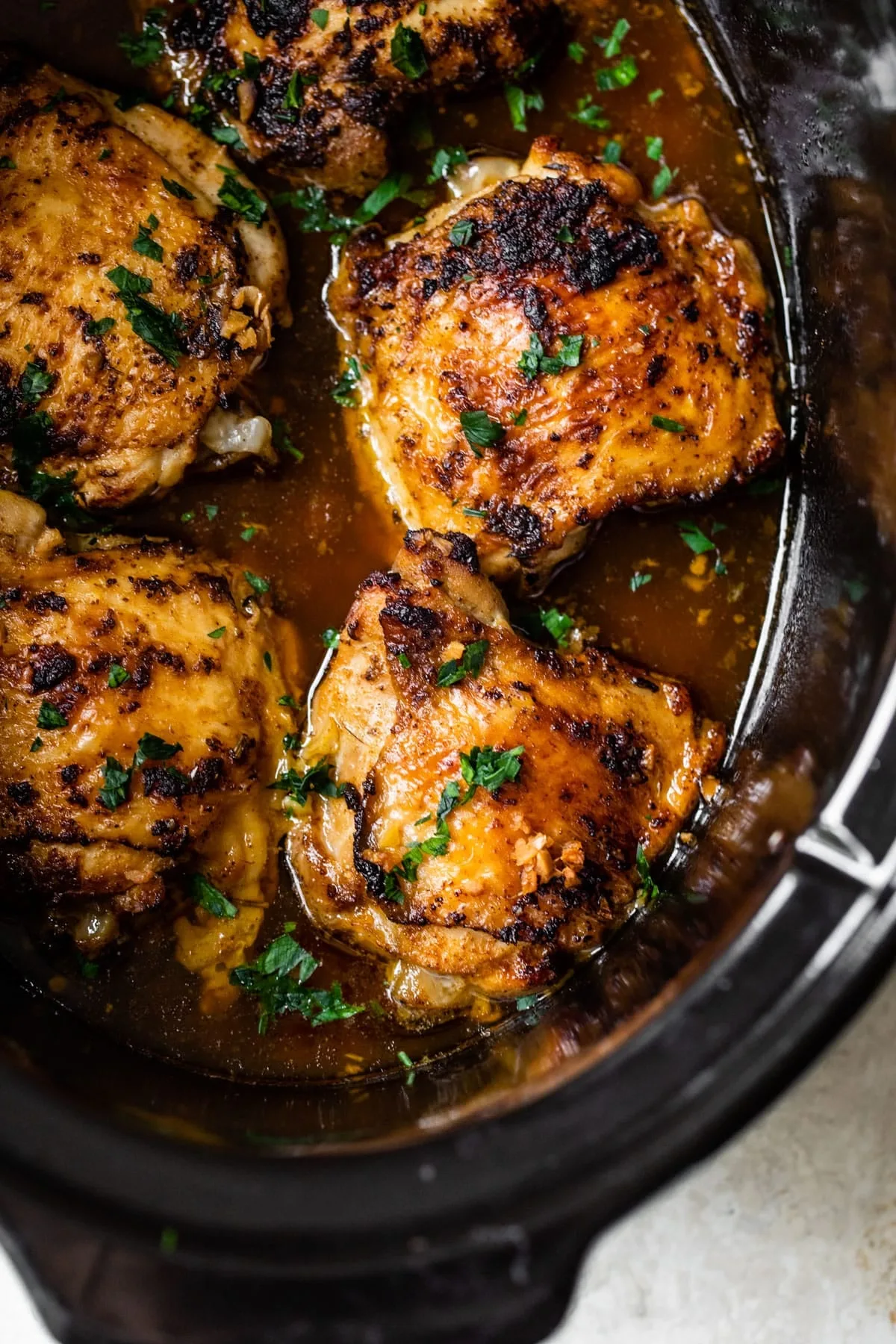
Image source: Bing (Web (fair-use with source credit))
Low vs. High Heat
Low and high both end at the same place. High just gets there faster. If you have the time, low gives you a wider margin before the meat overcooks.
Short on time? High works fine. Just start checking at the early end of the window.
How Much Liquid You Really Need
Half a cup to one cup is plenty for most recipes. Chicken releases its own juices as it cooks. Adding two cups of broth means the meat ends up simmering in liquid it doesn't need.
That's how you get chicken that tastes boiled. A small amount of liquid plus a tight lid creates enough steam to cook everything through.
Approximate Cook Times by Cut
Use the table above as your starting point, then adjust for your machine. A 3-quart slow cooker heats faster than a 7-quart one because there's less empty space.
Fill the crock no more than two-thirds full. Overloading blocks heat circulation and pushes cooking times past the safe window for the food sitting on top.
One more thing. Anything that touches raw chicken needs a real wash. That includes the scale, the cutting board, and your hands.
Here's how to sanitize the tools that handled raw meat so nothing crosses over to the rest of dinner.
Step-by-Step: How to Cook Chicken in a Slow Cooker Safely
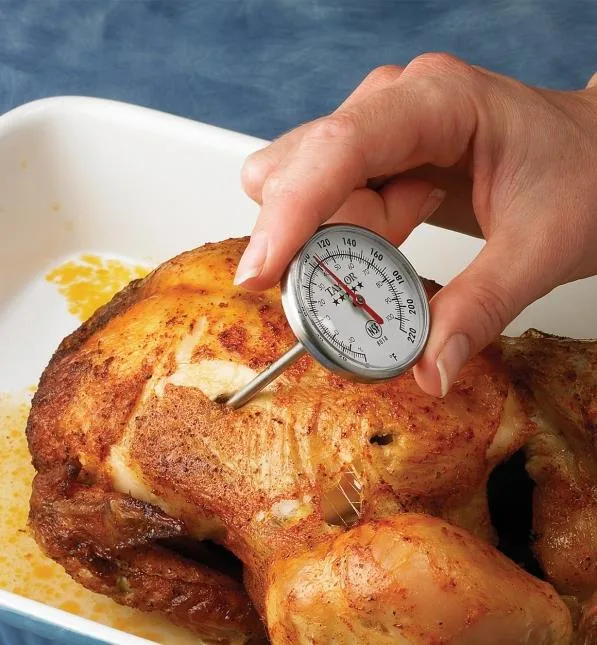
Image source: Bing (Web (fair-use with source credit))
Thaw, Season, and Layer
Start with thawed chicken. Thaw it in the refrigerator, never on the counter. A frozen block in a slow cooker spends too long in the bacterial growth range before it heats through.
Pat the pieces dry with paper towels. Season generously, since slow cooking mutes flavor. Put the chicken in a single layer, not stacked three deep.
Cook, Check Temp, and Rest
- Add 1/2 to 1 cup of liquid.
- Set the lid on and leave it alone.
- Cook on low or high using the times in the table.
- Check the thickest part with a thermometer at the early end of the window.
- Rest the meat for 5 to 10 minutes before shredding.
Resting lets the juices redistribute. Skip it and half the moisture ends up on the cutting board.
Shredding goes fast with two forks, but a hand mixer is quicker. Drop the beaters in and run it on low for about 30 seconds. If you've never done it, the technique is the same as mixing with a handheld appliance.
A cordless model works too, and battery-powered beaters give you more room to move around the counter.
Common Mistakes That Cause Dry, Rubbery, or Unsafe Chicken
Frozen Chicken, Lifting the Lid, and Too Much Liquid
Frozen chicken is the biggest one. The USDA advises against cooking frozen poultry in a slow cooker because the outer layers warm up while the center stays cold. That's a food safety problem, not just a texture problem.
Lifting the lid is the second mistake. Every peek releases trapped heat and can add 20 to 30 minutes to the cook. Use a glass lid and look through it instead.
Too much liquid is the third. It doesn't make chicken juicier. It dilutes the seasoning and leaves you with pale, waterlogged meat.
Dairy, Overcrowding, and Overcooking
Dairy curdles. Cream, milk, and sour cream break when they sit at a simmer for hours. Stir them in during the last 15 minutes instead.
Overcrowding steams the chicken instead of letting it cook in its own juices. Keep pieces in one layer with a little space between them.
Overcooking is the last trap. Breasts go from tender to chalky within about 30 minutes. Set a timer, not a guess.
Cleanup matters here too. Shredded chicken leaves residue on the beaters that dries hard if you leave it. Wiping the beaters right away saves you a soak later.
Leftovers, Storage, and Reheating Rules You Shouldn't Skip
Leftover chicken keeps well, but only if you cool it fast. Get it into the fridge within two hours. Shallow containers help it chill quickly and safely.
Leaving it out longer invites bacterial growth.
Fridge storage buys you 3 to 4 days. Freezer storage gets you 3 to 4 months. Write the date on the container so you actually use it.
When reheating, always bring the meat back to 165°F. A splash of broth keeps it moist in the microwave or a covered pan.
The slow cooker is a terrible reheating tool. It recycles the meat through that dangerous warm range again. Use a quick stovetop pan or microwave instead.
| Storage method | Safe window | Reheating tip |
|---|---|---|
| Fridge (below 40°F) | 3–4 days | Add broth, cover, heat to 165°F |
| Freezer | 3–4 months | Thaw overnight, then reheat |
If you discover undercooked chicken, don't store it. Get it back into the slow cooker immediately and cook until the thickest part reads 165°F. Waiting, refrigerating, or reheating later won't fix the safety gap.
Only finish cooking it while it's still fresh.
Slow Cooker Chicken vs. Oven, Instant Pot, and Air Fryer
Slow cooking is the king of set-and-forget meals. It builds deep flavor in thighs and drumsticks over hours. Ovens deliver crispy skin and even browning.
A 425°F roast turns a whole chicken into centerpiece material, though you have to baste and watch it.
Instant Pots compress time down to 30 minutes. That speed is great for weeknights, but the meat skips the slow flavor development. Air fryers nail the texture of roasted chicken in minutes, perfect for single breasts or wings.
| Method | Best for | Time | Key trait |
|---|---|---|---|
| Slow cooker | Batch cooking, thighs | 4–7 hrs low | Fork-tender, juicy |
| Oven | Whole chicken, crispy skin | 45–75 min | Browned, roasty |
| Instant Pot | Weeknights, shredding | 25–40 min | Fast, easy |
| Air fryer | Small batches, breasts | 20–25 min | Crispy outside |
Pick your tool by the meal, not the hype. Dark meat with time to spare goes in the slow cooker. A quick taco night calls for the Instant Pot.
Skin-on chicken you want crispy? The oven or air fryer wins.
Frequently Asked Questions
Can I put frozen chicken in a slow cooker?
No. The USDA advises against it. Frozen chicken spends too long in the bacterial growth zone before it thaws and heats.
Thaw in the fridge overnight instead.
Why is my slow cooker chicken rubbery?
Overcooking is the usual cause. Breasts especially turn firm when they sit past the 5-hour mark on low. Stick to the early end of the time window, and always check for 165°F.
Should I add liquid to the slow cooker for chicken?
A small amount, yes. Half a cup to one cup of broth, salsa, or water creates steam without drowning the meat. Too much liquid makes chicken taste boiled instead of roasted.
Can I slow cook chicken on high instead of low?
Yes. High heats the cooker faster, so the meat finishes in about half the time. Use the high setting times in the table above, and check temperature at the earliest point.
How long is cooked chicken safe to eat?
Store it in the fridge for 3 to 4 days. Freeze it for up to 4 months. Reheat to 165°F before serving, and toss anything left out longer than 2 hours.