Is the Jeep Renegade Good for Off-Roading?
When you picture yourself venturing off the beaten path, a capable vehicle is key. The question, "Is the Jeep Renegade good for off-roading?" often comes up for those who love adventure but also need a practical daily driver. While it carries the iconic Jeep name, its off-road prowess is best understood by looking at what it’s designed for.
Our research indicates that the Jeep Renegade offers commendable capability for its class, especially in certain trims. Manufacturer specifications for the Trailhawk model, for instance, list a specific approach angle of up to 30.5 degrees, which is a solid figure for navigating uneven terrain. It’s a vehicle that bridges the gap between urban commuting and moderate trail exploration.
Renegade's Off-Road DNA: What You Get in the Package
The Jeep Renegade is built with off-road potential in mind, though its capabilities lean more towards light to moderate trails rather than extreme rock crawling. It’s designed to be an accessible entry point for adventure, combining the rugged styling and brand heritage of Jeep with the practicality of a compact SUV. Think of it as a capable companion for weekend escapes, not necessarily a dedicated backcountry expedition vehicle.
The brand's legacy plays a significant role here. Jeep has a long history of producing vehicles known for their ability to handle diverse conditions. The Renegade aims to capture some of that spirit in a smaller, more city-friendly package.
Understanding its core design philosophy helps set expectations for its performance when the pavement ends.
Trail Rated: Understanding Jeep's Off-Road Badges
Jeep uses the "Trail Rated" designation to signify vehicles that have met a specific set of off-road performance standards developed by the company. These standards cover five key areas: traction, water fording, maneuverability, ground clearance, and articulation. Vehicles earning this badge have undergone rigorous testing to prove their mettle in challenging environments.
While not all Renegade models are Trail Rated, the Renegade Trailhawk is the standout here. It's engineered with specific features to earn this badge, indicating a higher level of off-road readiness compared to other trims. This designation isn't just for show; it's a commitment to a certain level of off-road capability as defined by Jeep itself.
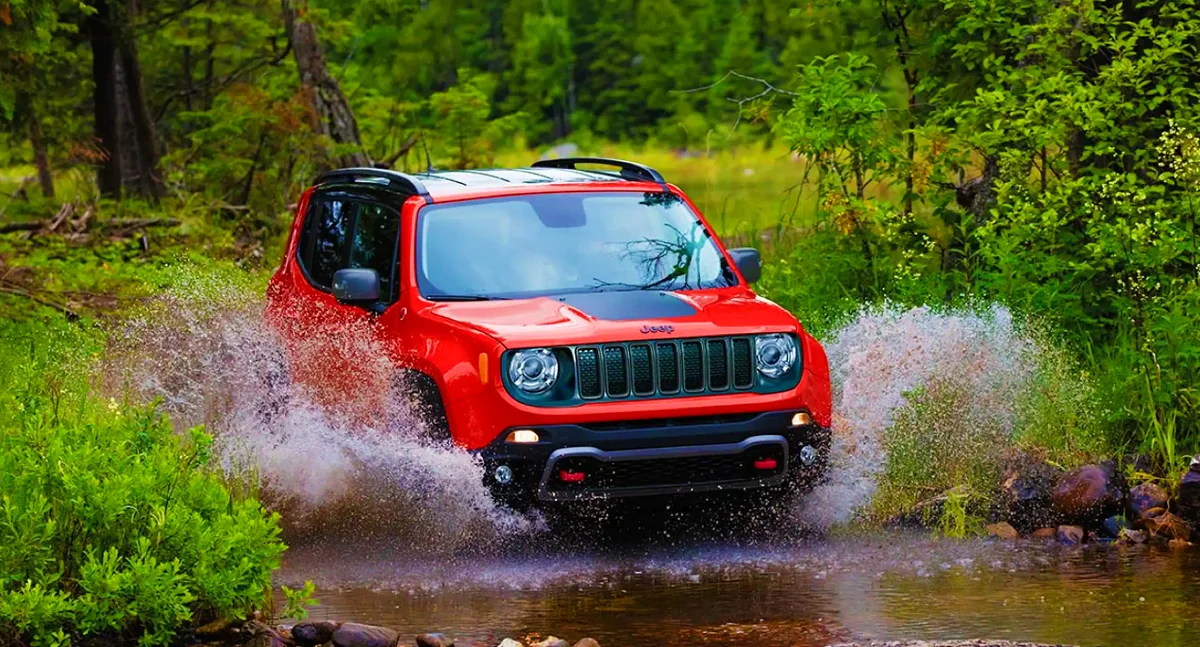
Image source: Bing (Web (fair-use with source credit))
Key Features for Tackling Trails
The Jeep Renegade, particularly in its more off-road-oriented trims like the Trailhawk, comes equipped with several features that enhance its trail capability. These aren't just cosmetic additions; they're functional components designed to help you navigate rougher terrain. Knowing what these features do is crucial for understanding the vehicle's potential.
Image source: Web (Bing) / autoepcservice.com (Web image (fair-use with source credit))
Here’s a breakdown of what to look for:
- 4×4 Systems: The Renegade offers different 4×4 systems, with the Jeep Active Drive Low being a notable option. This system can automatically engage 4WD when needed, and the "Low" designation means it has a special low-range gear for better crawling control on steep inclines or over obstacles.
- Selec-Terrain Traction Management System: This system allows the driver to select different terrain modes, Auto, Snow, Sand, Mud, and Rock (on Trailhawk). Each mode adjusts the vehicle's powertrain, braking, and drivetrain systems to optimize performance for the chosen surface.
- Ground Clearance: Higher ground clearance means the vehicle's undercarriage is further from the ground, reducing the risk of hitting rocks or debris. The Trailhawk, for example, typically offers more ground clearance than standard models.
- Approach, Breakover, and Departure Angles: These angles are critical for off-roading. They measure how steep an obstacle the vehicle can drive over or away from without scraping its bumpers or underbody. Better angles mean better obstacle clearance.
- Skid Plates: Durable plates placed underneath the vehicle protect vital components like the engine, transmission, and fuel tank from impacts on rough terrain.
- Tow Hooks: Redesigned tow hooks are often integrated into the front and rear bumpers. They provide secure attachment points for recovery in case the vehicle gets stuck.
These elements work together to give the Renegade its off-road chops, especially when comparing it to other compact SUVs that might only offer all-wheel drive for inclement weather.
Real-World Off-Road Capability: Where Does It Shine?
The Jeep Renegade truly shines in light off-road scenarios and moderate trail driving. It’s well-suited for navigating unpaved logging roads, gravel paths, and trails with uneven surfaces, moderate inclines, and some loose material like mud or sand. For weekend adventurers who plan to explore fire roads, access campsites off the main highway, or tackle mild forest trails, the Renegade can be a competent partner.
Manufacturer specifications for the Trailhawk trim, as of 2026, indicate a crawl ratio of up to 21:1. This is a figure that means for every rotation of the engine's crankshaft, the wheels turn 21 times. A higher crawl ratio is beneficial for slow, controlled descents down steep hills or carefully traversing rocky sections.
It allows for precise throttle control and reduces the likelihood of sudden movements that could cause loss of traction.
Where the Renegade excels is in its versatility. It’s a vehicle that doesn’t demand a specialized skill set or extensive modifications for basic trail use. Drivers can engage the Selec-Terrain system, select an appropriate mode, and confidently proceed on many common off-road routes without worry.
It offers a comfortable ride on pavement, making it a practical choice for daily commuting before you hit the trails.
When to Leave the Renegade at Home: Limitations and Risks
While the Renegade has genuine off-road capabilities, it's important to recognize its limitations. It’s not designed for extreme rock crawling, deep mud bogs, or heavily technical terrain that requires significant suspension articulation or extreme ground clearance. Pushing the Renegade beyond its design limits can lead to damage and leave you stranded.
Aggregate reviews and user feedback often point to a few key areas where the Renegade can struggle:
- Suspension Articulation: The suspension has a finite range of movement. On very uneven ground, one or more wheels might lift off the ground, reducing traction. More dedicated off-road vehicles have suspensions designed to keep more tires on the ground in such situations.
- Underbody Protection: While skid plates offer good protection for its class, they might not be robust enough for sharp rocks or severe impacts common on more challenging trails.
- Heat Management: Extended, aggressive off-roading, especially in hot weather, can potentially lead to overheating of the drivetrain or brakes if the vehicle is pushed too hard.
- Durability for Heavy Use: For those who plan to go off-roading frequently and aggressively, the Renegade's long-term durability might be a concern compared to vehicles built from the ground up for that purpose.
If your idea of off-roading involves steep, rocky ascents, large obstacles, or deep, thick mud, you might find the Renegade falls short. It's best to assess the trail difficulty realistically and know your vehicle's limits. For more extreme adventures, alternatives with greater ground clearance, more robust suspension systems, and beefier underbody protection would be more appropriate.
Renegade vs. The Competition: Comparing Off-Road Options
When considering the Jeep Renegade for off-roading, it’s helpful to see how it stacks up against other vehicles in the compact SUV segment that offer 4×4 or AWD capabilities. The Renegade, especially in its Trailhawk trim, generally positions itself above many competitors for light off-road duty due to features like Selec-Terrain and specific design elements.

Image source: Bing (Web (fair-use with source credit))
Here’s a quick comparison of what you might encounter:
Jeep Renegade (especially Trailhawk):
- Pros for Off-Roading: Standard 4×4, Selec-Terrain system, good approach/departure angles for its class, available locking rear differential (on some trims), higher ground clearance on Trailhawk. It’s one of the most capable small SUVs for mild trails.
- Cons for Off-Roading: Limited suspension articulation, less robust than dedicated off-roaders, not for extreme terrain.
- Best For: Everyday driving with capability for gravel roads, forest trails, light mud, and snowy conditions.
Subaru Forester/Crosstrek:
- Pros for Off-Roading: Standard Symmetrical All-Wheel Drive, good ground clearance (especially Crosstrek), Subaru's reputation for AWD confidence in varied weather.
- Cons for Off-Roading: Generally less sophisticated traction management systems than Renegade's Selec-Terrain, lower approach/departure angles, no low-range gearing.
- Best For: Excellent all-weather grip, snow driving, and light trails where AWD confidence is the priority.
Toyota RAV4/CR-V (with AWD):
- Pros for Off-Roading: Reliable, comfortable, often have selectable drive modes for snow, mud, or sand, decent fuel economy.
- Cons for Off-Roading: Primarily designed for on-road comfort and efficiency; AWD systems are typically less robust for serious off-road use, lower ground clearance, fewer dedicated off-road features.
- Best For: On-road commuting, light gravel roads, and confidence in slippery conditions.
Ford Bronco Sport:
- Pros for Off-Roading: Designed with off-road capability in mind, G.O.A.T. Modes (Goes Over Any Type of Terrain) are similar to Selec-Terrain, good ground clearance and approach/departure angles on higher trims.
- Cons for Off-Roading: Can be more expensive, availability of specific off-road features varies by trim.
- Best For: A more direct competitor to the Renegade Trailhawk for those seeking a factory-equipped, trail-ready compact SUV.
The Renegade distinguishes itself by offering a Jeep-branded experience with features like Selec-Terrain that are specifically tuned for more diverse trail conditions than what most AWD systems provide. If you’re looking for a compact SUV that can handle more than just a snowy driveway, the Renegade is definitely worth considering, especially if you opt for the Trailhawk trim.
Frequently Asked Questions About Renegade Off-Roading
Is the Jeep Renegade Trailhawk significantly better off-road than other trims?
Yes, the Trailhawk trim is engineered for superior off-road performance. It typically includes features like increased ground clearance, a more advanced 4×4 system (often with low-range gearing), and enhanced approach/departure angles that give it a distinct advantage on trails compared to standard Renegade models.
Can a stock Jeep Renegade handle a moderately challenging off-road trail?
A stock Jeep Renegade, particularly the Trailhawk model, can handle many moderately challenging trails. This includes well-maintained dirt roads, gravel paths, and trails with some uneven surfaces or mild obstacles. However, it's crucial to assess the trail difficulty and know the vehicle's limitations to avoid damage.
What are the main components that make the Renegade Trailhawk off-road capable?
Key components include its specialized 4×4 system with low-range capability, the Selec-Terrain Traction Management System with a Rock mode, improved ground clearance, skid plates for underbody protection, and red tow hooks for recovery. These features are standard on the Trailhawk and enhance its ability to navigate tougher terrain.
How does the Renegade's off-road capability compare to larger Jeep models like the Wrangler?
The Renegade is significantly less capable off-road than a Jeep Wrangler. While the Renegade excels at light to moderate trails, the Wrangler is a purpose-built off-roader designed for extreme conditions, featuring solid axles, significantly more suspension travel, higher ground clearance, and more robust underbody protection. The Renegade is a compromise for daily usability, whereas the Wrangler prioritizes off-road dominance.
What kind of maintenance is needed for a Jeep Renegade used for off-roading?
Regular maintenance is crucial, especially after off-road excursions. This includes thorough cleaning to remove mud and debris, inspecting the undercarriage for damage, checking fluid levels (engine oil, transmission fluid, differential fluid), ensuring brake systems are clear, and verifying tire condition. Following the manufacturer's recommended service intervals is essential.
Final Verdict: Is the Jeep Renegade Your Trail Buddy?
The Jeep Renegade, especially in its Trailhawk configuration, is a surprisingly capable compact SUV for those looking to venture beyond paved roads. It successfully blends everyday practicality with genuine off-road chops suitable for light to moderate trails, gravel tracks, and challenging weather conditions. Its Selec-Terrain system and solid approach/departure angles give it an edge over many competitors in its class.
However, it’s vital to understand its boundaries. This isn't a vehicle designed for extreme rock crawling or severe off-road challenges. If your adventures consistently involve highly technical terrain, the Renegade may not suffice.
For the average user seeking an affordable, versatile vehicle that can handle weekend exploration without demanding extensive modifications, the Jeep Renegade proves itself a worthy and competent companion.