INNO Roof Rack Vs Thule: Best Choice For Your Car
INNO often costs less, while Thule offers broader fit coverage, strong support, and polished accessories.
Choosing between INNO Roof Rack vs Thule is not as simple as picking the most famous brand. Both make reliable roof rack systems for bikes, skis, kayaks, cargo boxes, and everyday travel. The better choice depends on your vehicle, load size, installation needs, budget, and how often you plan to use the rack.
After comparing fit systems, crossbars, towers, accessories, noise, and real-world use, this guide explains where INNO and Thule each perform best. It also covers common setup mistakes, safety limits, and the key details that can save you money.
INNO Roof Rack vs Thule: The Main Difference
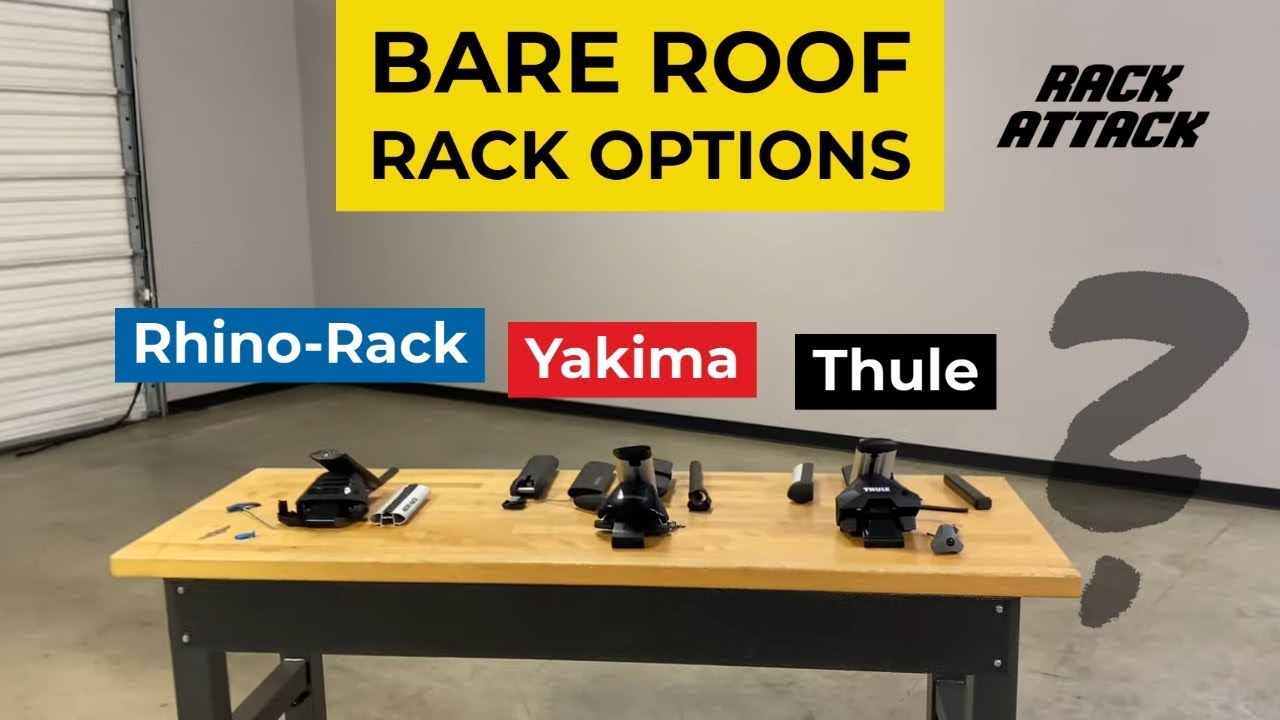
INNO and Thule both sell complete roof rack systems, but they take different approaches.
INNO is known for compact designs, clever fit kits, and competitive prices. Its products are especially popular with drivers who want a clean rack without paying for the largest accessory ecosystem.
Thule is one of the best-known roof rack brands in the United States. It offers a wide range of towers, crossbars, cargo boxes, bike carriers, ski racks, kayak carriers, and replacement parts.
The simple comparison looks like this:
| Feature | INNO | Thule |
|---|---|---|
| Typical price | Often lower | Often higher |
| Vehicle fit range | Strong, but model dependent | Very broad |
| Design | Compact and practical | Refined and highly developed |
| Accessory range | Good | Excellent |
| Installation | Can be simple after fit confirmation | Usually well documented |
| Wind noise | Often low with aero bars | Low with modern aero bars |
| Replacement support | Good, but may vary by market | Usually very strong |
| Best for | Value-focused buyers | Buyers wanting a large ecosystem |
The best choice in an INNO Roof Rack vs Thule comparison is the one that fits your exact vehicle and load. A premium rack that does not match your roof type is not a better rack.

INNO Roof Rack vs Thule: Product Families
Understanding each brand’s parts makes the buying process much easier. A roof rack is not one single item. It usually includes towers or feet, crossbars, fit kits, locks, and optional carriers.
INNO roof rack systems
INNO commonly uses a modular system with several parts:
• Towers or feet that attach to the vehicle
• Crossbars that support the load
• Vehicle-specific fit kits
• Locks and end caps
• Sport and cargo accessories
INNO crossbars may be available in square, aero, or other specialized shapes, depending on the market and product line. Some systems are designed to sit close to the roof, which can give the vehicle a cleaner look.
Thule roof rack systems
Thule offers several well-known roof rack families, including:
• Evo-style towers for many vehicles
• WingBar aero crossbars
• SquareBar crossbars
• Edge-style systems with a low-profile appearance
• Fit kits for different roof types
Thule also makes a large number of add-on products. That matters if you may start with a bike rack and later add a cargo box or kayak carrier.
The important lesson in the INNO Roof Rack vs Thule debate is that brand names do not tell the whole story. You must compare the exact product series, not just the logo on the box.

Fit and Vehicle Compatibility
Vehicle fit is the first thing to check. It matters more than color, shape, or brand reputation.
Roof rack compatibility depends on several factors:
• Bare roof, raised rails, or flush rails
• Fixed mounting points
• Factory tracks
• Sunroof clearance
• Door frame shape
• Roof width and curve
• Vehicle roof load rating
A rack designed for raised rails may not fit a bare roof. A system for fixed points may also require a different tower and fit kit than a door-jamb system.
Thule often has a wider fit database. This can make it easier to find a confirmed setup for older vehicles, uncommon roof styles, and newer cars.
INNO can still provide an excellent fit, especially for popular vehicles. However, you should confirm the exact year, make, model, body style, and roof type before ordering.
How to check fit correctly
Follow these steps:
-
Read the vehicle owner’s manual for the maximum roof load.
-
Use the brand’s current fit guide.
-
Confirm the crossbar length.
-
Check door, hatch, antenna, and sunroof clearance.
-
Confirm whether the system needs a special fit kit.
-
Check the combined weight of the rack and cargo.
A common mistake is checking only whether the towers fit. The crossbar length and foot position must also be correct.

Build Quality and Durability
Both brands make products that can last for years when installed and maintained correctly. The main durability factors are aluminum or steel bar construction, plastic quality, locking parts, rubber pads, and exposure to weather.
Thule products often feel highly polished. The adjustment points are clear, the instructions are detailed, and replacement accessories are easy to find in many areas.
INNO products can also feel solid and well made. Some drivers prefer their compact shape and simple appearance. In many setups, INNO provides the strength needed for normal bikes, skis, boards, and cargo boxes without extra bulk.
No roof rack should be treated as indestructible. Road salt, sand, UV exposure, and loose hardware can shorten its life.
Maintenance tips
Inspect the rack before long trips:
• Check tower bolts and clamps.
• Look for cracks in plastic parts.
• Inspect rubber pads for wear.
• Confirm that end caps are secure.
• Clean dirt from the mounting points.
• Remove the rack when you do not need it.
A rack that stays on the vehicle all year may wear faster than one that is removed after each trip. This is true for both INNO and Thule.
Load Capacity and Safety
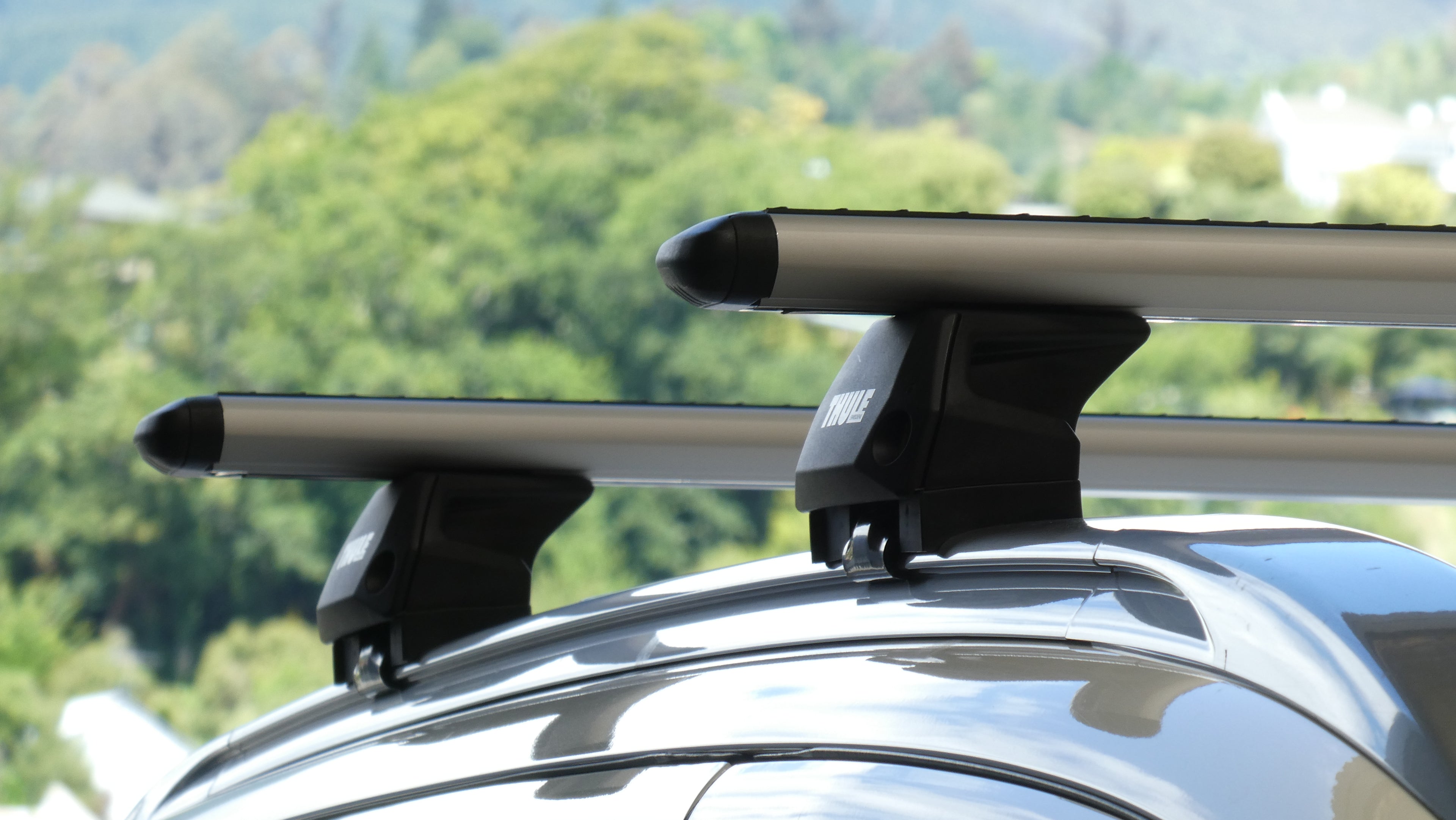
Load capacity is one of the most misunderstood parts of an INNO Roof Rack vs Thule comparison.
The rack may have one maximum load rating, while the vehicle roof has another. Always use the lower number.
For example, if the rack is rated for 165 pounds but the vehicle roof is rated for 100 pounds, the safe maximum is generally 100 pounds. That total includes:
• Crossbars
• Towers or feet
• Fit kit
• Bike, kayak, skis, or cargo box
• Any gear inside the carrier
Dynamic load means the weight carried while driving. Static load means the weight supported while the vehicle is parked. Some rooftop tents use static ratings, but you must follow the vehicle and rack maker’s rules.
Practical loading advice
Place heavy items low and near the center of the bars. Keep the load balanced from left to right.
Use the correct carrier for the item. A loose kayak, bike, or board can become dangerous at highway speed. Tighten every strap, then check it again after a short drive.
Never assume that a stronger-looking bar increases your vehicle’s roof limit.
Installation: INNO vs Thule
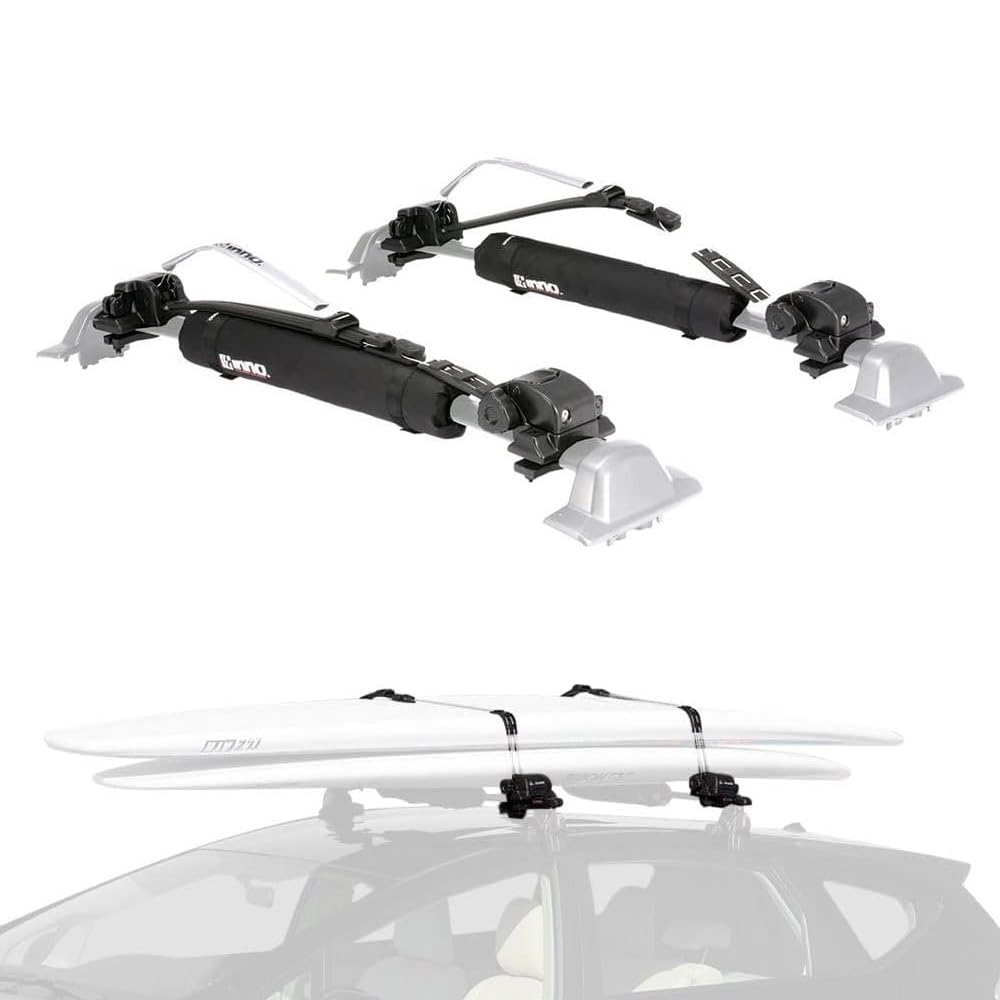
Installation quality affects noise, safety, and durability. A poorly fitted roof rack can shift, damage paint, or create a serious road hazard.
Thule often has an advantage in installation clarity. Its instructions, measuring tools, torque guidance, and fit information are widely available.
INNO systems can also install cleanly, but some users may need more patience when checking measurements and tower positions. The process is usually straightforward when the correct fit kit is used.
Installation mistakes to avoid
• Mixing towers and fit kits from different systems
• Guessing the bar position
• Tightening one side too much before the other
• Skipping the torque setting
• Placing the rack too close to a sunroof
• Forgetting to test the hatch before loading gear
• Assuming factory roof rails can carry any rack
In my experience with roof rack setups, the biggest problem is not the brand. It is using the wrong fit kit or failing to measure twice. A ten-minute fit check can prevent hours of repair and frustration.
Wind Noise and Fuel Economy
Every roof rack adds some wind resistance. The amount depends on bar shape, vehicle design, speed, crossbar position, and the accessories installed.
Aero bars from both INNO and Thule are usually quieter than traditional square bars. Still, no rack is fully silent. A cargo box, bike carrier, or kayak can create more noise than the crossbars alone.
Fuel use may also increase. The effect is often small with only low-profile bars, but it can become more noticeable with a large cargo box or upright bike carrier.
To reduce noise:
• Center the bars carefully.
• Install rubber strips and end caps.
• Keep loose straps secured.
• Use a fairing if it matches the rack system.
• Remove unused carriers.
• Follow the recommended bar spacing.
Thule may offer more aerodynamic accessory choices, but INNO can perform well when fitted with the right aero bars and accessories.
Accessories and Long-Term Flexibility
This is one of Thule’s strongest advantages. The company offers a large accessory range and broad dealer support.
Thule makes products for:
• Road and mountain bikes
• Skis and snowboards
• Kayaks and canoes
• Surfboards
• Cargo boxes
• Ladders and work equipment
• Travel and storage needs
INNO also offers useful carriers and cargo products. Its range may be smaller in some regions, but it covers many common recreational needs.
Choose Thule if you expect your needs to change often. For example, you might carry skis in winter, bikes in summer, and luggage during family trips.
Choose INNO if you already know what you need and want a streamlined setup. A smaller accessory catalog can sometimes make the purchase easier because there are fewer choices to compare.
Price and Overall Value
INNO often wins on initial price. This can make it attractive for someone who needs a roof rack for occasional weekend use.
Thule usually costs more, especially when you add locks, premium bars, and specialized carriers. However, the higher price may provide value through fit coverage, resale appeal, support, and accessory compatibility.
Do not compare only the crossbar price. Calculate the complete system:
• Towers or feet
• Fit kit
• Crossbars
• Locks
• Carrier
• Installation tools
• Shipping or dealer costs
A lower-priced rack may not be cheaper if it needs extra parts or cannot support your future accessories.
In the INNO Roof Rack vs Thule decision, value means more than the checkout total. It means how well the system works for your vehicle and how long it remains useful.
Which Brand Is Quieter?
Modern aero bars from both brands can be fairly quiet. Thule’s WingBar-style designs are known for smooth airflow and a refined finish.
INNO aero bars can also produce low noise when the end caps, rubber strips, and tower covers are installed correctly. Small gaps can create a whistle.
Noise also depends on the vehicle. A tall SUV, a glass roof, and a sharply curved roofline may create different sounds than a sedan.
If quiet driving is your top concern, buy an aerodynamic system, keep the bars clean, and remove unused accessories. The carrier often makes more noise than the bars.
INNO Roof Rack vs Thule for Bikes
Both brands can work well for bikes, but the correct carrier depends on the bike type.
For standard bikes, a roof-mounted upright carrier may be simple and secure. Heavy electric bikes can be difficult to lift onto the roof, and some roof carriers are not rated for their weight.
Before choosing a bike rack, check:
• Bike weight
• Wheel size
• Tire width
• Frame shape
• Carbon frame requirements
• Fork or axle design
• Roof height
A hitch-mounted carrier may be better for heavy e-bikes. It reduces lifting and usually creates less wind resistance.
Thule may have more choices for unusual bikes and replacement parts. INNO can be a strong value for regular bikes when the carrier matches the frame and axle.
INNO Roof Rack vs Thule for Kayaks and Skis
For kayaks, bar width and spacing are important. The rack must support the boat without placing pressure on weak areas.
A kayak carrier with rollers or a load-assist feature can make loading easier. This matters because a kayak can be awkward and heavy, especially on a tall SUV.
For skis and snowboards, check the carrier’s internal height. Thick skis, large bindings, and snowboards may need more clearance.
Thule offers a wide selection of winter and water-sport accessories. INNO also provides practical options, often at a more approachable price.
Whichever brand you choose, use bow and stern lines for long kayaks when the manufacturer recommends them. These lines reduce movement and help control the load.
Pros and Cons of INNO
INNO may be the better choice for drivers who want useful features without the highest price.
Advantages of INNO
• Competitive system cost
• Clean, compact appearance
• Good options for common vehicles
• Practical aero bar designs
• Useful products for bikes, skis, and water sports
• Strong value for occasional users
Limitations of INNO
• Fit coverage may vary by vehicle and region
• Some accessories can be harder to find
• Product information may be less familiar to local retailers
• Replacement parts may require more careful searching
INNO is not automatically a budget compromise. It can be a smart choice when the exact system fits your vehicle and meets your load needs.
Pros and Cons of Thule
Thule is a strong choice for buyers who want a broad product family and long-term support.
Advantages of Thule
• Wide vehicle compatibility
• Large accessory ecosystem
• Detailed installation information
• Strong dealer and replacement-part availability
• Refined designs and finishes
• Good resale appeal
Limitations of Thule
• Higher total cost
• Many product options can feel confusing
• Premium parts do not increase the vehicle roof limit
• Some accessories may be unnecessary for simple use
Thule’s reputation is valuable, but it should not replace checking the fit guide. A famous brand can still be wrong for a specific vehicle.
Common Buying Mistakes
A roof rack purchase can go wrong in several predictable ways.
Buying by bar length alone
Bar length does not confirm vehicle fit. The towers and fit kit must match the roof.
Ignoring the roof load rating
The rack’s rating does not override the vehicle maker’s rating. Use the lower limit.
Forgetting the total system weight
A cargo box and rack can consume a large part of the available load limit before you add luggage.
Leaving the rack on all year
This may increase noise, fuel use, and exposure to weather. Remove it when practical.
Skipping a test drive
Drive slowly at first and listen for movement, vibration, or whistling. Stop and inspect the rack after a short distance.
Choosing roof mounting for a heavy bike
A hitch carrier may be safer and easier for heavy electric bikes or bikes with delicate frames.
These lessons apply to both INNO Roof Rack vs Thule systems.
Which One Should You Buy?
Use INNO when these points match your needs:
• You want a lower total price.
• Your vehicle has a confirmed INNO fit.
• You need a rack for occasional trips.
• You prefer a compact, simple design.
• You carry standard bikes, skis, boards, or a small cargo box.
Choose Thule when these points matter more:
• You want many accessory options.
• You need broad vehicle fit coverage.
• You value easy access to replacement parts.
• You plan to expand your system later.
• You prefer extensive dealer and installation support.
For most buyers, the final decision should follow this order:
-
Confirm vehicle compatibility.
-
Check the vehicle roof load limit.
-
Choose the right crossbar type.
-
Add only the carrier you need.
-
Compare the complete installed cost.
-
Read the installation and safety instructions.
That process is more reliable than choosing based on brand popularity alone.
Frequently Asked Questions About INNO Roof Rack vs Thule
Is INNO better than Thule?
INNO can be better for buyers who want a capable roof rack at a lower price. Thule may be better for buyers who want more accessories, wider fit coverage, and strong long-term support.
Is Thule worth the extra money?
Thule can be worth the extra cost if you need specialized carriers, broad compatibility, or easy access to replacement parts. If you only need basic crossbars for occasional trips, INNO may provide better value.
Are INNO and Thule roof rack parts interchangeable?
Some carriers may attach to similar crossbar channels, but towers, fit kits, locks, and mounting hardware are not automatically interchangeable. Always confirm compatibility with the specific product instructions.
Which roof rack is quieter, INNO or Thule?
Both can be quiet when using aerodynamic bars and installing all rubber strips and end caps correctly. Vehicle shape and accessories often affect noise more than the brand itself.
Can either rack carry a rooftop tent?
Only use a rooftop tent when the vehicle, rack, and tent manufacturer approve the setup. You must check both the dynamic driving load and the static parked load.
Does a roof rack reduce gas mileage?
Yes, a roof rack can increase aerodynamic drag and reduce fuel economy. The effect is usually greater with a cargo box, bike carrier, or kayak than with low-profile crossbars alone.
Which is better for a heavy electric bike?
A hitch-mounted carrier is often easier and safer for a heavy electric bike because lifting it onto the roof can be difficult. If you use a roof carrier, confirm its weight rating and the bike’s total weight first.
Should I remove my roof rack when I am not using it?
Removing the rack can reduce wind noise, fuel use, and weather exposure. If you leave it installed, inspect the hardware and clean the contact points on a regular basis.
Conclusion
INNO Roof Rack vs Thule is a comparison between strong value and a larger premium ecosystem. INNO can deliver a clean, capable setup at a lower price, while Thule stands out with broad fit coverage, extensive accessories, and strong support.
The right choice starts with your vehicle’s roof type, load rating, and intended cargo. Confirm the complete fit, include the rack’s own weight, and choose a carrier made for your bike, kayak, skis, or luggage.
Take a few minutes to compare complete systems instead of single parts. Then share your vehicle and cargo needs in the comments or explore more roof rack guides before you buy.