Why Is My Treadmill Squeaking
The squeak starts about ten minutes into your walk. It builds as you pick up speed, then it becomes impossible to ignore. You're not alone, and it's not necessarily a sign your treadmill is dying.
In our research, we found that most treadmill squeaks come from a handful of common causes. A dry deck, worn roller bearings, or an overtightened belt account for the vast majority of cases. With a little patience and the right lubricant, you can usually fix it yourself in under an hour.
Quick Answer
Your treadmill squeaks because of friction. The walking belt rubs against a deck that lacks lubrication, or a bearing has worn out. A dry deck is the most common cause.
Apply 100% silicone lubricant under the belt. If the sound persists, inspect the roller bearings and belt tension. Most home squeaks resolve with basic maintenance.
First, Listen: Where Is That Squeak Coming From?
Before you touch any tools, spend two minutes listening. Stand beside the treadmill while it runs at a low speed, around 3 to 4 mph. Do not get on the belt.
Move from the motor hood to the middle of the belt, then to the rear roller. The sound will usually be loudest near its source.
Have your owner's manual ready. It often includes a noise chart or a basic troubleshooting guide. You will also need a flashlight, a clean cloth, and some 100% silicone lubricant.
Do not use WD-40 or grease, which we will cover later.
If the squeak happens only when you step on the belt, that tells you it is load-related. If it squeaks with the belt running free, the problem is in the rollers, motor, or bearings. That single observation is your first decision point.
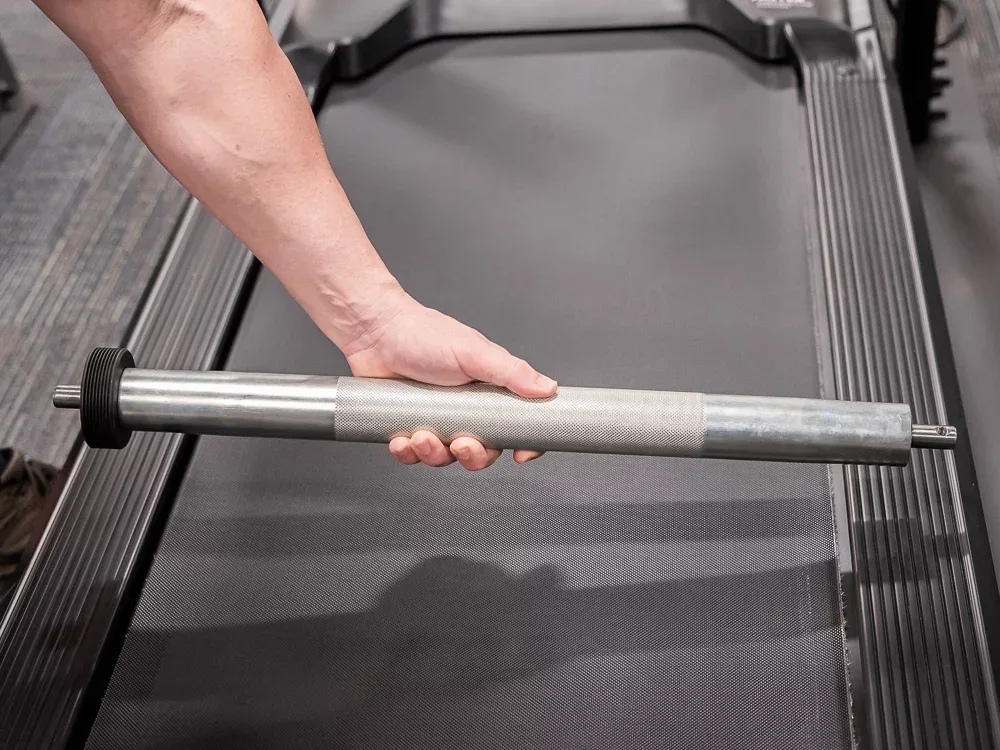
Image source: Bing (Web (fair-use with source credit))
What Actually Squeaks: Belt, Deck, Rollers, or Motor?
There are four main suspects for treadmill noise. Each one sounds a bit different and happens under different conditions. Knowing these helps you narrow it down fast.
The walking belt itself can squeak if it is too tight, too dry, or rubbing against the frame. A dry deck is the most common cause. The belt slides over a surface that needs lubricant, and friction creates a high-pitched squeal.
This often gets louder when you step on it.
The running deck is the board under the belt. It wears down over time and becomes rough. A worn deck increases friction even with a new belt.
You might notice the squeak is steady and happens with every rotation.
Roller bearings are inside the front and rear rollers. When they go bad, they make a chirping or grinding noise. This sound is usually constant and comes from one end of the treadmill.
It does not change when you step on the belt.
The drive motor can squeal if its bearings are failing. This noise comes from the motor compartment under the hood. It may also happen when the treadmill starts or changes speed.
A slipping drive belt can cause a similar chirping sound.
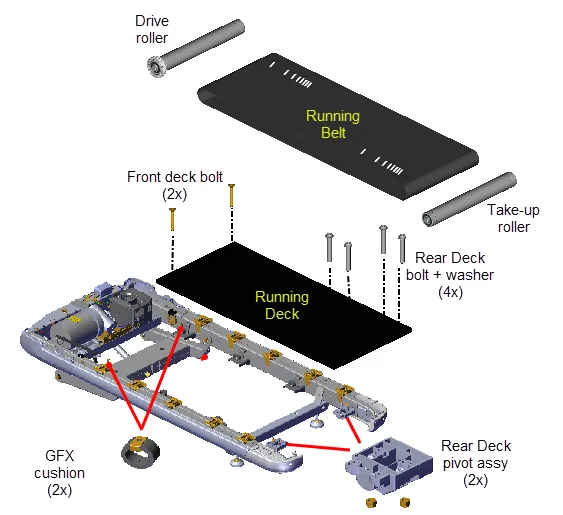
Image source: Bing (Web (fair-use with source credit))
The 3-Step Squeak Diagnosis Workflow
This is the core process. It uses if/then logic to help you find the cause without guessing.
Step 1: Pinpoint the Location
Run the treadmill at a low speed. Stand to the side for safety. Listen carefully at each end.
If the sound is strongest near the motor hood, it is likely the motor or front roller. If it comes from the back, focus on the rear roller.
If the sound seems to come from under the belt in the middle, the deck or belt lubrication is probably the issue. This is the most common scenario, and the cheap, easy fix.
Step 2: Test It Loaded and Unloaded
Now, carefully get on the treadmill and walk at a slow pace. Pay attention to whether the squeak gets louder, stays the same, or disappears. If it gets louder when you are on it, the belt-to-deck friction is the likely cause.
If the squeak does not change whether you are on it or off, the problem is more likely a roller bearing or motor issue. These parts spin at the same speed regardless of load.
Step 3: Match the Fix to the Symptom
Based on your observations, here is what to do next. If the squeak is loudest in the middle and gets worse under load, lubricate the deck. If the squeak comes from one end and is constant, inspect the roller bearings.
If it comes from the motor compartment, check the drive belt and motor.
If you are unsure, start with lubrication. It is the safest first step. If the squeak persists after lubricating, then move on to checking roller tension or hardware.
Squeak Fixes That Backfire: Common Mistakes to Skip
Many people reach for WD-40 first. That is a mistake. WD-40 is a solvent, not a long-term lubricant.
It can break down the belt material and make things worse.
Using grease is another error. Grease is too thick. It will attract dirt and dust, creating a gummy mess that ruins the belt and deck.
Only use lubricants made specifically for treadmills.
Over-tightening the belt is a common DIY error. It puts extra stress on the roller bearings and can cause them to fail faster. The belt should have about 2 to 3 inches of lift when you pull up on the center.
Ignoring the squeak is the worst mistake. A little friction noise can turn into a damaged belt or a seized roller. Fixing a squeak early usually costs nothing but a little time and the right lubricant.
Some people take the treadmill apart without marking bolt positions. This can throw off the alignment later. If you remove anything, take a photo first.
Use a marker to label parts if needed.
Keep It Quiet: Lubrication, Belt Tension, and Routine Care
Prevention keeps the squeak from coming back. The most important task is regular lubrication. How often depends on use, but a good rule is every three months or every 100 miles.
Always use 100% silicone lubricant. Apply it under the belt along the center of the deck. Then run the treadmill at a low speed for about three minutes to spread it evenly.
Wipe away any excess.
Check belt tension monthly. The 2 to 3 inch lift test is simple. Lift the belt at the center of the deck.
It should give about that much before it feels tight. If it is too loose, it may slip. If too tight, it stresses the rollers.
Keep the treadmill on a level surface. Uneven floors can twist the frame and cause rubbing. A treadmill mat helps with stability and noise.
Regular cleaning matters. Dust and pet hair get under the belt and create friction. Vacuum around and under the treadmill often.
Wipe down the deck and belt with a dry cloth.
Consider your environment. Humidity affects the deck surface. In very dry climates, you may need to lubricate more often.
Cold garages can make belts stiffer and more prone to noise.
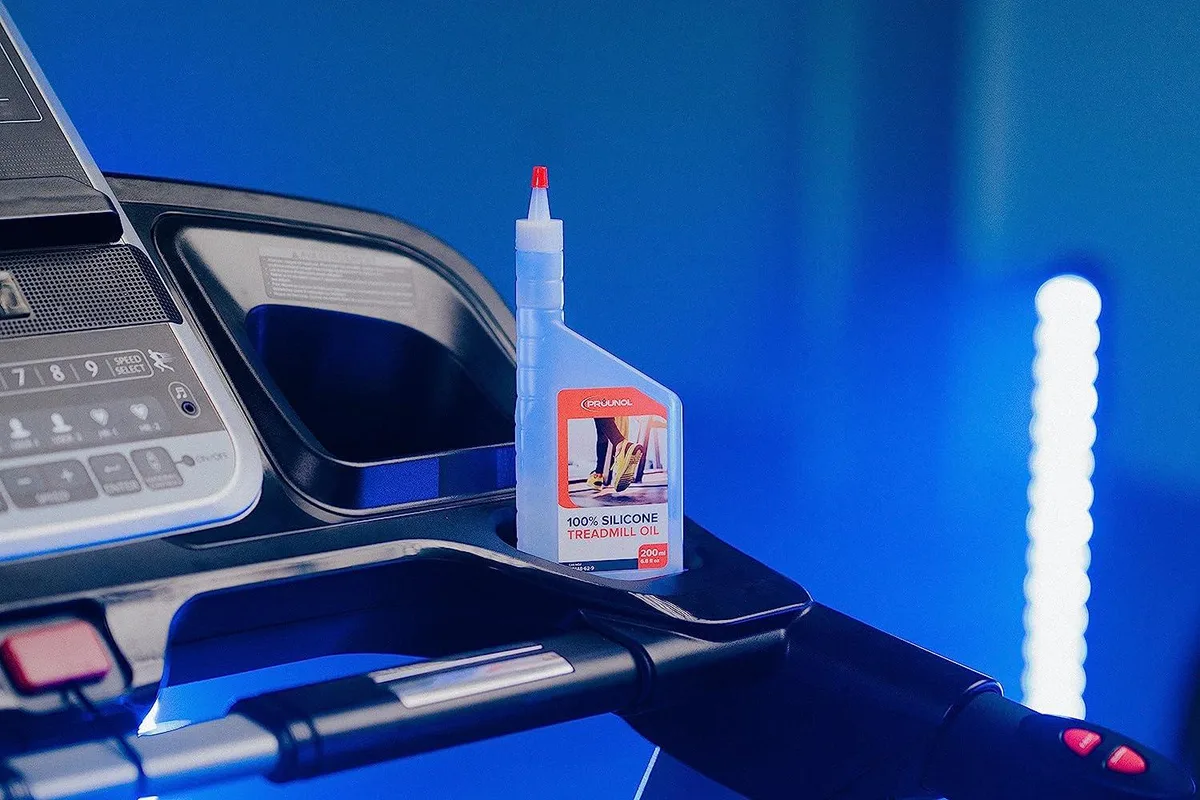
Image source: Bing (Web (fair-use with source credit))
For more on keeping fitness equipment in top shape, you might find our guide on how to maintain an elliptical machine useful. The principles of regular cleaning and lubrication apply across machines.
If you are wondering how often you should use an elliptical machine, consistent use with proper maintenance is key to longevity.
Understanding how an elliptical machine works can also give you insight into general fitness equipment mechanics and care.
If you are considering other equipment, what is the difference between an elliptical and a rowing machine compares two popular options.
For general home gym advice, how much space do dumbbells need covers equipment storage basics.
Per ASTM F2115, the standard for motorized treadmills, regular maintenance as outlined in the owner's manual is required for safe operation.
Squeak-to-Fix Quick Reference Table
If you're short on time, use this table to match the sound you hear with the most likely cause and the fix that works. It follows the same if/then logic from the diagnosis workflow above.
| Symptom | Likely Cause | Recommended Fix |
|---|---|---|
| Squeak in the middle, louder under load | Dry deck or worn belt | Apply 100% silicone lubricant; test again |
| Squeak at one end, constant and chirping | Bad roller bearing | Remove the roller and test it by hand |
| Squeak from motor compartment | Failing motor bearings or a dry drive belt | Inspect the drive belt; order matching bearings |
| Rubbing sound on every rotation | Belt scraping the frame or seam damage | Center the belt; replace it if the seam is frayed |
| Loud squeak right after you step on | Belt tension too tight | Loosen the rear roller bolts by half a turn each |
| Intermittent squeak only on incline | Dry incline motor pivots or worn plastic bushings | Lubricate the incline joint with a PTFE spray |
| Creaking from the frame | Loose hardware or uneven floor | Tighten all frame bolts; level the treadmill with the feet |
| Belt slips after you lubricate | Too much lubricant or a glazed belt | Wipe off excess; clean the belt surface with a dry cloth |
Match your symptom to the row. Fix one thing at a time. Then run the treadmill for two minutes and listen again.
That simple retest tells you whether you solved it or need to try the next row.
Squeaky Treadmill FAQs
Is WD-40 ever safe to use on a treadmill?
No. WD-40 is a solvent, not a proper lubricant. It breaks down the walking belt material and can damage the deck's protective surface.
Use only 100% silicone-based treadmill lubricant. It is the only type that keeps the belt gliding without degrading rubber or plastic parts.
How often should I lubricate my treadmill?
Most manufacturers recommend lubricating every three months or every 100 to 150 miles. If you walk more than an hour a day, lubricate monthly. If you use it lightly, twice a year is usually enough.
Check the belt's underside for dryness, which signals it is time.
Why does my treadmill only squeak when I step on it?
A load-sensitive squeak almost always means belt-to-deck friction. Your body weight presses the belt down, and if the deck lacks lubricant, the friction creates a high-pitched sound. Start with silicone lubrication.
If the squeak continues, check belt tension or a worn deck.
Can a small squeak cause permanent damage?
Yes, if left alone. A dry deck wears through the belt surface and can ruin the walking belt and the deck together. Worn roller bearings can seize, which damages the drive motor.
Fixing a squeak early costs a few dollars and minutes. Waiting can cost hundreds.
When should I call a professional instead of fixing it myself?
Call a technician if the noise is a loud grinding sound or comes from the motor. Also call if you have tightened bolts and lubricated the deck, but the squeak remains after two attempts. Replacing motor parts requires special tools and knowledge.
A professional is cheaper than breaking something else.