What Is a Spin Bike
If you've ever seen a spin bike in a gym and wondered whether it's just another exercise bike, you're not alone. It looks like a road bike bolted to the floor, with a heavy wheel up front and handlebars that angle down. That's the short answer.
What is a spin bike exactly? It's a stationary bicycle with a weighted flywheel and a fixed gear, designed to mimic the feel of riding outdoors. It was popularized by Spinning®, a brand created by South African endurance cyclist Johnny Goldberg in the 1990s.
The bikes are now a staple in gyms and studios worldwide, and they're everywhere in home workouts. In our research, manufacturer specifications indicate that most spin bikes use flywheels weighing between 30 and 50 pounds, which is a core part of the smooth ride. Let's break down the visual and mechanical details that make a spin bike unique.
What Is a Spin Bike? A Quick Visual Breakdown
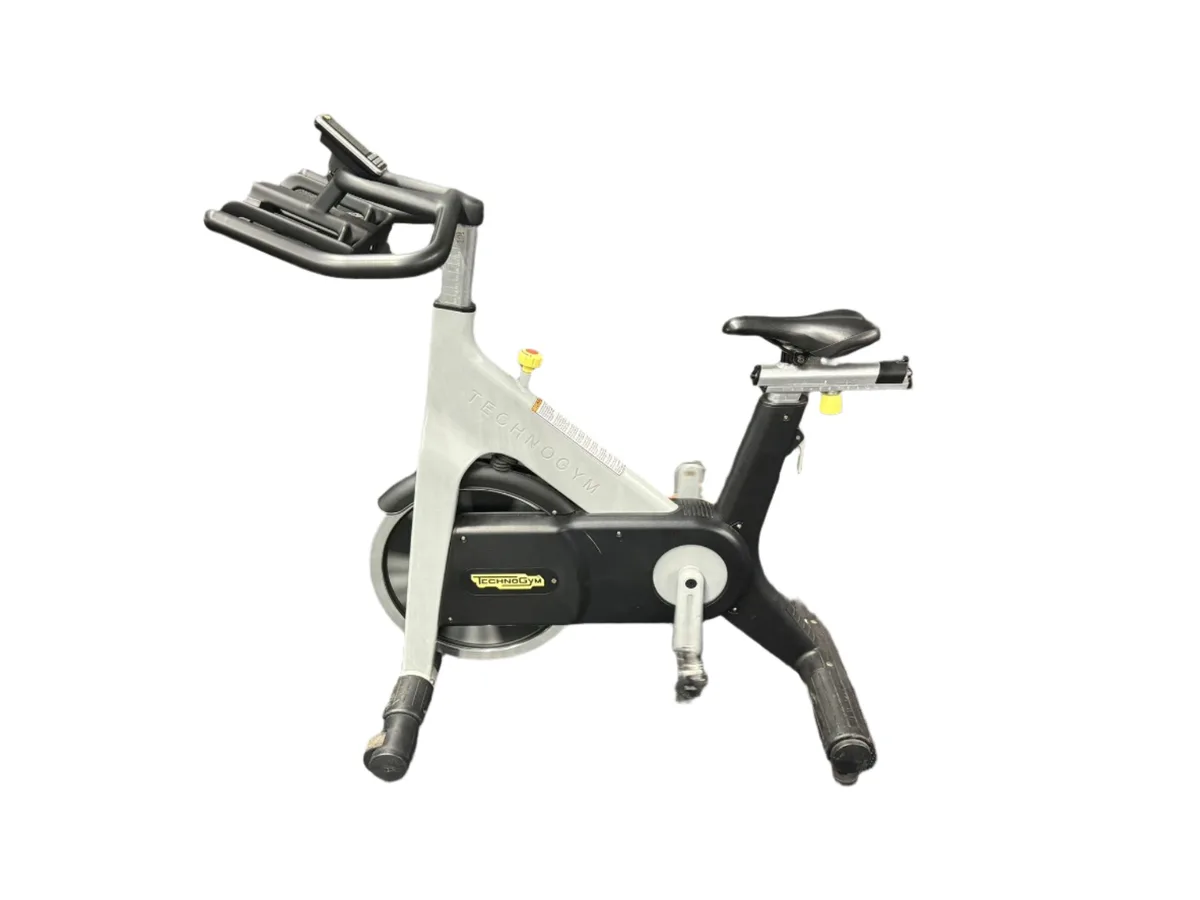
Image source: Bing (Web (fair-use with source credit))
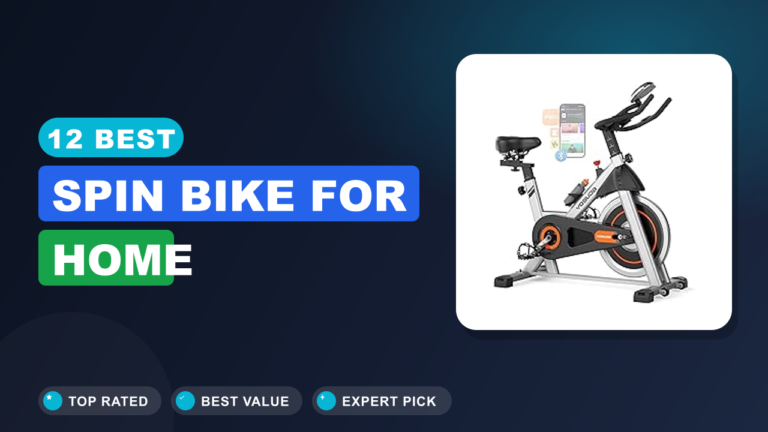
Look at a spin bike from the side and the first thing you'll notice is the big solid wheel at the front. That's the flywheel, and it's the heart of the whole machine. Unlike a regular exercise bike, that wheel actually spins when you pedal, and it carries momentum.
That momentum is what creates the smooth, fluid pedal stroke that spin bikes are known for. Heavier flywheels feel stronger and resist sudden tempo changes.
The second visual clue is the handlebar position. Spin bike handlebars sit lower than the saddle and curve forward and down, similar to a road racing bike. That geometry puts your body in a forward-leaning riding position, which engages your core and lets you pull as well as push on the pedals.
An upright bike, by comparison, keeps your spine closer to vertical.
Now look at the middle of the bike, between the handlebars and the seat post. You'll see a knob, often with a brake lever attached. That's the resistance dial.
Turn it clockwise and the bike gets harder to pedal. Push it straight down as an emergency brake. There's typically no freewheel mechanism on a spin bike, meaning the pedals keep turning as long as the flywheel is moving.
Keep these three visual cues in mind: the heavy front wheel, the low drop handlebars, and the resistance knob near the top tube. Those are the easiest ways to identify a spin bike at a glance.
The Anatomy of a Spin Bike: What Every Part Looks Like and What It Does
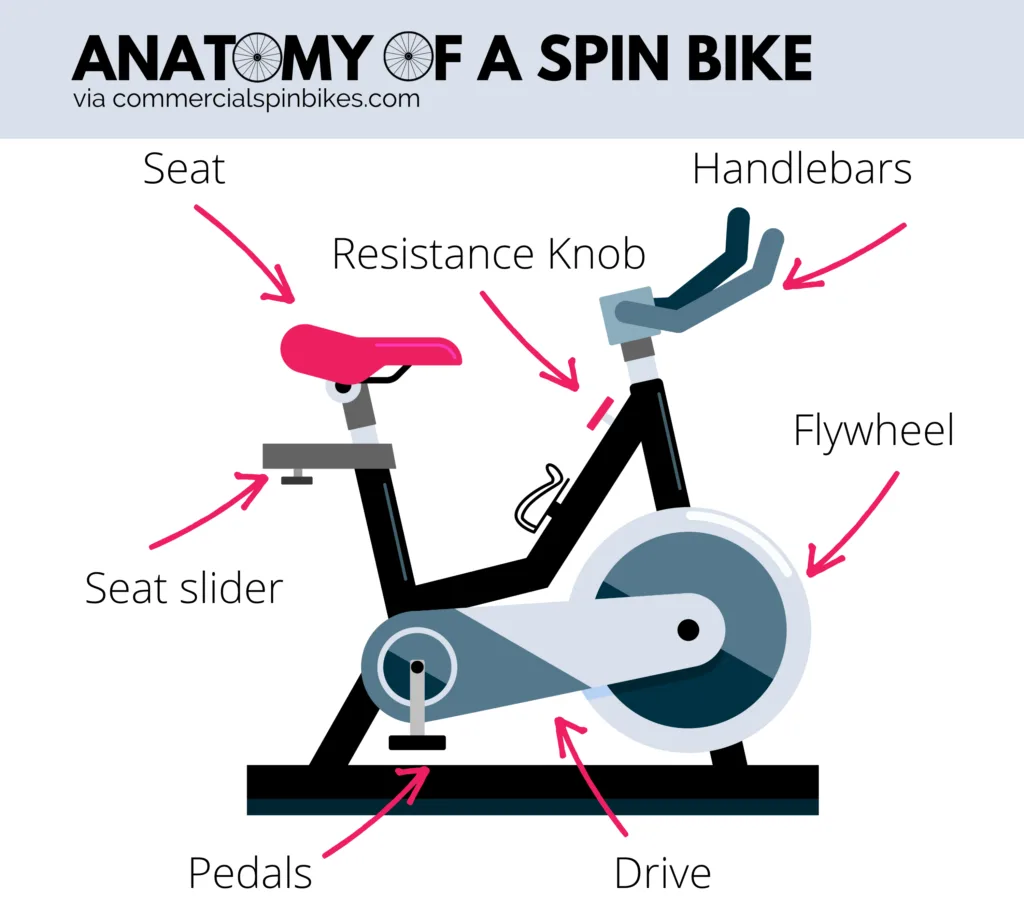
Image source: Bing (Web (fair-use with source credit))
Once you know what a spin bike looks like overall, it helps to learn the names of its main parts. Here's what you're looking at when you stand next to one, from front to back.
The flywheel sits inside either an open frame or a covered casing, depending on the model. It's weighted metal, usually cast iron or steel. Its job is to store kinetic energy, so your pedal strokes feel consistent and smooth.
A heavier flywheel gives a more realistic ride, but it also takes more effort to get moving.
The resistance system works against that flywheel. On a classic spin bike, a felt or leather pad presses against the flywheel. Turn the resistance knob clockwise, the pad presses harder, and the pedals become tougher to push.
On newer bikes, magnetic resistance does the same job without any friction parts touching the wheel. The resistance knob doubles as a brake: push it straight down and the pad stops the flywheel instantly.
The frame is a heavy steel skeleton that holds everything together. The horizontal top tube connects the front fork to the seat tube, and it's usually where you'll find the resistance mechanism. Frame weight matters because a stable bike keeps you safe during standing sprints.
A wobbly frame can flex under heavy load, which is why commercial studio bikes typically weigh over 100 pounds.
The adjustable parts are the saddle and the handlebars. The seat post slides up and down for leg length, and the saddle itself slides forward and backward. The handlebars also adjust up and down, plus they offer multiple gripping positions, which is what "multi-position drop bars" means.
More adjustment points mean a better fit for different body shapes.
The drivetrain is the final piece. A spin bike uses either a chain or a belt to connect the crank arms to the flywheel. Belt-driven bikes are quieter, and they don't require grease maintenance.
Chain-driven bikes feel more like a true road bike, but they need occasional lubrication. For home use, a belt drive is usually the better choice.
Spin Bike vs. Upright Bike vs. Smart Bike: How to Tell Them Apart at a Glance
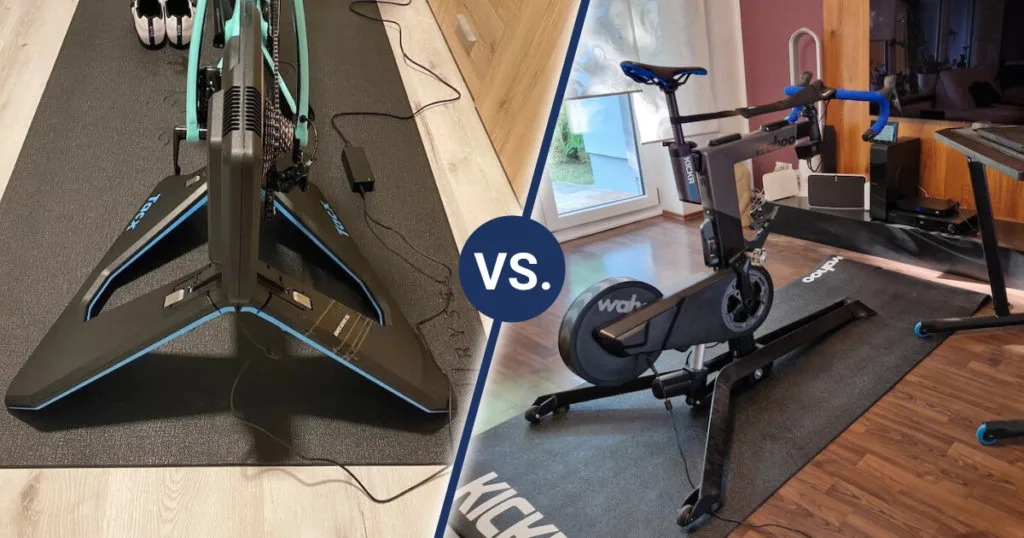
Image source: Bing (Web (fair-use with source credit))
Here's where a lot of people get confused. Spin bikes, standard upright exercise bikes, and smart connected bikes all look similar in a dark corner of the gym, but they're quite different machines.
Compare the riding position first. An upright exercise bike usually has handlebars that sit higher and closer to the rider, encouraging a more upright, casual posture. A spin bike forces you to lean forward, with your hips higher and your weight distributed across the saddle and handlebars.
That forward position is a key visual distinction.
The flywheel tells the story mechanically. Upright bikes typically use lighter flywheels, often under 20 pounds, and they have a freewheel mechanism. That means you can stop pedaling and the pedals stay still.
A spin bike has a fixed gear, so the pedals move whenever the flywheel spins. That's the biggest functional difference to spot.
| Feature | Spin Bike | Upright Bike | Smart Connected Bike |
|---|---|---|---|
| Flywheel weight | 30 to 50 lb | 10 to 20 lb | 30 to 50 lb |
| Drivetrain | Fixed gear, no coasting | Freewheel, coasting allowed | Fixed gear, no coasting |
| Resistance | Friction pad or magnetic | Magnetic, belt, or fan | Magnetic, app-controlled |
| Handlebars | Low drop bars | High upright bars | Moderate drop or upright |
| Connectivity | None or basic RPM | Basic display | App, auto resistance, data |
Smart bikes, like the Peloton-style models, combine spin bike geometry with connected features. They have the same heavy flywheel and fixed gear, but the resistance is usually magnetic and controlled through a touchscreen. They can change resistance automatically based on the workout you're following.
If the bike has a flywheel that keeps spinning when you stop pedaling, and the handlebars sit noticeably lower than the seat, it's a spin bike. If it has a screen with live classes and digital resistance, it's a smart bike. If neither applies, it's probably a standard upright exercise bike.
How to Spot a Quality Spin Bike by Eye (Without a Spec Sheet)
You don't need a manual to judge a spin bike's quality. A quick visual inspection tells you almost everything, especially when you compare two bikes side by side.
Look at the flywheel first. A quality spin bike uses a heavier flywheel, typically 35 pounds or more. You can see it if it's exposed.
If it's enclosed, check the bike's listed weight. A heavier overall bike usually means a heavier flywheel and a sturdier frame. The frame itself should be thick steel, not thin tubular metal that flexes when you push on the handlebars.
Manufacturer specifications suggest that bikes weighing over 100 pounds total are built for commercial use.
Check the drivetrain. A belt drive is a good sign for home use because it's quieter and requires no lubrication. A chain drive is fine if the bike is meant for a studio environment, but it demands more maintenance.
Both are acceptable, but you should know which one you're looking at.
Examine the resistance mechanism. If the bike uses a felt pad, the pad should sit where you can see it, and it should be easy to replace. If it uses magnetic resistance, look for a sealed unit that needs no maintenance.
The resistance knob should turn smoothly, without clicking or slipping.
The seat and handlebar adjustments are also telling. Quality bikes use sturdy quick-release levers, not plastic knobs, and they offer a wide range of motion. A bike that only adjusts for seat height but not fore and aft position limits your ability to get a proper fit.
That's a common feature of cheaper bikes.
Quality bikes follow international safety standards like EN ISO 20957-1, which tests stationary training equipment for stability and durability. Seeing that certification mentioned in the spec sheet is a strong sign of a properly built machine.
Common Lookalike Mistakes: Why So Many People Buy the Wrong Bike
The most common mistake isn't buying a bad spin bike. It's buying a bike that isn't a spin bike at all, because it has spin-like styling.
Retailers love to slap the word "spinning" on almost any stationary bike with a flywheel and drop bars. But some of these bikes use a freewheel mechanism, which means you can coast. As soon as you stop pedaling, the pedals stay still.
A true spin bike has a fixed gear, and if you don't keep pedaling, the crank keeps turning. If you're expecting that forced pedal motion and get a freewheel instead, your workout feels wrong. Check the product description for the words "fixed gear" or "freewheel." That single spec determines whether you're getting a spin bike.
Another mistake is choosing an upright bike because you want to read a book while riding. That's not what a spin bike is for. Spin bikes require your full-body engagement.
You'll be out of the saddle, shifting your weight, and gripping the handlebars in different positions. If you want a casual, sit-back cardio session, cardio equipment more suited to relaxed sessions might be a better fit.
Running out of space is a third mistake. Spin bikes have a large footprint, roughly 4 feet long and 2 feet wide, and they're heavy. They're not easy to move up stairs or squeeze into a closet.
Some people buy one without measuring their room, and they end up with a bike that blocks a door. Before you commit, measure your workout space and check the bike's assembled dimensions.
Finally, don't buy a spin bike expecting it to feel like a real road bike. The position is similar, but the ride is fixed, and the weight is different. If you're a serious cyclist looking for realistic training, a smart trainer for your existing road bike might serve you better.
Spin bikes are their own thing, and knowing the difference is half the battle.
What the Correct Riding Position Should Look Like on a Spin Bike
Can you ride a spin bike and still get the setup wrong? Absolutely. Most beginners sit too low, with rounded backs and knees that push forward.
Your position determines whether the workout feels smooth or painful.
Saddle height comes first. Place a pedal at the lowest point. Your leg should hold a slight bend of about 25 to 30 degrees.
If your hips rock from side to side as you pedal, the seat is too high.
Next, adjust the saddle forward or backward. Put both pedals horizontally in the 3 o'clock and 9 o'clock positions. The front of your knee should line up directly with the pedal axle.
Small equipment fit changes correct what you see in the mirror.
Handlebars come last. Start with the bars at the same height as the saddle. Riders with tight hamstrings feel better with the bars up a bit higher.
Lower them gradually as your flexibility improves.
Check your whole body in a mirror. Your back stays flat, leaning forward gently from the hips. Elbows remain soft, shoulders low, wrists straight.
Aim for roughly 60 percent of your weight on the saddle and 40 percent on the handlebars.
Persistent pain means your position is off, not the workout. The American Council on Exercise stresses proper bike fit because indoor cycling puts real stress on the knees and lower back when alignment is wrong.
Spin Bike FAQs: Quick Answers for Beginners
Here's what people ask us most often when they're new to spin bikes.
Is a spin bike good for weight loss?
Yes. A moderate to vigorous spin session burns roughly 400 to 600 calories per hour. The fixed gear keeps your legs moving, so there's less downtime than on other machines.
Rowing burns calories at a similar rate if you're comparing cardio options.
Can you coast on a spin bike?
No. A spin bike has a fixed gear, so the pedals turn whenever the flywheel spins. If you stop pedaling, the crank pushes your feet along.
You can coast on a standard upright bike, but not on a true spin bike.
Do you need special cycling shoes?
No, but they help. Most spin bikes come with toe cages that work fine in regular sneakers. Many also have dual-sided pedals with SPD clips on the flip side.
If you buy cycling shoes, make sure they use SPD-style cleats.
How much does a spin bike cost?
Entry-level home bikes run from $300 to $600. Mid-range models with magnetic resistance and heavier flywheels cost $600 to $1,500. Smart bikes with screens and auto resistance start above $1,500 and can reach $3,000 plus.
How long should a beginner session last?
Start with 20 to 30 minutes. That's enough for a solid workout without overwhelming your muscles. Experienced riders often go 45 to 60 minutes.
The same session-length logic applies to other home cardio machines: build up slowly and stay consistent.