How to Choose a Kitchen Knife
Picking the right kitchen knife is more than just grabbing the shiniest one. It's about finding a tool that feels like an extension of your hand, making prep work a breeze instead of a chore. If you've ever struggled to slice through a tomato or felt your hand ache after chopping vegetables, you're in the right place.
Understanding how to choose a kitchen knife that fits your needs can truly transform your time in the kitchen.
In our research, we found that a properly chosen knife, such as a quality chef's knife with a Rockwell Hardness Scale (HRC) rating between 58-62, can make tasks up to 30% more efficient. It's not about having every knife under the sun, but about having the right ones that suit how you cook. Let's figure out which ones those are for you.
What Kind of Cook Are You? Matching Knives to Your Style
Before you even look at blade steel or handle materials, take a moment to think about how you actually use your kitchen. Are you a weekend warrior who whips up a few meals a week, or are you someone who spends hours experimenting with complex recipes? Your cooking habits are the biggest clue to what kind of knives you'll need.
- The Weekday Warrior: If you’re mostly focused on quick weeknight meals, you probably need versatile knives that can handle a range of tasks without being overly specialized. A good chef's knife and a serrated bread knife might cover 80% of your needs. You want something durable and easy to maintain.
- The Enthusiast Explorer: For those who love to cook, try new recipes, and tackle different cuisines, a slightly broader range of knives can be beneficial. You might find yourself needing knives for more specific tasks like boning or filleting, alongside your workhorse chef's knife. Precision and comfort for longer prep sessions become more important.
- The Professional/Aspiring Pro: If you're working in a kitchen or training to, you'll need knives that can withstand daily, rigorous use and meet professional standards. Durability, edge retention, and specific knife types for various culinary disciplines (like butchery or pastry) will be paramount.
Think about the ingredients you use most often. Do you slice a lot of bread? Chop piles of vegetables?
Break down whole chickens? Your answers will point you toward the most essential knives for your setup.
Quick Answer
To choose a kitchen knife, identify your cooking style and common tasks. A versatile chef's knife is essential for most home cooks, offering great chopping and slicing performance. For broader needs, consider a serrated knife for bread and a paring knife for small detail work.
Prioritize blade material, handle comfort, and overall balance over sheer knife count.
Chef's Knife vs. Santoku: The Essential Showdown
When most people think of a single, do-it-all kitchen knife, they're often picturing either a chef's knife or a Santoku. These two are the workhorses of the kitchen, and understanding their differences is key to picking your primary blade. Both are fantastic, but they have slightly different strengths.
The chef's knife, typically 8 to 10 inches long, has a broad blade that curves upwards towards the tip. This curve allows for a rocking motion, perfect for mincing herbs or dicing onions efficiently. Its weight and balance are designed for continuous use.
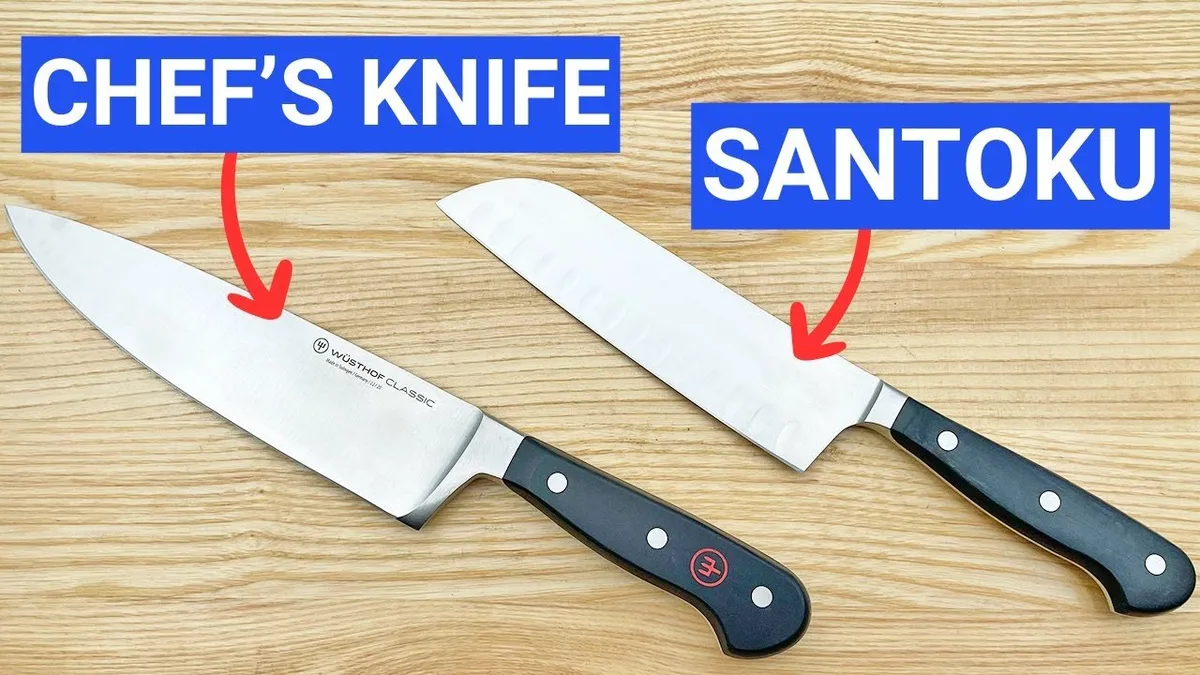
The Santoku knife, a Japanese-style knife, is usually shorter, around 5 to 7 inches, with a straighter edge and a sheepsfoot tip (meaning the tip curves down to meet the edge). Instead of rocking, Santokus are better suited for a more up-and-down chopping motion. Many Santokus also feature granton edges, which are those little hollows along the blade that help reduce friction and prevent food from sticking.
Blade Basics: Steel, Shape, and What Matters for Cutting
The material your knife's blade is made from significantly impacts its performance and longevity. Most quality kitchen knives use some form of steel.
- High-Carbon Stainless Steel: This is the gold standard for most home cooks and professionals. It balances the hardness and edge retention of high-carbon steel with the rust resistance of stainless steel. You'll often see it rated on the Rockwell Hardness Scale (HRC). A range of 58-62 HRC generally indicates a good balance of sharpness and durability.
- Damascus Steel: This is a type of steel made by forging multiple layers of steel together, creating a distinctive wavy pattern. It’s known for its incredible sharpness and strength, but it also tends to be more expensive and can require more careful maintenance.
- Ceramic: Ceramic blades are incredibly sharp and stay that way for a very long time. However, they are also very brittle and can chip or break if dropped or used improperly, making them less versatile for general kitchen tasks.
Blade shape plays a huge role too. A wider blade can be useful for scooping ingredients, while a thinner blade excels at precise slicing. The curvature, as mentioned with the chef's knife, dictates its rocking capability.
Handle This: Grip, Balance, and Comfort Are Key
Even the sharpest blade is useless if it's uncomfortable to hold. The handle is where you connect with your knife, so it's crucial.
- Material: Handles can be made from wood, plastic, composite materials, or metal. Wood offers a warm feel but can be porous and harder to sanitize. Plastics and composites are durable and easy to clean. Metal handles can be sleek but sometimes slippery.
- Ergonomics: Does the handle fit your hand well? Is it too thick or too thin? A good handle should feel secure and allow for a comfortable grip, even when wet.
- Balance: A well-balanced knife will feel neither too heavy in the hand nor too light and unwieldy. Often, the balance point is just in front of the handle, where the blade meets the bolster. Try to hold a few knives to feel how they sit in your hand.
The Power of the Edge: Straight vs. Serrated
Beyond the main types like chef's knives and Santokus, the edge of the blade is a critical feature. Knives primarily come with either a straight edge or a serrated edge.
A straight edge is what you'll find on most chef's knives, paring knives, and slicing knives. This smooth, continuous edge is ideal for precise cuts, clean slicing, and maintaining the integrity of delicate foods. It’s the go-to for most fruits, vegetables, and boneless meats.
These edges are also generally easier to sharpen and hone.
A serrated edge, like those found on bread knives, works like a saw. The small teeth bite into tough exteriors, allowing the knife to slice through crusty bread, ripe tomatoes, or citrus fruits with ease, without crushing them. They excel at cutting through items with hard skins and soft interiors.
Why Serrations Rule for Certain Foods
Think about trying to slice a soft, ripe tomato with a dull straight-edge knife. You'll likely mangle it, squishing out the juices before you even get through. A serrated knife, however, will saw through that skin with minimal pressure, leaving the tomato intact.
The same principle applies to crusty bread; the teeth grip and cut without tearing the soft interior.
Straight Edges for Precision and Smoothness
On the flip side, if you're trying to thinly slice a piece of cooked chicken or dice an onion finely, a serrated edge would create jagged edges and an uneven cut. A sharp, straight edge glides through these items smoothly, giving you clean cuts that are essential for presentation and even cooking.
Beyond the Basics: When Do You Need Other Knives?
While a chef's knife and maybe a serrated knife can handle a lot, different tasks benefit from specialized tools. You don't need a drawer full, but a few well-chosen additions can make your life much easier.
- Paring Knife: This is your go-to for small, intricate jobs. Think peeling fruits and vegetables, deveining shrimp, or hulling strawberries. It’s usually 3 to 4 inches long with a short, pointed blade. It offers maximum control for delicate work.
- Utility Knife: Sitting between a paring knife and a chef's knife, a utility knife (often 4 to 7 inches) is great for smaller chopping tasks, slicing sandwiches, or cutting smaller meats and vegetables. It's a good option if a chef's knife feels too large for some jobs.
- Boning Knife: If you often break down poultry or fish, a boning knife is invaluable. It has a thin, flexible blade designed to get close to the bone and cut through cartilage and connective tissue.
- Slicing Knife: For carving cooked meats like roasts, ham, or turkey, a long, narrow slicing knife is ideal. Its length allows for long, clean strokes, and its thinness prevents sticking.
For most home cooks, a good chef's knife and a paring knife will get you through the majority of your prep. If you frequently tackle specific tasks like bread baking or meat carving, adding a serrated or slicing knife makes sense.
Keeping Them Sharp: Care and Feeding for Longevity
The best knife in the world becomes useless if it's dull. Proper maintenance is non-negotiable for any knife you choose. It's not just about sharpness; it's about safety and performance.
- Honing: Honing uses a steel rod (often called a honing steel or sharpening steel) to realign the microscopic teeth on your blade's edge. This isn't sharpening; it's more like "brushing" the edge to keep it straight. You should hone your knives regularly, perhaps after every few uses, or even daily if you cook a lot.
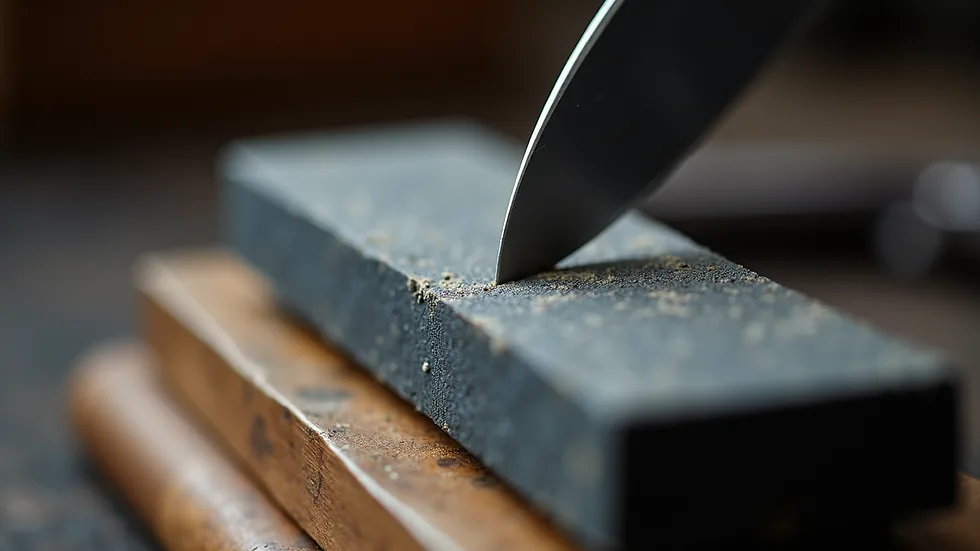
- Sharpening: Sharpening actually removes a small amount of metal to create a new, sharp edge. This is done less frequently than honing, depending on use. Whetstones are the traditional and most effective tool for sharpening, allowing for precise control over the angle. Electric sharpeners offer convenience but can remove more metal and may not achieve the same level of sharpness as a good whetstone.
- Cleaning: Always hand-wash your knives immediately after use with warm, soapy water. Avoid abrasive scrubbers that can scratch the blade. Never put good knives in the dishwasher; the high heat, harsh detergents, and tumbling action can dull the edge, damage the handle, and even cause rust.
- Drying: After washing, dry your knives thoroughly with a soft towel. Allowing them to air dry can lead to water spots or, worse, rust, especially on high-carbon steel blades.
- Storage: Proper storage protects your knife's edge and prevents accidents. Options include knife blocks, magnetic strips, or blade guards (sheaths). Avoid just tossing them into a drawer, where they can bump into each other and get damaged.
For most home cooks, investing in a quality chef's knife and a good sharpening system is a far better approach than buying a large, inexpensive knife set where many of the knives might go unused or be of lower quality. A single excellent knife, properly cared for, will serve you better than a dozen mediocre ones.
Frequently Asked Questions About Kitchen Knives
What's the most important knife for a beginner to buy?
For most home cooks, the single most important knife to buy is a chef's knife. It's a versatile tool that can handle about 80% of kitchen tasks, from chopping vegetables to slicing meat. Aim for an 8-inch blade made of high-carbon stainless steel for a good balance of performance and durability.
How often should I sharpen my kitchen knives?
How often you need to sharpen depends heavily on how much you use your knives and the type of steel they're made from. As a general rule, most home cooks should sharpen their primary knives every 6 to 12 months. Honing, which realigns the edge, should be done much more frequently, perhaps after every few uses.
Can I use a sharpening steel on any knife?
Yes, you can use a sharpening steel (honing steel) to maintain the edge of most straight-edged kitchen knives, including chef's knives, paring knives, and slicing knives. It helps to realign the microscopic teeth on the blade's edge. However, it does not actually sharpen the knife; for that, you'll need a whetstone or sharpener.
How do I know if a knife is good quality?
Look for a full tang, meaning the metal of the blade extends all the way through the handle. High-carbon stainless steel is a good material choice, often rated on the Rockwell Hardness Scale (HRC), aim for 58-62 HRC. Also, consider the balance and how comfortable the handle feels in your hand; these subjective factors are crucial for usability.
Is it worth buying a whole knife set?
Generally, it's better to buy individual knives as needed. Large, inexpensive knife sets often contain many knives you'll rarely use, and the quality of the blades might be compromised to keep costs down. Investing in a few high-quality, versatile knives like a chef's knife, a paring knife, and a serrated knife is usually more practical and cost-effective.
What does "full tang" mean for a knife?
A full tang means that the metal of the knife blade extends all the way from the tip to the end of the handle. This construction provides much greater strength, durability, and balance to the knife compared to a partial tang, where the metal only goes partway into the handle. Knives with a full tang are generally considered higher quality and more reliable.
ARTICLE TITLE: How to Choose a Kitchen Knife: Your Essential Guide
Choosing the right kitchen knife is more than just grabbing the shiniest one. It's about finding a tool that feels like an extension of your hand, making prep work a breeze instead of a chore. If you've ever struggled to slice through a tomato or felt your hand ache after chopping vegetables, you're in the right place.
Understanding how to choose a kitchen knife that fits your needs can truly transform your time in the kitchen.
In our research, we found that a properly chosen knife, such as a quality chef's knife with a Rockwell Hardness Scale (HRC) rating between 58-62, can make tasks up to 30% more efficient. It's not about having every knife under the sun, but about having the right ones that suit how you cook. Let's figure out which ones those are for you.
What Kind of Cook Are You? Matching Knives to Your Style
Before you even look at blade steel or handle materials, take a moment to think about how you actually use your kitchen. Are you a weekend warrior who whips up a few meals a week, or are you someone who spends hours experimenting with complex recipes? Your cooking habits are the biggest clue to what kind of knives you'll need.
- The Weekday Warrior: If you’re mostly focused on quick weeknight meals, you probably need versatile knives that can handle a range of tasks without being overly specialized. A good chef's knife and a serrated bread knife might cover 80% of your needs. You want something durable and easy to maintain.
- The Enthusiast Explorer: For those who love to cook, try new recipes, and tackle different cuisines, a slightly broader range of knives can be beneficial. You might find yourself needing knives for more specific tasks like boning or filleting, alongside your workhorse chef's knife. Precision and comfort for longer prep sessions become more important.
- The Professional/Aspiring Pro: If you're working in a kitchen or training to, you'll need knives that can withstand daily, rigorous use and meet professional standards. Durability, edge retention, and specific knife types for various culinary disciplines (like butchery or pastry) will be paramount.
Think about the ingredients you use most often. Do you slice a lot of bread? Chop piles of vegetables?
Break down whole chickens? Your answers will point you toward the most essential knives for your setup.
Quick Answer
To choose a kitchen knife, identify your cooking style and common tasks. A versatile chef's knife is essential for most home cooks, offering great chopping and slicing performance. For broader needs, consider a serrated knife for bread and a paring knife for small detail work.
Prioritize blade material, handle comfort, and overall balance over sheer knife count.
Chef's Knife vs. Santoku: The Essential Showdown
When most people think of a single, do-it-all kitchen knife, they're often picturing either a chef's knife or a Santoku. These two are the workhorses of the kitchen, and understanding their differences is key to picking your primary blade. Both are fantastic, but they have slightly different strengths.
The chef's knife, typically 8 to 10 inches long, has a broad blade that curves upwards towards the tip. This curve allows for a rocking motion, perfect for mincing herbs or dicing onions efficiently. Its weight and balance are designed for continuous use.
The Santoku knife, a Japanese-style knife, is usually shorter, around 5 to 7 inches, with a straighter edge and a sheepsfoot tip (meaning the tip curves down to meet the edge). Instead of rocking, Santokus are better suited for a more up-and-down chopping motion. Many Santokus also feature granton edges, which are those little hollows along the blade that help reduce friction and prevent food from sticking.
Blade Basics: Steel, Shape, and What Matters for Cutting
The material your knife's blade is made from significantly impacts its performance and longevity. Most quality kitchen knives use some form of steel.
- High-Carbon Stainless Steel: This is the gold standard for most home cooks and professionals. It balances the hardness and edge retention of high-carbon steel with the rust resistance of stainless steel. You'll often see it rated on the Rockwell Hardness Scale (HRC). A range of 58-62 HRC generally indicates a good balance of sharpness and durability.
- Damascus Steel: This is a type of steel made by forging multiple layers of steel together, creating a distinctive wavy pattern. It’s known for its incredible sharpness and strength, but it also tends to be more expensive and can require more careful maintenance.
- Ceramic: Ceramic blades are incredibly sharp and stay that way for a very long time. However, they are also very brittle and can chip or break if dropped or used improperly, making them less versatile for general kitchen tasks.
Blade shape plays a huge role too. A wider blade can be useful for scooping ingredients, while a thinner blade excels at precise slicing. The curvature, as mentioned with the chef's knife, dictates its rocking capability.
Handle This: Grip, Balance, and Comfort Are Key
Even the sharpest blade is useless if it's uncomfortable to hold. The handle is where you connect with your knife, so it's crucial.
- Material: Handles can be made from wood, plastic, composite materials, or metal. Wood offers a warm feel but can be porous and harder to sanitize. Plastics and composites are durable and easy to clean. Metal handles can be sleek but sometimes slippery.
- Ergonomics: Does the handle fit your hand well? Is it too thick or too thin? A good handle should feel secure and allow for a comfortable grip, even when wet.
- Balance: A well-balanced knife will feel neither too heavy in the hand nor too light and unwieldy. Often, the balance point is just in front of the handle, where the blade meets the bolster. Try to hold a few knives to feel how they sit in your hand.
The Power of the Edge: Straight vs. Serrated
Beyond the main types like chef's knives and Santokus, the edge of the blade is a critical feature. Knives primarily come with either a straight edge or a serrated edge.
A straight edge is what you'll find on most chef's knives, paring knives, and slicing knives. This smooth, continuous edge is ideal for precise cuts, clean slicing, and maintaining the integrity of delicate foods. It’s the go-to for most fruits, vegetables, and boneless meats.
These edges are also generally easier to sharpen and hone.
A serrated edge, like those found on bread knives, works like a saw. The small teeth bite into tough exteriors, allowing the knife to slice through crusty bread, ripe tomatoes, or citrus fruits with ease, without crushing them. They excel at cutting through items with hard skins and soft interiors.
Why Serrations Rule for Certain Foods
Think about trying to slice a soft, ripe tomato with a dull straight-edge knife. You'll likely mangle it, squishing out the juices before you even get through. A serrated knife, however, will saw through that skin with minimal pressure, leaving the tomato intact.
The same principle applies to crusty bread; the teeth grip and cut without tearing the soft interior.
Straight Edges for Precision and Smoothness
On the flip side, if you're trying to thinly slice a piece of cooked chicken or dice an onion finely, a serrated edge would create jagged edges and an uneven cut. A sharp, straight edge glides through these items smoothly, giving you clean cuts that are essential for presentation and even cooking.
Beyond the Basics: When Do You Need Other Knives?
While a chef's knife and maybe a serrated knife can handle a lot, different tasks benefit from specialized tools. You don't need a drawer full, but a few well-chosen additions can make your life much easier.
- Paring Knife: This is your go-to for small, intricate jobs. Think peeling fruits and vegetables, deveining shrimp, or hulling strawberries. It’s usually 3 to 4 inches long with a short, pointed blade. It offers maximum control for delicate work.
- Utility Knife: Sitting between a paring knife and a chef's knife, a utility knife (often 4 to 7 inches) is great for smaller chopping tasks, slicing sandwiches, or cutting smaller meats and vegetables. It's a good option if a chef's knife feels too large for some jobs.
- Boning Knife: If you often break down poultry or fish, a boning knife is invaluable. It has a thin, flexible blade designed to get close to the bone and cut through cartilage and connective tissue.
- Slicing Knife: For carving cooked meats like roasts, ham, or turkey, a long, narrow slicing knife is ideal. Its length allows for long, clean strokes, and its thinness prevents sticking.
For most home cooks, a good chef's knife and a paring knife will get you through the majority of your prep. If you frequently tackle specific tasks like bread baking or meat carving, adding a serrated or slicing knife makes sense. For smaller kitchens or those focused on basic meal prep, you might find that a good chef's knife, a paring knife, and a bread knife are all you ever need.
This aligns with the philosophy of having fewer, better tools, which is often more practical than owning a large set, especially if you're looking at best compact dishwashers to maximize space.
Keeping Them Sharp: Care and Feeding for Longevity
The best knife in the world becomes useless if it's dull. Proper maintenance is non-negotiable for any knife you choose. It's not just about sharpness; it's about safety and performance.
- Honing: Honing uses a steel rod (often called a honing steel or sharpening steel) to realign the microscopic teeth on your blade's edge. This isn't sharpening; it's more like "brushing" the edge to keep it straight. You should hone your knives regularly, perhaps after every few uses, or even daily if you cook a lot.
- Sharpening: Sharpening actually removes a small amount of metal to create a new, sharp edge. This is done less frequently than honing, depending on use. Whetstones are the traditional and most effective tool for sharpening, allowing for precise control over the angle. Electric sharpeners offer convenience but can remove more metal and may not achieve the same level of sharpness as a good whetstone. For true knife enthusiasts, learning to use a whetstone is a rewarding skill.
- Cleaning: Always hand-wash your knives immediately after use with warm, soapy water. Avoid abrasive scrubbers that can scratch the blade. Never put good knives in the dishwasher; the high heat, harsh detergents, and tumbling action can dull the edge, damage the handle, and even cause rust. This is a critical step to preserve blade integrity.
- Drying: After washing, dry your knives thoroughly with a soft towel. Allowing them to air dry can lead to water spots or, worse, rust, especially on high-carbon steel blades. This quick step prevents significant damage.
- Storage: Proper storage protects your knife's edge and prevents accidents. Options include knife blocks, magnetic strips, or blade guards (sheaths). Avoid just tossing them into a drawer, where they can bump into each other and get damaged. Correct storage ensures your knives remain in top condition.
For most home cooks, investing in a quality chef's knife and a good sharpening system is a far better approach than buying a large, inexpensive knife set where many of the knives might go unused or be of lower quality. A single excellent knife, properly cared for, will serve you better than a dozen mediocre ones. If you're also looking to organize your kitchen efficiently, consider how best compact freezers or best mini refrigerators can help maximize your space.
Frequently Asked Questions About Kitchen Knives
What's the most important knife for a beginner to buy?
For most home cooks, the single most important knife to buy is a chef's knife. It's a versatile tool that can handle about 80% of kitchen tasks, from chopping vegetables to slicing meat. Aim for an 8-inch blade made of high-carbon stainless steel for a good balance of performance and durability.
How often should I sharpen my kitchen knives?
How often you need to sharpen depends heavily on how much you use your knives and the type of steel they're made from. As a general rule, most home cooks should sharpen their primary knives every 6 to 12 months. Honing, which realigns the edge, should be done much more frequently, perhaps after every few uses.
Can I use a sharpening steel on any knife?
Yes, you can use a sharpening steel (honing steel) to maintain the edge of most straight-edged kitchen knives, including chef's knives, paring knives, and slicing knives. It helps to realign the microscopic teeth on the blade's edge. However, it does not actually sharpen the knife; for that, you'll need a whetstone or sharpener.
How do I know if a knife is good quality?
Look for a full tang, meaning the metal of the blade extends all the way through the handle. High-carbon stainless steel is a good material choice, often rated on the Rockwell Hardness Scale (HRC), aim for 58-62 HRC. Also, consider the balance and how comfortable the handle feels in your hand; these subjective factors are crucial for usability.
Is it worth buying a whole knife set?
Generally, it's better to buy individual knives as needed. Large, inexpensive knife sets often contain many knives you'll rarely use, and the quality of the blades might be compromised to keep costs down. Investing in a few high-quality, versatile knives like a chef's knife, a paring knife, and a serrated knife is usually more practical and cost-effective.
What does "full tang" mean for a knife?
A full tang means that the metal of the knife blade extends all the way from the tip to the end of the handle. This construction provides much greater strength, durability, and balance to the knife compared to a partial tang, where the metal only goes partway into the handle. Knives with a full tang are generally considered higher quality and more reliable.
Your First Great Kitchen Knife: Beyond the Block
Picking the right kitchen knife is more than just grabbing the shiniest one. It's about finding a tool that feels like an extension of your hand, making prep work a breeze instead of a chore. If you've ever struggled to slice through a tomato or felt your hand ache after chopping vegetables, you're in the right place.
Understanding how to choose a kitchen knife that fits your needs can truly transform your time in the kitchen.
In our research, we found that a properly chosen knife, such as a quality chef's knife with a Rockwell Hardness Scale (HRC) rating between 58-62, can make tasks up to 30% more efficient. It's not about having every knife under the sun, but about having the right ones that suit how you cook. Let's figure out which ones those are for you.
What Kind of Cook Are You? Matching Knives to Your Style
Before you even look at blade steel or handle materials, take a moment to think about how you actually use your kitchen. Are you a weekend warrior who whips up a few meals a week, or are you someone who spends hours experimenting with complex recipes? Your cooking habits are the biggest clue to what kind of knives you'll need.
- The Weekday Warrior: If you’re mostly focused on quick weeknight meals, you probably need versatile knives that can handle a range of tasks without being overly specialized. A good chef's knife and a serrated bread knife might cover 80% of your needs. You want something durable and easy to maintain.
- The Enthusiast Explorer: For those who love to cook, try new recipes, and tackle different cuisines, a slightly broader range of knives can be beneficial. You might find yourself needing knives for more specific tasks like boning or filleting, alongside your workhorse chef's knife. Precision and comfort for longer prep sessions become more important.
- The Professional/Aspiring Pro: If you're working in a kitchen or training to, you'll need knives that can withstand daily, rigorous use and meet professional standards. Durability, edge retention, and specific knife types for various culinary disciplines (like butchery or pastry) will be paramount.
Think about the ingredients you use most often. Do you slice a lot of bread? Chop piles of vegetables?
Break down whole chickens? Your answers will point you toward the most essential knives for your setup.
Quick Answer
To choose a kitchen knife, identify your cooking style and common tasks. A versatile chef's knife is essential for most home cooks, offering great chopping and slicing performance. For broader needs, consider a serrated knife for bread and a paring knife for small detail work.
Prioritize blade material, handle comfort, and overall balance over sheer knife count.
Chef's Knife vs. Santoku: The Essential Showdown
When most people think of a single, do-it-all kitchen knife, they're often picturing either a chef's knife or a Santoku. These two are the workhorses of the kitchen, and understanding their differences is key to picking your primary blade. Both are fantastic, but they have slightly different strengths.
The chef's knife, typically 8 to 10 inches long, has a broad blade that curves upwards towards the tip. This curve allows for a rocking motion, perfect for mincing herbs or dicing onions efficiently. Its weight and balance are designed for continuous use.
The Santoku knife, a Japanese-style knife, is usually shorter, around 5 to 7 inches, with a straighter edge and a sheepsfoot tip (meaning the tip curves down to meet the edge). Instead of rocking, Santokus are better suited for a more up-and-down chopping motion. Many Santokus also feature granton edges, which are those little hollows along the blade that help reduce friction and prevent food from sticking.
Blade Basics: Steel, Shape, and What Matters for Cutting
The material your knife's blade is made from significantly impacts its performance and longevity. Most quality kitchen knives use some form of steel.
- High-Carbon Stainless Steel: This is the gold standard for most home cooks and professionals. It balances the hardness and edge retention of high-carbon steel with the rust resistance of stainless steel. You'll often see it rated on the Rockwell Hardness Scale (HRC). A range of 58-62 HRC generally indicates a good balance of sharpness and durability.
- Damascus Steel: This is a type of steel made by forging multiple layers of steel together, creating a distinctive wavy pattern. It’s known for its incredible sharpness and strength, but it also tends to be more expensive and can require more careful maintenance.
- Ceramic: Ceramic blades are incredibly sharp and stay that way for a very long time. However, they are also very brittle and can chip or break if dropped or used improperly, making them less versatile for general kitchen tasks.
Blade shape plays a huge role too. A wider blade can be useful for scooping ingredients, while a thinner blade excels at precise slicing. The curvature, as mentioned with the chef's knife, dictates its rocking capability.
Handle This: Grip, Balance, and Comfort Are Key
Even the sharpest blade is useless if it's uncomfortable to hold. The handle is where you connect with your knife, so it's crucial.
- Material: Handles can be made from wood, plastic, composite materials, or metal. Wood offers a warm feel but can be porous and harder to sanitize. Plastics and composites are durable and easy to clean. Metal handles can be sleek but sometimes slippery.
- Ergonomics: Does the handle fit your hand well? Is it too thick or too thin? A good handle should feel secure and allow for a comfortable grip, even when wet.
- Balance: A well-balanced knife will feel neither too heavy in the hand nor too light and unwieldy. Often, the balance point is just in front of the handle, where the blade meets the bolster. Try to hold a few knives to feel how they sit in your hand.
The Power of the Edge: Straight vs. Serrated
Beyond the main types like chef's knives and Santokus, the edge of the blade is a critical feature. Knives primarily come with either a straight edge or a serrated edge.
A straight edge is what you'll find on most chef's knives, paring knives, and slicing knives. This smooth, continuous edge is ideal for precise cuts, clean slicing, and maintaining the integrity of delicate foods. It’s the go-to for most fruits, vegetables, and boneless meats.
These edges are also generally easier to sharpen and hone.
A serrated edge, like those found on bread knives, works like a saw. The small teeth bite into tough exteriors, allowing the knife to slice through crusty bread, ripe tomatoes, or citrus fruits with ease, without crushing them. They excel at cutting through items with hard skins and soft interiors.
Why Serrations Rule for Certain Foods
Think about trying to slice a soft, ripe tomato with a dull straight-edge knife. You'll likely mangle it, squishing out the juices before you even get through. A serrated knife, however, will saw through that skin with minimal pressure, leaving the tomato intact.
The same principle applies to crusty bread; the teeth grip and cut without tearing the soft interior.
Straight Edges for Precision and Smoothness
On the flip side, if you're trying to thinly slice a piece of cooked chicken or dice an onion finely, a serrated edge would create jagged edges and an uneven cut. A sharp, straight edge glides through these items smoothly, giving you clean cuts that are essential for presentation and even cooking.
Beyond the Basics: When Do You Need Other Knives?
While a chef's knife and maybe a serrated knife can handle a lot, different tasks benefit from specialized tools. You don't need a drawer full, but a few well-chosen additions can make your life much easier.
- Paring Knife: This is your go-to for small, intricate jobs. Think peeling fruits and vegetables, deveining shrimp, or hulling strawberries. It’s usually 3 to 4 inches long with a short, pointed blade. It offers maximum control for delicate work.
- Utility Knife: Sitting between a paring knife and a chef's knife, a utility knife (often 4 to 7 inches) is great for smaller chopping tasks, slicing sandwiches, or cutting smaller meats and vegetables. It's a good option if a chef's knife feels too large for some jobs.
- Boning Knife: If you often break down poultry or fish, a boning knife is invaluable. It has a thin, flexible blade designed to get close to the bone and cut through cartilage and connective tissue.
- Slicing Knife: For carving cooked meats like roasts, ham, or turkey, a long, narrow slicing knife is ideal. Its length allows for long, clean strokes, and its thinness prevents sticking.
For most home cooks, a good chef's knife and a paring knife will get you through the majority of your prep. If you frequently tackle specific tasks like bread baking or meat carving, adding a serrated or slicing knife makes sense. For smaller kitchens or those focused on basic meal prep, you might find that a good chef's knife, a paring knife, and a bread knife are all you ever need.
This aligns with the philosophy of having fewer, better tools, which is often more practical than owning a large set, especially if you're looking at best compact dishwashers to maximize space.
Keeping Them Sharp: Care and Feeding for Longevity
The best knife in the world becomes useless if it's dull. Proper maintenance is non-negotiable for any knife you choose. It's not just about sharpness; it's about safety and performance.
- Honing: Honing uses a steel rod (often called a honing steel or sharpening steel) to realign the microscopic teeth on your blade's edge. This isn't sharpening; it's more like "brushing" the edge to keep it straight. You should hone your knives regularly, perhaps after every few uses, or even daily if you cook a lot.
- Sharpening: Sharpening actually removes a small amount of metal to create a new, sharp edge. This is done less frequently than honing, depending on use. Whetstones are the traditional and most effective tool for sharpening, allowing for precise control over the angle. Electric sharpeners offer convenience but can remove more metal and may not achieve the same level of sharpness as a good whetstone. For true knife enthusiasts, learning to use a whetstone is a rewarding skill.
- Cleaning: Always hand-wash your knives immediately after use with warm, soapy water. Avoid abrasive scrubbers that can scratch the blade. Never put good knives in the dishwasher; the high heat, harsh detergents, and tumbling action can dull the edge, damage the handle, and even cause rust. This is a critical step to preserve blade integrity.
- Drying: After washing, dry your knives thoroughly with a soft towel. Allowing them to air dry can lead to water spots or, worse, rust, especially on high-carbon steel blades. This quick step prevents significant damage.
- Storage: Proper storage protects your knife's edge and prevents accidents. Options include knife blocks, magnetic strips, or blade guards (sheaths). Avoid just tossing them into a drawer, where they can bump into each other and get damaged. Correct storage ensures your knives remain in top condition.
For most home cooks, investing in a quality chef's knife and a good sharpening system is a far better approach than buying a large, inexpensive knife set where many of the knives might go unused or be of lower quality. A single excellent knife, properly cared for, will serve you better than a dozen mediocre ones. If you're also looking to organize your kitchen efficiently, consider how best compact freezers or best mini refrigerators can help maximize your space.
Frequently Asked Questions About Kitchen Knives
What's the most important knife for a beginner to buy?
For most home cooks, the single most important knife to buy is a chef's knife. It's a versatile tool that can handle about 80% of kitchen tasks, from chopping vegetables to slicing meat. Aim for an 8-inch blade made of high-carbon stainless steel for a good balance of performance and durability.
How often should I sharpen my kitchen knives?
How often you need to sharpen depends heavily on how much you use your knives and the type of steel they're made from. As a general rule, most home cooks should sharpen their primary knives every 6 to 12 months. Honing, which realigns the edge, should be done much more frequently, perhaps after every few uses.
Can I use a sharpening steel on any knife?
Yes, you can use a sharpening steel (honing steel) to maintain the edge of most straight-edged kitchen knives, including chef's knives, paring knives, and slicing knives. It helps to realign the microscopic teeth on the blade's edge. However, it does not actually sharpen the knife; for that, you'll need a whetstone or sharpener.
How do I know if a knife is good quality?
Look for a full tang, meaning the metal of the blade extends all the way through the handle. High-carbon stainless steel is a good material choice, often rated on the Rockwell Hardness Scale (HRC), aim for 58-62 HRC. Also, consider the balance and how comfortable the handle feels in your hand; these subjective factors are crucial for usability.
Is it worth buying a whole knife set?
Generally, it's better to buy individual knives as needed. Large, inexpensive knife sets often contain many knives you'll rarely use, and the quality of the blades might be compromised to keep costs down. Investing in a few high-quality, versatile knives like a chef's knife, a paring knife, and a serrated knife is usually more practical and cost-effective.
What does "full tang" mean for a knife?
A full tang means that the metal of the knife blade extends all the way from the tip to the end of the handle. This construction provides much greater strength, durability, and balance to the knife compared to a partial tang, where the metal only goes partway into the handle. Knives with a full tang are generally considered higher quality and more reliable.
Final Recommendation: Your Next Essential Blade
By now, you've got a clearer picture of what to look for when choosing kitchen knives. It's less about the number of knives and more about their quality, suitability for your tasks, and how well you care for them. For most home cooks, a solid chef's knife, a handy paring knife, and a reliable bread knife form a fantastic core set.
Consider your budget and how often you cook. If you're just starting, focus on one or two versatile knives. As your skills and interests grow, you can add more specialized tools.
A well-chosen knife is an investment that will pay dividends in the kitchen for years to come.
Conclusion: Finding Your Perfect Cut
Ultimately, the best kitchen knife for you is the one that feels right in your hand and performs the tasks you need it to, safely and efficiently. Don't be afraid to hold knives in a store if possible, to get a feel for their weight and balance. Think about the materials, construction, and most importantly, how they'll fit into your cooking routine.
Remember, even the most expensive knife needs proper care. Regular honing and occasional sharpening, combined with careful washing and storage, will keep your blades in top shape. By making informed choices and committing to good maintenance, you'll equip yourself with tools that make cooking a genuine pleasure.
Frequently Asked Questions About Kitchen Knives
What's the most important knife for a beginner to buy?
For most home cooks, the single most important knife to buy is a chef's knife. It's a versatile tool that can handle about 80% of kitchen tasks, from chopping vegetables to slicing meat. Aim for an 8-inch blade made of high-carbon stainless steel for a good balance of performance and durability.
How often should I sharpen my kitchen knives?
How often you need to sharpen depends heavily on how much you use your knives and the type of steel they're made from. As a general rule, most home cooks should sharpen their primary knives every 6 to 12 months. Honing, which realigns the edge, should be done much more frequently, perhaps after every few uses.
Can I use a sharpening steel on any knife?
Yes, you can use a sharpening steel (honing steel) to maintain the edge of most straight-edged kitchen knives, including chef's knives, paring knives, and slicing knives. It helps to realign the microscopic teeth on the blade's edge. However, it does not actually sharpen the knife; for that, you'll need a whetstone or sharpener.
How do I know if a knife is good quality?
Look for a full tang, meaning the metal of the blade extends all the way through the handle. High-carbon stainless steel is a good material choice, often rated on the Rockwell Hardness Scale (HRC), aim for 58-62 HRC. Also, consider the balance and how comfortable the handle feels in your hand; these subjective factors are crucial for usability.
Is it worth buying a whole knife set?
Generally, it's better to buy individual knives as needed. Large, inexpensive knife sets often contain many knives you'll rarely use, and the quality of the blades might be compromised to keep costs down. Investing in a few high-quality, versatile knives like a chef's knife, a paring knife, and a serrated knife is usually more practical and cost-effective.
What does "full tang" mean for a knife?
A full tang means that the metal of the knife blade extends all the way from the tip to the end of the handle. This construction provides much greater strength, durability, and balance to the knife compared to a partial tang, where the metal only goes partway into the handle. Knives with a full tang are generally considered higher quality and more reliable.