Hand Mixer vs Immersion Blender
Deciding between a hand mixer and an immersion blender can feel like a coin toss if you're not sure about their unique strengths. Both promise to make your kitchen tasks easier, but they excel at very different things, and using the wrong tool can lead to frustrating results. Understanding their core functions helps you pick the right one for your needs, saving you time and kitchen chaos.
Our research indicates that while both are handheld electric kitchen appliances, their design dictates their primary purpose: one is for beating and aerating in a bowl, the other for pureeing directly in a pot. Per manufacturer specifications, immersion blenders typically feature a single blade designed for liquefying, while hand mixers utilize interchangeable beaters for incorporating air. This fundamental difference makes them suited for distinct culinary endeavors.
Quick Answer
A hand mixer is best for baking and whipping, creating volume in bowls. An immersion blender excels at pureeing soups and sauces directly in their cooking containers. If you bake often, choose a hand mixer; if you make soups and sauces, opt for an immersion blender.
What's the Big Difference? Quick Overview
At their heart, a hand mixer and an immersion blender are two different types of kitchen tools designed for different jobs, even though both are electric and handheld. The primary distinction lies in their action and where they perform it. Think of it this way: a hand mixer is all about incorporating air and combining ingredients in a separate bowl, while an immersion blender is built to make things smooth and liquid directly in the pot or container they're in.
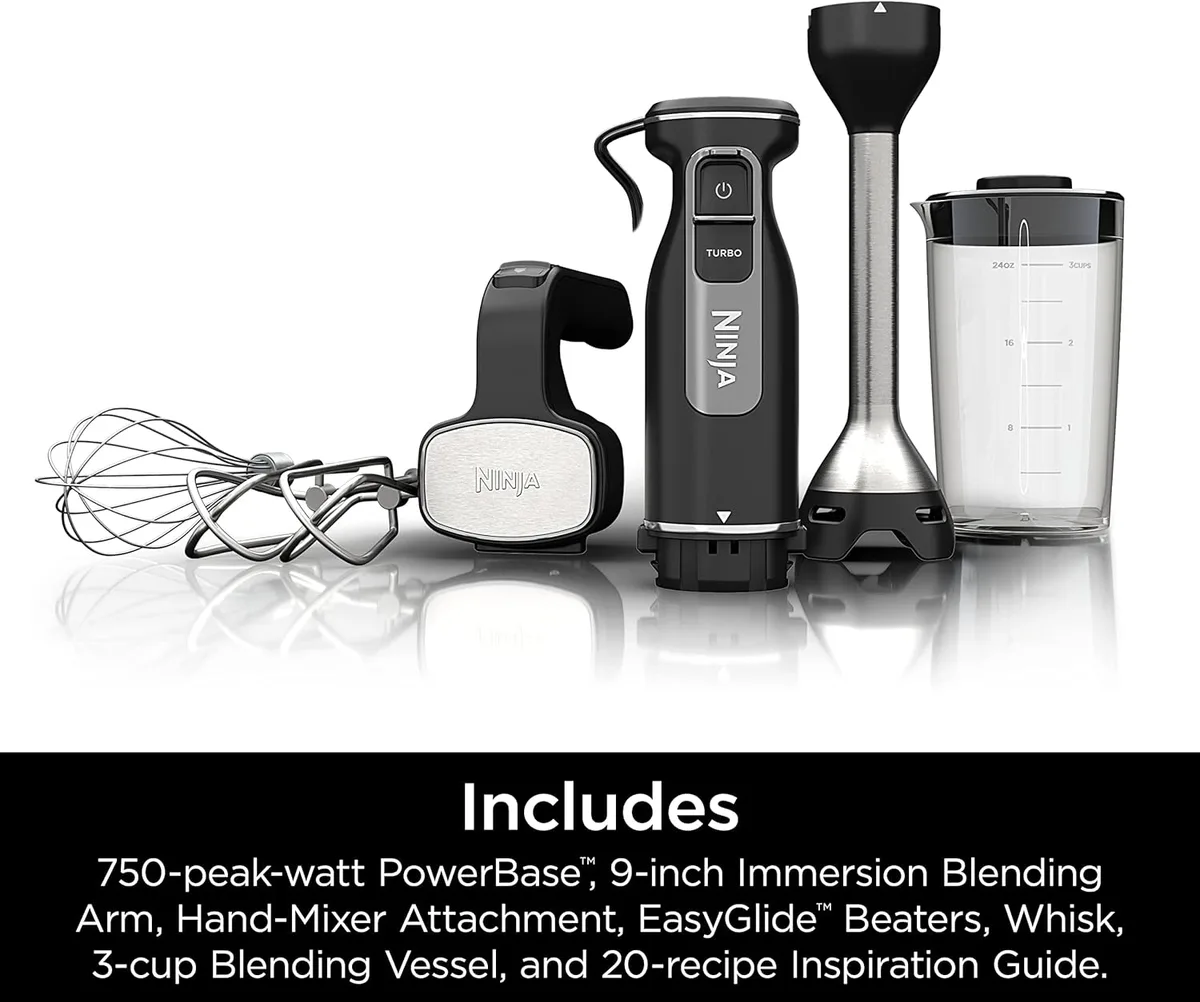
Image source: Bing (Web (fair-use with source credit))
This fundamental difference means they have different strengths. A hand mixer is your best friend for cakes, cookies, and whipped cream because it adds air and blends ingredients thoroughly. An immersion blender, on the other hand, is your go-to for silky smooth soups, sauces, and even some smoothies because it liquefies ingredients quickly.
They aren't really interchangeable, and knowing their strengths helps you avoid kitchen frustrations and achieve the desired culinary results.
Hand Mixer: Your Go-To for Mixing and Whipping
A hand mixer is fundamentally designed for tasks that require incorporating air or thoroughly combining ingredients in a mixing bowl. It usually comes with a set of beaters, and sometimes dough hooks or a whisk attachment. Its motor drives these attachments at various speeds, allowing you to cream butter and sugar, whip cream to stiff peaks, or mix cake batter until it’s just right.
The key here is the action: beating and blending in a contained space like a bowl.
Key Features of a Hand Mixer
Manufacturer specifications often highlight a few core features that define a hand mixer's performance. Most models offer multiple speed settings, typically ranging from 2 to 5 or more, allowing for gentle folding to high-speed whipping. The power, measured in watts, varies by model, with more powerful units handling thicker doughs better.
The included attachments are also a major selling point; standard beaters are universal, but dough hooks are great for bread or pizza dough, and whisks are ideal for egg whites.
- Motor Power: Usually between 100 and 300 watts, influencing its ability to tackle dense mixtures.
- Speed Settings: Commonly 2-5 speeds for controlled mixing.
- Attachments: Standard beaters are included; dough hooks and whisks are often optional or found on higher-end models.
- Ergonomics: A comfortable grip and lightweight design are crucial for extended use.
- Eject Button: A simple button to release the beaters for easy cleaning.
Aggregate reviews report that models with a good speed range and comfortable grip make a significant difference in user experience.
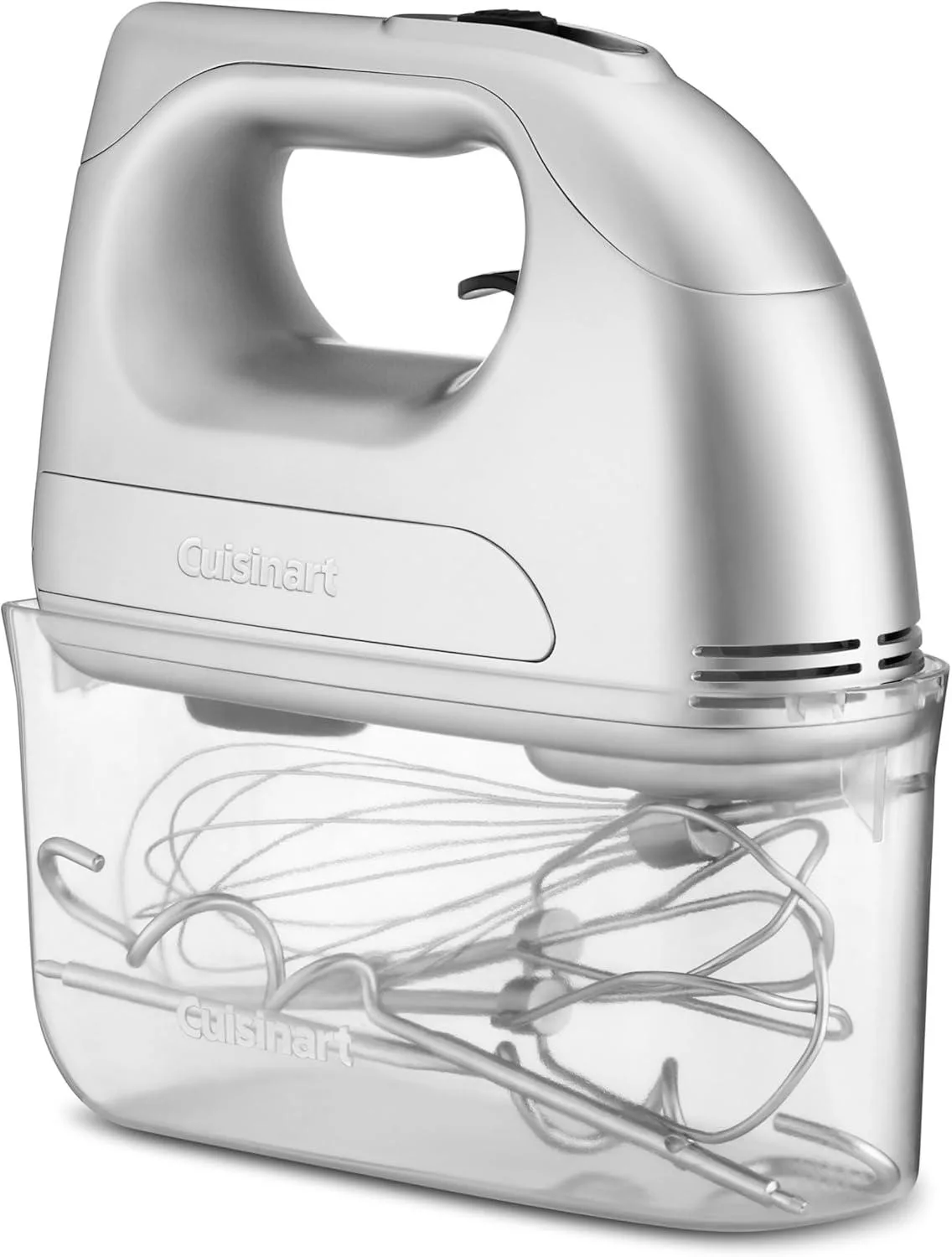
Image source: Bing (Web (fair-use with source credit))
When a Hand Mixer Shines: Best Use Cases
A hand mixer truly shines when your recipe calls for aeration, creaming, or thorough mixing of batters and doughs within a bowl. It’s the essential tool for achieving the perfect texture in many baked goods. If you find yourself making cookies from scratch, a hand mixer can cream your butter and sugar effectively, forming the base for crispy or chewy delights.
For cakes, it ensures your batter is uniformly mixed and airy, which is crucial for a light crumb. Whipping cream or egg whites also falls squarely into its domain.
- Baking: Perfect for cake batters, cookie doughs, and brownie mixes.
- Dairy: Ideal for whipping heavy cream into whipped cream or beating egg whites for meringues and soufflés.
- Mashing: Can be used for mashing potatoes, though care must be taken to avoid over-mixing into a gummy texture.
- General Mixing: Useful for combining ingredients in recipes where a smooth, consistent blend is needed in a bowl.
For tasks like these, the hand mixer’s ability to introduce air and evenly distribute ingredients is invaluable. It will be a workhorse for many baking projects, simplifying steps that would be tedious by hand. If you bake often, investing in a good model with appropriate attachments can streamline your process significantly, much like how having the right baking scale ensures accurate ingredient measurements.
Downsides of Using a Hand Mixer
Despite its usefulness, a hand mixer isn't perfect for every situation and comes with its own set of limitations. One of the most common frustrations is ingredient splatter; if you’re not careful or if your bowl is too shallow, you’ll end up with batter on your countertops and walls. It also requires you to stand and hold the mixer, which can be tiring if you’re mixing for a long time or if the mixture is particularly thick.
Furthermore, a hand mixer is generally not designed for pureeing or liquefying ingredients. If you try to make a smooth soup with it, you’ll likely end up with chunky bits and a lot of mess. Its beaters are not sharp blades like those found on an immersion blender.
For tasks requiring ultra-smooth textures, like baby food or certain sauces, it falls short. Its performance is also highly dependent on the bowl size and depth; a small bowl can lead to a big mess.
Immersion Blender: The Champion of Smooth and Creamy
An immersion blender, often called a stick blender, is built for one primary purpose: to blend ingredients directly within the container they are in, most commonly a pot or a tall jar. Its design features a motor housed in a handle, with a stainless steel wand extending downwards, culminating in a blade assembly. This allows you to plunge the blender directly into hot soups, sauces, or smoothies, creating smooth purees and emulsified mixtures with minimal mess and without transferring hot liquids.
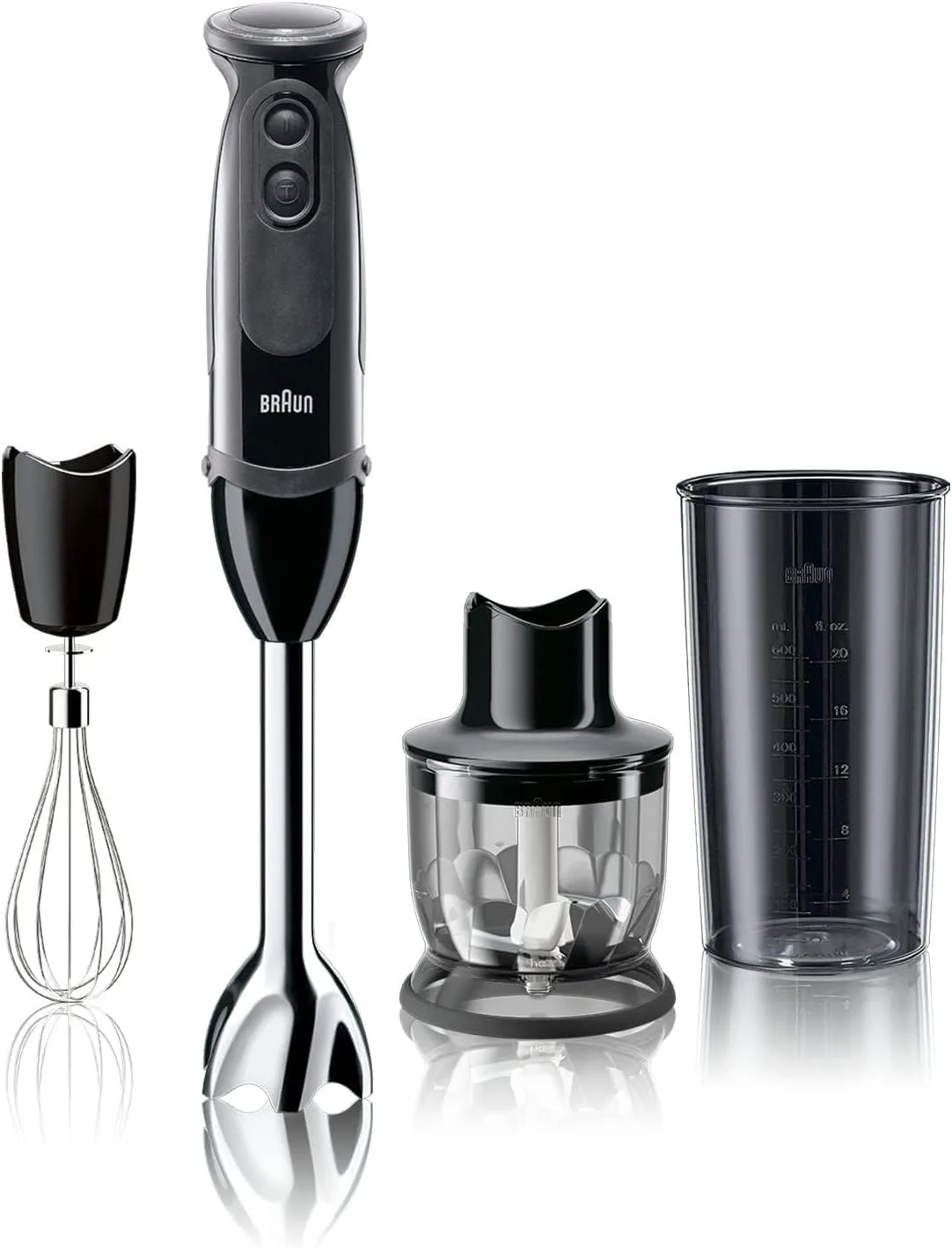
Image source: Bing (Web (fair-use with source credit))
Key Features of an Immersion Blender
When looking at immersion blenders, several features stand out that determine their effectiveness. The motor power, typically ranging from 150 to 600 watts, is a key indicator of its ability to handle tougher ingredients or longer blending times. Variable speed controls are common, allowing you to adjust the blending intensity.
The length and material of the blending wand, usually stainless steel for durability and heat resistance, are also important considerations. Some models come with additional attachments like a small chopper or a whisk, increasing their versatility.
- Motor Power: Generally higher than hand mixers, often between 150-600W.
- Speed Control: Variable speed offers greater control for different textures.
- Blending Wand: Typically stainless steel, designed to be submerged safely in hot liquids.
- Blade Design: Sharp blades for efficient pureeing.
- Attachments: Choppers, whisks, and blending cups are common additions.
User feedback frequently points to the ease of cleaning as a significant advantage for immersion blenders, as the wand can usually be rinsed quickly.
When an Immersion Blender Wins: Best Use Cases
An immersion blender truly earns its keep when you need to create smooth textures directly in your cooking pot or a convenient container. It’s a revelation for making soups; instead of carefully ladling hot liquid into a countertop blender and risking burns, you can simply insert the immersion blender and puree your soup to silky perfection right in the pot. This also applies to sauces, where it can emulsify ingredients for a creamy finish.
Making pesto, hummus, or even small batches of smoothies are also prime examples of where an immersion blender excels.
- Soups and Stocks: Ideal for pureeing vegetables and creating velvety smooth textures directly in the pot.
- Sauces: Perfect for emulsifying ingredients to create smooth, consistent sauces.
- Smoothies and Shakes: Great for single-serving drinks made in a tall glass or cup.
- Dips and Spreads: Can quickly make dips like hummus, guacamole, or pesto.
- Baby Food: Efficiently purees cooked fruits and vegetables.
Its ability to reduce mess and streamline the process makes it a favorite for busy cooks. If you're making a lot of soups, you might also find having a reliable food scale helps with portioning ingredients for consistent results.
Downsides of Using an Immersion Blender
While incredibly useful, immersion blenders have their limitations, and trying to force them into roles they weren't designed for will lead to disappointment. They are not good for incorporating air or creating volume. If you attempt to whip cream or beat egg whites with an immersion blender, you’ll likely end up with a watery mess rather than stiff peaks.
Its blending action is about liquefying, not aerating.
Furthermore, they are not ideal for thick batters or dense doughs. Trying to mix cookie dough or cake batter with an immersion blender can strain the motor and result in a tough, improperly mixed final product. The small blades and localized blending action aren't suited for tasks that require thorough, uniform mixing of dry and wet ingredients in a bowl.
You also need to be mindful of the container depth; if the blender isn't fully submerged, you risk splashing liquid out.
Side-by-Side: Hand Mixer vs. Immersion Blender Comparison
When you’re standing in the kitchen, staring at two appliances that both seem to spin and mix, it's natural to wonder which one is right for the job. The key difference boils down to their design and intended function. A hand mixer is like a tiny, portable version of a stand mixer’s whisking power, meant to introduce air and combine ingredients in a bowl.
An immersion blender, conversely, is a wand with blades designed to pulverize and liquefy ingredients directly in the pot or container.
This core difference impacts everything from the texture of your food to the number of dishes you’ll have to wash. If your recipe calls for volume and aeration, like cake batter or whipped cream, the hand mixer is your ally. If smooth soups, creamy sauces, or quick purees are on the menu, the immersion blender is the tool you'll reach for.
They are not interchangeable, and knowing their strengths helps you avoid kitchen mishaps and achieve the desired culinary results.
Key Task Comparisons: Which Tool for Which Job?
Let’s get down to the nitty-gritty of what each tool can and can't do effectively. This isn't just about what they're advertised for, but what they actually do well in real-world cooking and baking scenarios. For example, while a hand mixer can mash potatoes, it can also make them gummy if you overdo it.
An immersion blender can’t whip cream at all, but it can make a soup smooth in seconds.
| Task | Hand Mixer | Immersion Blender | Best Tool? |
|---|---|---|---|
| Whipping Cream | Excellent; creates stiff peaks | Poor; will likely become watery or buttery | Hand Mixer |
| Cake Batter | Excellent; mixes evenly, adds air | Poor; can create a tough texture | Hand Mixer |
| Cookie Dough | Good; mixes ingredients effectively | Poor; not designed for thick dough | Hand Mixer |
| Soups (Pureeing) | Poor; leaves chunks | Excellent; creates smooth, creamy texture | Immersion Blender |
| Sauces (Emulsifying) | Okay for some, but not ideal for smooth | Excellent; creates smooth, emulsified sauces | Immersion Blender |
| Smoothies (Single Serve) | Not ideal; requires a special cup attachment | Good; blends directly in a tall glass/cup | Immersion Blender |
| Mashing Potatoes | Fair; risk of gummy texture | Fair; can work, but might be messy | Either (with caution) |
| Pesto/Hummus | Poor; won't achieve fine paste | Excellent; makes small batches quickly | Immersion Blender |
As you can see, they serve distinct purposes. Using a hand mixer for smooth soups means more work and a less desirable texture. Conversely, attempting to whip cream with an immersion blender is a recipe for failure.
What Makes Them Different? Features and Functionality
The fundamental differences in how a hand mixer and an immersion blender operate stem directly from their design. A hand mixer typically has a motor in its body that powers interchangeable beaters. These beaters spin at controlled speeds, usually between 2 to 5 settings, designed to pull in air and mix ingredients in a bowl.
The power of these motors generally ranges from 100 to 300 watts, which is sufficient for most baking and whipping tasks. The ease of ejecting beaters for cleaning is also a standard feature.
An immersion blender, however, features a motor in its handle that drives a blade at the end of a wand. This blade spins at high speeds, pulverizing ingredients. Many immersion blenders offer variable speed control, allowing for more nuanced blending, from a gentle swirl to a powerful puree.
Their motors are often more robust, ranging from 150 to 600 watts, because they need to handle tougher jobs like blending hot vegetables or frozen fruit. The wand is designed to be submerged, and the blade is enclosed to minimize splashing. If you’re precise with measurements for baking, having an accurate kitchen scale can prevent errors that these tools can't fix.
Common Mistakes to Avoid with Both Tools
Even with the right tool for the job, it's easy to make mistakes that lead to less-than-ideal results or even damage to your appliance. For hand mixers, a common error is using a bowl that's too small for the batter you're mixing. This inevitably leads to batter flying everywhere, creating a mess and potentially drying out your mixture if you're working with something like cake batter.
Another mistake is over-mixing; for cakes, this develops the gluten too much, resulting in a tough, dense texture instead of a light, tender one. Always mix cake batter until just combined.
With immersion blenders, the most frequent mistake is trying to blend when the appliance isn't fully submerged. This causes liquid to splash out, creating a mess and potentially burning you if it's hot liquid. Also, avoid running the immersion blender dry or for too long continuously, as this can overheat the motor.
For both appliances, neglecting to clean them immediately after use is a common pitfall. Dried-on food can be much harder to remove, and prolonged neglect can lead to hygiene issues or damage to the appliance’s parts. Regular maintenance, like cleaning attachments promptly, extends the life of your kitchen tools.
Choosing Your Kitchen Companion: Who Needs Which?
Deciding which appliance deserves prime real estate in your kitchen really depends on your culinary habits. If your kitchen is primarily a baking hub, where cake mixes, cookie doughs, and mountains of whipped cream are common, a hand mixer is likely your most valuable player. It’s the tool designed to build structure and lightness into baked goods.
Many bakers find a good hand mixer for baking indispensable.
On the flip side, if your kitchen is more about hearty soups, homemade sauces, and quick healthy smoothies, an immersion blender will serve you far better. Its ability to transform ingredients directly in the pot saves time and minimizes cleanup, which is a huge win for weeknight meals. For those who love to experiment with purees and smooth textures, an immersion blender is an efficient game-changer.
If you're just starting out and want one versatile tool, consider what you cook most often. For many, having both provides the most kitchen flexibility.
Frequently Asked Questions About Hand Mixers and Immersion Blenders
Can I use an immersion blender instead of a hand mixer for cake batter?
No, an immersion blender is not suitable for cake batter. Its blade action will overwork the gluten in the flour, resulting in a tough, dense cake. A hand mixer is designed to gently combine ingredients and incorporate air for a light texture.
Can I use a hand mixer to make soup smooth?
Not effectively. A hand mixer's beaters are designed for mixing and whipping, not for pureeing. You'll likely end up with a chunky soup and potentially splatter the contents everywhere.
An immersion blender is the correct tool for smoothing soups.
How do I clean my hand mixer or immersion blender?
For hand mixers, unplug the appliance and wipe down the body with a damp cloth. The beaters, dough hooks, and whisks are usually dishwasher safe or can be hand-washed. For immersion blenders, unplug it and rinse the wand and blade assembly under running water.
Some wands are also dishwasher safe, but always check the manufacturer’s instructions.
Are immersion blenders good for making smoothies?
Yes, immersion blenders are great for single-serving smoothies, especially when made directly in the cup or glass. They offer a quick and easy way to blend ingredients for a smooth drink with minimal cleanup. For larger batches or tougher frozen ingredients, a countertop blender might be more powerful.
Can I use an immersion blender on hot liquids?
Yes, immersion blenders are specifically designed to be used with hot liquids like soups and sauces, often directly in the cooking pot. However, always be cautious of splashing and ensure the motor housing stays above the liquid line.
Making Your Choice: Final Verdict
Ultimately, the decision between a hand mixer and an immersion blender hinges on your cooking and baking priorities. If your passion lies in creating light, airy baked goods like cakes, cookies, and meringues, the hand mixer is an indispensable tool. Its ability to incorporate air and thoroughly blend ingredients in a bowl is key to achieving perfect textures.
Consider a model with variable speeds and comfortable grip for best results, perhaps one with useful attachments.
Conversely, if you frequently prepare smooth soups, rich sauces, or quick, healthy smoothies, the immersion blender will streamline your kitchen routine. Its convenience in blending directly within pots and containers, coupled with easier cleanup, makes it a champion for everyday cooking. For those seeking efficiency in pureeing and emulsifying, this tool is a clear winner.
As of 2026, both appliances remain staples, and many home cooks find having both provides the greatest versatility.