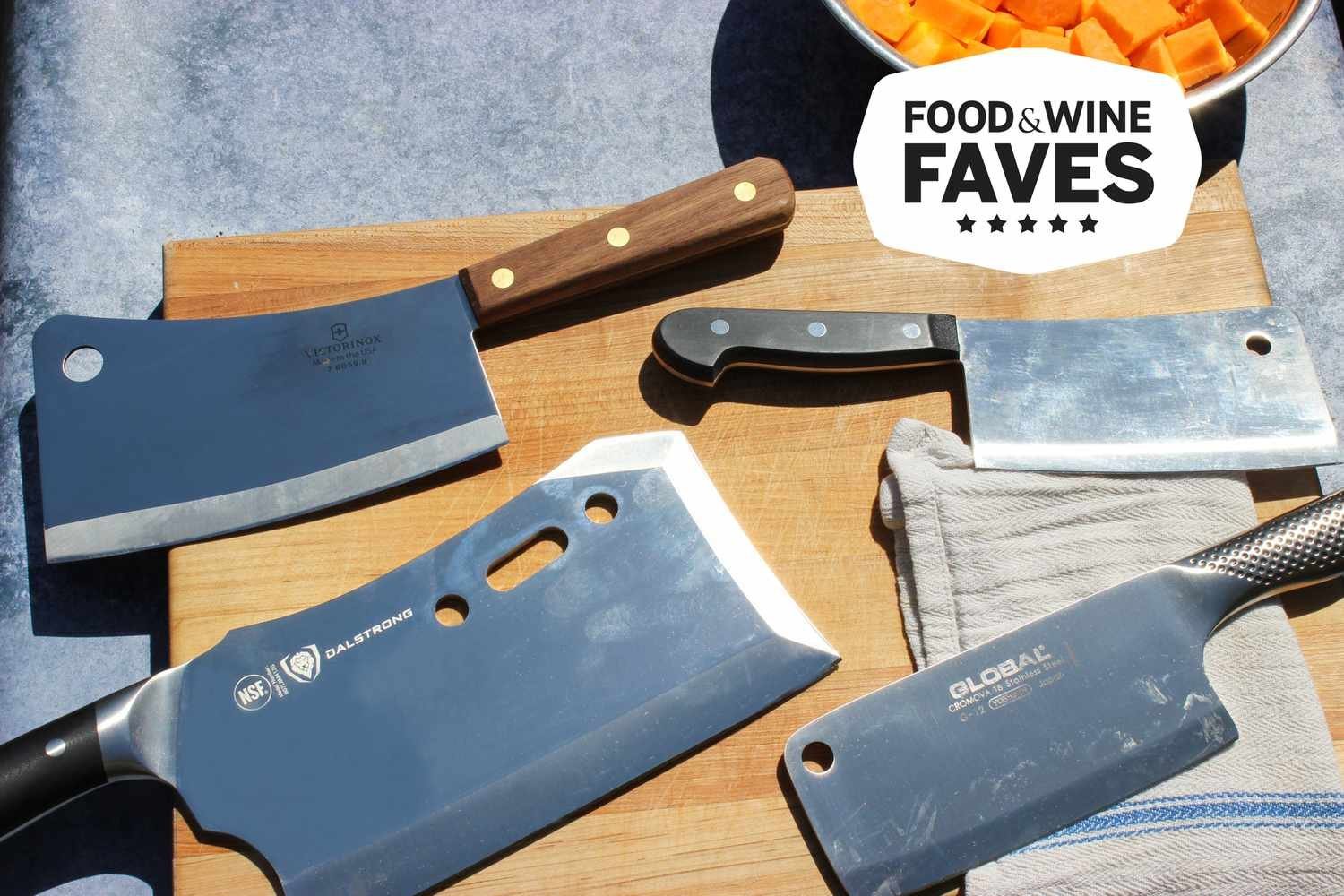
10 Best Cleaver Knife
Finding a cleaver knife comes down to knowing what you actually plan to cut. Many home cooks buy a wide blade thinking it chops through everything, but that isn’t true. A thin vegetable cleaver slices produce paper-thin, yet it’ll chip on a chicken bone. A thick meat chopper smashes through bone, but it’ll wedge and crack a whole carrot.
The real secret is matching the blade’s edge and weight to your cutting board habits. If you get a tool made for delicate slicing, it won’t handle butchery. Pick the wrong steel or edge angle, and you’ll ruin the blade on your first dinner prep.
1. ZWILLING Twin Signature 7-inch Chinese Vegetable Cleaver

Best for: everyday slicing and dicing of kitchen vegetables
This 7-inch Chinese vegetable cleaver features special formula German stainless steel with an ice-hardened FRIODUR blade. It carries a 15-degree edge angle per side and a 57 Rockwell Hardness, giving it dependable edge retention without making the steel too brittle. The full-tang build joins directly to an ergonomic polymer handle, providing solid physical balance while cutting.
Because this tool is built for vegetables, using it to chop hard bones will ruin the fine edge. You’ll find it moves smoothly through cabbage, onions, and soft boneless meats on daily prep. Anyone needing to split beef joints or hack frozen food should skip this model entirely.
| What it gives | What you accept |
|---|---|
| Ice-hardened German steel | Not made for bones |
| Full tang balance | Edge needs regular honing |
2. KYOKU Vegetable Cleaver Knife

Best for: paper-thin slicing of produce and meat
KYOKU builds this 7-inch vegetable cleaver around a cryogenically treated VG-10 Japanese Damascus steel core. It hits HRC 58-60 hardness and uses an 8-to-12 degree double-sided edge sharpened by the Honbazuke method. The moisture-resistant G10 handle includes triple rivets and a mosaic pin, and it ships with a protective sheath and case.
The extremely acute 8-to-12 degree angle slices cleanly through soft meats, but it forces you to keep the blade far away from dense materials. Owning it means taking extra care when washing and storing the tool so the edge stays intact. This isn’t the knife for someone who wants to hack through poultry joints or chop without watching their technique.
What goes smoothly: – Honbazuke edge slices with very little push resistance – Cryogenic treatment yields great wear resistance – G10 handle resists moisture, cold, and heat – Includes protective sheath and case
What you have to accept: – Acute edge can chip if twisted against hard surfaces – Unsuitable for bone chopping
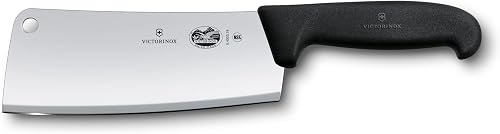
3. Victorinox Fibrox Pro 7″ Kitchen Cleaver
Best for: splitting poultry bones and dense joints
This Swiss-made kitchen cleaver carries a 7-inch thick, strong blade built specifically for bones and joints. It pairs that heavy steel with a non-slip Fibrox handle designed to keep your hand safe when working with wet meats. Unlike delicate kitchen knives, the entire piece is dishwasher safe.
The thick blade drives right through chicken carcasses and small joints, but that same thickness makes it clumsy for fine dicing. Owning it means you won’t hesitate during heavy butchery tasks, though you’ll still reach for a chef knife to slice an onion. If you want a thin blade that glides through raw root vegetables, this isn’t for you.
Who it fits Home cooks who process whole chickens, trim spare ribs, and regularly separate meat joints need this kind of thick blade. The non-slip handle stays secure even if your fingers are wet with grease.
Who should pass Anyone looking for a general-purpose Chinese vegetable knife shouldn’t buy this tool. The wide spine wedges in dense produce instead of making clean, effortless cuts.
4. Shun Classic 7″ Vegetable Cleaver

Best for: delicate vegetable prep and gourmet slicing
Shun builds this 7-inch tool with a proprietary VG-MAX steel core protected by 68 layers of Damascus cladding. The blade carries a razor-sharp 16-degree cutting edge, complemented by a comfortable D-shaped Pakkawood handle designed for left and right hands. Each knife is handcrafted in Japan and includes free factory sharpening support.
The refined VG-MAX core holds an edge through endless prep, yet the high hardness means you can’t twist or pry with it. Daily use feels smooth and controlled when dicing squash, slicing herbs, or mincing ginger on a wooden board. Buyers looking for an all-purpose meat cleaver to split bones must look elsewhere.
Snapshot: – Damascus cladding protects a high-carbon core – D-shaped handle seats comfortably in palm – Free factory sharpening supports long-term upkeep – 16-degree edge glides through firm vegetable skins – Brittle hard steel will chip if struck against bone
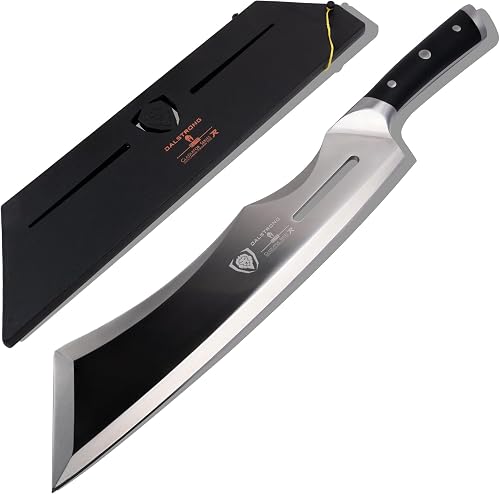
5. Dalstrong Annihilator 14″ Meat Cleaver
Best for: breaking down whole carcasses and large squash
The Dalstrong Annihilator is a massive 14-inch heavy cleaver built from 6mm thick 7Cr17MoV high-carbon steel at 60 HRC. Weighing in at 2.9 pounds, it relies on sheer mass to split pork shoulders, quarter chickens, or crack open pumpkins in a single stroke. It features an ultra-premium G-10 handle, an acacia wood display stand, a saya sheath, and NSF certification.
The heavy weight cuts through cartilage and joints without extra arm force, but lifting it quickly tires out small wrists. Owning it turns whole primal cuts into an easy backyard butchery project, though it’ll take up serious counter or drawer space. It isn’t suited for everyday meal prep like mincing garlic or slicing bell peppers.
| What it gives | What you accept |
|---|---|
| 2.9 lb weight powers through bones | Heavy mass causes arm fatigue during long use |
| 6mm thick full-tang construction | Blade is too thick for delicate vegetable slicing |
| Includes wood stand and sheath | Massive 14-inch profile requires extra storage |
6. Victorinox Fibrox 7 in Chinese Cleaver

Best for: high-volume everyday chopping and dicing
This Swiss-made 7-inch Chinese cleaver functions as a versatile utility knife built to chop, cut, and dice produce and boneless meat. It has a straight cutting edge paired with an ergonomic, non-slip Fibrox handle for steady control. The entire construction is durable and listed as dishwasher safe.
The thin, tall blade moves through piles of celery, leafy greens, and boneless chicken without dragging. In daily kitchen use, you’ll love using the wide flat face to scoop diced ingredients straight into the pan. It’s not designed for chopping through beef bones or dense joints, so bone-in butchers should avoid it.
What goes smoothly: – Straight edge cuts flat against cutting board – Non-slip handle provides steady wet grip – Dishwasher safe design simplifies daily cleanup – Wide face scoops prepped vegetables easily
What you have to accept: – Light profile lacks weight for bone hacking – Utility style lacks decorative Damascus finishes
7. SHI BA ZI ZUO 8-inch Professional Cleaver

Best for: traditional Chinese slicing and garlic crushing
Shi Ba Zi Zuo crafts this 8-inch cleaver using a 3-layer clad steel with an 80Cr13 high-carbon core and low-carbon outer layers. It incorporates a non-stick coating on the wide blade face along with an integrated full tang set into a carved rosewood handle. The knife is built to slice, dice, and mince vegetables and meat, with enough blade width to smash garlic.
The 3-layer steel gives a great balance between edge hardness and blade toughness, while the non-stick finish keeps potato slices from riding up the blade. Owning it gives you traditional Chinese kitchen utility with a firm carved rosewood grip. It isn’t meant for heavy bone splitting, so look elsewhere for heavy-duty butchery.
Who it fits Home cooks who want authentic Chinese kitchen versatility will appreciate the broad blade and slicing performance. It fits anyone who wants to slice meat, chop herbs, and crush garlic with one tool.
Who should pass It also won’t suit cooks who need to crack dense animal bones.
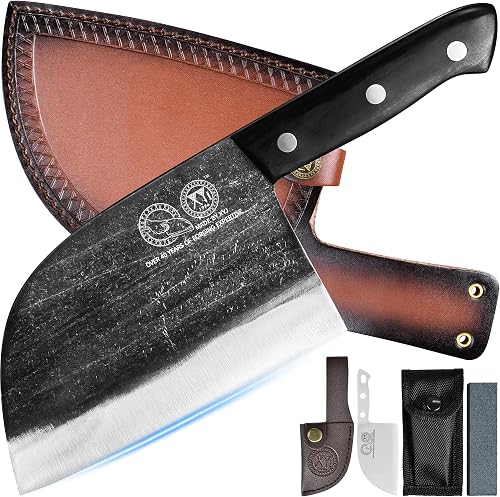
8. XYJ Serbian Chef Cleaver
Best for: rustic indoor cutting and outdoor camp cooking
XYJ brings a rustic handmade forging style to this 6.7-inch Serbian chef cleaver, using a full-tang high-carbon steel blank. The blade undergoes quenching and tempering cycles, leaving a hammered, stonewashed texture that naturally prevents food from sticking. It comes with a reinforced riveted handle, a leather belt sheath, and a gift box.
The hammered carbon steel slices through meats and vegetables easily, though it requires regular care to keep in good shape. Carrying it along for outdoor cooking or kitchen prep feels rugged, though regular maintenance is required to prevent corrosion. Cooks who don’t want to maintain carbon steel should pass on this blade.
Snapshot: – Hammered finish reduces drag on wet vegetables – Includes leather sheath with integrated belt loop – Full tang construction offers solid mechanical balance – Compact 6.7-inch length maneuvers well in small spaces – High-carbon steel requires immediate drying and oiling
9. HENCKELS Statement Razor-Sharp 6-inch Meat Cleaver

Best for: compact butchery and trimming small meats
Henckels designs this compact 6-inch meat cleaver with high-quality stainless steel and a satin-finished, finely honed edge. Its lightweight full-tang build provides quick maneuverability across cutting boards, balanced by a traditional triple-riveted handle with a stainless steel endcap.
The shorter 6-inch profile gives you close control when trimming poultry or separating small ribs, avoiding the clumsiness of giant choppers. In daily use, it feels fast in the hand, though its lighter build means you must supply the downward force when cutting tough pieces. It isn’t heavy enough to split dense beef marrow bones in one clean stroke.
| What it gives | What you accept |
|---|---|
| 6-inch profile maneuvers easily | Lacks heavy downward mass |
| Triple-riveted full tang | Shorter cutting length |
| Rust-resistant stainless steel | Not meant for large carcasses |
10. imarku Cleaver Knife 7 Inch

Best for: all-around prep on boneless meats and vegetables
This 7-inch Chinese cleaver is forged from Japanese high-carbon stainless steel hardened to 57±1 HRC. Its 2.4mm blade thickness features a double-bevel 15-degree edge designed to cut meat, fruit, and vegetables without wedging. An FSC-certified Pakkawood handle offers an ergonomic grip for both right and left-handed cooks.
The 2.4mm spine balances nimble slicing with sufficient blade stiffness, keeping fingers clear of the cutting board below. Daily cooking feels fast and fluid with its balanced build. Anyone looking to chop hard frozen foods or thick soup bones should bypass this model.
What goes smoothly: – 2.4mm thin blade slices without wedging – Pakkawood handle provides comfortable ambidextrous grip – 57±1 HRC steel holds edge while remaining easy to sharpen – Wide blade protects fingers from the cutting surface
What you have to accept: – Not intended for hacking hard bones
Also Worth Considering
The Dalstrong 7″ Meat Cleaver Knife brings high-end Japanese super steel and layered Damascus patterning to butchery tasks, making it a stylish candidate for meat prep.
The TUO Vegetable Cleaver Knife offers a standard-length stainless steel blade with a comfortable Pakkawood handle from their Fiery Phoenix line, ideal for daily vegetable slicing.
The Cutluxe Meat Cleaver Knife provides a mid-sized butcher profile with an ultra-sharp Japanese blade that splits meat and joints cleanly on prep day.
The Decision Filter
To choose the right cleaver, ask yourself whether you need to chop hard bones or slice soft vegetables. If you hit bones, pick a heavy meat cleaver with a thick spine, which rules out every thin Japanese or Chinese slicing knife. If you prepare vegetables, pick a tall, thin Chinese chef knife, which rules out heavy bone choppers that crush instead of slice. Most people miss this: a “Chinese cleaver” is almost always a thin vegetable knife, not a bone-chopping axe. If your kitchen routine involves both tasks, you’ll need two separate tools rather than one compromise. Selecting a delicate edge for bone work will permanently chip your blade within days.
The Thirty-Second Checklist
- Will you cut through hard animal bones or just slice boneless meats?
- Do you have enough drawer or block space to store a wide, tall blade?
- Are you willing to hand wash and dry carbon steel after every meal?
- Does your household require a dishwasher-safe handle for quick and easy sanitation?
- Will the cleaver feel too heavy for your wrist during long cutting sessions?
- Can your existing kitchen cutting board withstand the impact of heavy butchery chopping?
Three Regrets Worth Avoiding
Regret #1: Buying a delicate vegetable cleaver and chipping the edge on a frozen steak or chicken bone. Chinese vegetable cleavers look big and tough, but their thin edges aren’t made for dense materials. The simple fix is checking the spine thickness and intended use before you ever strike bone.
Regret #2: Choosing high-carbon steel without being prepared to oil and hand dry it after every use. A carbon steel blade left wet in a sink will show rust spots and discoloration by morning. The simple fix is buying standard stainless steel if you prefer low-maintenance kitchen cleanup.
Regret #3: Purchasing a heavy butcher cleaver to dice onions and slice fresh tomatoes. Thick blades crush soft cell walls instead of making clean cuts, leaving you with bruised produce and puddles of juice. The fix is picking a 15-degree thin-edge vegetable cleaver for garden produce.
If You Want This, Look for That
Match your prep style to the right blade traits:
| If you want… | Look for | Avoid |
|---|---|---|
| Bone cutting | Thick spine, heavy weight | Thin 15-degree slicing edges |
| Thin vegetable slicing | Chinese chef knife profile | Heavy butcher choppers |
| Low maintenance | Stainless steel, polymer handle | Bare high-carbon steel |
| Long edge life | Hard steel (58+ HRC) | Prying or twisting on bones |
| Easy cleaning | Dishwasher safe materials | Natural rosewood handles |
If you’re stuck between two picks, choose the lighter one for vegetables and the heavier one for whole meats. Once you know your main ingredient, order the knife that matches your board.
Frequently Asked Questions
Can I put my cleaver knife in the dishwasher?
Most cleaver knives should never go into a dishwasher. Harsh detergents and high heat degrade wooden handles, loosen rivets, and dull the cutting edge against other dishes. Wash by hand with warm soapy water instead.
What is the difference between a meat cleaver and a Chinese cleaver?
A meat cleaver has a thick, heavy spine built to absorb shock when hacking through bones and joints. A Chinese cleaver has a tall but very thin blade designed for precise slicing, dicing, and mincing of vegetables and boneless meat. Using a Chinese cleaver on hard bones will chip the blade.
How do I stop a high-carbon cleaver from rusting?
High-carbon steel reacts quickly with moisture and acidic foods like citrus and tomatoes. Wash the blade immediately after use, dry it thoroughly with a towel, and rub a drop of food-safe mineral oil over the metal. Storing the knife in a dry sheath or block prevents ambient moisture from forming surface rust.
What cutting board is best for a heavy meat cleaver?
Use a thick wooden butcher block or an end-grain wood cutting board when chopping with a heavy cleaver. Wood absorbs the impact of the blade without rolling the edge or cracking your counter. Avoid glass, granite, or ceramic boards, as hard surfaces will immediately chip and destroy your knife edge.
How often do I need to sharpen my cleaver?
Vegetable cleavers need light honing on a ceramic rod every few uses and full sharpening every few months. Heavy bone cleavers have blunt, robust angles that last much longer between sharpenings because they chop rather than slice. Sharpen whenever the blade starts tearing soft food instead of cutting cleanly.


One Comment