Digital vs Mechanical Kitchen Scale
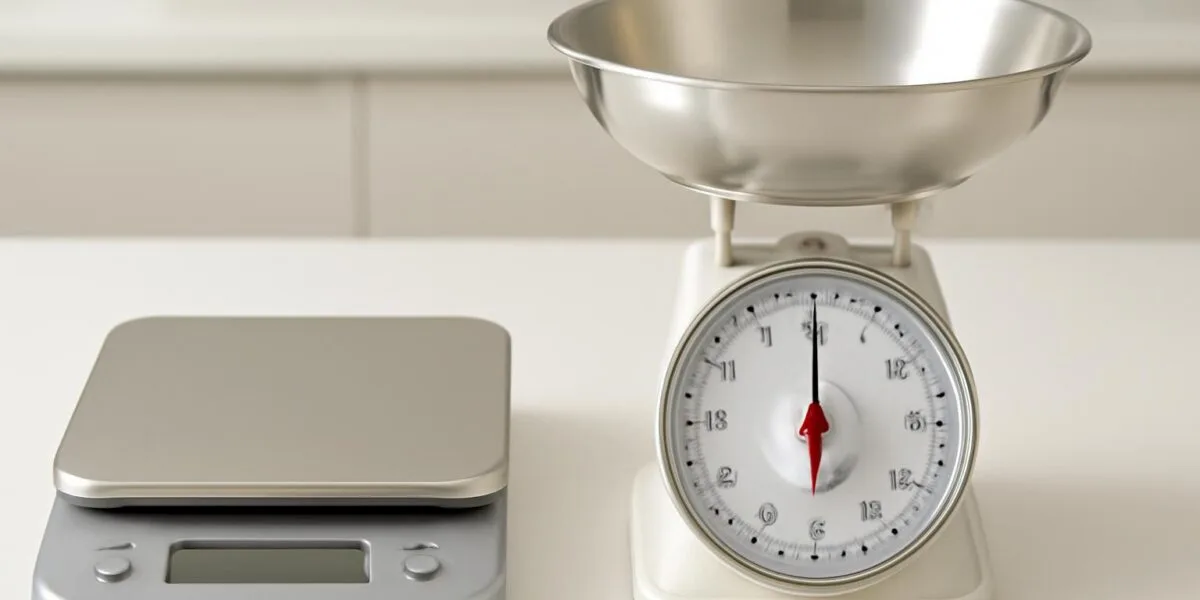
Image source: Bing (Web (fair-use with source credit))
Digital vs. Mechanical Kitchen Scales: Which Is Right For Your Kitchen?
Are you tired of guessing ingredient amounts and getting inconsistent results in your cooking or baking? Choosing the right kitchen scale is a simple step that can dramatically improve your culinary precision. When deciding between a digital vs. mechanical kitchen scale, understanding their core differences will guide you to the best tool for your needs.
Our research indicates that while both scale types measure weight, digital models offer a higher degree of accuracy and convenience, often measuring down to 1 gram, a critical specification for baking. Mechanical scales, though simpler, can lack this fine-tuned precision. This guide will explore each type to help you make an informed choice.
Quick Answer
Digital scales provide superior accuracy and a convenient tare function, making them ideal for baking and precise measurements. Mechanical scales are simpler, more durable, and require no batteries, suiting everyday cooking where exact grams aren't essential. For most modern kitchens aiming for recipe success, a digital scale is the better choice.
The Precision Dilemma: Why Scale Choice Matters in Cooking
In the world of cooking and baking, precision can be the difference between a fluffy cake and a dense brick, or a perfectly balanced sauce and one that's off. Recipes, especially in baking, are often developed with specific ingredient ratios in mind, and these are frequently based on weight rather than volume. This is where a reliable kitchen scale becomes invaluable.
Using volume measurements (like cups and tablespoons) can be inconsistent because how tightly you pack ingredients, or how they settle, can change the actual amount you're using. For example, one cup of flour can vary significantly depending on how it's measured. A scale eliminates this guesswork, ensuring you add exactly what the recipe calls for, every single time.
This is why understanding the nuances between different scale types, like digital versus mechanical, is so important for achieving consistent, professional-level results.
Digital Kitchen Scales: Accuracy and Convenience at Your Fingertips
Digital kitchen scales are the modern standard for a reason. They offer a combination of precision and user-friendly features that make measuring ingredients a breeze. Their sleek design often appeals to contemporary kitchens, and their functionality makes them a go-to tool for anyone serious about cooking or baking.
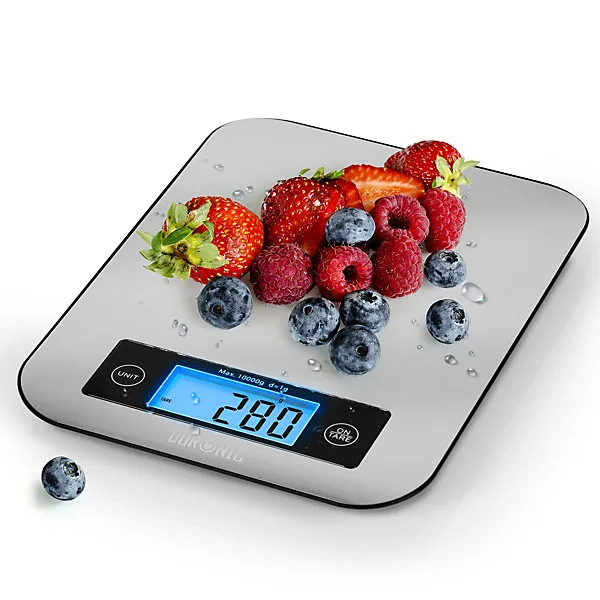
Image source: Bing (Web (fair-use with source credit))
Key Features of Digital Scales
Digital scales rely on electronic sensors to measure weight, which allows for a high degree of accuracy. They typically display readings on a clear LCD screen. Manufacturer specifications confirm that most quality digital scales measure in increments as small as 1 gram, with some high-end models even going down to 0.1 grams.
This level of detail is crucial for recipes that demand exact measurements, particularly in baking. Another standout feature is the "tare" function, which allows you to reset the scale to zero after placing a container on it, so you only measure the weight of the ingredients you add. You can easily switch between units, such as grams, ounces, pounds, and milliliters for liquids, which is handy when a recipe calls for volume measurements of water or milk.
Digital Scale Benefits
The primary advantage of a digital scale is its accuracy. For baking, where precise ratios are paramount, these scales ensure consistency and predictable outcomes. The tare function significantly streamlines the process of weighing multiple ingredients in the same bowl, saving time and reducing the need for washing extra dishes.
Reading the digital display is effortless, even in varied lighting conditions. Furthermore, many digital scales are compact and easy to store. Their versatility in unit conversion adds another layer of convenience for international recipes or when working with different measurement systems.
For those seeking the highest reliability in their kitchen measurements, especially for baking, a digital scale is hard to beat. You can explore 6 Best Digital Kitchen Scale 2026 for specific model recommendations.
Digital Scale Drawbacks
While digital scales are fantastic, they aren't without their downsides. The most common issue is their reliance on batteries. If the batteries die mid-recipe, it can be frustrating.
Keeping a spare set of batteries handy is a good practice. Our research shows that some budget digital scales can be less durable; dropping them or placing excessively heavy items on them can damage the sensors, leading to inaccurate readings or complete failure. Although many are designed for kitchen use, extreme moisture or prolonged exposure to steam might also affect their electronic components over time.
Finally, while there are many affordable options, the most accurate and feature-rich digital scales can represent a moderate investment.
Mechanical Kitchen Scales: Classic Simplicity and Durability
Mechanical kitchen scales, often called analog scales, have been around for generations. They operate on a spring system rather than electronics, giving them a distinct set of pros and cons. These scales often feature a dial with a needle that points to the weight.
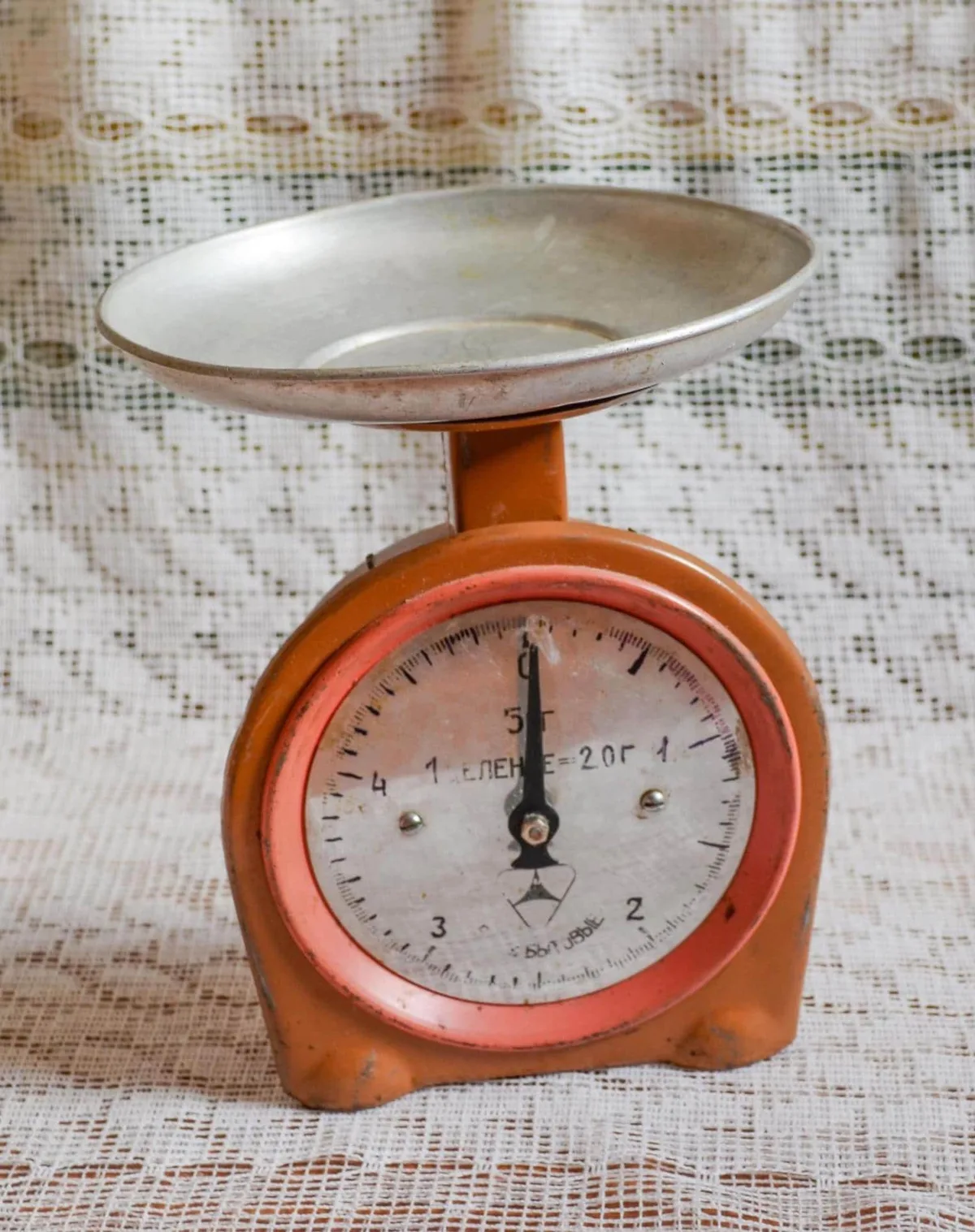
Image source: Bing (Web (fair-use with source credit))
Key Features of Mechanical Scales
The defining feature of a mechanical scale is its internal spring mechanism. When weight is applied to the scale's platform, it compresses or stretches this spring, which in turn moves a pointer across a graduated dial. This means they don't require any electrical power source; they are always ready to use.
The dial typically displays weight in increments of 5 or 10 grams, sometimes even larger, depending on the scale's capacity and design. While they don't have an electronic tare button, many have a small dial or knob that allows you to manually adjust the needle to zero before you start weighing, though this is a manual zeroing rather than an ingredient-specific tare function.
Mechanical Scale Benefits
The biggest advantage of a mechanical scale is its independence from batteries or electricity. This makes them incredibly reliable; you never have to worry about them running out of power. They are often built with robust materials, making them quite durable and able to withstand regular use and the occasional bump in the kitchen.
Their simplicity is also a plus for some users; there are no buttons to press or settings to adjust, making them very straightforward to operate. For kitchens that embrace a vintage aesthetic, their classic appearance can also be a significant draw. If you're looking for an uncomplicated tool that just works, a mechanical scale fits the bill.
Mechanical Scale Drawbacks
The main drawback of mechanical scales is their lack of precision compared to their digital counterparts. The larger measurement increments mean they are less suitable for recipes that require exact gram measurements, which is particularly common in baking. While some have a manual zeroing knob, they lack the true tare function that digital scales offer, making it more cumbersome to weigh multiple ingredients in one bowl.
You'd have to manually calculate the weight of each ingredient by subtracting the weight of the previous ones, which can be time-consuming and error-prone. Reading the dial can also be challenging; the needle might not always align perfectly with a marking, and the smaller markings can be crowded, making precise readings difficult, especially in low light. They also tend to be bulkier than many digital models, taking up more counter or storage space.
Head-to-Head: Digital vs. Mechanical for Your Cooking Needs
When you're standing in the store or browsing online, the choice between digital and mechanical might seem simple, but it really depends on how you plan to use your scale. Our comparative analysis highlights that the "better" scale isn't universal; it's about finding the right fit for your kitchen tasks and preferences.
When Digital Scales Shine
Digital scales are the clear winner for tasks demanding high accuracy. If you're a serious baker, aiming for consistent results in bread, pastries, or delicate desserts, the precise measurements and tare function of a digital scale are indispensable. Recipes for such items often specify ingredients down to the gram, making digital scales the only viable option for true fidelity.
They excel in scenarios where you're weighing multiple ingredients sequentially in the same bowl, as the tare feature negates the need for complex calculations. This type of scale is also invaluable for portion control in meal prep or if you're tracking specific dietary plans that require exact nutrient tracking. For those seeking the highest reliability in their kitchen measurements, especially for baking, a digital scale is hard to beat.
You can explore 6 Best Kitchen Scale for Baking 2026 for specific model recommendations.
When Mechanical Scales Make Sense
A mechanical scale shines in situations where absolute precision isn't the primary concern, but durability and simplicity are. If you're mostly measuring larger quantities for everyday cooking, like portioning out meat, weighing vegetables for a stew, or measuring dry goods for a simple cake where a few grams won't make a difference, a mechanical scale can be perfectly adequate. Their robustness means they can withstand more general kitchen use without worry.
For households with young children who might be tempted to play with kitchen gadgets, a mechanical scale's lack of electronic parts can be a plus. They are also a solid choice for anyone who prefers not to deal with batteries or electronic devices, valuing a tool that's always ready to go. If budget is a major consideration, mechanical scales are often more affordable, aligning with the needs of those seeking a 6 Best Budget Kitchen Scale 2026.
Navigating the Trade-offs: Common Kitchen Scale Mistakes to Avoid
Even with the right scale, it's possible to run into issues if you're not careful. Understanding common pitfalls can help you get the most out of your kitchen scale and avoid frustrating errors.
One of the most frequent mistakes is neglecting the tare function on a digital scale. If you place a bowl on the scale and then add your flour without taring, the scale measures the combined weight. This means you then have to manually subtract the bowl's weight, defeating the purpose of the tare feature and increasing the chance of calculation errors.
Always remember to press "tare" after placing your bowl or any other container on the scale before adding ingredients.
Another error, particularly with digital scales, is overloading them. Every scale has a maximum weight capacity, often around 5 kg (11 lbs) for typical kitchen models. Exceeding this limit can damage the sensors and lead to inaccurate readings or permanent malfunction.
Always check the scale's maximum capacity and avoid weighing items that significantly exceed it. For mechanical scales, the issue is often reading the dial incorrectly. The needle can sometimes be slightly off the exact marking, or the scale might not be perfectly level, leading to slightly skewed measurements.
Ensure your mechanical scale is on a flat surface and learn to read the dial consistently. Finally, improper cleaning can be a problem for both types. Digital scales should generally be wiped clean with a damp cloth, avoiding harsh chemicals or submerging them in water.
Mechanical scales can often withstand a bit more direct wiping, but their springs and mechanisms should also be kept free from excessive grime or sticky residue that could impede their movement.
Making Your Choice: Which Scale Fits Your Kitchen and Cooking Style?
So, you've weighed the pros and cons, looked at the features, and considered how you cook. Now it's time to make that final decision. For most home cooks and bakers in 2026, the choice leans heavily towards a digital scale, but there are specific scenarios where a mechanical scale still holds its ground.
If your kitchen adventures often involve baking delicate cakes, crafting artisanal bread, or following recipes that demand exact measurements for flavor balance, a digital kitchen scale is your best bet. The accuracy it provides, often down to a single gram, ensures your ingredients are proportioned precisely as the recipe intends. The tare function further simplifies your workflow, letting you measure multiple components in one go without mental gymnastics.
This type of scale is also invaluable for portion control in meal prep or if you're tracking specific nutritional intake. Consider looking at options designed for 6 Best Kitchen Scale for Baking 2026 if baking is your main focus.
However, if your cooking style is more relaxed, focused on larger quantities, and you prioritize simplicity and resilience over minute precision, a mechanical kitchen scale might be all you need. They are dependable, require no power source, and can handle general kitchen tasks reliably. They are a good fit for kitchens where the emphasis is on straightforward cooking rather than intricate patisserie.
They also offer a charming, retro aesthetic that can complement certain kitchen designs. For straightforward weighing of produce, meats, or bulk dry goods where exact gram measurements are less critical, a mechanical scale serves its purpose well.
Frequently Asked Questions About Kitchen Scales
How do I clean my digital kitchen scale?
Always wipe your digital scale with a damp cloth and mild soap if needed. Avoid submerging it in water or using harsh abrasive cleaners, as these can damage the electronic components and display. Ensure it's completely dry before storing or using again.
Can I use a mechanical scale for baking?
While you can use a mechanical scale for baking, it's generally not recommended for recipes requiring high precision. The larger measurement increments mean you might not achieve the exact gram measurements crucial for many baked goods, potentially affecting the final texture and outcome.
How often should I replace batteries in a digital scale?
Battery life varies greatly depending on the model and how often it's used. Most digital scales will indicate when batteries are low. As a preventative measure, keeping a spare set of batteries handy is advisable, especially if you bake frequently.
Are mechanical scales more durable than digital ones?
Generally, yes. Mechanical scales, lacking complex electronics, are often more robust and resistant to physical shock or minor impacts. However, both types can be damaged if handled roughly or overloaded beyond their specified capacity.