DeWalt Polisher Vs Milwaukee Polisher: Best Choice
DeWalt Polisher vs Milwaukee Polisher: DeWalt offers broad control, while Milwaukee shines with smooth handling and M18 battery convenience.
Choosing between the DeWalt Polisher vs Milwaukee Polisher can feel like picking between two top mechanics in the same garage. Both brands make strong cordless tools for cars, boats, motorcycles, and painted metal, but their controls, balance, batteries, and polishing feel are not the same. This guide compares the key models, real-world use, costs, safety, and best applications so you can buy with confidence.

DeWalt Polisher vs Milwaukee Polisher: Quick Comparison
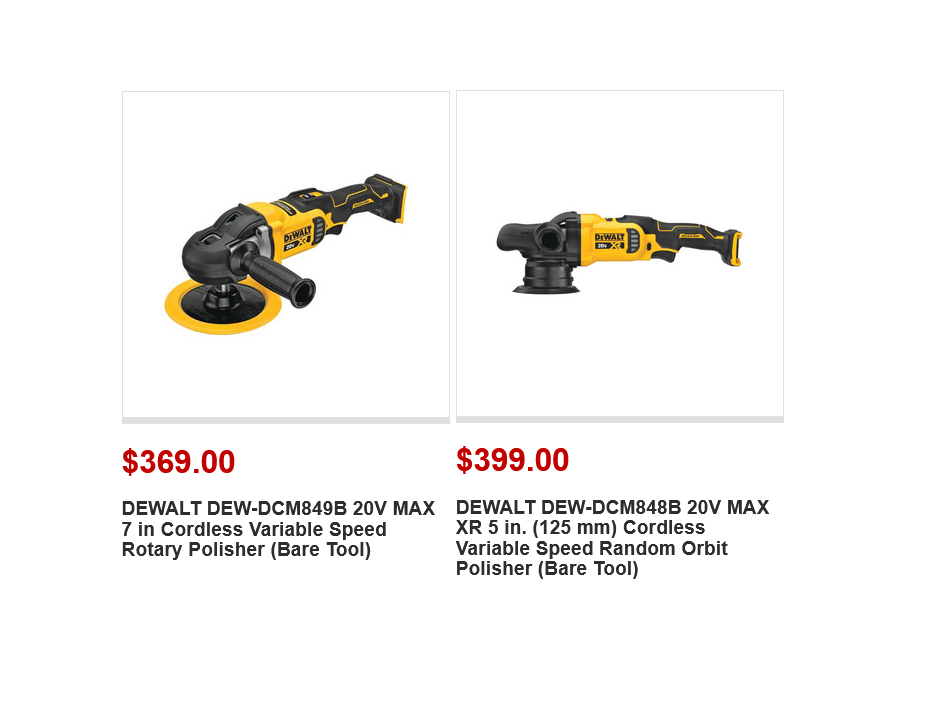
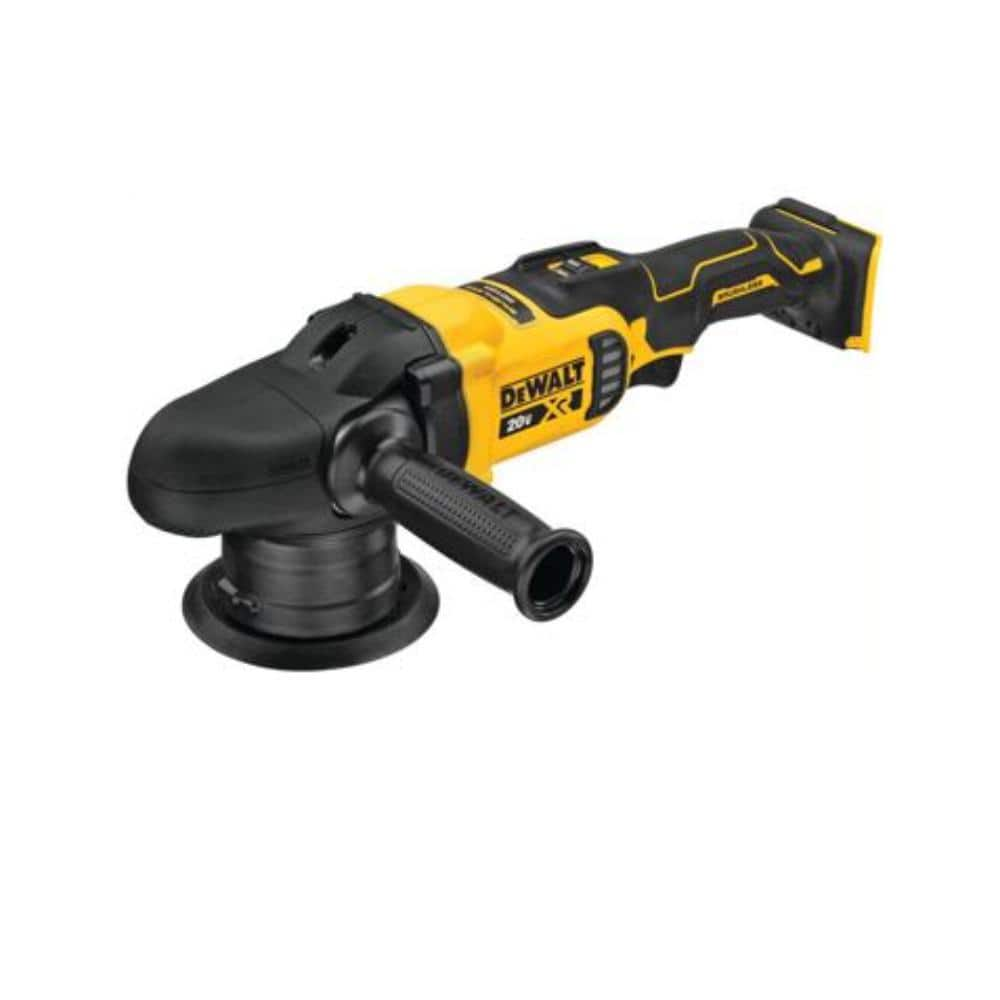
The main comparison is between the DeWalt DCM849 20V MAX variable-speed polisher and the Milwaukee M18 FUEL variable-speed polisher. Both are cordless rotary polishers designed for serious paint correction and surface finishing.
| Feature | DeWalt DCM849 | Milwaukee M18 FUEL |
|---|---|---|
| Battery platform | DeWalt 20V MAX | Milwaukee M18 |
| Tool type | Cordless rotary polisher | Cordless rotary polisher |
| Typical speed range | About 800 to 2,200 RPM | About 0 to 2,200 RPM |
| Common pad sizes | 7-inch and 9-inch setups | Commonly used with 7-inch and 9-inch setups |
| Speed control | Trigger and speed control system | Variable trigger and speed dial |
| Best strength | Control, reach, and platform value | Balance, smooth operation, and M18 compatibility |
| Ideal users | DeWalt users, detailers, and body shops | Milwaukee users, mobile detailers, and professionals |
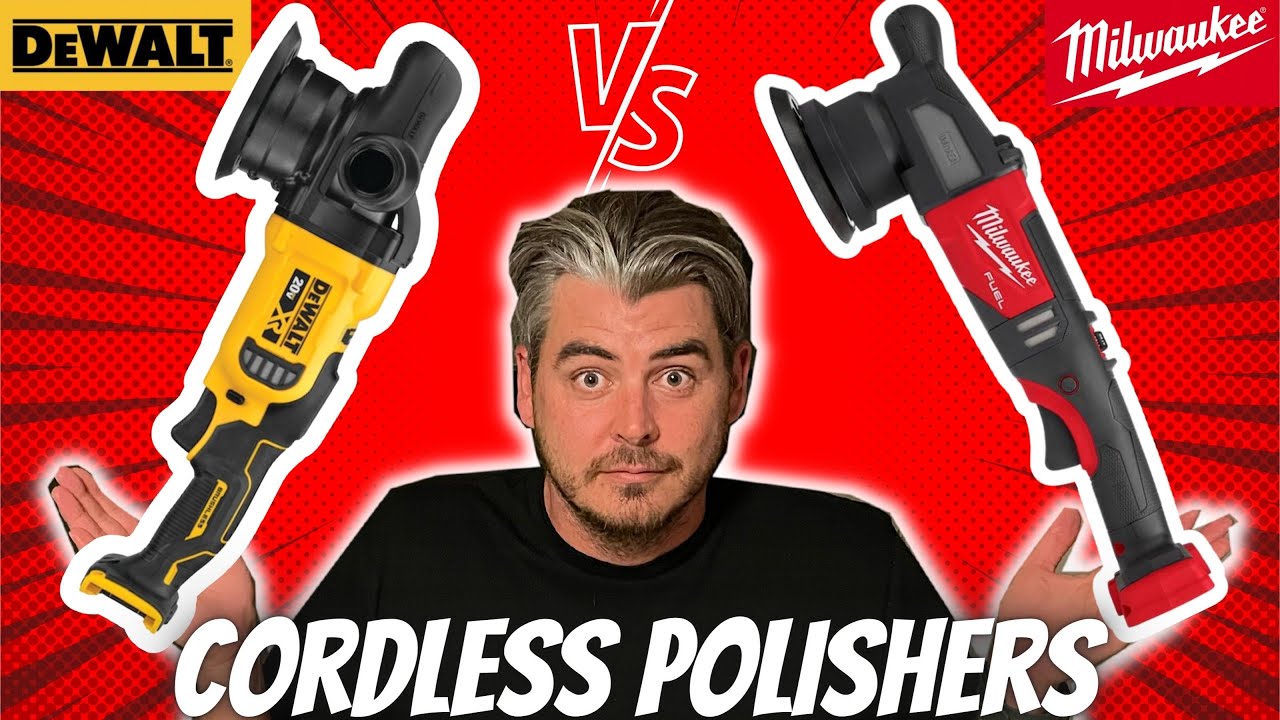
The DeWalt Polisher vs Milwaukee Polisher comparison is not about finding one tool that wins every task. It is about matching the tool to your battery collection, work style, and polishing goals.
A rotary polisher can remove defects faster than a dual-action polisher. However, it can also create swirl marks or burn paint when used with too much pressure, speed, or heat. Skill matters as much as the brand.
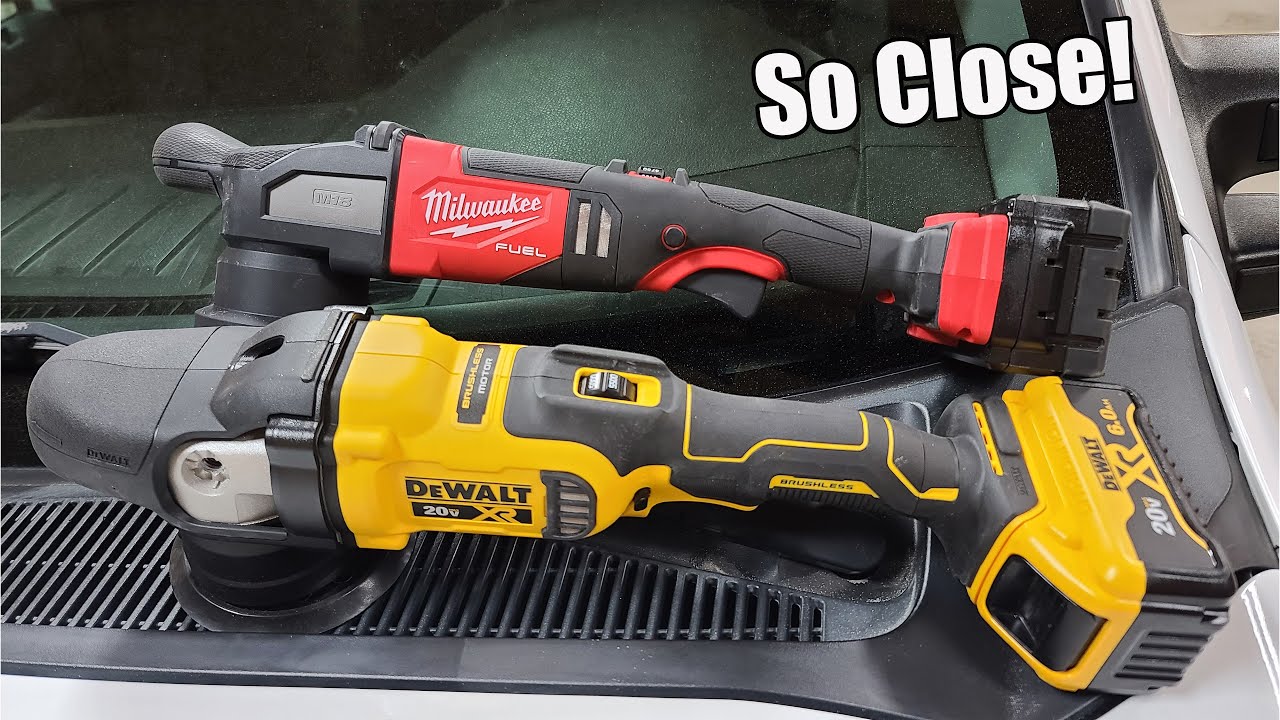
DeWalt DCM849 Polisher Overview
The DeWalt DCM849 is a cordless rotary polisher in the 20V MAX lineup. It uses a variable-speed design and commonly supports 7-inch and 9-inch polishing accessories.
Its speed range is suited to several tasks. Lower speeds help with spreading compound and reducing heat. Higher speeds help with cutting oxidation, sanding marks, and deeper paint defects when the pad and compound are suitable.
Key features often associated with the DeWalt DCM849 include:
- Variable-speed control for more accurate polishing
- A cordless design for mobile work
- Support for common polishing pads and backing plates
- A side handle and bale-style handle for different grips
- A brushless motor designed for longer tool life and better efficiency
- Compatibility with DeWalt 20V MAX batteries
The tool feels substantial in the hand. That weight can help keep the pad stable on a large panel. It can also cause arm fatigue during long work sessions, especially when polishing roofs, hoods, or vertical doors.
One useful trait is the range of grip choices. A side handle gives strong control during heavy correction. A top or bale handle can make broad panels easier to work. This matters because polishing is not only about motor power. It is also about keeping the pad flat and moving at a steady pace.

Milwaukee M18 FUEL Polisher Overview
The Milwaukee M18 FUEL polisher is built for users already invested in the M18 battery system. It is a cordless rotary polisher made for paint correction, metal polishing, finishing work, and other professional tasks.
The M18 FUEL name usually signals a brushless motor, electronic control, and battery protection features. These features help the tool manage load and reduce the chance of damage during demanding work.
Common strengths include:
- Variable speed for controlled polishing
- A smooth trigger for gradual speed changes
- A speed dial for repeatable settings
- M18 battery compatibility
- Handle options for better control
- Electronic protection against overload and overheating
- A design suited to mobile repair and detailing work
The Milwaukee often feels balanced when used with a medium-size M18 battery. A compact battery can reduce weight, but it may not provide the same runtime as a larger high-output pack. A large battery can extend work time while making the tool heavier.
The Milwaukee Polisher is a practical choice for users who already own M18 drills, impact drivers, lights, and other tools. Buying bare tools can reduce the cost of entering the polishing market because you may not need new chargers or batteries.

DeWalt Polisher vs Milwaukee Polisher: Performance
Both tools can produce strong results when paired with the right pad, compound, and technique. The motor alone does not determine the final finish.
The DeWalt has enough speed and torque for common correction jobs. It can help remove oxidation, water spots, sanding marks, and moderate scratches. The Milwaukee offers similar capability and gives the operator fine speed control for slower finishing work.
In practice, the difference often feels smaller than expected. Pad choice and paint condition create a larger change than the brand name.
For example, a firm cutting pad with an aggressive compound can remove defects quickly. A soft foam pad with a finishing polish can improve gloss. The same tool can do both jobs, but the settings and technique must change.
Cutting performance
Rotary polishers are strong at cutting. They keep the pad moving in one direction, which creates fast correction on hard paint and metal surfaces.
The DeWalt Polisher vs Milwaukee Polisher comparison is close during heavy correction. Both can maintain useful speed under moderate load when the battery is charged and the pad is clean.
Use a slower speed when:
- Spreading compound across a panel
- Working near plastic trim
- Polishing an edge
- Using a wool pad
- Controlling heat on thin paint
Use a higher speed only when the product instructions and surface allow it. More speed does not always mean faster work. Too much speed can dry the compound, create haze, and raise surface temperature.
Finishing performance
Finishing work requires smooth movement and a light touch. Both polishers can refine paint after cutting, but a rotary tool requires care because it can leave holograms.
The Milwaukee trigger may appeal to users who like gradual control. The DeWalt also offers strong control, especially when the operator uses the speed setting instead of holding the trigger fully open.
For the best finish:
- Use a clean finishing pad
- Apply moderate pressure
- Work smaller sections
- Keep the pad moving
- Wipe residue with a clean microfiber towel
- Inspect the panel under bright light

DeWalt Polisher vs Milwaukee Polisher: Battery Life
Battery life depends on more than amp-hour capacity. Paint hardness, pad pressure, speed, temperature, and battery age all affect runtime.
A large battery can run longer, but it adds weight. A smaller battery feels easier to control but may require more frequent changes. For professional detailing, two or three charged batteries are often more useful than one very large pack.
DeWalt 20V MAX batteries work with many DeWalt tools. Milwaukee M18 batteries work with a large range of Milwaukee products. This shared platform can be a major part of the buying decision.
Choose DeWalt if you already own:
- DeWalt drills or impact drivers
- DeWalt outdoor tools
- DeWalt lights and fans
- Several charged 20V MAX batteries
Choose Milwaukee if you already own:
- M18 drills and impact drivers
- M18 lighting tools
- M18 heated gear
- M18 saws or specialty tools
Battery marketing can be confusing. “20V MAX” and “18V” refer to nominal battery ratings used by different brands. They do not mean that one system is automatically more powerful. Actual performance depends on the motor, electronics, battery design, and load.
Ergonomics, Weight, and Handling
A polisher is a hand tool, so comfort matters. A tool that removes defects quickly but causes wrist pain may slow the job and reduce control.
The DeWalt has a solid, work-focused feel. Its handle options help the user change grip during long sessions. Some users may prefer its planted feel on large panels.
The Milwaukee is also built for controlled professional use. Its balance can feel natural when paired with the right battery. The exact feel will change based on the battery size, backing plate, pad, and handle position.
During testing and shop work, I learned a simple lesson: the best handle is the one that keeps your wrists straight. I once spent too long polishing a vertical door with a poor grip. The finish looked fine, but my forearm felt like it had done a full day of manual labor. Changing the handle position made the next panel much easier.
Look for these comfort features:
- A grip that keeps the wrist neutral
- A trigger that does not require excessive force
- A handle position that keeps the pad flat
- A battery that does not interfere with your forearm
- A gear housing that does not become too hot to hold
If possible, hold both tools before buying. Online specifications cannot show how a polisher feels after two hours of use.
Which Polisher Is Better for Beginners?
A rotary polisher is not the easiest machine for a beginner. It can correct paint quickly, but it can also create holograms, burn edges, or remove too much clear coat.
A dual-action polisher is usually safer for a new user. Its random movement reduces the chance of creating rotary trails. Still, a beginner can use the DeWalt or Milwaukee rotary polisher with patience and proper training.
Start with an old panel or a small test area. Use a mild polish and a soft foam pad. Keep the speed moderate, avoid sharp edges, and check the surface often.
My biggest beginner lesson was simple: do not chase every scratch. A deep scratch may have reached the color coat or metal. Removing enough clear coat to make it disappear can cause permanent damage. A safe improvement is better than a perfect-looking panel that has no protection left.

DeWalt Polisher vs Milwaukee Polisher for Professional Detailers
Professional detailers need speed, control, and dependable battery support. A cordless polisher can be useful when working at a customer’s home, in a parking area, or inside a shop with limited outlets.
The DeWalt Polisher vs Milwaukee Polisher decision for professional work should include the full system cost. Count the tool, batteries, charger, pads, backing plates, extension tools, and replacement parts.
DeWalt may be the better value for a detailer who already owns several 20V MAX batteries. Milwaukee may be the better choice for a technician who already runs an M18 shop.
Consider DeWalt when:
- You want a broad speed range
- You prefer a sturdy, planted tool
- You already use DeWalt 20V MAX products
- You want several handle options
- You often correct large panels
Consider Milwaukee when:
- You already own M18 batteries
- You value smooth speed control
- You want one battery system for many tools
- You work in mobile repair or detailing
- You prefer the balance of the M18 platform
Neither tool removes the need for corded equipment in every shop. Corded polishers can provide steady power for long correction jobs without battery changes. Cordless tools win when mobility and quick setup matter most.

Paint Correction and Polishing Technique
Good technique protects the paint and helps either tool perform better. Work in small sections, often about 2 feet by 2 feet, unless the product maker gives different instructions.
Use this basic process:
- Wash and dry the vehicle.
- Remove tar, iron particles, and bonded dirt.
- Inspect the paint under strong light.
- Mask delicate trim and edges.
- Test the least aggressive pad and polish.
- Apply a small amount of product.
- Spread it at a low speed.
- Increase speed only as needed.
- Keep the pad flat and moving.
- Wipe the panel and inspect the result.
- Clean the pad before starting the next section.
- Apply protection after correction.
Heat is one of the biggest risks. A rotary pad can warm a panel fast, especially on an edge or raised body line. Use light pressure and take short breaks when the surface becomes hot.
Pad cleaning also matters. A loaded pad creates extra friction. That reduces correction quality and can increase heat. Use a pad brush, compressed air, or a pad washer according to the pad maker’s instructions.
Safety and Maintenance Tips
A cordless polisher is powerful enough to damage paint and injure the user if handled carelessly. Wear eye protection and keep loose clothing away from the spinning pad.
Follow the tool manual and the chemical product label. Keep the battery disconnected before changing a backing plate or inspecting the spindle.
Important safety habits include:
- Wear eye protection
- Use hearing protection during long jobs
- Keep the pad flat
- Avoid sharp edges
- Do not polish damaged or loose panels
- Keep solvents away from hot parts
- Remove the battery before maintenance
- Let the tool cool after heavy use
- Use only approved batteries and chargers
- Store batteries in a dry, moderate-temperature area
Clean the tool after each job. Remove compound dust from the vents and handle. Check the backing plate for damage. Replace worn pads because an uneven pad can create vibration and poor results.
Battery safety also deserves attention. Lithium-ion packs should not be punctured, soaked, crushed, or exposed to extreme heat. Stop using a battery if it swells, smells unusual, leaks, or becomes abnormally hot.
Price, Warranty, and Long-Term Value
Tool prices change often. Sales, kit packages, battery size, and retailer promotions can make one brand appear cheaper on one day and more expensive the next.
Compare bare-tool prices separately from kit prices. A kit with a battery and charger may offer better value if you are new to the platform. A bare tool is usually smarter when you already have compatible batteries.
Long-term value includes:
- Battery compatibility
- Warranty support
- Local service access
- Replacement backing plates
- Handle availability
- Battery replacement cost
- Tool balance and comfort
- Expected hours of use
Both major brands have established service networks and strong professional reputations. However, warranty terms can vary by product and region. Register the tool when required, save your receipt, and read the current warranty terms before relying on them.
A cheaper tool is not always the lower-cost choice. If poor balance causes fatigue or weak battery support interrupts work, the savings may disappear quickly.
Common Mistakes to Avoid
Many polishing problems come from technique, not from the tool. The same mistakes can affect both the DeWalt Polisher vs Milwaukee Polisher.
Avoid these errors:
- Starting at high speed
- Using too much compound
- Pressing too hard
- Holding the pad on one spot
- Polishing dirty paint
- Ignoring panel temperature
- Using a worn or uneven pad
- Skipping the test section
- Expecting a deep scratch to vanish safely
- Running a nearly empty battery during heavy correction
One mistake I see often is using the largest pad for every job. A large pad works well on broad panels, but a smaller pad gives better control around mirrors, pillars, bumpers, and tight curves.
Another mistake is judging the finish under poor light. A panel can look perfect in a garage and show haze in direct sunlight. Use a bright inspection lamp or move the vehicle into different light before declaring the job complete.
Final Verdict: DeWalt Polisher vs Milwaukee Polisher
The DeWalt Polisher vs Milwaukee Polisher contest has no universal winner. Both are capable cordless rotary polishers with enough control for demanding correction and finishing work.
Choose the DeWalt DCM849 if you want strong control, flexible handle positions, and access to the DeWalt 20V MAX battery system. It suits users who prefer a sturdy feel and often work on large panels.
Choose the Milwaukee M18 FUEL polisher if you already own M18 tools, prefer its balance, or want smooth control within the Milwaukee platform. It is a strong fit for mobile technicians and professional users who value one shared battery system.
Your best choice is usually the brand you already support. If you own neither platform, compare the complete kit, battery price, local warranty service, and how each tool feels in your hands.
Frequently Asked Questions About DeWalt Polisher vs Milwaukee Polisher
Is the DeWalt Polisher better than the Milwaukee Polisher?
The DeWalt Polisher may be better for users who prefer its handle design, speed control, and 20V MAX battery system. Milwaukee may be better for users who already own M18 batteries or prefer its balance.
Can beginners use the DeWalt or Milwaukee rotary polisher?
Beginners can use either tool, but a rotary polisher requires careful technique. Start at a low speed, use a mild pad and polish, and practice on a test panel before working on a valuable vehicle.
Which battery lasts longer, DeWalt 20V MAX or Milwaukee M18?
Runtime depends on battery capacity, surface load, speed, pad pressure, and battery age. A larger amp-hour battery from either platform can last longer, but it also adds weight.
Can these polishers remove deep scratches?
They can improve many surface defects, oxidation marks, and sanding scratches. A deep scratch that reaches the color coat or metal may not be safely removable through polishing.
Is a cordless polisher as powerful as a corded polisher?
Modern cordless polishers can handle many detailing jobs and offer excellent mobility. A corded model may be more suitable for very long, heavy correction sessions because it does not require battery changes.
What size pad should I use with these polishers?
A 7-inch pad is a useful general choice for many panels. Smaller pads improve control in tight areas, while larger pads cover broad surfaces faster when the panel is flat and open.
Does the DeWalt Polisher vs Milwaukee Polisher create swirl marks?
Either rotary polisher can create holograms or swirl marks if used with the wrong pad, compound, speed, or pressure. Careful finishing work, clean pads, and proper inspection help reduce the risk.
Conclusion
The DeWalt Polisher vs Milwaukee Polisher choice comes down to more than speed or motor power. DeWalt offers a strong 20V MAX option with useful control and handle flexibility, while Milwaukee provides a capable M18 tool with smooth operation and excellent battery-system value.
Choose the platform that matches your current tools, work habits, and comfort needs. Start with safe technique, test every product on a small area, and let the pad and compound do the work instead of forcing the machine. Explore more detailing guides, compare current kits, and share your polishing experience in the comments.